
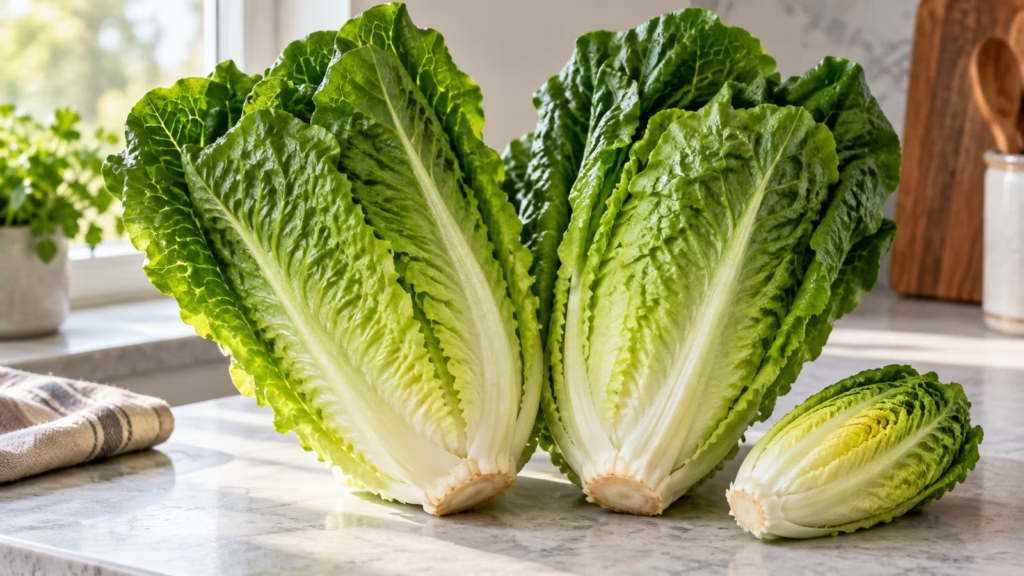
The bowl is ready, the dressing is mixed, and the romaine lettuce still has water hiding along its ribs. For a crisp salad, choose sound leaves, wash an unwashed head under running water, dry it carefully and dress it near serving time. If the package specifically says prewashed or ready to eat, another wash is not required.
A good romaine salad starts with crisp leaves and ends with just enough dressing to coat them.
Romaine earns its place through texture: long leaves, sturdy pale ribs and enough structure to stand up to a creamy dressing. I would give those ribs as much attention as the leafy ends. Cutting and drying them well makes a bigger practical difference than adding another handful of toppings.
Choose romaine lettuce by condition and convenience
A whole head usually gives you both darker outer leaves and a paler center. Hearts are the tighter inner portion, often sold with much of the outer growth removed. Either can work for a salad; the useful choice is how much preparation you want and how soon you will use it.
- Whole heads: look for crisp leaves and a firm structure, without slimy or rotten areas. Check the base and outer leaves before buying.
- Romaine hearts: convenient for wedges or compact chopped salads. A bag around the hearts does not automatically mean they have been washed.
- Precut bags or kits: choose refrigerated products and read the preparation instructions. Notice whether the package includes dressing and toppings before comparing price or nutrition.
Buy an amount that fits the next few meals. Arizona Extension suggests buying lettuce close to when you plan to eat it, since it deteriorates faster than many vegetables. A large bag is only convenient if the last portion still has a place at dinner.
Let the package answer the washing question
For unwashed romaine, remove damaged areas and separate the leaves so running water can reach their folds and bases. Start with clean hands and equipment. The FDA recommends plain running water, not soap, detergent or commercial produce wash.
- Unwashed whole heads or hearts: rinse before cutting and eating. Work gently around the leafy ends and more deliberately along the sturdy ribs.
- Prewashed or ready-to-eat lettuce: use without another wash, unless the package gives different instructions.
- If you choose to rewash ready-to-eat leaves: keep them away from dirty sinks, utensils and surfaces. Extra handling can introduce contamination.
Washing can reduce bacteria but cannot eliminate all of them. It does not make recalled lettuce acceptable to eat. Our bagged-salad washing guide covers that label distinction in more detail; the same principle applies when the greens inside happen to be romaine.
Dry the ribs, protect the leaves and keep them cold
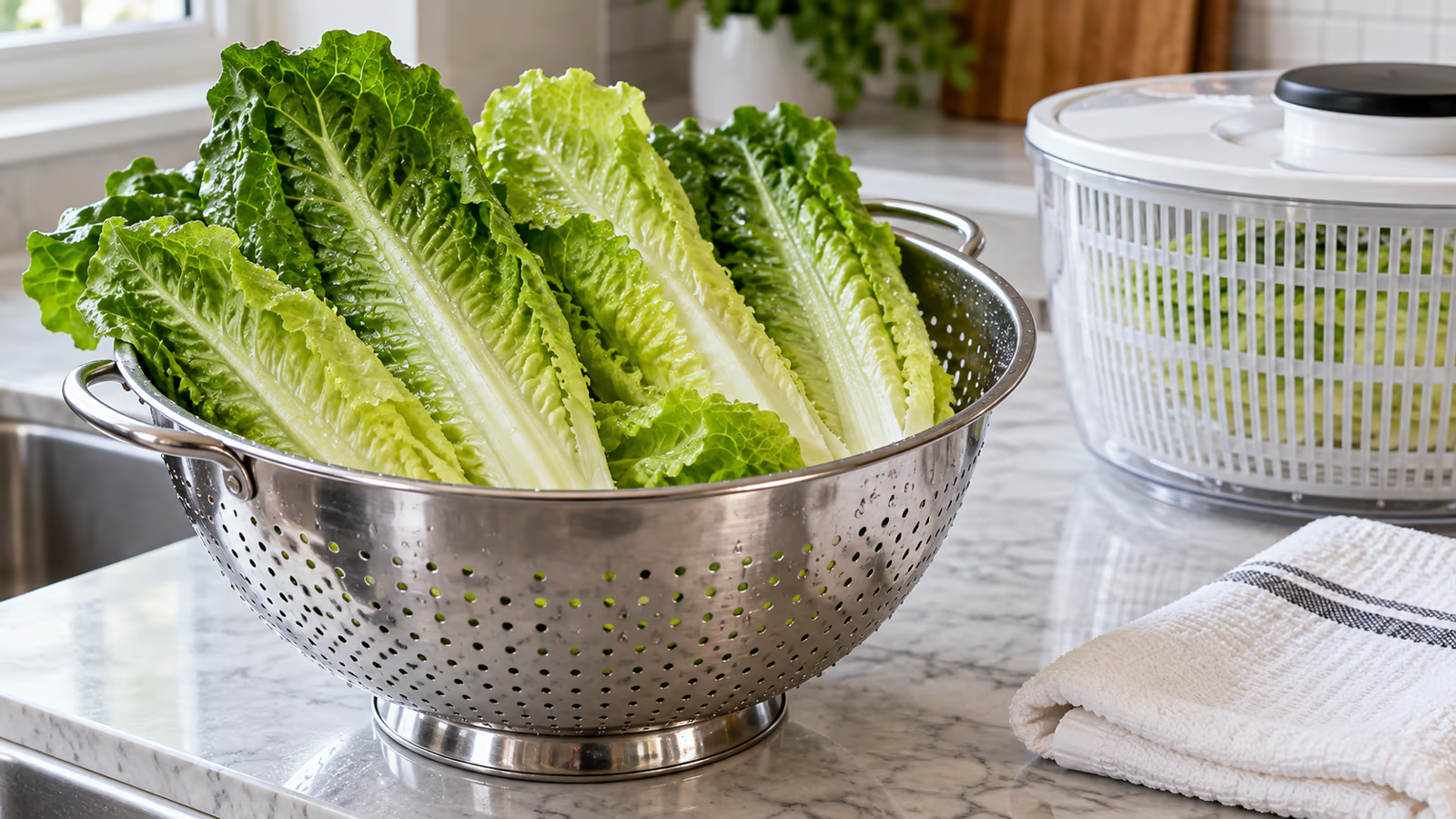
A clean salad spinner helps remove water without squeezing the leaves into a compact wad. If you do not have one, drain in a clean colander and pat dry with a clean towel or paper towels. Open the folded leaves as needed so the central ribs do not carry a small puddle into the bowl.
- For storage, refrigerate at 40°F (4°C) or below. Keep lettuce away from raw meat, poultry and seafood juices.
- If leaves are damp, a clean dry paper towel can absorb excess moisture. Replace it when it becomes wet instead of leaving leaves against a soggy towel.
- Keep dressing separate until serving. A wet leaf also dilutes the dressing before you have had a chance to judge the seasoning.
- Follow the package’s storage instructions and use-by guidance. Discard slimy, rotten or otherwise deteriorated lettuce.
Clemson Extension’s handling guidance emphasizes clean equipment and careful drying. I prefer to prepare only what I need for the next meal or two: less handling, less crowding in the refrigerator and fewer forgotten containers behind the milk.
Use the sturdy texture beyond a basic salad
Chop romaine into manageable pieces for a tossed salad, or leave smaller sound leaves intact for a crisp base beneath a filling. Cut the thicker ribs into pieces that fit comfortably on a fork. Giant leaves look generous until the first bite turns into a balancing exercise.
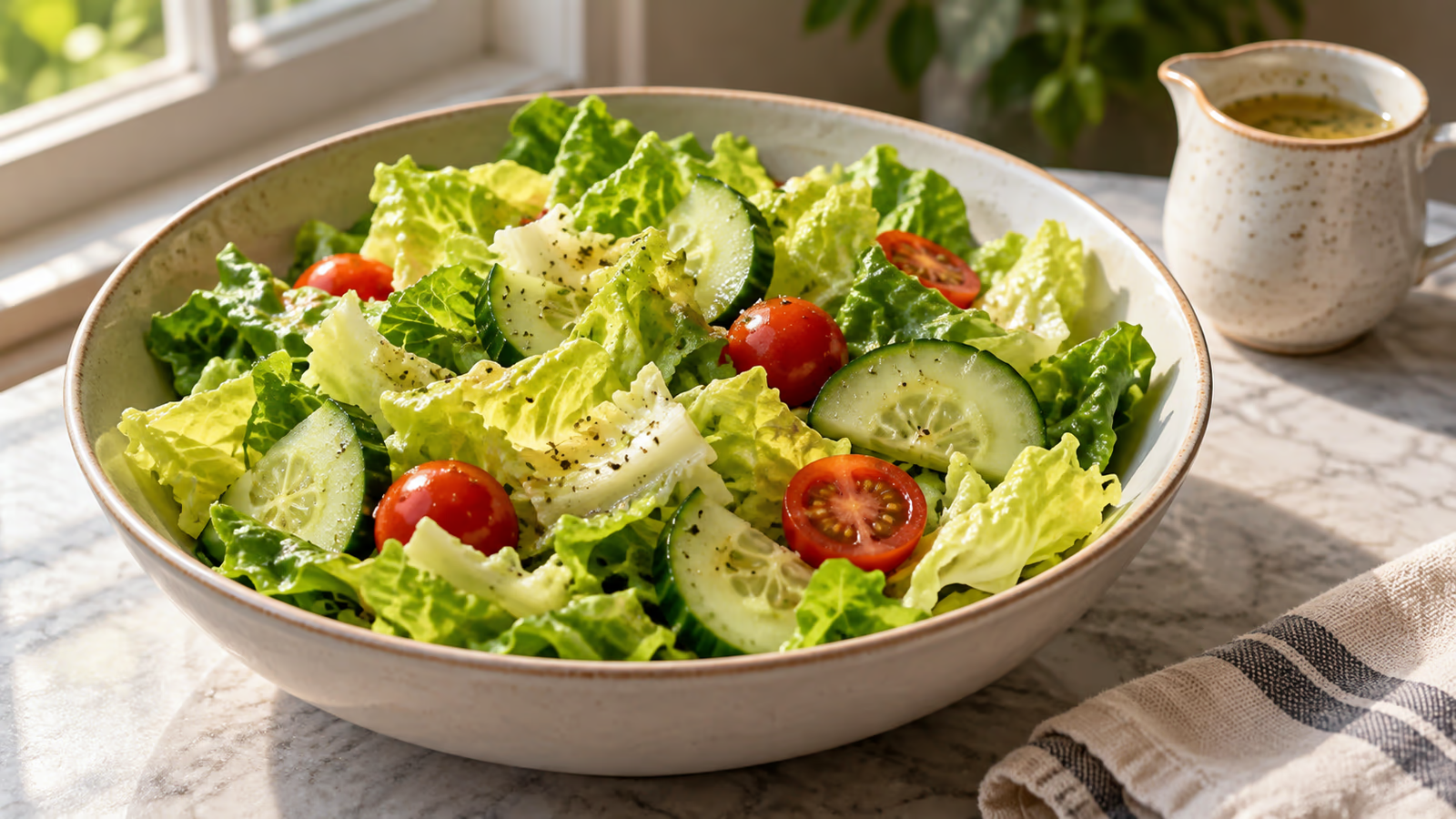
- For a simple bowl, pair romaine with cucumber and tomatoes, then add dressing gradually. Taste a dressed bite before adding more.
- For a fuller meal, add a protein you enjoy and another substantial ingredient, rather than assuming lettuce alone makes lunch.
- For warm contrast, try a recipe for briefly grilled romaine hearts. The cut surfaces can char while the interior keeps some structure.
- For packed meals, cool cooked additions before combining and keep the salad refrigerated or in an insulated bag with ice packs.
Brief grilling is a cooking choice, not a method for rescuing recalled or mishandled lettuce. Current recall instructions take priority over ordinary kitchen advice; check the specific product and lot if an alert concerns a package you own. An old outbreak headline cannot establish whether today’s lettuce is affected.
Chef John’s Food Wishes demonstration below shows grilled romaine hearts as another use for this sturdy lettuce. Follow the produce-handling guidance above before cooking, and treat his dressing and toppings as optional choices for that dish.
Sources
- FDA: choosing, washing and storing produce.
- University of Arizona Extension: lettuce selection and storage.
- Clemson Extension: safe handling of lettuce and leafy salads.
- FDA: current recalls and safety alerts.
- Food Wishes: grilled romaine demonstration.

Hi, I’m Laura, the voice behind Tastiva. I’ve always believed that eating well should feel enjoyable, comforting, and realistic—not like another complicated rule to follow. I love creating recipes that fit into everyday life, sharing simple nutrition ideas, and finding small ways to make meals feel a little better without losing the pleasure of good food.