
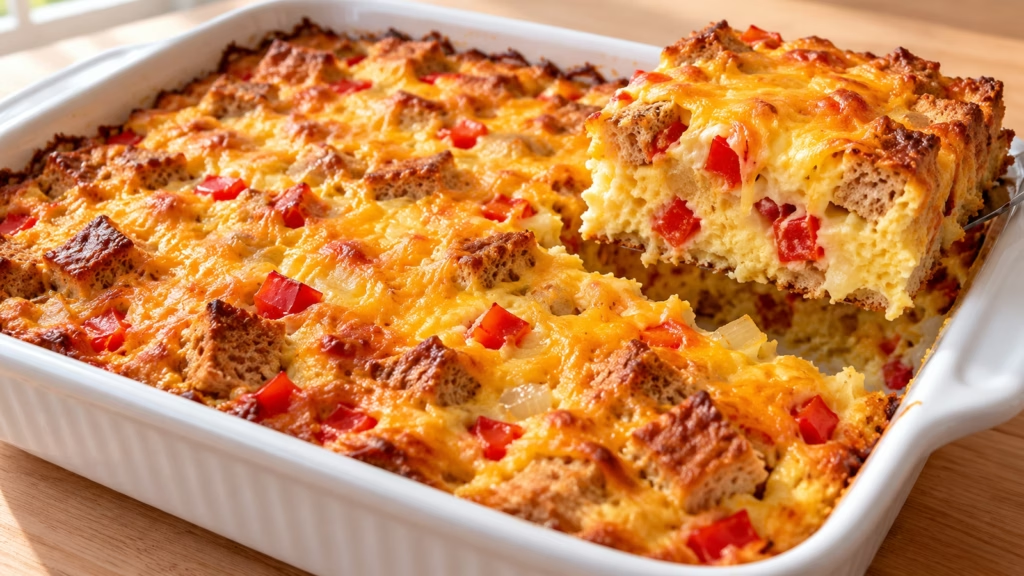
A loaf that is getting a little firm and a carton of eggs can turn into a breakfast worth sitting down for. This breakfast casserole combines whole-wheat bread, eggs, cheddar, and sautéed peppers and onion in one baking dish. The useful trick is to soften the vegetables first, give the bread time to absorb the egg mixture, and check the center with a thermometer before serving.
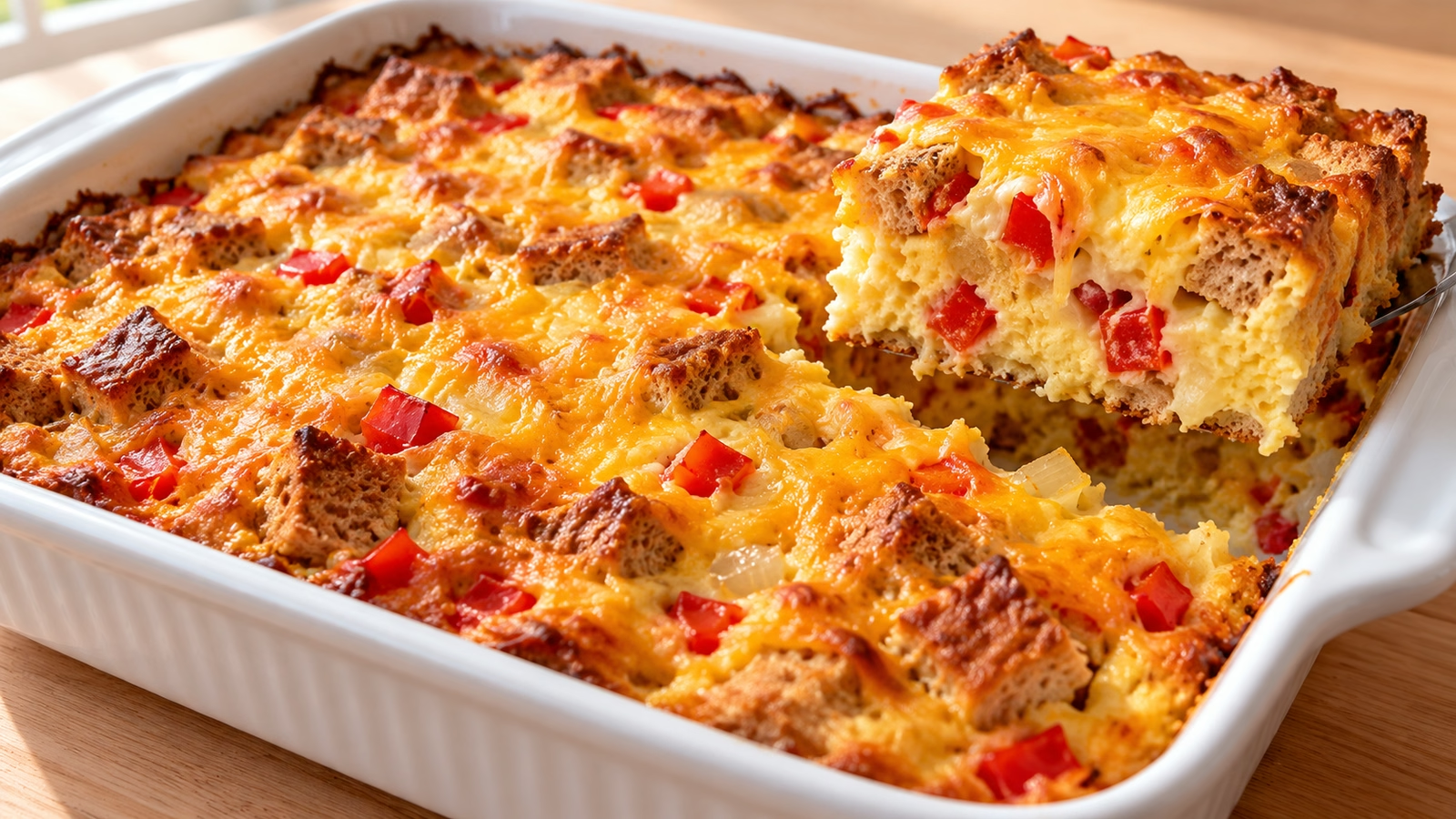
A good breakfast casserole gives the bread a job, the vegetables a little attention, and the cook one less pan to juggle.
What belongs in this breakfast casserole
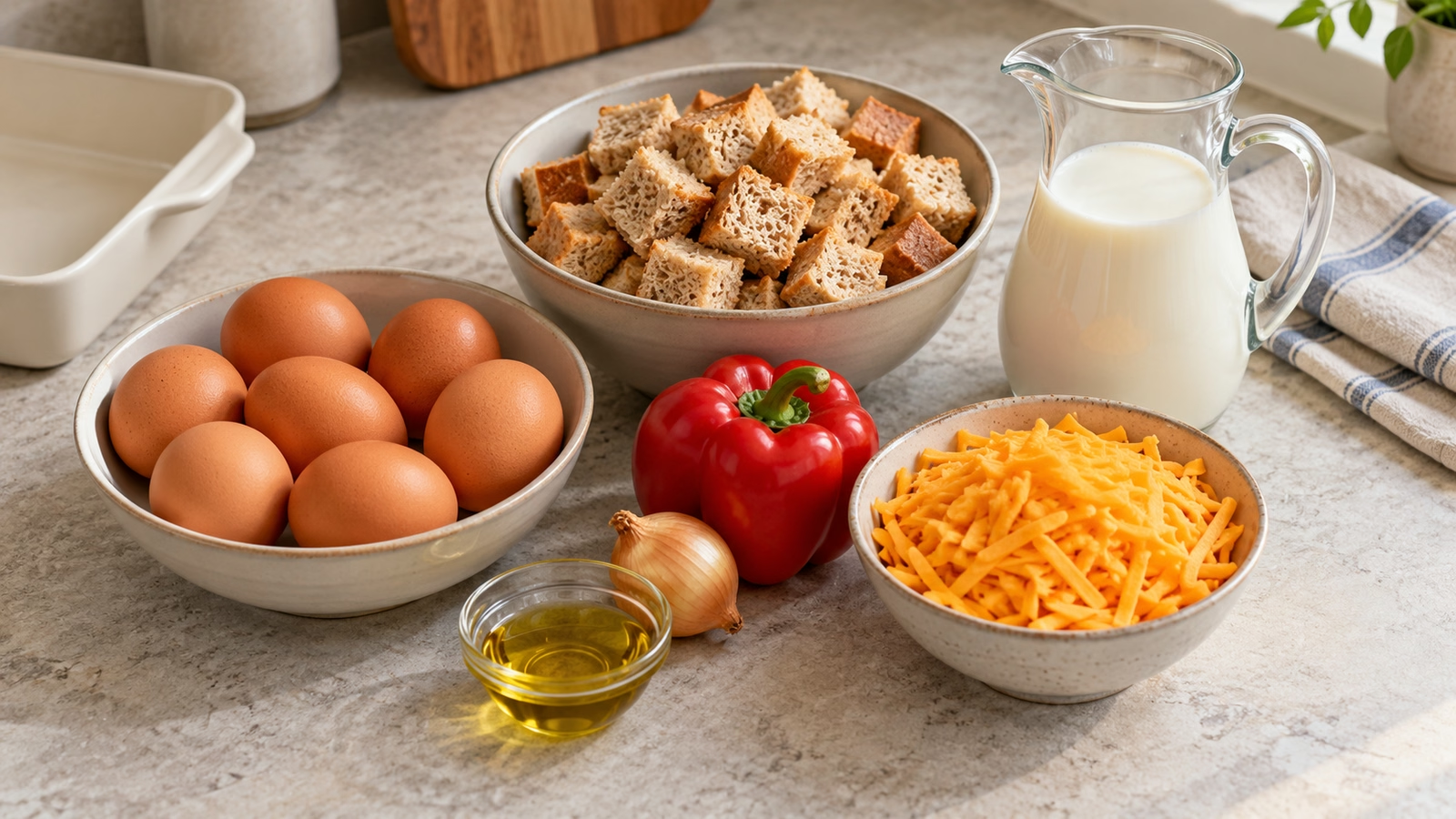
This is a bread-and-egg casserole, sometimes called a strata, rather than a potato bake. I’d choose ordinary whole-wheat sandwich bread over a very dense seeded loaf here: the softer crumb can absorb the milk-and-egg mixture without making every bite a workout.
- Eggs: These set the mixture and hold the portions together. Use large eggs so the proportions stay consistent.
- Milk: It adds moisture to the custard. This version uses 2% dairy milk; changing the milk can change richness and nutrition.
- Bread: Slightly firm bread is useful, but stale does not mean moldy. Discard moldy bread rather than trimming it for the casserole.
- Cheddar: Sharp cheddar adds a more pronounced cheese flavor. Divide it between the filling and the top instead of piling everything on the surface.
- Red pepper and onion: Sautéing softens them before baking and helps avoid hard pieces in the finished egg mixture.
Cut the bread into roughly ¾-inch pieces rather than tearing it into large chunks. Weighing it is more consistent than packing cubes into a measuring cup. For ingredient handling, Tastiva’s guide to checking whether eggs are bad covers useful checks before you crack them.
Small choices that help the center cook evenly
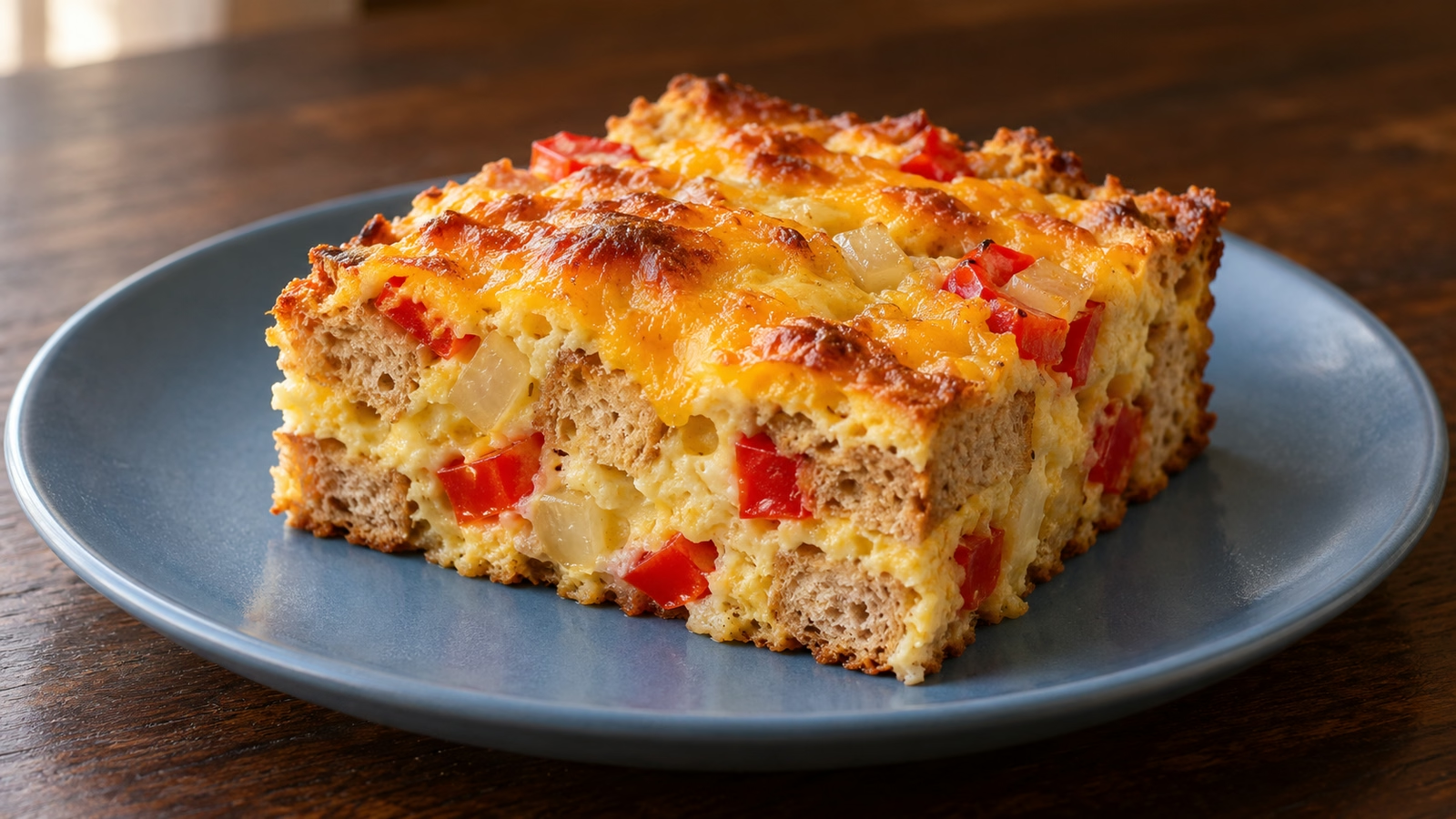
The surface and the center tell different stories. Cheese can brown while the mixture underneath still needs time, so I’d give the thermometer the final say. FoodSafety.gov recommends 165°F (74°C) for casseroles, including meatless ones.
- Use the specified dish: A 9-by-13-inch dish spreads the mixture into a relatively shallow layer. A smaller, deeper dish changes baking time.
- Cool the sautéed vegetables briefly: They should not be sizzling hot when added to the raw eggs.
- Press the bread gently: Moisten any dry cubes above the liquid before baking. Bread should absorb the mixture rather than float in islands.
- Check several central spots: Insert an instant-read thermometer into the casserole, avoiding the hot pan itself.
- Protect the top if needed: Loosely tent with foil if the cheese browns before the center reaches temperature.
Let the baked casserole stand for 10 minutes before cutting. That short pause makes portioning easier; it is also a reasonable moment to put the plates out. The cheese will survive being admired for a minute.
Substitutions, serving, and realistic limits
I’d change one component at a time rather than treating the dish as an invitation to empty every container in the refrigerator. Extra vegetables add moisture and volume, while potatoes need their own cooking plan. Those changes can affect whether the center sets within the suggested time.
- Another bell pepper: Use the same prepared weight of yellow or orange pepper. Green pepper has a more assertive flavor.
- Another cheese: An equal weight of Monterey Jack gives a milder direction. Keep the cheese amount consistent rather than adding a thick extra layer.
- Gluten-free bread: Absorption varies substantially by loaf. The original timing and texture have not been established for this substitution.
- Meat additions: Raw sausage does not belong directly in this mixture. A meat version needs separately cooked meat and adjusted proportions.
Serve a square with fruit or a simple green salad, depending on whether this is breakfast or lunch. Eggs, dairy, and wheat are present in the base recipe. Cheese can contribute substantial sodium and saturated fat, so portions and the rest of the meal matter more than attaching a blanket “healthy” label.
Store the cooked casserole safely
For advance preparation, I’d bake it first and refrigerate portions rather than rely on an unverified overnight soaking schedule. Divide leftovers into shallow containers and refrigerate promptly. FoodSafety.gov’s chilling guidance calls for refrigeration within two hours, or one hour when temperatures exceed 90°F (32°C).
| Storage choice | Temperature | Time or check |
|---|---|---|
| Refrigerate after baking | 40°F (4°C) or below | 3–4 days |
| Freeze after baking | 0°F (−18°C) or below | 2–3 months for quality |
| Reheat leftovers | 165°F (74°C) inside | Check the center with a thermometer |
The storage limits above follow the federal cold food storage chart for baked casseroles with eggs. Thaw frozen portions in the refrigerator and reheat thoroughly. Freezing can change the egg mixture’s texture; it does not make unsafe food safe.
Breakfast Casserole Recipe

Ingredients
- 1 tablespoon olive oil 14 g; divide between greasing the dish and sautéing
- 1 medium red bell pepper 150 g trimmed, seeded, and diced
- 1 small yellow onion 110 g peeled and diced
- 8 large eggs about 400 g without shells
- 1.5 cups 2% milk 360 mL; use dairy milk for the specified version
- 0.5 teaspoon fine table salt 3 g
- 0.25 teaspoon ground black pepper about 0.6 g
- 6 cups whole-wheat sandwich bread cubes 225 g; approximately ¾-inch cubes; weight is more consistent than volume
- 1.5 cups shredded sharp cheddar 170 g, divided
Equipment
- 9-by-13-inch baking dish (about 23-by-33 cm)
- Large skillet
- large mixing bowl
- Whisk
- Cutting board and knife
- Measuring cups and spoons
- Kitchen scale
- Instant-read food thermometer
- foil if needed
Instructions
- Heat the oven to 350°F (177°C). Grease a 9-by-13-inch baking dish with 1 teaspoon of the measured oil.
- Heat the remaining 2 teaspoons oil in a skillet over medium heat. Add the diced pepper and onion; cook, stirring, for approximately 6–8 minutes, until softened. Remove from heat and let cool briefly.
- Whisk eggs, milk, salt, and black pepper in a large bowl. Fold in the bread cubes, cooled vegetables, and 1 cup (about 113 g) cheddar.
- Transfer to the prepared dish and spread evenly. Gently press any dry bread cubes into the mixture. Let stand for 10 minutes while the oven finishes heating. Sprinkle with the remaining ½ cup (about 57 g) cheddar.
- Bake on the middle rack, beginning to check at 40 minutes. The estimated baking range is 40–50 minutes, but continue cooking until an instant-read thermometer reads at least 165°F (74°C) in several central spots. Do not touch the pan with the probe. Loosely tent with foil if the top browns before the center reaches temperature.
- Rest for 10 minutes, then cut into 8 portions. Refrigerate leftovers in shallow covered containers within 2 hours, or within 1 hour if the surrounding temperature is above 90°F (32°C).
Nutrition
Video
Video: Chef Nicki Sizemore of From Scratch Fast demonstrates a vegetarian breakfast strata with bread, eggs, milk and sautéed vegetables. Her version uses cottage cheese, Parmesan, leeks and spinach; this recipe uses cheddar, bell pepper and onion. Follow the recipe above for its quantities, pan size and baking instructions.
Notes
Tried this recipe?
Let us know how it turned out!Sources
- FoodSafety.gov: safe minimum internal temperatures
- FoodSafety.gov: cold food storage chart
- FoodSafety.gov: clean, separate, cook, and chill
Hi, I’m Laura, the voice behind Tastiva. I’ve always believed that eating well should feel enjoyable, comforting, and realistic—not like another complicated rule to follow. I love creating recipes that fit into everyday life, sharing simple nutrition ideas, and finding small ways to make meals feel a little better without losing the pleasure of good food.