
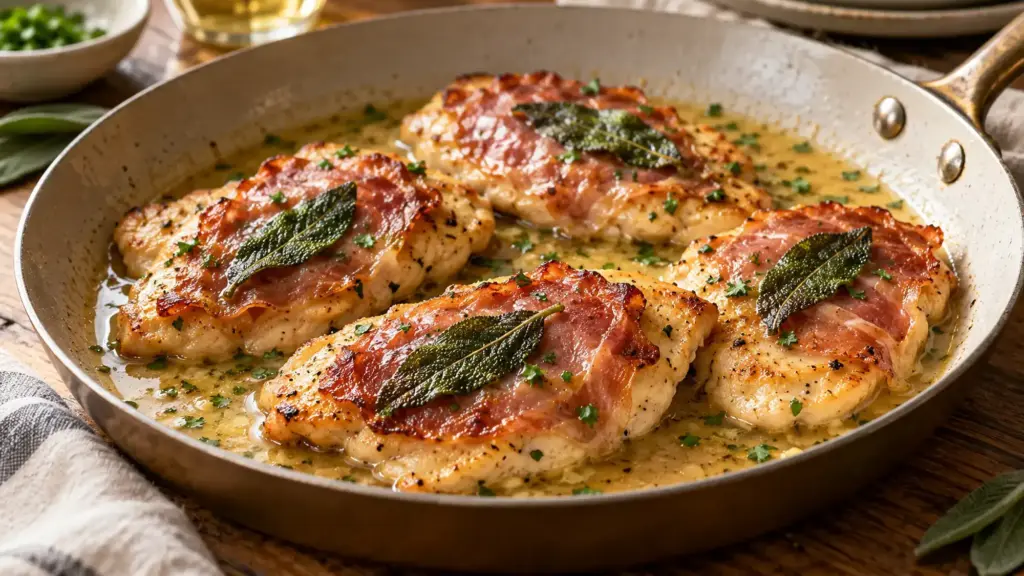
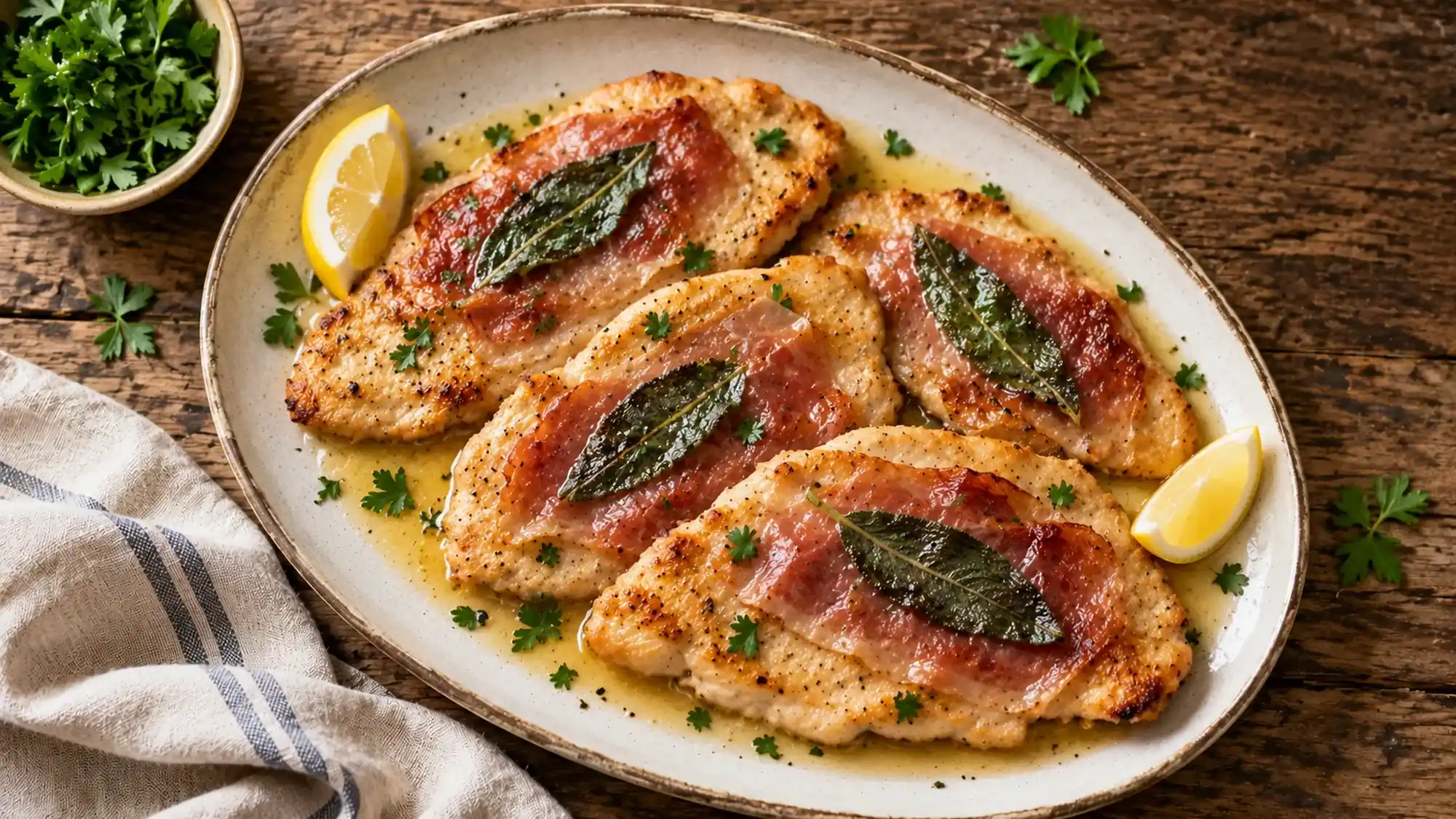
A thin chicken cutlet can feel rather ordinary until a ribbon of prosciutto and a sage leaf meet the hot pan. Chicken saltimbocca makes that small transformation the point of dinner: savory edges, tender meat and a sauce worth spooning carefully around the plate.
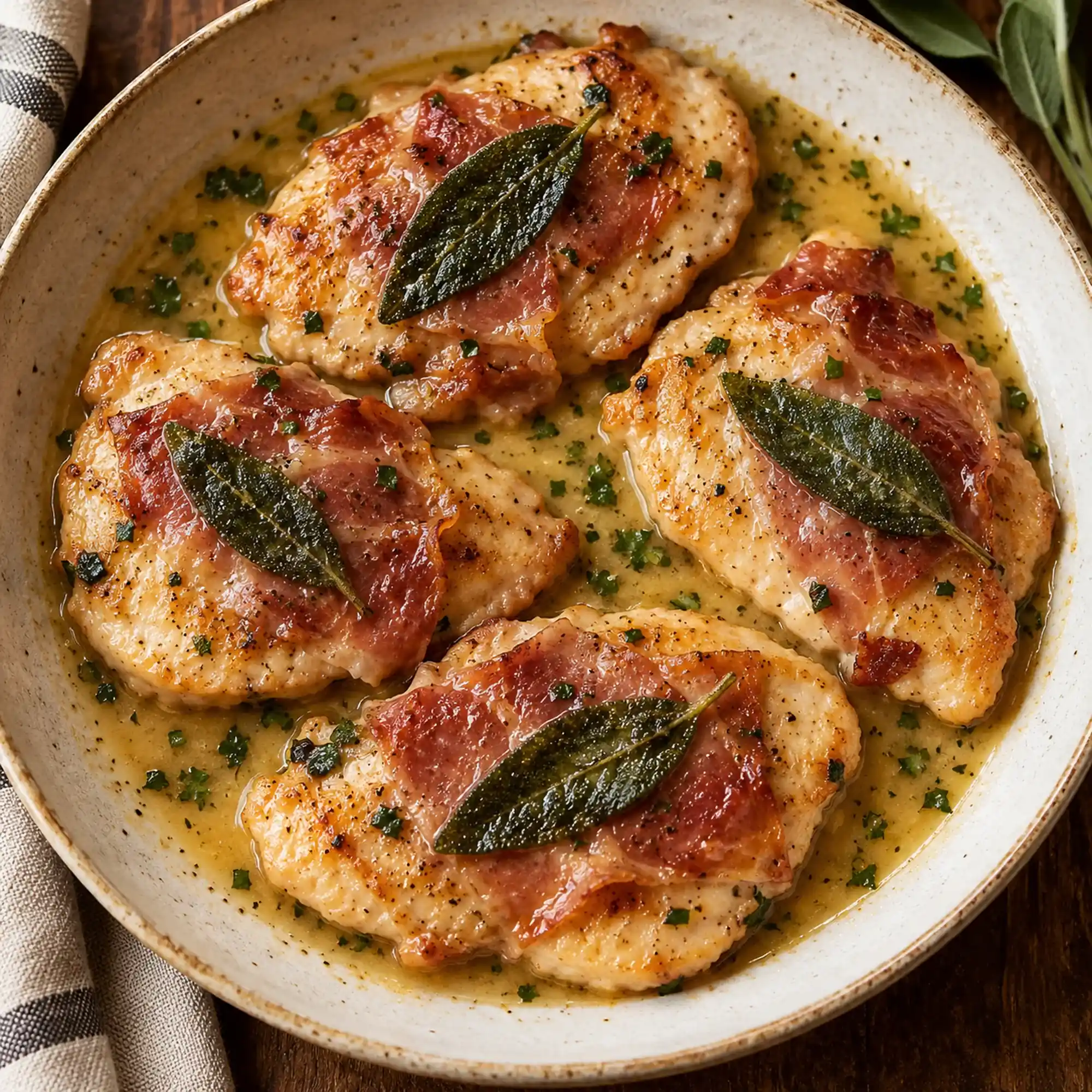
This chicken saltimbocca pairs lightly floured breast cutlets with prosciutto, sage and a reduced wine-butter sauce. Thin, even pieces matter more than a large flame; remove every toothpick before serving.
The approach is adapted from Sip and Feast’s cutlet method, with six portions and measured seasoning. I like this dish best when the sage remains visible rather than disappearing beneath a heavy blanket of sauce.
Serving Chicken Saltimbocca
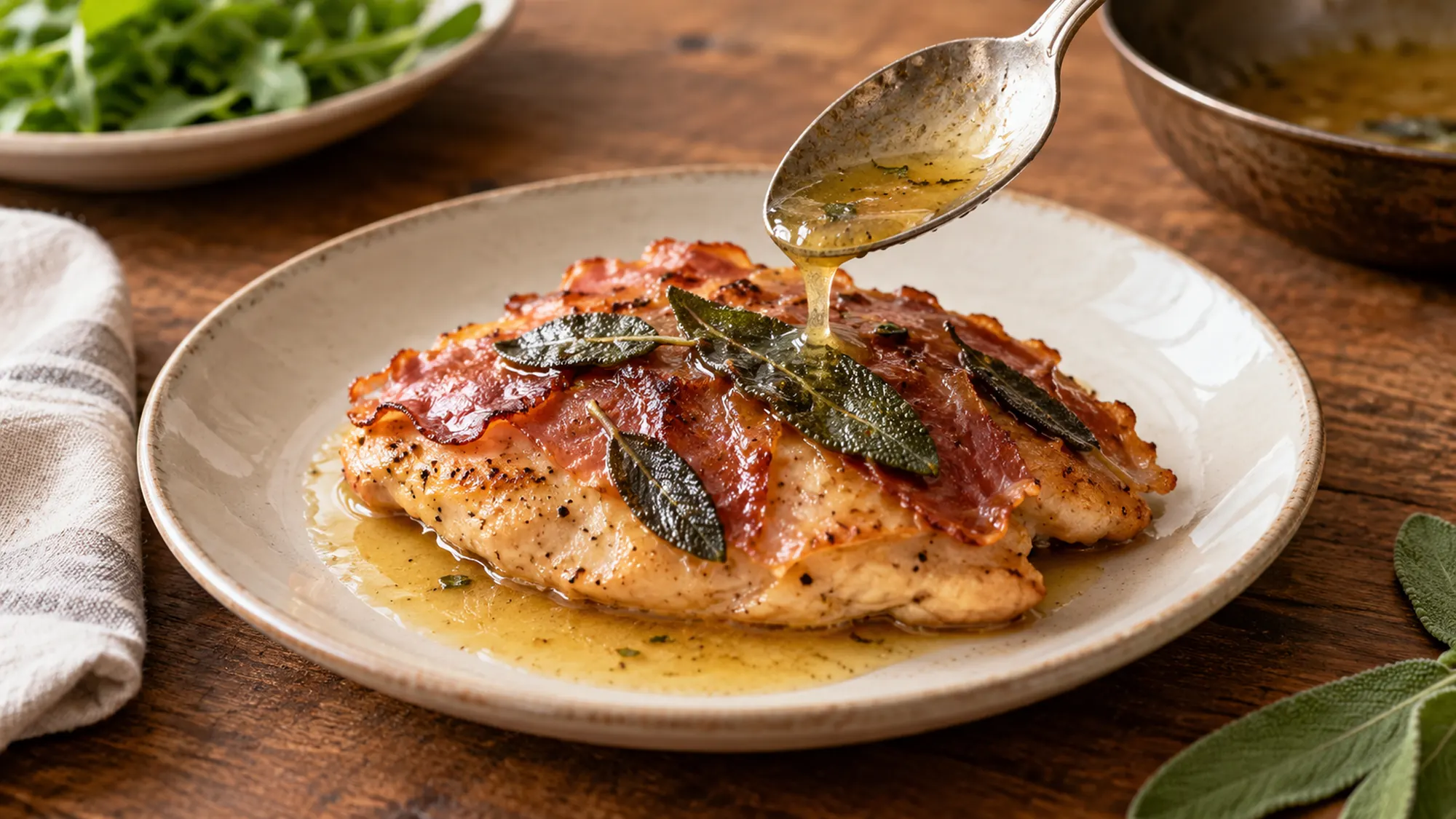
Serve the cutlets on warm plates, with a modest spoonful of sauce beside and underneath them. Pouring everything over the top softens the prosciutto immediately; keeping some surface exposed gives each bite a little contrast. A shallow platter also makes it easier to spot and remove the toothpicks.
Choose one quiet accompaniment rather than several rich ones. The wine-butter sauce already brings plenty of flavor, so plain potatoes or a green vegetable can do useful work without another creamy dressing. Keep extra sauce in the pan for anyone who wants more.
- For a soft base: mashed potatoes catch the sauce without competing with sage.
- For a lighter-feeling plate: serve with green beans and a little lemon.
- For family service: arrange the cutlets in one layer, not a deep stack.
| Choice | What it adds | Keep in mind |
|---|---|---|
| Plain potatoes | A mild base for sauce | Avoid another butter-heavy topping |
| Green vegetables | Fresh texture and color | Serve separately |
| Warm platter | Keeps thin cutlets inviting | Do not bury the crisp tops |
Keep the prosciutto visible and let the sauce sit around the chicken, not over every browned edge.
Chicken Saltimbocca Variations
Prosciutto is salty before anything else reaches the pan. If your slices are particularly assertive, reduce the added salt rather than trying to correct an overly salty finished sauce. Unsalted stock gives you more room to make that decision at the end. Taste the sauce with a small piece of chicken, not on its own.
I would keep the sage restrained instead of adding handfuls of mixed herbs. Its distinctive aroma is part of the appeal, while too many competing leaves make the dish harder to read. Parsley belongs as a small fresh finish, not as a second dominant flavor.
- No wine: use extra stock and finish with a small squeeze of lemon; expect a different sauce.
- Different cutlets: pork or veal are related variations, but use their appropriate safe temperatures.
- Less butter: the sauce loses some gloss and richness; reduce gradually rather than replacing it with cream.
- No toothpicks: placing sage beneath the prosciutto is less decorative but can help hold the layers together.
Change the salt or sauce richness first; preserve the clear chicken, prosciutto and sage combination.
Nutrition and Safe Cooking
Chicken supplies protein, but the dish also includes cured pork, butter and cooking oil. That combination deserves an honest portion estimate rather than a broad healthy label. The card divides the batch into six servings and does not count optional potatoes or vegetables.
Dredging adds uncertainty: only some flour stays on the cutlets, and some oil or sauce can remain in the pan. The estimate assumes thirty grams of flour are retained and includes all measured fat. Actual servings will vary with cutlet size and the sauce you spoon onto each plate.
- Check the center: follow the 165°F poultry minimum, even for very thin cutlets.
- Separate raw and cooked: discard contaminated dredging flour and use a clean plate for finished chicken.
- Count the picks: remove every toothpick before food reaches the table.
Enjoy the rich sauce in a portion that suits your meal, while treating poultry temperature and toothpick removal as nonnegotiable.
Bottom Line
Chicken saltimbocca rewards a few deliberate choices: even cutlets, restrained salt and a sauce finished gently. The prosciutto does not need to become brittle, and the sage does not need to shout. Keep the plate simple, serve it hot and let those savory layers provide the interest.
Thin cutlets, visible sage and a little glossy sauce make the strongest plate.
Chicken Saltimbocca Recipe

Ingredients
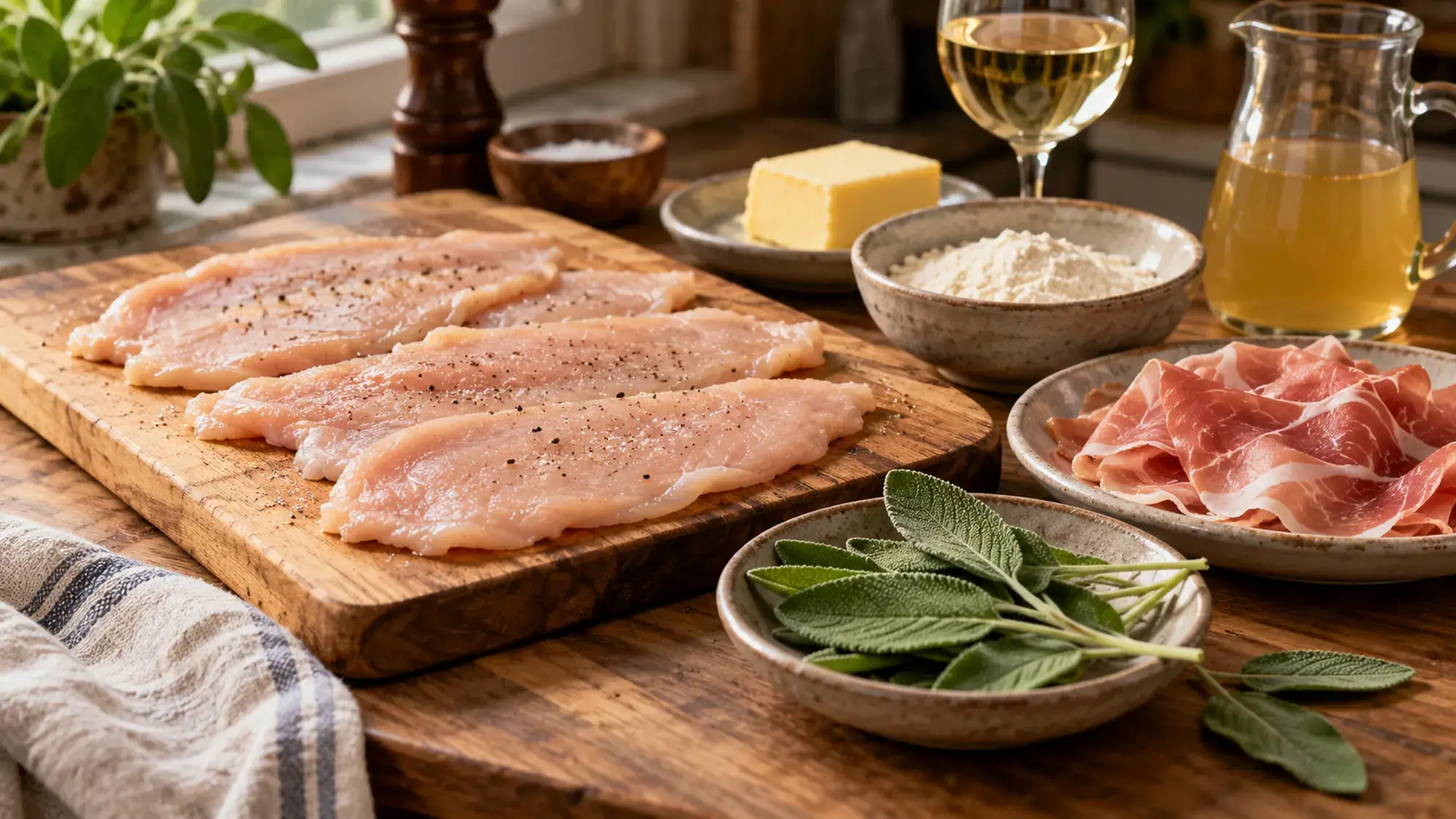
- 900 g chicken breast cutlets pounded 1/4 inch thick
- 114 g thinly sliced prosciutto
- 5 g fresh sage leaves about 20 small leaves
- 300 ml unsalted chicken stock
- 240 ml dry white wine
- 60 g all-purpose flour dredging bath; about 30 g estimated retained
- 2 g fine salt
- 1 g ground black pepper
- 60 ml olive oil
- 84 g unsalted butter divided
- 8 g fresh parsley chopped
Equipment
- 1 Large skillet
- 1 Meat mallet
- 1 Toothpicks
- 1 Instant-read thermometer
Instructions
- Pat the cutlets dry and season with the measured salt and pepper. Lay prosciutto and sage on each piece; secure with toothpicks, keeping count so every pick can be removed.
- Place flour in a shallow dish. Coat the cutlets lightly and shake off excess. Discard flour that has touched raw poultry; the estimate assumes about 30 g stays on the chicken.
- Heat a large skillet over medium heat. Use the measured oil and 28 g of the butter in batches; sear cutlets prosciutto-side down 2–3 minutes, then turn and cook until the thickest part reaches 165°F (74°C). Transfer to a clean plate.
- Pour wine into the pan and scrape the browned bits. Add stock and simmer until the liquid reduces roughly by half. Lower the heat and whisk in the remaining 56 g butter. Some alcohol may remain after cooking.
- Return the cutlets briefly to the sauce. Remove and count all toothpicks, scatter with parsley and serve immediately.
Nutrition
Video
Notes
Tried this recipe?
Let us know how it turned out!Hi, I’m Laura, the voice behind Tastiva. I’ve always believed that eating well should feel enjoyable, comforting, and realistic—not like another complicated rule to follow. I love creating recipes that fit into everyday life, sharing simple nutrition ideas, and finding small ways to make meals feel a little better without losing the pleasure of good food.