
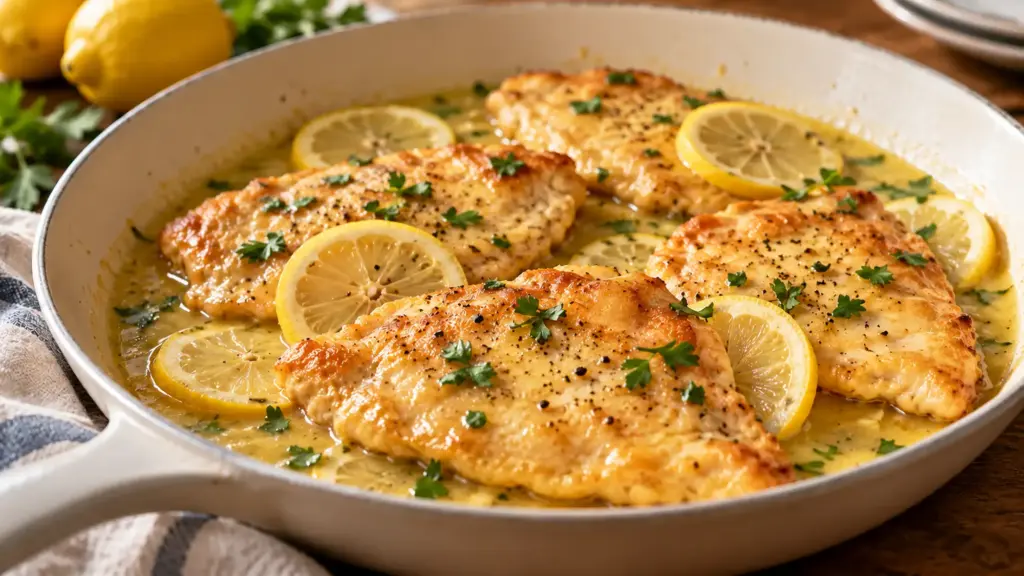
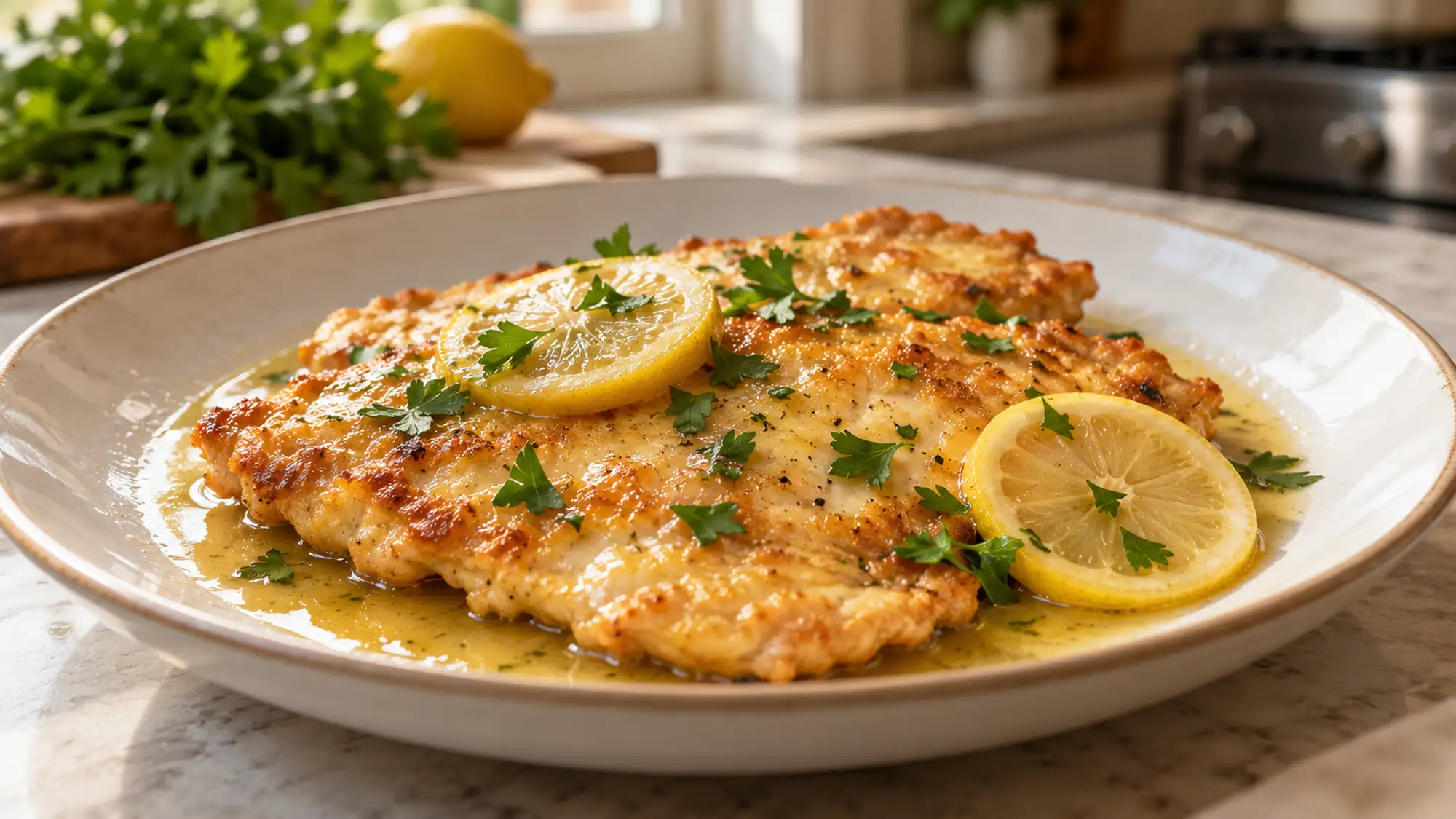
A golden cutlet does not always need breadcrumbs. Chicken francese gets its delicate coating from flour followed by beaten egg, then meets a lemon-butter sauce that softens the edges without hiding the chicken. It is a useful change when you want something crisp-edged but not heavily breaded.
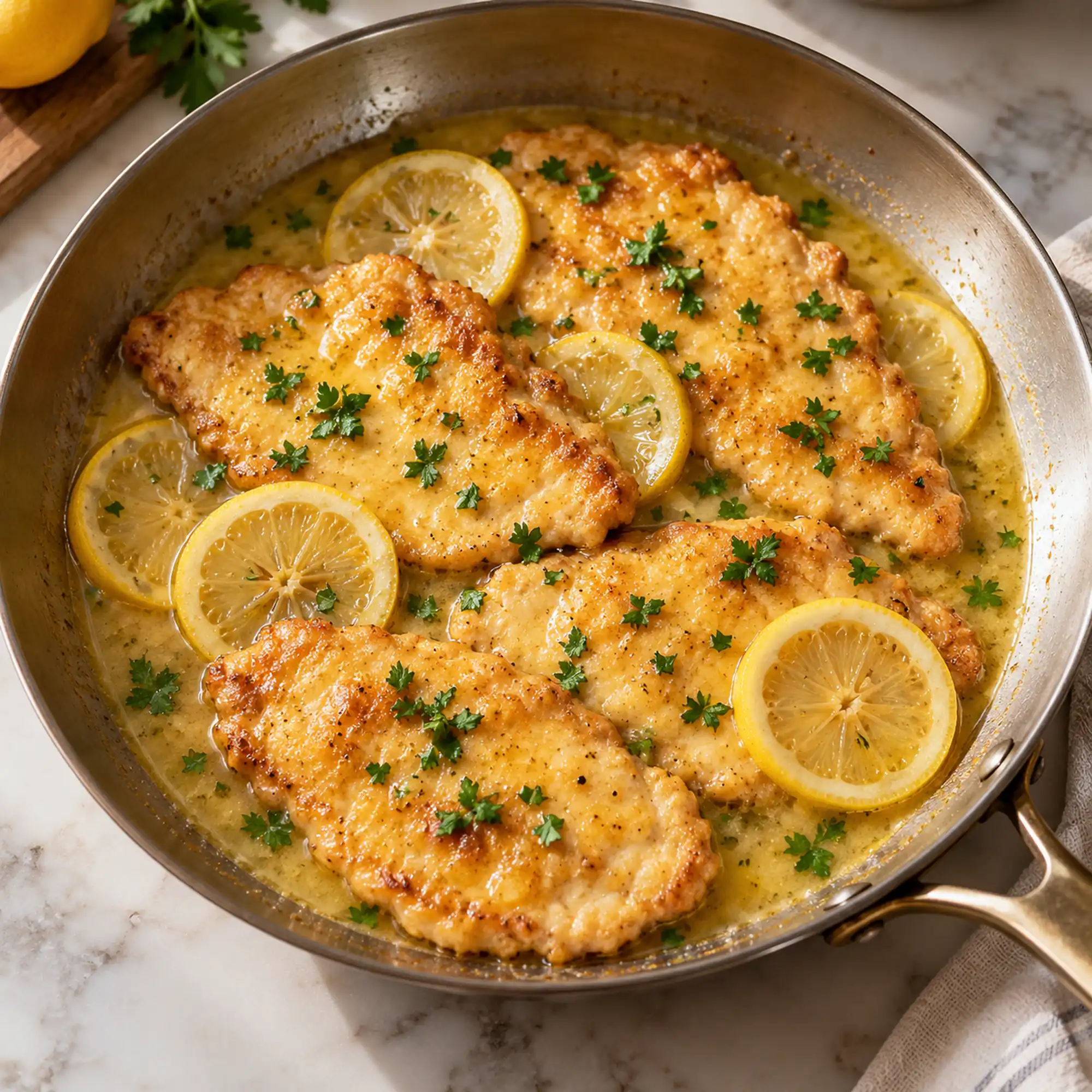
This chicken francese uses thin breast cutlets, a light egg coating and a reduced wine-stock sauce. Keep the batches small and reserve clean flour for the sauce before any flour touches raw poultry.
The method follows Sip and Feast’s updated version, including shallot. I like the lemon to brighten the sauce rather than dominate it; tasting a bite of chicken with the sauce is more useful than tasting the liquid alone.
Serving Chicken Francese
Move the cutlets onto warm plates and spoon the sauce around them just before serving. The egg coating naturally softens once it sits in liquid, so this is not a dish to judge by the lasting crunch of a breaded schnitzel. Its appeal is the tender coating and bright, buttery finish.
One plain side is usually enough. Rice or potatoes make sense when you want something to catch the sauce, while a green vegetable adds a different texture. Avoid adding several creamy accompaniments simply because the chicken looks like a restaurant-style centerpiece.
- For a simple base: plain rice keeps the lemon sauce in focus.
- For vegetables: green beans offer a clean contrast.
- For the table: set out lemon wedges only if people want extra acidity.
| Serving choice | What it adds | Useful detail |
|---|---|---|
| Plain rice | A mild base for sauce | Serve a modest scoop |
| Green vegetables | Texture and color | Keep dressing simple |
| Warm plates | Helps thin cutlets stay inviting | Sauce at the last moment |
Serve promptly, and expect a tender egg coating rather than a thick crunchy crust.
Chicken Francese Variations
Thin, even cutlets are more important than an exact number of pieces. If some are much thicker, they will need longer in the pan while the others wait. Pound carefully and keep the raw chicken on its own board, away from ready-to-eat vegetables or garnishes.
I would adjust the lemon after the stock has reduced, not before. Reduction concentrates both acidity and salt, so an early taste can be misleading. Add a little more juice only after you know what the finished sauce tastes like with the cutlet.
- No wine: the source permits omission; use stock and adjust lemon at the end.
- Less richness: reduce butter modestly and expect a thinner, less glossy finish.
- Different herbs: parsley keeps the flavor light; strong herbs change the character.
- A thicker sauce: use the reserved clean flour, never a contaminated dredging bath.
- A smaller skillet: work in extra batches instead of squeezing every cutlet into one pan.
Keep the cutlets even and the coating light; make final flavor adjustments after the sauce reduces.
Nutrition and Safe Cooking
Chicken supplies protein, but butter, egg and measured cooking oil also belong in the picture. This is not a low-fat recipe just because the coating contains no breadcrumbs. The four-serving estimate is a planning tool, and optional rice or potatoes are counted separately.
Coating is difficult to measure precisely because some egg and flour remain in their dishes. The estimate assumes half the egg bath and a measured amount of flour are retained, while all oil and butter are counted conservatively. Your actual plate may contain a different amount of sauce.
- Cook through: use the 165°F poultry temperature, not just a golden surface.
- Separate clean flour: reserve the sauce portion before dredging raw chicken.
- Discard raw coating: unused egg and flour that touched poultry should not be reused as ready-to-eat ingredients.
- Handle leftovers promptly: cool in shallow containers and reheat thoroughly.
An attractive coating is not a doneness test; temperature and clean handling still matter.
Bottom Line
Chicken francese works through a few small contrasts: golden egg, tender chicken and a sauce that is rich but bright. Keep the coating thin, give each batch enough space and finish the seasoning with the complete bite in mind. A plain side and warm plates are all the extra ceremony it needs.
A light coating and a carefully balanced lemon sauce make the dish feel generous without unnecessary extras.
Chicken Francese Recipe

Ingredients
- 680 g thin chicken breast cutlets
- 4 large eggs beaten; about half the 200 g bath estimated retained
- 65 g all-purpose flour reserve 10 g clean for sauce; estimate 30 g retained from dredging
- 15 g fresh parsley chopped, divided
- 56 g unsalted butter divided
- 60 ml olive oil measured total for batches
- 40 g shallot minced
- 120 ml dry white wine
- 30 ml lemon juice
- 360 ml unsalted chicken stock
- 1 lemon thin slices, optional to eat
- 4 g fine salt divided
- 1 g ground black pepper
Equipment
- 1 Large nonstick skillet
- 1 Shallow bowls
- 1 Instant-read thermometer
Instructions
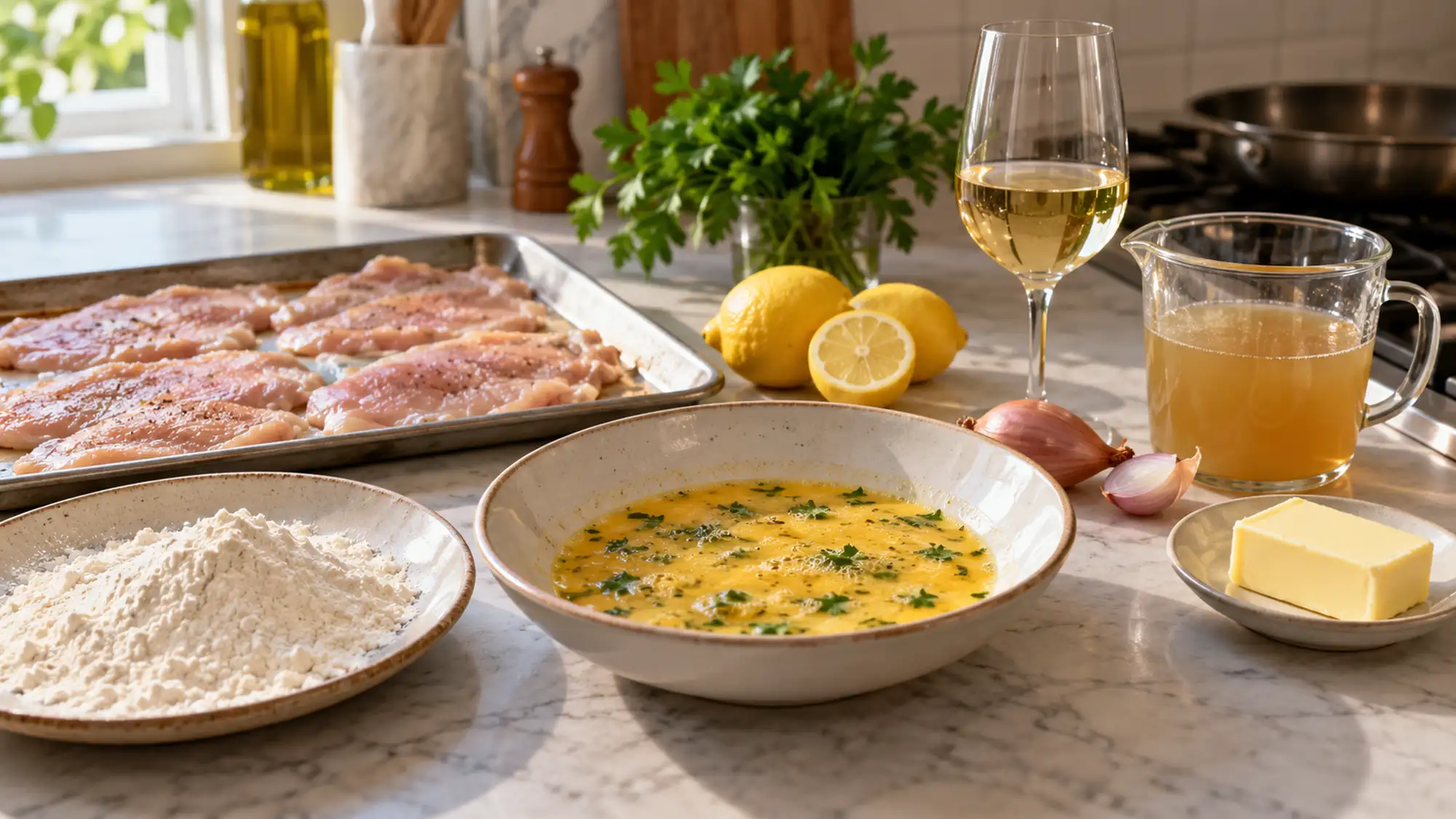
- Pat chicken dry and season with half the salt and pepper. Reserve 10 g flour in a clean dish for the sauce before handling raw poultry. Put the remaining flour in a shallow plate; beat eggs with half the parsley in another bowl.
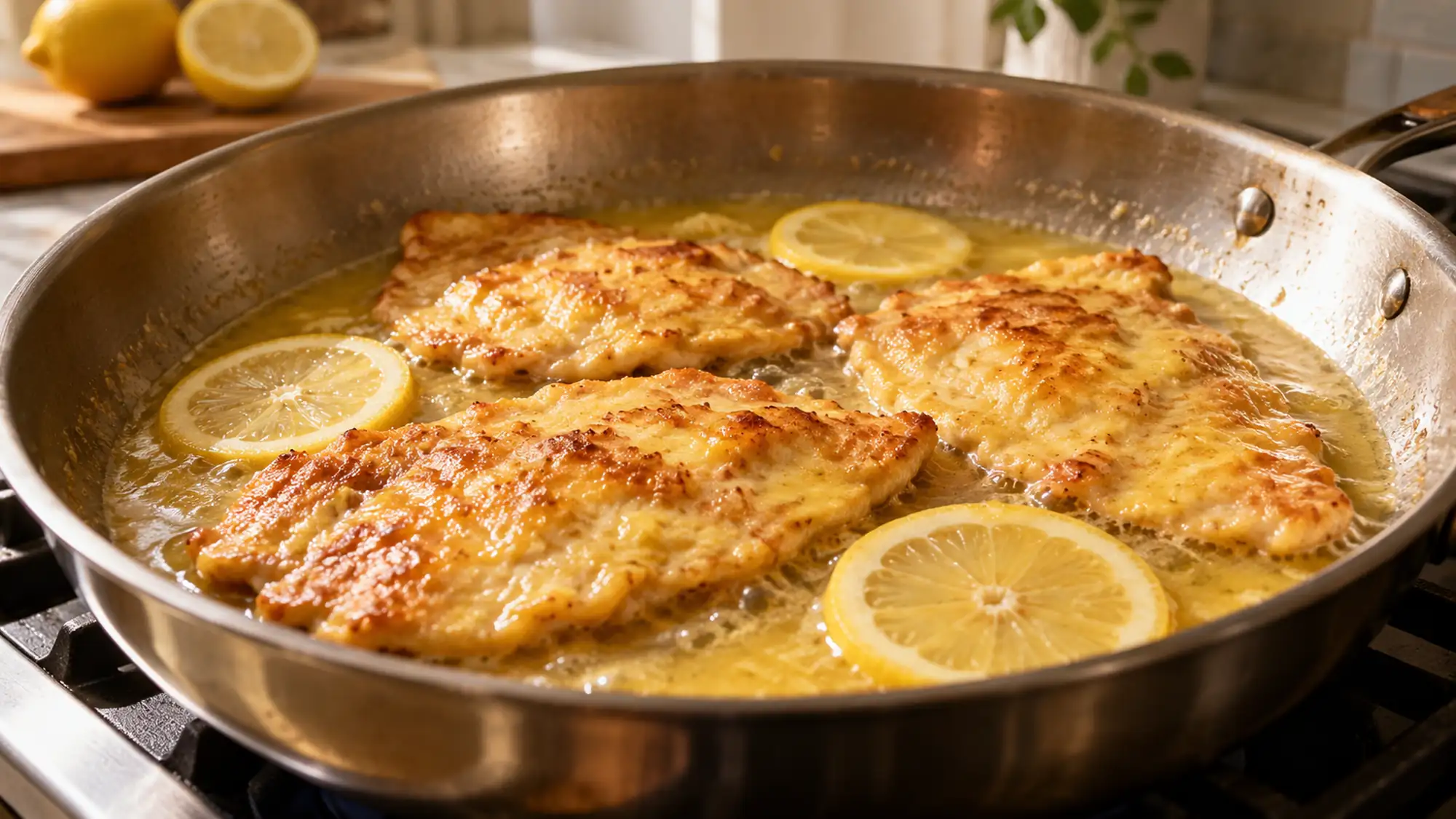
- Coat cutlets lightly with flour, then egg, letting excess drip off. Heat a portion of the measured oil with 14 g butter over medium heat. Cook in batches until golden on both sides and the center reaches 165°F (74°C), adding measured oil as needed. Move to a clean plate; discard unused raw coating.
- Soften shallot in the pan. Add wine and stock, scraping up browned juices; simmer until reduced roughly by half. Mix the reserved clean flour with the remaining 42 g butter, then whisk small pieces into the sauce and simmer 2–3 minutes.
- Add lemon slices and juice, then taste before adding the remaining salt. Return cutlets briefly to coat and warm. Scatter remaining parsley and serve. Wine reduction does not guarantee complete alcohol removal.
Nutrition
Video
Notes
Tried this recipe?
Let us know how it turned out!Hi, I’m Laura, the voice behind Tastiva. I’ve always believed that eating well should feel enjoyable, comforting, and realistic—not like another complicated rule to follow. I love creating recipes that fit into everyday life, sharing simple nutrition ideas, and finding small ways to make meals feel a little better without losing the pleasure of good food.