
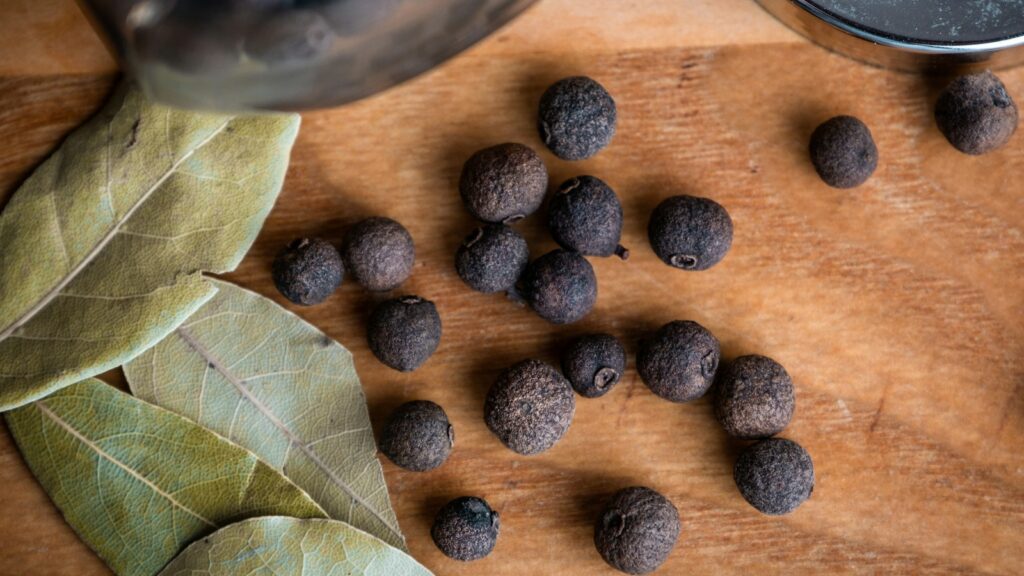
The name sounds like a ready-made spice blend, but allspice is a single spice made from the dried berries of Pimenta dioica. Its warm aroma brings to mind cloves, cinnamon, and nutmeg without being a mixture of those ingredients. If a recipe says “all spice” as two words, it will usually mean this same ingredient, though checking the recipe context is sensible.
Think of allspice as its own flavor: use the form the recipe needs, then give that warm aroma room to work.
What allspice is and how to recognize it
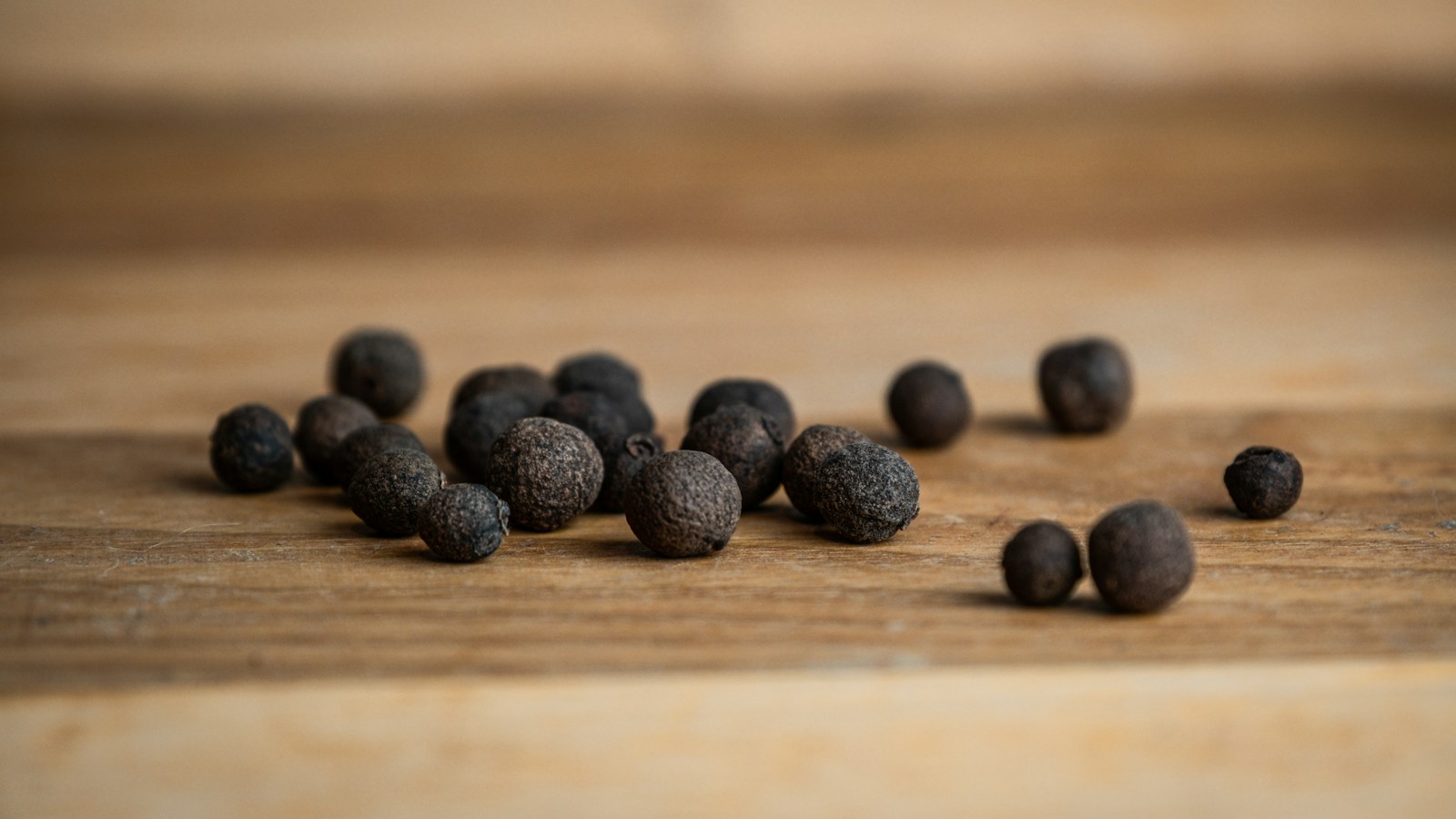
Whole allspice looks like small brown berries, while ground allspice is a brown powder. The flavor is warm and aromatic, with a peppery quality as well as notes people associate with sweet baking spices. That combination helps explain why it works in savory preparations as well as cakes, cookies, and fruit dishes.
McCormick describes its ground product as milled whole allspice berries, with a flavor reminiscent of cinnamon, nutmeg, and cloves. Those comparisons describe the experience; they aren't an ingredient list. A jar of pure allspice shouldn't be confused with mixed spice, pumpkin pie spice, or a general-purpose seasoning blend.
| Name on the jar | What it generally means | What to check |
|---|---|---|
| Whole allspice | Dried berries | Whether the recipe expects them removed after cooking |
| Ground allspice | The berries milled into powder | The quantity specified for ground spice |
| Mixed spice | A blend whose ingredients vary | The full blend, not just the familiar aroma |
| Pumpkin pie spice | Another blend | Whether allspice is included and what else is present |
| All-purpose seasoning | A broad seasoning mixture | Salt, herbs, spices, and other ingredients |
I would label a decanted jar with the full name and form. “Brown spice” may feel obvious on the day you fill it, but that confidence fades when cinnamon, cloves, and allspice share a shelf. A little clarity now saves a surprising cookie later.
Whole berries and ground spice do different jobs
Whole berries are useful when you want to infuse a liquid and remove the solid spice afterward. Ground allspice distributes throughout a mixture, which can suit a dough, a rub, or a sauce. They come from the same ingredient, but their physical forms change how you measure and use them.
Follow the recipe's specified form before converting a quantity. A spoonful of whole berries includes spaces between the pieces; a spoonful of powder doesn't. The strength of a particular jar can also vary with age and storage, so an improvised conversion may change the balance more than you expect.
- Put whole berries in a spice bag or another easily removable arrangement when the recipe expects a smooth finished liquid.
- Count or otherwise track loose whole spices so they can be removed before serving when appropriate.
- Measure ground allspice with the spoon size the recipe specifies, rather than adding it from the jar by eye on your first attempt.
- If grinding berries yourself, use clean equipment suitable for dry spices and prepare the amount you need.
- Keep ground spice away from steam as you measure, so moisture doesn't enter the jar.
Our ground coriander guide explains another whole-versus-ground decision. The flavors are entirely different, but the measuring issue is similar: a change in form deserves a check before it becomes a change in the whole dish.
Use its warmth in savory food as well as sweets
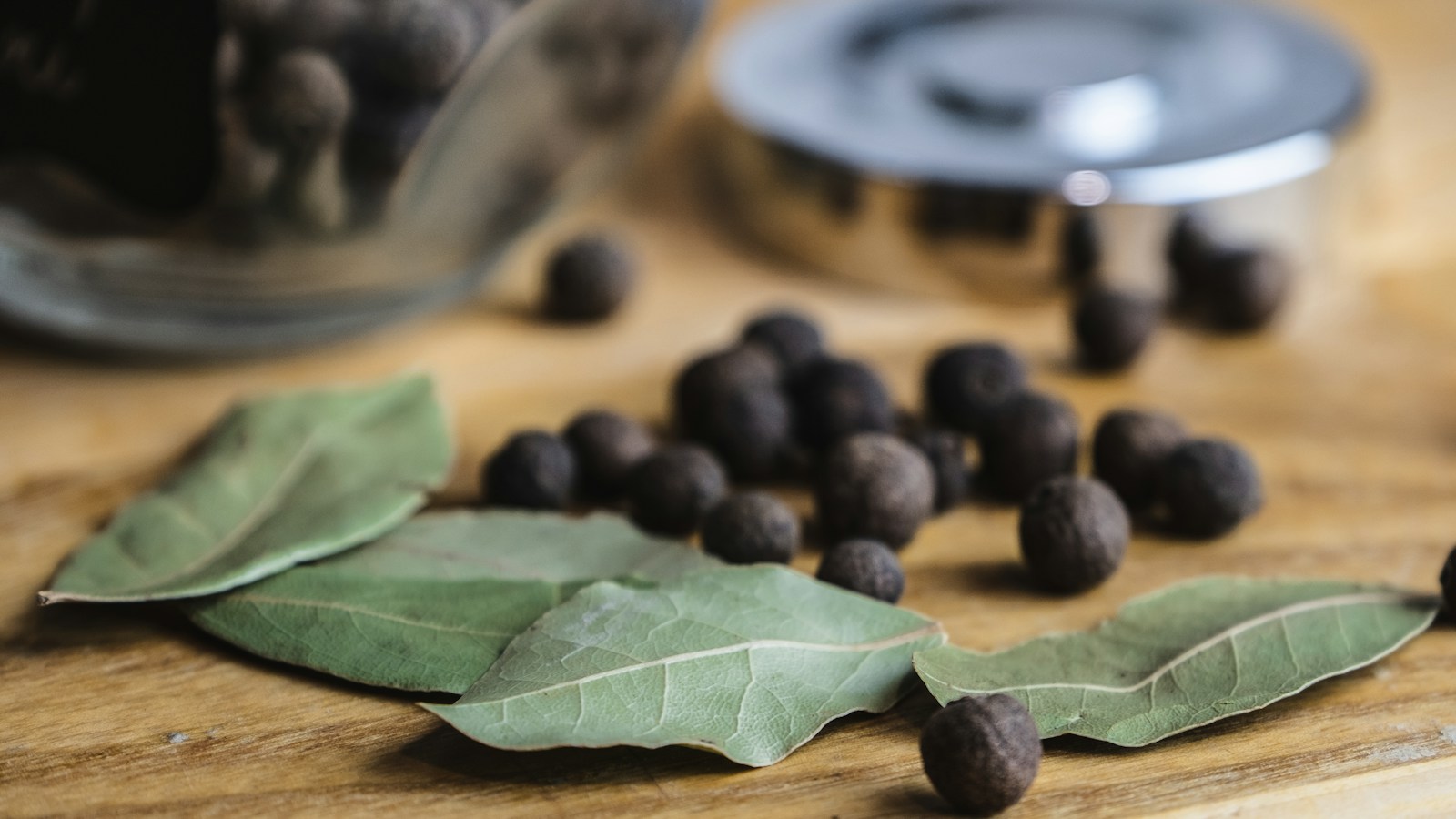
Allspice has an established place in Caribbean cooking, including Jamaican jerk seasoning, and in other savory traditions. It's also familiar in spiced baking. Those uses are a reminder that a warm aroma isn't automatically a signal to add sugar; the other ingredients determine where the flavor lands.
For a first savory use, choose a recipe that already includes allspice rather than trying to rebuild a complex traditional seasoning blend from one ingredient. Jerk seasoning, for example, isn't simply allspice sprinkled on meat. Respect the full preparation and use allspice as the part the recipe intends it to play.
- In a stew or braise: Use the measured amount in the recipe and let it sit alongside the other aromatics.
- In a dry seasoning mixture: Combine it as directed, checking whether the mixture also includes salt before seasoning again.
- In baking: Choose ground allspice when the recipe needs an even distribution through the batter or dough.
- With fruit: Follow a suitable recipe for a compote or baked fruit, then decide whether you prefer a more restrained spice level next time.
- In pickling: Follow a tested preservation recipe. Adjusting a flavoring isn't permission to change acid proportions or processing requirements.
I would start with the amount a reliable recipe gives and make a note afterward. With an aromatic spice, the difference between pleasantly warm and overpowering can be smaller than a casual shake suggests. That note makes your next batch a decision rather than another guess.
What to do when the jar is missing
A blend of familiar warm spices may approximate part of allspice's flavor, but it won't become the same ingredient. Use a tested substitute from the recipe author when possible, especially if allspice is central to the dish. Don't assume pumpkin pie spice or mixed spice can replace it without adding other flavors.
If the spice is a minor accent in a flexible dish, omitting it may be simpler than adding a strongly flavored substitute. If you're making a recipe specifically chosen for its allspice character, finding the correct jar is worth the pause. The best option depends on how much of the dish's identity rests on that flavor.
Store the spice tightly closed away from heat, light, and moisture, and follow its date and storage guidance. Check the aroma before starting a recipe, without treating smell as a food safety test for a damaged or contaminated product. Buy a quantity you use regularly; a small jar that earns its space is more useful than a large one purchased only for its unit price.
Sources
- McCormick: Ground Allspice, Ingredient and Flavor Information
- McCormick Culinary: Ground Allspice Uses
- Kew Science: Pimenta dioica Taxonomy and Distribution

Hi, I’m Laura, the voice behind Tastiva. I’ve always believed that eating well should feel enjoyable, comforting, and realistic—not like another complicated rule to follow. I love creating recipes that fit into everyday life, sharing simple nutrition ideas, and finding small ways to make meals feel a little better without losing the pleasure of good food.