
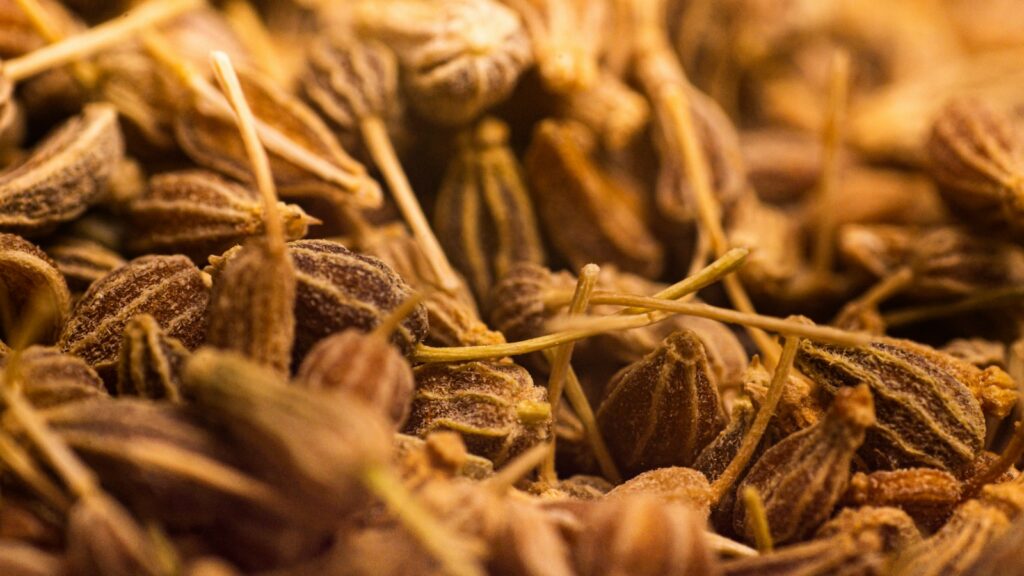
A cookie recipe calls for anise seed, but the jar at the back of the cupboard holds dark, star-shaped pods. Pause before tipping them in: anise seed and star anise come from different plants. Anise seed is the small, aromatic spice from Pimpinella anisum, with a sweet, licorice-like flavor that works beautifully in the right amount.
Match the spice's identity and form to the recipe first; a familiar aroma doesn't make two ingredients interchangeable.
What anise seed looks and tastes like
Anise, also called aniseed, is an herb in the parsley family. Its small, ridged seeds are quite unlike the woody stars sold as star anise. North Carolina Extension describes its fragrance as sweet and similar to licorice, and lists uses in breads, cookies, pastries, fruit dishes, and other foods.
That flavor can become the main character very quickly. If you're unfamiliar with it, start with a recipe that deliberately features anise rather than sprinkling it into an entire pot on impulse. I would choose a small batch of a familiar baked good first, so you can judge whether you enjoy the flavor in that setting.
| Ingredient | What to look for | Why the distinction matters |
|---|---|---|
| Anise seed | Small, ridged seeds labeled anise or aniseed | The ingredient this guide covers |
| Ground anise | Powder made from anise seed | Distributes differently from whole seeds |
| Star anise | A woody, star-shaped spice | A different plant and a different form |
| Fennel seed | Usually larger, elongated seeds | Similar flavor territory, but not the same spice |
| Anise extract | A bottled, concentrated flavoring | Requires its own recipe quantity |
Keep the label if you transfer spices into matching jars. Attractive jars are lovely until three brown or greenish ingredients look nearly identical. A name and purchase date make the next baking project much calmer than trying to identify everything by appearance alone.
Whole, crushed, ground, or extract: choose deliberately
Whole seeds leave small pieces throughout a dough or filling. Crushing or grinding changes how evenly those pieces spread and how noticeable their texture is. Use the form requested in a recipe, especially when making a delicate cookie where biting into a whole seed may be a different experience from a smooth anise flavor.
Ground anise and anise extract aren't interchangeable spoon for spoon. Extract strength and formulation vary, and adding extra liquid can matter in some doughs or icings. Look for a tested conversion from the recipe author or product manufacturer instead of borrowing a ratio meant for another spice.
- Whole seeds: Useful when the recipe intentionally includes small aromatic pieces, such as in certain breads or cookies.
- Crushed seeds: A middle ground when a recipe calls for a little texture with more distribution through the mixture.
- Ground seed: Convenient when a smooth-looking spice mixture is important; measure as ground if that's what the recipe specifies.
- Extract: Follow the recipe and bottle guidance. A few drops and a spoonful of whole seeds don't represent the same concentration.
Our ground coriander guide explores another seed-versus-powder decision. The flavors are different, but the practical lesson carries over: identify the form before measuring, rather than assuming every spoonful behaves alike.
Where its sweet aroma makes sense
Anise seed is familiar in several baking traditions, including biscotti and other anise-flavored cookies. McCormick also suggests it for breads, confections, pickling mixtures, and brines. Those uses offer a starting point, not permission to replace a preservation recipe's measured ingredients or processing instructions at random.
For ordinary cooking, think about the balance of the whole dish. Citrus zest, warm spices, or a lightly sweet base may help anise feel integrated instead of isolated. Use a recipe that specifies amounts when you're learning; after that, you can decide whether you prefer it as a quiet background note or the dominant flavor.
- Choose a cookie or bread recipe that names anise seed explicitly if you want to understand its characteristic taste.
- If adapting a fresh fruit dish, test a little seasoning on a small separate portion before changing the entire bowl.
- Keep any whole spices used for infusing a liquid easy to strain out when the recipe expects a smooth finish.
- Write down the amount you used when experimenting, so a result you enjoy is repeatable.
I wouldn't use a strong anise flavor to rescue a spice jar that has barely any aroma left. Adding more stale spice can add texture without giving you the result you wanted. A smaller, fresher jar is often the more useful choice for an ingredient used occasionally.
Substitutions, storage, and a sensible boundary
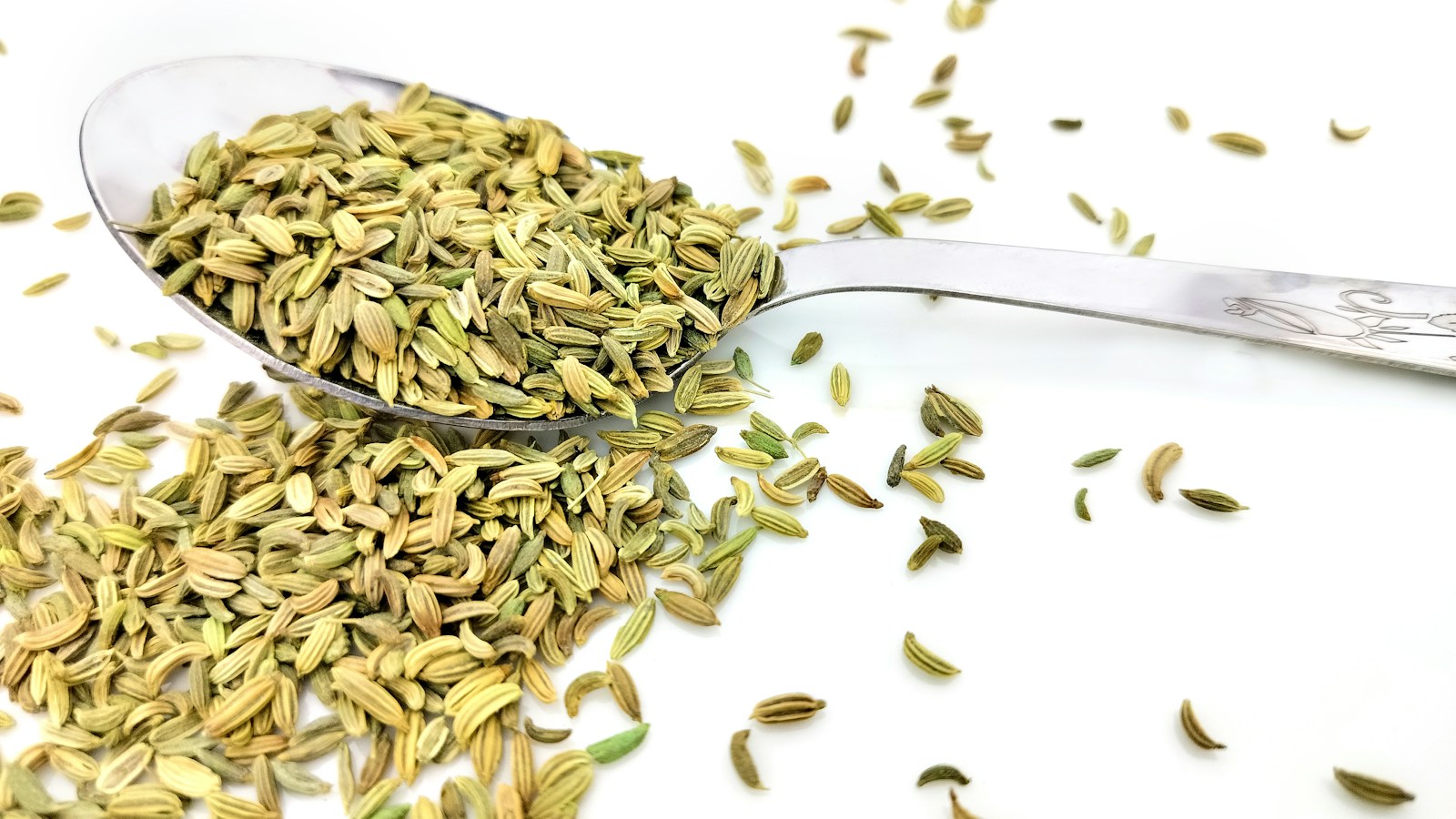
Fennel seed may move a dish in a similar licorice-like direction, but it changes the flavor; star anise changes both flavor and form. If anise defines the recipe, finding the correct spice is the most dependable option. If it's a minor accent, consult the recipe's substitution notes or consider omitting it when the dish allows.
Store culinary anise in a tightly closed container away from heat, moisture, and direct light. Measure into a spoon away from a steaming pot rather than shaking the jar over it. Buy the quantity you use and check the product's date and storage advice instead of assuming every whole spice keeps its best aroma indefinitely.
This is a guide to anise as a food ingredient, not to essential oils or concentrated remedies. Don't substitute an essential oil for a cooking extract, and don't identify wild plants by a flavor description. Buy a labeled culinary product; that leaves your attention free for the part that should be enjoyable, deciding what to bake.
Sources
- North Carolina Extension: Pimpinella anisum
- North Carolina Extension: Fennel
- McCormick: Culinary Anise Seed

Hi, I’m Laura, the voice behind Tastiva. I’ve always believed that eating well should feel enjoyable, comforting, and realistic—not like another complicated rule to follow. I love creating recipes that fit into everyday life, sharing simple nutrition ideas, and finding small ways to make meals feel a little better without losing the pleasure of good food.