
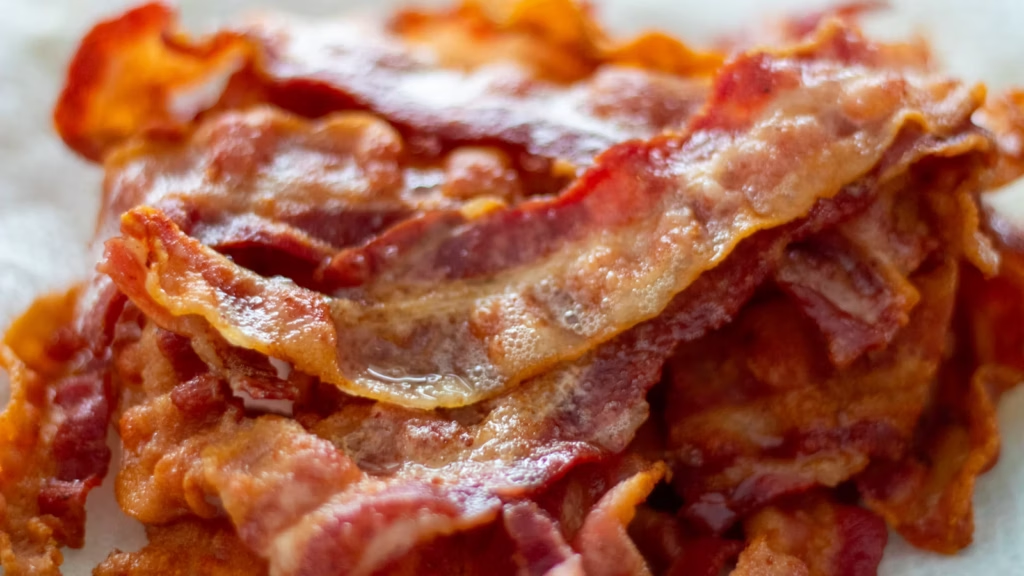
A package labeled bacon thick cut promises a meatier bite, but those broad ribbons need more time for the fat to render than standard slices. For the most even result, I’d arrange them on a lined sheet pan, start in a cold oven, set it to 400°F (205°C), and begin checking at 18 minutes; most batches land between 20 and 30 minutes.
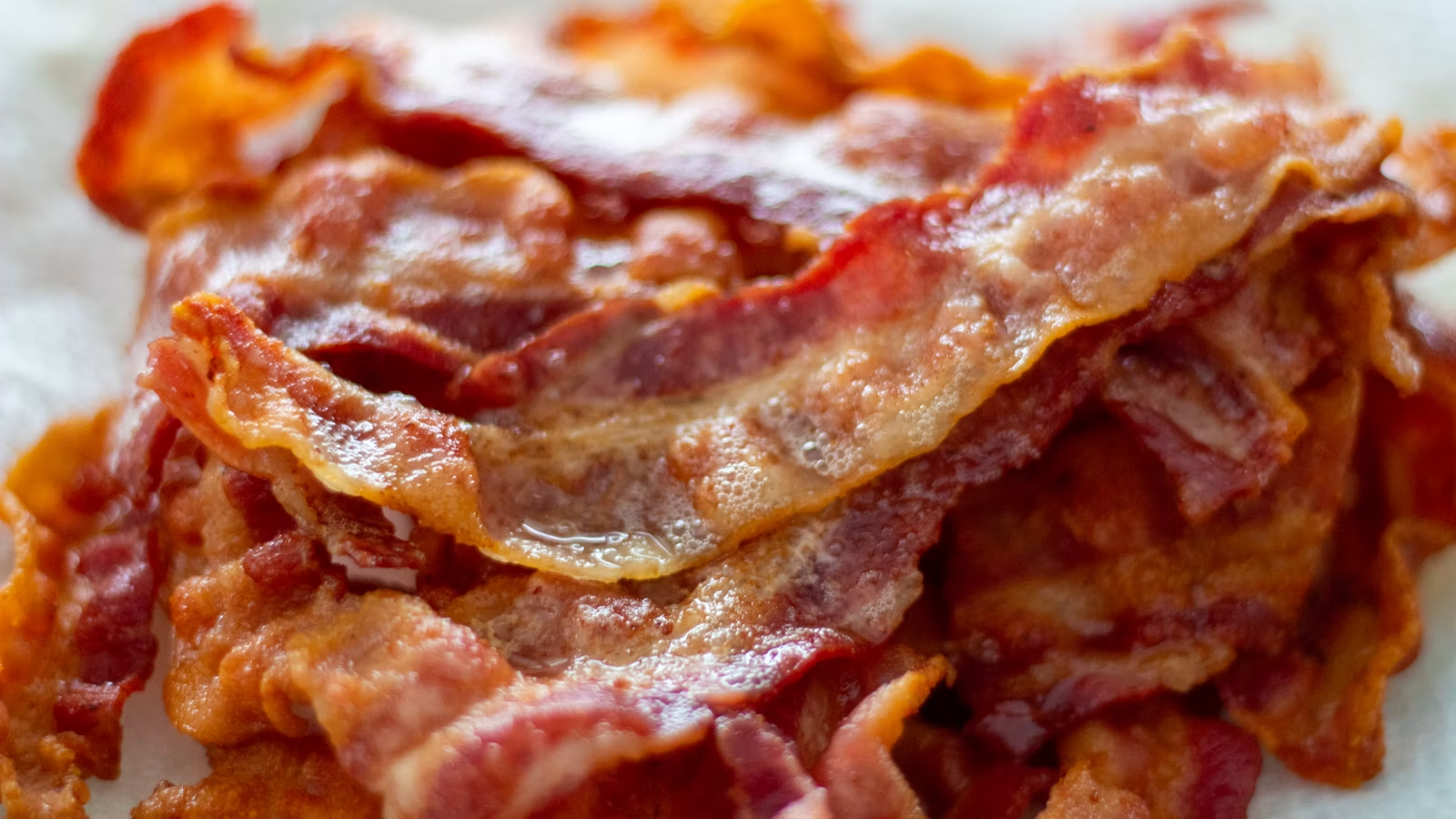
Thick-cut bacon rewards patience: give the fat time to render, then judge doneness by the browned edges and texture you enjoy.
What thick-cut bacon changes
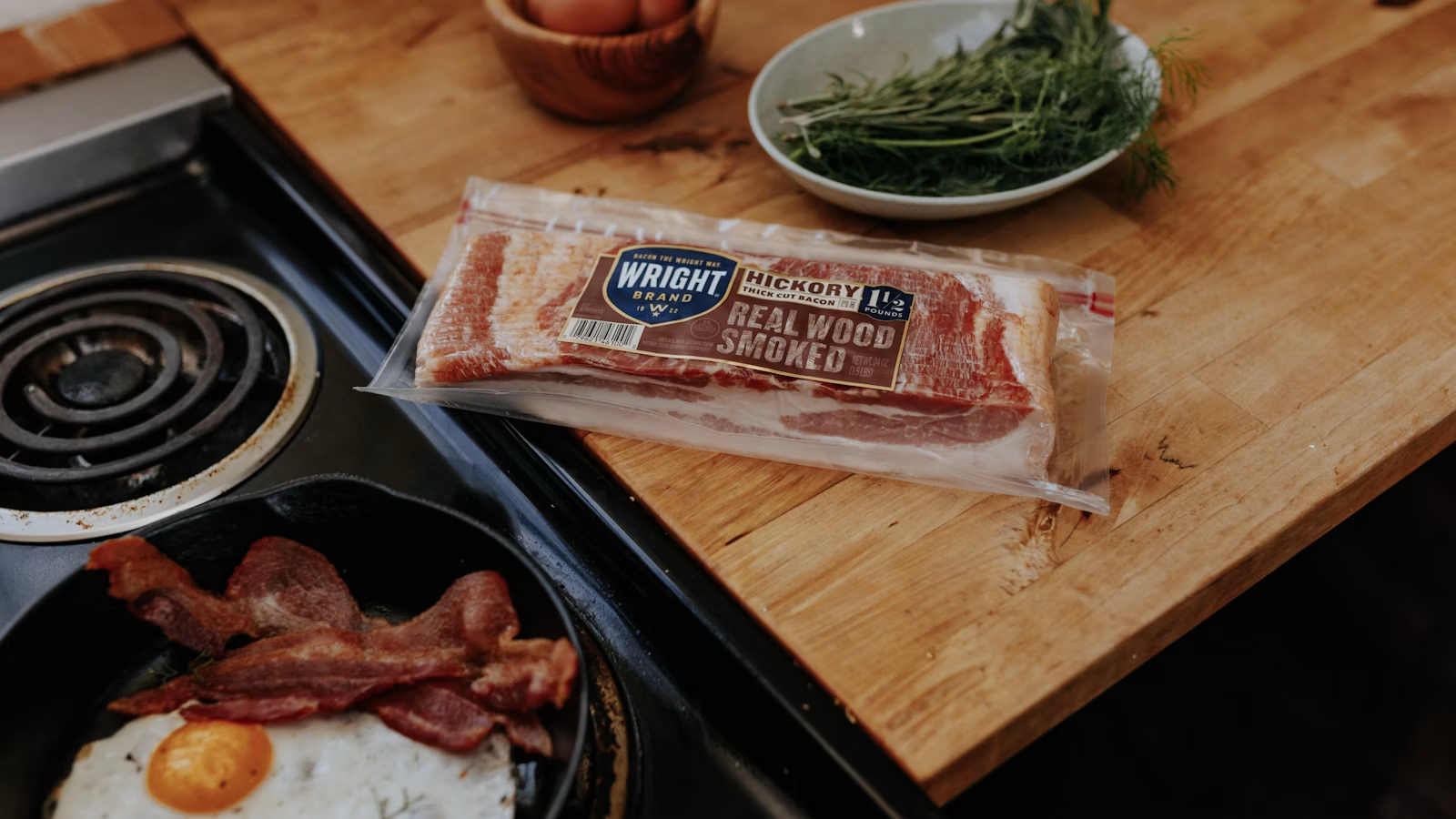
Thicker slices hold on to more chew while their edges crisp, which is exactly why I’d choose them for breakfast plates, burgers, and sturdy sandwiches. The trade-off is timing: a lean edge may brown before a wide ribbon of fat looks fully rendered, so the clock can only be a starting point.
- For a tender-chewy center: remove the slices when the fat looks translucent and the edges are browned but still flexible.
- For crisp bacon: let the strips deepen to an even mahogany color, then remember they will firm as they cool.
- For crumbles: cook a little further than you would for serving whole so the cooled strips break cleanly.
Packages are not standardized, and “thick” can describe noticeably different cuts. I’d buy by appearance when possible: even slices with a balanced pattern of lean and fat cook more predictably than a package with wispy ends and heavy fatty patches.
How to cook bacon thick cut in the oven
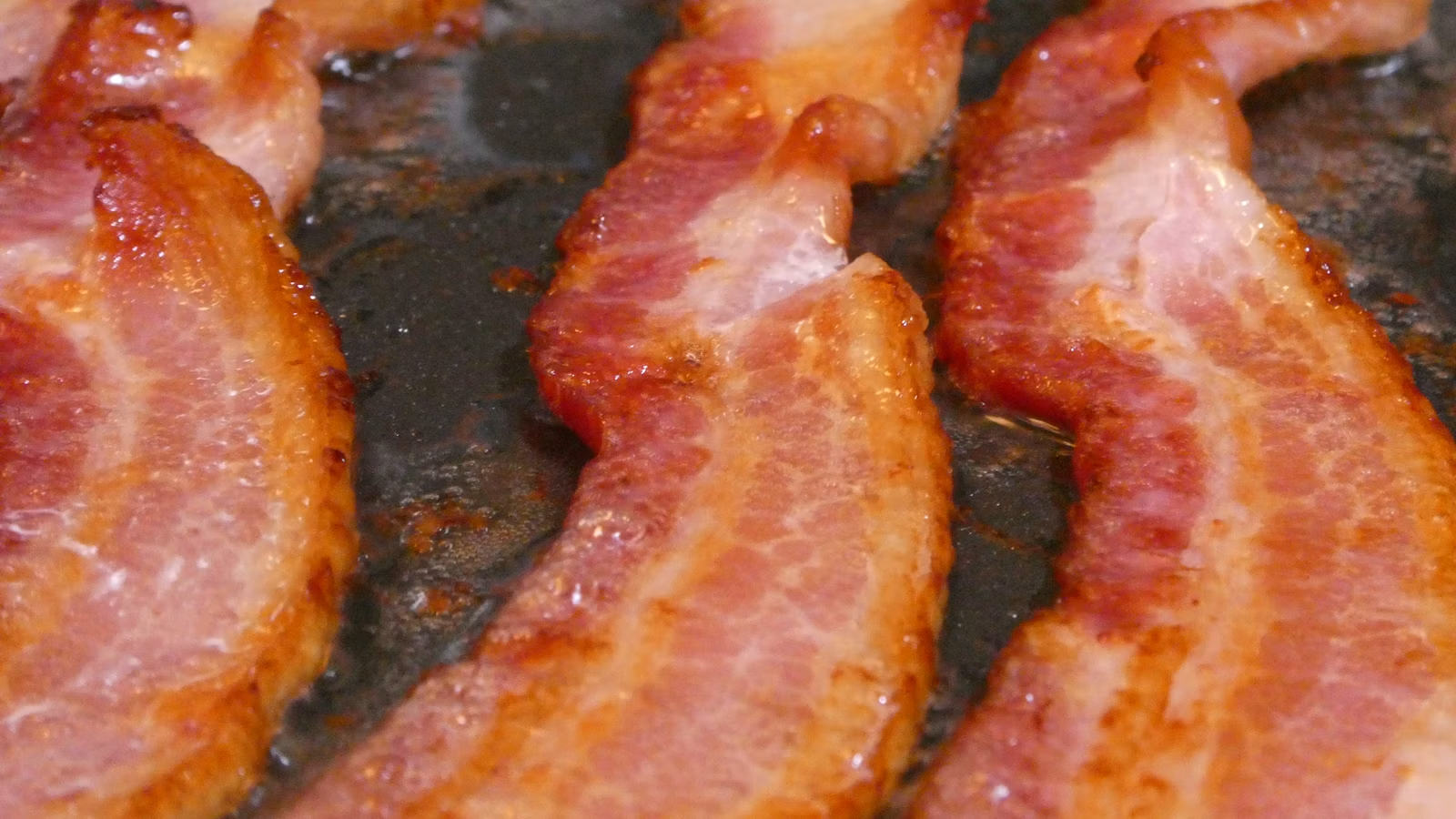
A cold start lets the bacon warm gradually while the oven comes to temperature. That gives the fat a head start on rendering before the lean sections race toward dark brown. A rack is optional: cooking directly on parchment or foil gives richer browning from contact with the rendered fat, while a rack can produce a drier surface and creates one more thing to scrub.
- Line a rimmed sheet pan and arrange the slices in one layer without overlap.
- Place the pan in a cold oven, then set the heat to 400°F (205°C).
- Check at 18 minutes. Rotate the pan if one side browns faster, and remove finished slices individually.
- Drain on paper towels and rest for 3 to 5 minutes before deciding whether the bacon needs more crisping.
If you need only a few pieces, the skillet still makes sense. Start the strips in a cool pan over medium-low heat, turn them periodically, and pour off excess fat carefully if it begins to pool. For an even quicker option, my microwave bacon guide is useful when speed matters more than batch size.
Choose your texture and fix common problems
Thick bacon rarely fails in a dramatic way; it simply moves from pale and floppy to burnished and crisp at different speeds across the pan. Stay nearby near the end. Bacon has a mischievous little window between “almost there” and “who invited the smoke alarm?”
- Rubbery fat: lower the heat to 375°F (190°C) and give the slices more time, especially if they are exceptionally thick.
- Burned lean edges: move finished pieces off the pan early rather than waiting for every slice to match.
- Uneven browning: rotate the pan and avoid overlapping curled ends.
- Soft after cooling: return the strips to the oven for 2 to 3 minutes, watching closely.
- Lots of rendered fat: let it cool slightly, strain it into a heat-safe container, and refrigerate it for cooking savory dishes.
Sweetened or maple bacon can brown faster because of the added sugar. In that case, I’d begin checking several minutes early and follow the package directions when they differ from this general method.
Bacon thick cut recipe
The card below uses one sheet pan and a cold-oven start. It is deliberately simple because the useful decisions are spacing, heat, and the visual cue for your preferred texture—not a parade of extra ingredients.
Bacon Thick Cut Recipe

Ingredients
- 12 slices thick-cut bacon about 1 to 1 1/2 pounds, depending on the brand
Equipment
- 1 Rimmed sheet pan
- 1 sheet of parchment paper or foil
- 1 pair of tongs
Instructions
- Line a rimmed sheet pan with parchment paper or foil. Lay the bacon in a single layer without overlapping; use two pans if needed.
- Place the pan on the center rack of a cold oven. Set the oven to 400°F (205°C).
- Bake for 20 to 30 minutes. Begin checking at 18 minutes, rotate the pan if your oven browns unevenly, and remove individual slices as they become deep golden with crisp edges.
- Transfer the bacon to a paper towel-lined plate with tongs. Rest for 3 to 5 minutes; it will become crisper as it cools.
Nutrition
Notes
- Extra-thick slices may need several additional minutes. Color and rendered fat are better guides than the clock.
- Do not partially cook raw bacon and refrigerate it to finish later; USDA advises cooking it completely first.
- Nutrition is an estimate for two slices based on a representative thick-cut bacon label. Your package label is the best source for your brand.
Tried this recipe?
Let us know how it turned out!Store, reheat, and use every strip
USDA guidance says raw bacon should be refrigerated at 40°F (4°C) or below and used within seven days, while home-cooked leftover bacon keeps for four to five days in the refrigerator. Do not partially cook raw bacon and chill it to finish later; cook it completely before storing.
- Refrigerate: cool cooked strips, place them in a covered container, and chill promptly.
- Reheat: warm them briefly in a skillet, a 350°F (175°C) oven, or the microwave until hot; short bursts protect the texture.
- Freeze: separate cooled strips with parchment so you can take out only what you need.
- Use leftovers: tuck them into a BLT, crumble them over soup or salad, or fold them into eggs.
Bacon is salty and energy-dense, so I treat it as a strong-flavored component rather than letting it crowd the plate. Two crisp slices beside eggs, vegetables, or whole-grain toast can bring plenty of smoky character without asking bacon to do all the nutritional work.
Sources
- USDA Food Safety and Inspection Service: Bacon and Food Safety
- Serious Eats: The Best Way to Cook Bacon
- Wright Brand: Hickory Smoked Thick-Cut Bacon directions and nutrition
Hi, I’m Laura, the voice behind Tastiva. I’ve always believed that eating well should feel enjoyable, comforting, and realistic—not like another complicated rule to follow. I love creating recipes that fit into everyday life, sharing simple nutrition ideas, and finding small ways to make meals feel a little better without losing the pleasure of good food.