
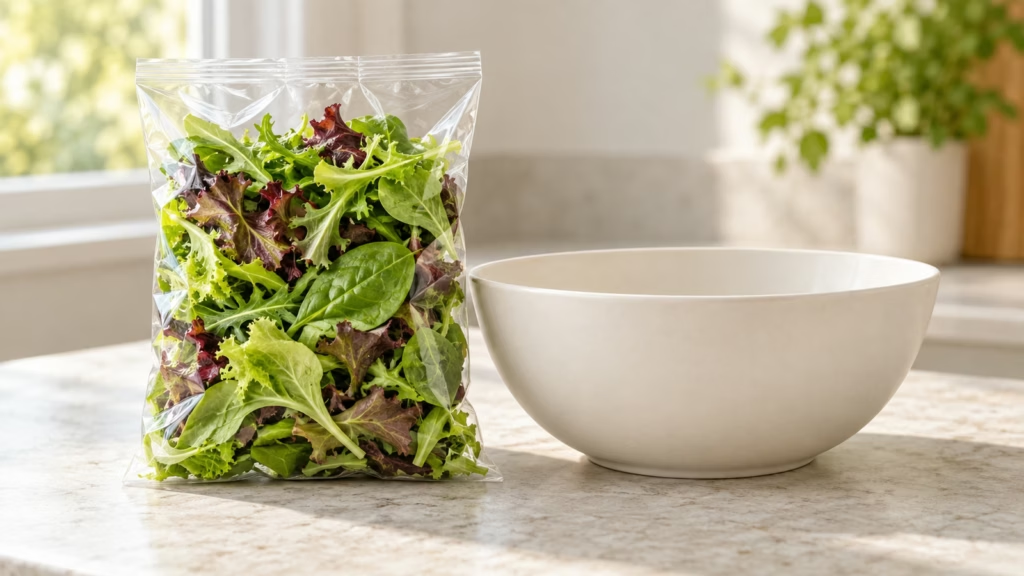
The salad is supposed to be the easy part of dinner, yet the bag leaves you hovering between the sink and the bowl. Should you wash bagged salad before serving it? If the package says prewashed or ready-to-eat, additional washing is unnecessary. Greens labeled wash before use, or without a washed designation, need rinsing before you prepare or eat them.
Let the package settle the washing question, then give the greens a clean route to the bowl.
Before you wash bagged salad, check the wording
Prewashed tells you that washing has already happened before packaging. Ready-to-eat indicates that the greens can be eaten without another preparation step. The FDA permits using produce with these labels without further washing; University of Minnesota Extension includes washed and triple washed in the same practical guidance.
| Package wording | What to do |
|---|---|
| Prewashed, washed, triple washed or ready-to-eat | Use without another rinse, with clean hands, a clean bowl and clean utensils. |
| Wash before use or wash before eating | Rinse the greens under running water before preparing or eating. |
| No clear washing statement | Treat as unwashed produce. Read the full package for any additional preparation instructions. |
I’d check those words rather than guess from the container. A clamshell of baby spinach, a bag of shredded cabbage and a chopped salad kit are all packaged produce, but packaging alone does not establish that they are ready to eat. A familiar brand name is no substitute for the instructions on this particular bag.
When the leaves need washing, keep the method simple
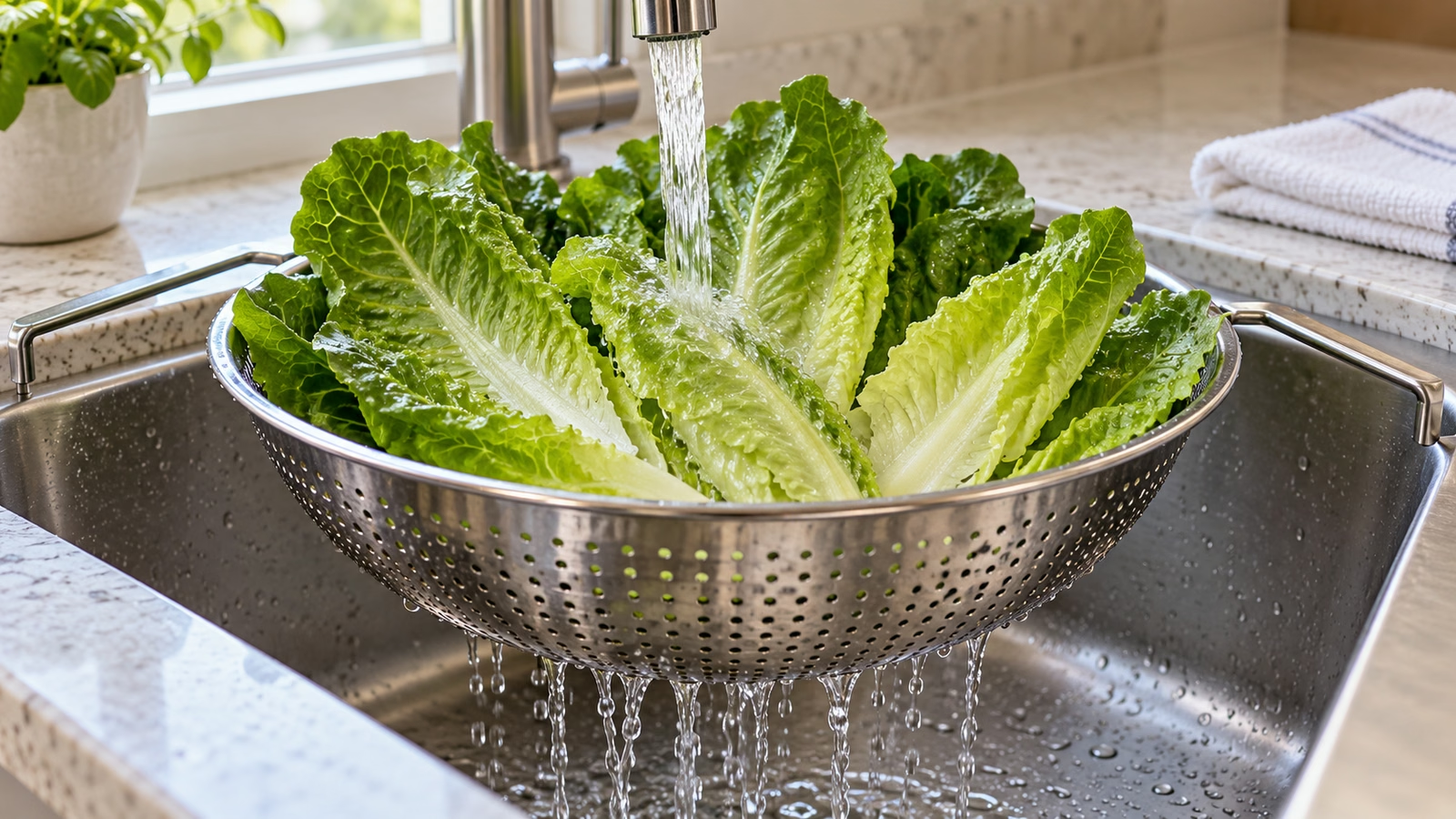
For greens that need washing, use cool running water rather than an improvised cleaning solution. USDA advises rinsing fresh produce under the tap and avoiding soap or detergent, which can leave residues you might ingest. Washing belongs before chopping or eating, even when the leaves look tidy.
- Prepare the area: wash your hands with soap and water for at least 20 seconds. Start with a clean sink, counter, colander and utensils.
- Separate the leaves: discard the outer leaves of a whole lettuce head and remove damaged portions. Open the folds so water can reach trapped dirt.
- Rinse under running water: handle the leaves gently. Do not pour household bleach, soap or detergent over food.
- Dry with clean material: use a clean cloth or paper towel. Keep the washed leaves off an unwashed counter or used cutting board.
Maryland Extension emphasizes separating leaves and rinsing their folds, a useful detail with crinkly greens. I’d take a little care with drying, too: leaving water pooled in the bowl can dilute the dressing. Drying is a finishing step, not a way to disinfect the salad.
Keep the clean bowl and the refrigerator in the plan
If you choose to rinse prewashed greens anyway, the FDA cautions against contact with dirty surfaces and utensils. Cross-contamination means germs move from one food or surface to another. Our guide to keeping raw foods apart explains the wider kitchen routine; for this salad, concentrate on what touches the leaves.
- Shop from the cold case: choose bagged or precut greens that are refrigerated or surrounded by ice. Keep them apart from raw meat, poultry and seafood in your shopping bags.
- Use a clean serving setup: a ready-to-eat label does not make a used chicken-prep board suitable for salad. Wash equipment and surfaces between those jobs.
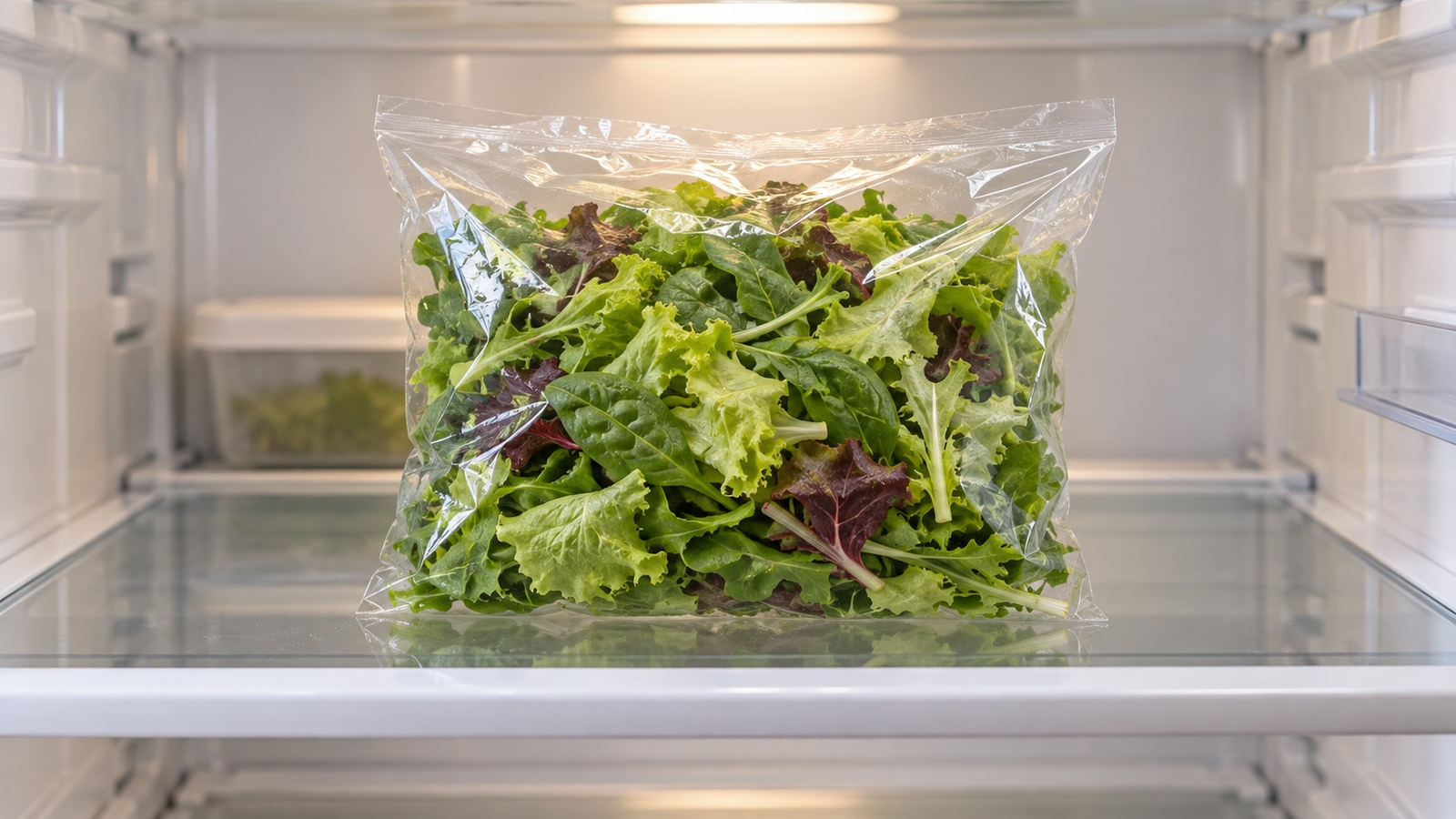
- Keep greens cold: refrigerate at 40°F (4°C) or below, and use an appliance thermometer to check the temperature. Follow the package’s storage and after-opening instructions.
- Limit time on the counter: refrigerate perishables within two hours, or within one hour when exposed to temperatures above 90°F (32°C). Take out the portion you need and return the rest promptly.
Those temperature and timing limits come from FoodSafety.gov’s home food-safety guidance. I’d buy a bag sized for meals I actually plan to make. A larger package is useful only when there is a realistic place for the remaining greens in the next few meals.
What another rinse cannot fix
Ready-to-eat does not mean sterile. Washing can reduce bacteria on produce, but it cannot eliminate them all. The ordinary washing instructions also do not override a recall, repair spoiled leaves or compensate for poor handling. These are separate decisions, even when everything happens at the same kitchen sink.
- A recalled product: do not eat it or try to rinse it back into use. Read the recall notice and compare the product name, package size, lot code and dates; follow its return or disposal instructions.
- A normal-looking leaf: appearance is not proof of safety. FoodSafety.gov explains that you cannot see, smell or taste illness-causing bacteria or viruses. Do not taste a suspect product to check it.
- Rotten greens: discard produce that looks rotten. Washing does not turn deteriorated leaves into a fresh ingredient.
- A vinegar or baking-soda soak: it is unnecessary for this routine. Minnesota Extension advises against soaking produce and notes that these additions can affect its flavor. Keep the vinegar for a dressing you actually want to taste.
For an ordinary, properly handled bag, the goal is a manageable dinner routine. Read the preparation instructions, use clean equipment and keep the remaining greens refrigerated. There is no need to turn a simple side salad into a more elaborate washing project.
Mayo Clinic dietitian Angie Murad demonstrates the label check with packaged produce and triple-washed spinach. Keep the clean utensils, cold storage, and recall precautions above in mind even when another rinse is unnecessary.
Sources
- FDA: Selecting and Serving Produce Safely
- University of Minnesota Extension: Washing fresh fruits and vegetables safely
- USDA: How should fresh produce be washed before eating?
- University of Maryland Extension: Cooking with Leafy Greens
- FoodSafety.gov: Four Steps to Food Safety
- FDA: Food Recalls and FoodSafety.gov: What to Do With a Recalled Product

Hi, I’m Laura, the voice behind Tastiva. I’ve always believed that eating well should feel enjoyable, comforting, and realistic—not like another complicated rule to follow. I love creating recipes that fit into everyday life, sharing simple nutrition ideas, and finding small ways to make meals feel a little better without losing the pleasure of good food.