
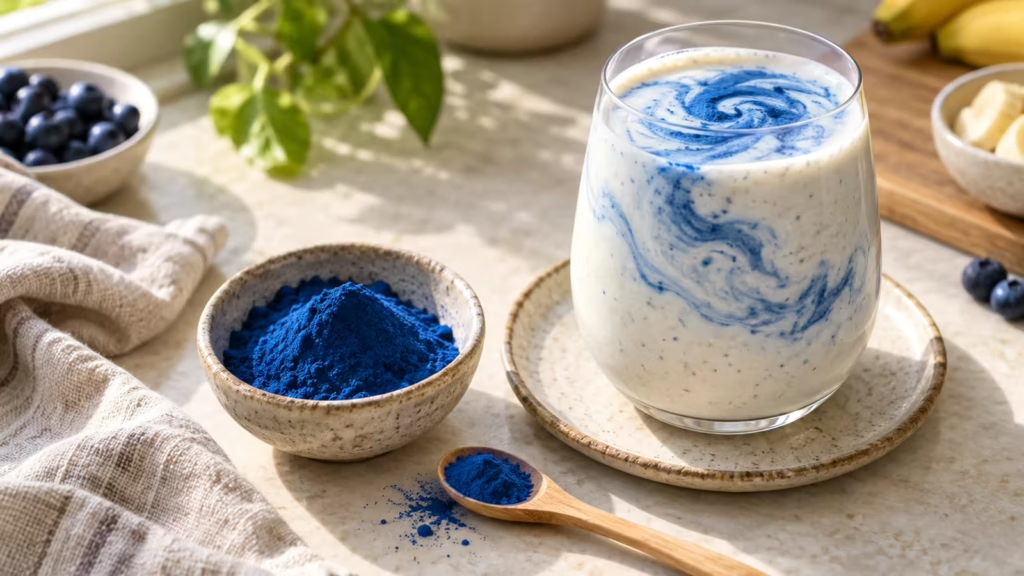
The first time blue spirulina appears in a smoothie bowl, it looks almost mischievous—an ocean-blue swirl made without a drop of food dye. The useful answer is less mystical and more interesting: blue spirulina is usually a phycocyanin-rich extract made from Arthrospira platensis, the organism commonly sold as spirulina. It is prized mainly for color. It is not automatically the same nutritionally as whole green spirulina powder, and the glowing shade does not turn breakfast into medicine. I would buy it for visual joy first, then judge every nutrition or wellness claim by the actual label and the evidence behind that exact product.
Blue spirulina can make food look extraordinary; the honest benefit begins with color, not a promise to transform your health.
What blue spirulina actually is
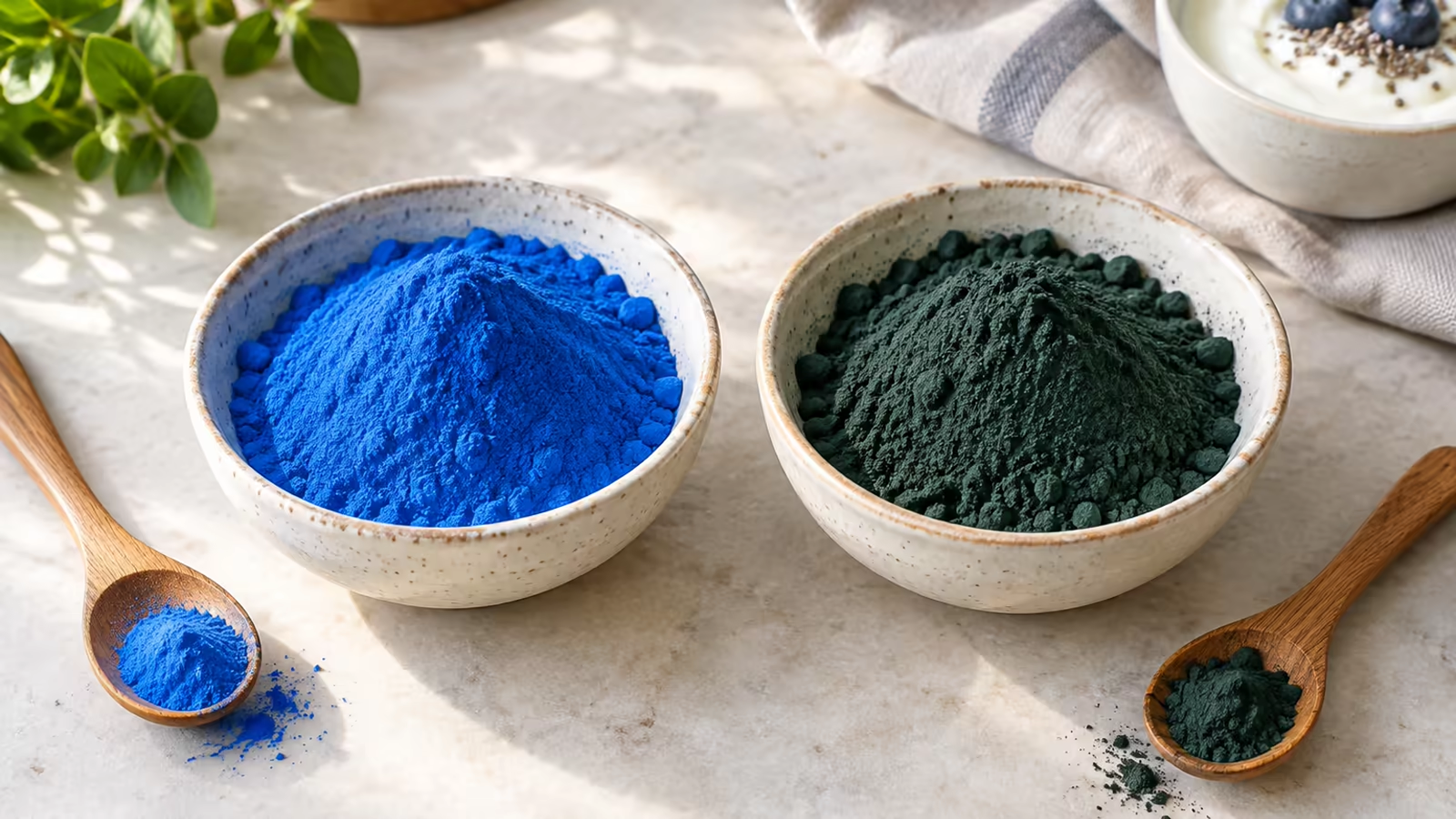
Despite the familiar word “algae,” spirulina is a cyanobacterium. Commercial food-grade spirulina is cultivated and processed; it is not a scoop from a blue-green pond bloom. Under the current U.S. color-additive rule, spirulina extract is made by filtering a water extraction of dried Arthrospira platensis biomass. Phycocyanins are the principal coloring components. Those water-soluble blue proteins are what manufacturers concentrate for the brilliant powder often marketed as blue spirulina.
Whole spirulina keeps much more of the original biomass, including green chlorophyll, so it looks blue-green and often tastes earthier. Extracting the blue fraction changes the package. A teaspoon used to tint yogurt should not be described as a major source of protein, iron, or vitamins unless its Nutrition Facts panel genuinely supports that statement. “Derived from a nutrient-rich food” and “nutrient-rich in this serving” are not the same claim.
| What you are comparing | Blue spirulina extract | Whole spirulina powder |
|---|---|---|
| What it usually contains | A blue, phycocyanin-rich water extract from Arthrospira platensis. | More of the dried whole biomass, including green chlorophyll and a broader mix of nutrients. |
| Color and flavor | Electric blue; generally milder and easier to hide in food. | Deep blue-green; often more marine, earthy, or grassy. |
| Protein claim | A small decorating serving is not a meaningful protein source unless the label shows otherwise. | Can contain substantial protein by weight, though a spoonful is still a modest food serving. |
| What human studies tell us | Clinical evidence on the blue extract itself is limited. | More studies exist on whole spirulina, but results do not transfer automatically to the extract. |
| Best reason to buy | Natural blue color and visual fun. | A whole spirulina ingredient whose taste and nutrition fit your needs. |
The distinction matters because online articles often use research on whole spirulina to sell blue extract. That is like using the nutrition of a whole orange to describe a few drops of orange-colored flavoring: related origin, different finished ingredient. Before comparing prices, read whether the package says spirulina extract, phycocyanin, whole spirulina, or a blend.
Blue spirulina benefits: where the evidence ends
Phycocyanin shows antioxidant and anti-inflammatory activity in laboratory research, but a test tube is not a human breakfast. Human trials and reviews have studied whole spirulina more often than purified blue spirulina. A 2023 meta-analysis found changes in blood lipids across trials of spirulina supplementation, yet the products, doses, participants, and study quality varied. That evidence cannot be quietly reassigned to a decorative half-teaspoon of blue extract.
So what benefit can I say confidently? Blue spirulina offers a vivid plant-derived color that can make plain, nourishing food feel playful. It may help someone enjoy yogurt, oats, or a smoothie without synthetic blue dye. That is a perfectly respectable job. It does not need a detox story, an immune “boost,” or a promise about weight, blood sugar, inflammation, skin, or energy to earn a place in the pantry.
- Reasonable: use it as a concentrated blue food color with a mild flavor.
- Possible but not established: specific health effects from the blue extract at ordinary food amounts.
- Not interchangeable evidence: findings from whole-spirulina supplements applied to purified phycocyanin.
- Marketing red flag: claims that one powder detoxes, cures, prevents, or rapidly changes several unrelated conditions.
If you want more protein, fiber, or minerals, build those into the meal directly: yogurt or soy yogurt, beans, nuts, seeds, fruit, and whole grains do that work more predictably. I think of blue spirulina as the finishing paint, not the foundation of the house.
How to use the blue powder without losing the color
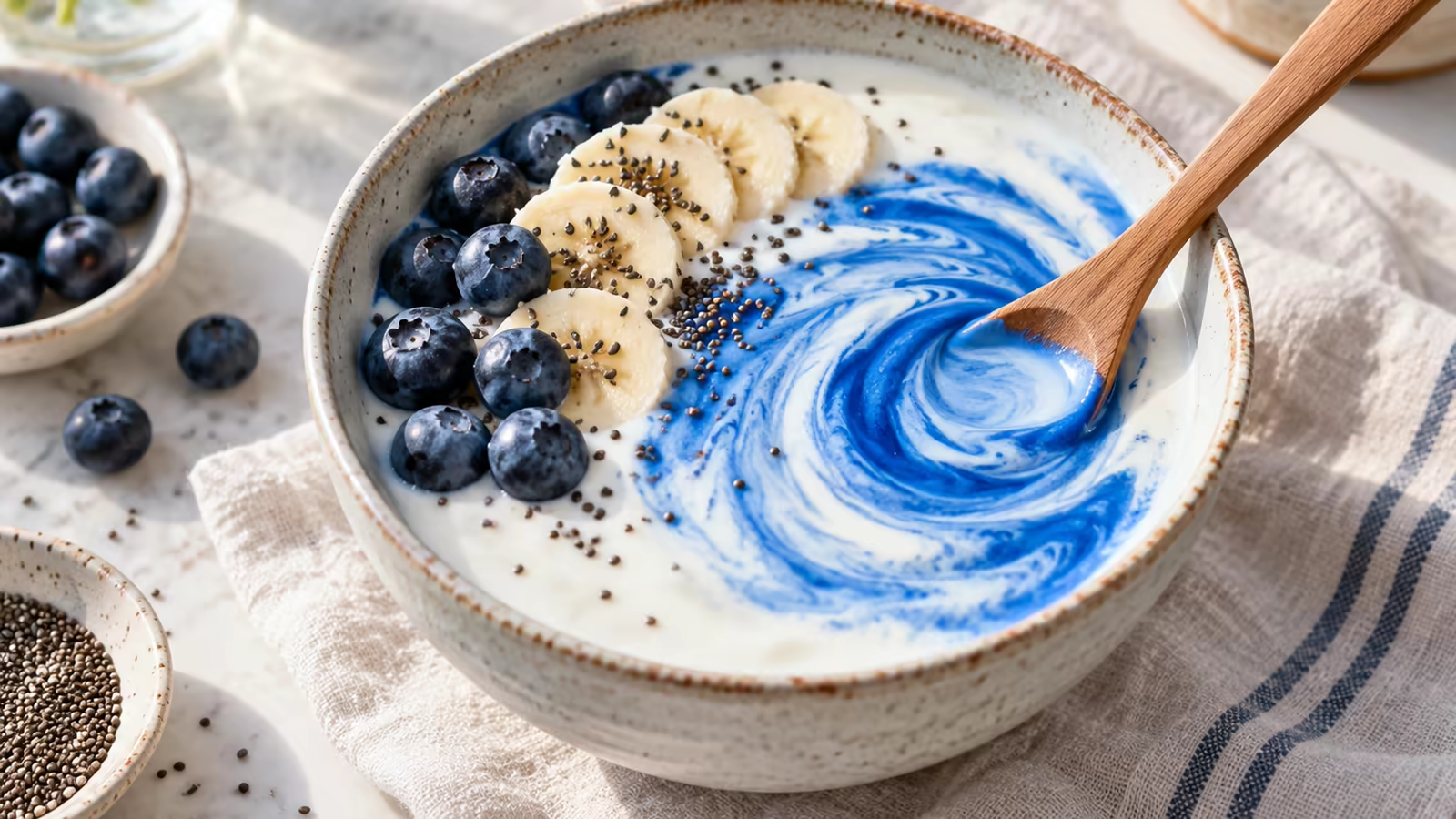
Phycocyanin is water-soluble, so it blends readily into smoothies, yogurt, chia pudding, overnight oats, lemonade, frosting, coconut-based desserts, and other pale mixtures. Start with the package amount or a tiny pinch, stir completely, then add more. The color intensifies quickly and the powder travels—one enthusiastic spoon can leave a blue fingerprint on the counter, the towel, and somehow your elbow.
Strong heat, prolonged light, and very acidic conditions can weaken or shift the blue. For the brightest result, add it to cool or gently warmed food near the end. Yellow ingredients make turquoise or green; berries and cocoa can muddy it. A pale base gives the clearest blue. If natural color is what delights you, our guide to purple sweet potatoes explores a whole-food pigment with a very different kitchen personality.
- Smooth bowl: blend it into a light banana, yogurt, or oat base before adding toppings.
- Two-tone effect: color only half the mixture, then swirl instead of stirring completely.
- Baking: expect some fading; reserve a cool glaze or filling for the strongest blue.
- Drinks: whisk or shake well, because powder can cling in small blue islands.
Blue spirulina does not preserve food, replace a balanced ingredient, or make a sugary dessert nutritionally neutral. Use enough for the shade you want, and let the rest of the recipe do its ordinary jobs: flavor, texture, satisfaction, and nourishment.
How to choose and use it safely
Choose a product clearly labeled for food use from a company that identifies the ingredient and provides lot, use-by, and storage information. For concentrated powders or supplements, independent testing or an accessible certificate of analysis is useful because cyanobacterial products can be contaminated during cultivation or processing. The federal color-additive specification requires regulated spirulina extract to meet limits for lead, arsenic, and mercury and to test negative for microcystin toxin; a vague marketplace powder with no traceability should not receive your trust by default.
Follow the label rather than copying a social-media dose. Supplements are regulated differently from conventional foods, and FDA does not approve dietary supplements for safety and effectiveness before they reach the market. If you are pregnant, breastfeeding, immunocompromised, managing a medical condition, or taking medication, ask a qualified clinician or pharmacist before using a concentrated supplement for a health purpose.
Stop using the product and seek advice if it causes hives, swelling, breathing trouble, severe digestive symptoms, or another concerning reaction. For everyone else, the calm verdict is cheerful: blue spirulina can be a striking culinary color, and that alone can be fun. Buy a tested food-grade product, keep the health expectations modest, and enjoy the part it does beautifully.
Sources
- eCFR: 21 CFR § 73.530—Spirulina Extract
- U.S. Food and Drug Administration: Spirulina Extract Color-Additive Rule History
- PubMed: Spirulina Supplementation and Lipid Profile Meta-Analysis
- U.S. Food and Drug Administration: Information for Consumers Using Dietary Supplements

Hi, I’m Laura, the voice behind Tastiva. I’ve always believed that eating well should feel enjoyable, comforting, and realistic—not like another complicated rule to follow. I love creating recipes that fit into everyday life, sharing simple nutrition ideas, and finding small ways to make meals feel a little better without losing the pleasure of good food.