
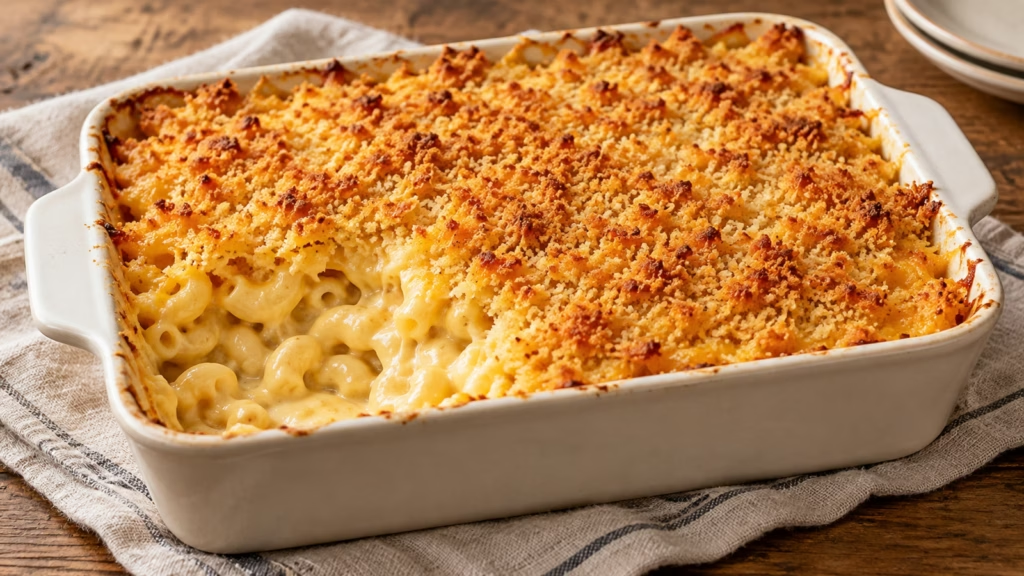
A homemade mac and cheese recipe should give you two good things at once: tender pasta under a crisp top, and enough creamy sauce to make the second spoonful as inviting as the first. This baked version uses cheddar for a familiar sharp flavor, Gruyère for a nutty finish, and a straightforward milk sauce that comes together before the dish goes into the oven.
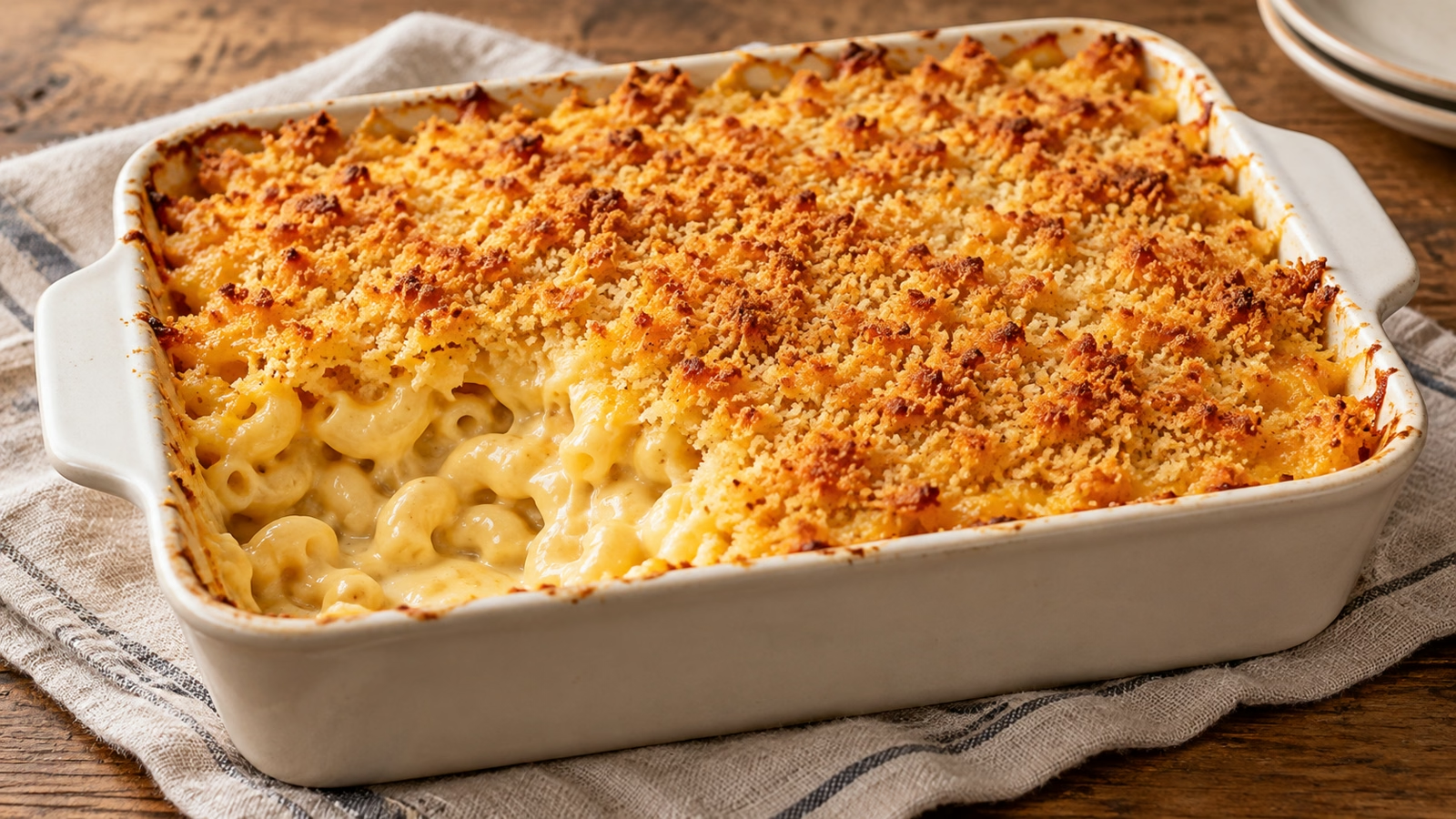
For me, the best part is the boundary between the golden crumbs and the creamy elbows underneath. I keep the topping fairly light so it adds a little crunch without hiding the macaroni.
A practical cheese blend and the right pasta
Elbow macaroni is a comfortable fit here. Its small curves hold sauce, and a spoonful is easy to serve beside vegetables or a main dish. Small shells work too, but use the package timing as your starting point rather than assuming every shape cooks at the same speed.
Buy blocks of cheddar and Gruyère and grate them before starting the sauce. That gives you fine, loose shreds that melt readily. Bagged shredded cheese is convenient, but its coatings can affect the sauce’s texture. This recipe uses natural cheeses; if you are curious about the different way processed slices melt, our American cheese guide explains that distinction.
Whole milk supplies the liquid, while butter and flour form the sauce base. A little mustard powder adds background warmth without making the finished dish taste like mustard. Plain dry breadcrumbs are enough for the top; there is no need to buy a heavily seasoned mix that competes with the cheese.
Make the sauce smooth before adding cheese
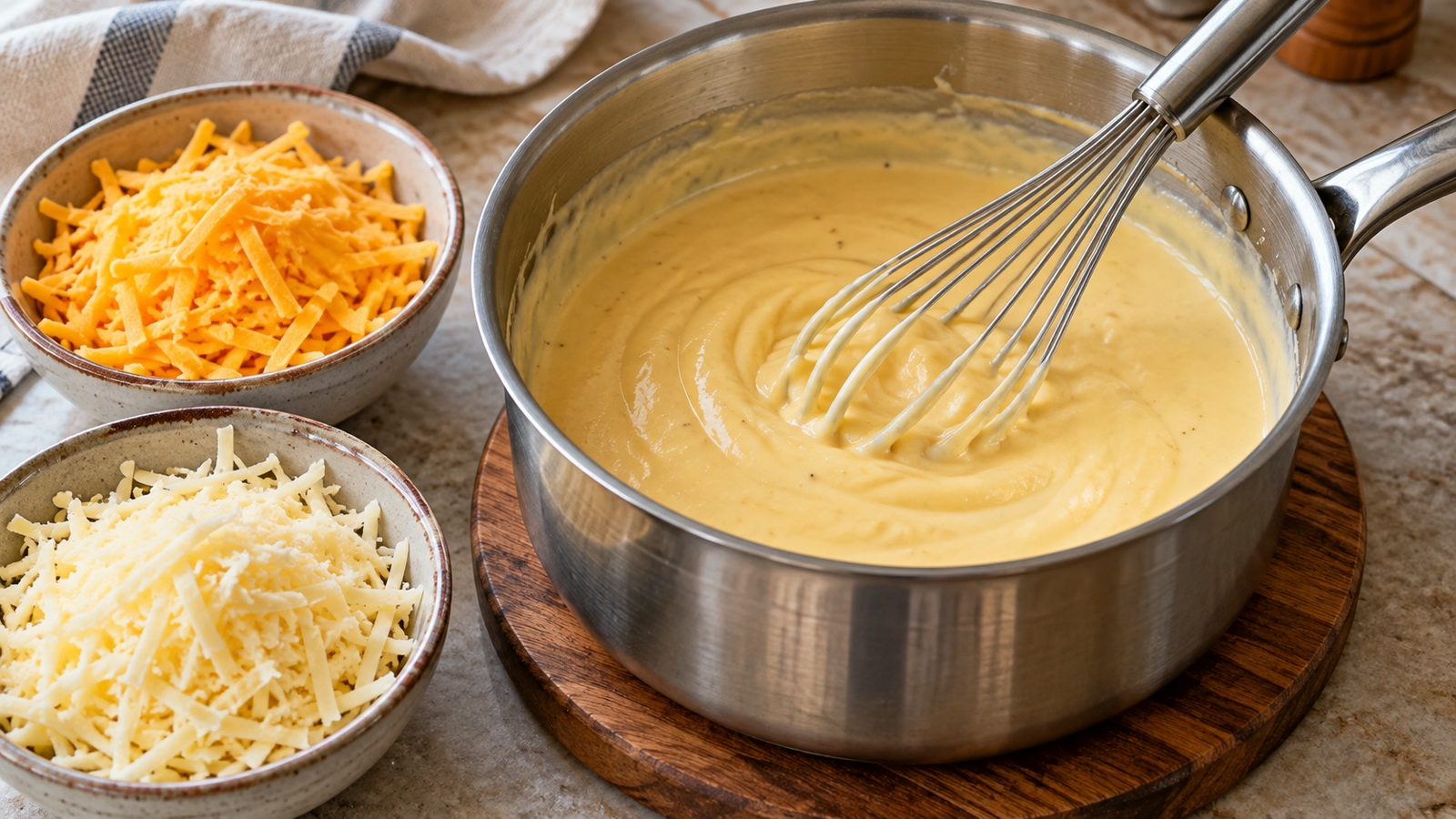
Melt the butter over medium-low heat, then stir in the flour. Give that pale paste a couple of minutes of gentle cooking while you keep it moving. You are softening the raw-flour edge, not making a dark roux. If it begins taking on brown patches, lower the heat.
Whisk in the milk gradually, starting with a small splash and smoothing it into the paste before adding more. The mixture may look thick at first. Keep whisking and adding milk until it becomes an even sauce. Let it simmer gently until it lightly coats a spoon rather than flowing like plain milk.
Remove the saucepan from the heat before adding the cheese a handful at a time. Stir each addition until it melts. A hard boil is unnecessary once the cheese is involved and can leave the sauce oily or grainy. If a few shreds need encouragement, use very low heat briefly, then take the pan off again.
Leave room for the oven to finish the pasta
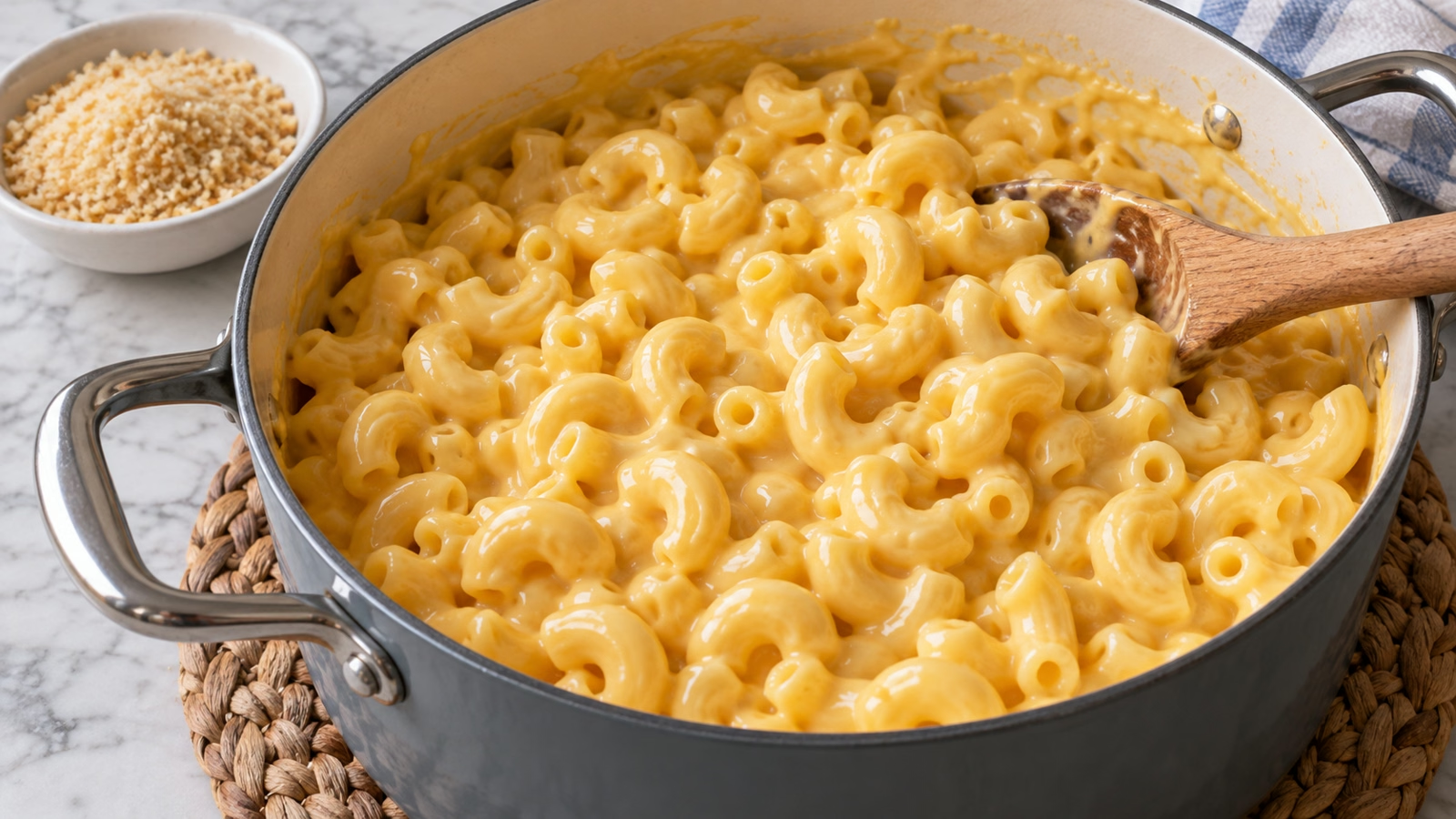
Cook the elbows about two minutes short of the package’s al dente time. They should bend but still have a firmer center than you would choose for a finished bowl of pasta. Drain them promptly and fold them into the sauce. They will continue softening as they bake, so starting with fully soft pasta makes a mushier casserole.
The combined mixture should look generously coated before it goes into the baking dish. Spread it gently rather than packing it down. Scatter the buttered crumbs across the top, then bake until the edges bubble and the surface is golden. A five-minute rest makes serving easier without letting the sauce cool into a firm block.
- Too thick before baking? Fold in a splash of warm milk, just enough to loosen the mixture.
- Crumbs browning too quickly? Loosely cover the dish with foil while the center finishes heating.
- Want stovetop mac and cheese? Cook the pasta fully, combine it with the finished sauce and skip the crumbs and baking. The texture will be softer and saucier.
Serving, leftovers and small changes
This dish makes six generous main-dish portions or more smaller side portions. Something crisp or green alongside it is welcome. Keep extras simple: cooked broccoli can be served beside the macaroni, and a little basil pesto can be offered separately for anyone who wants an herbal finish.
For the most predictable texture, bake the casserole soon after assembling it. Pasta continues absorbing sauce while it sits, so a long wait changes the result. If preparing dinner in stages, grate the cheese and measure the dry ingredients ahead, then cook the pasta and make the sauce closer to serving.
Refrigerate leftovers in shallow covered containers within two hours, or one hour above 90°F. Use within three to four days at 40°F or below. Reheat covered with a splash of milk until the center reaches 165°F, stirring a microwave portion between intervals. The crumbs will soften; the cheese sauce may need that extra moisture.
Homemade Mac and Cheese Recipe

Ingredients
- 350 g elbow macaroni dry, about 12 oz
- 40 g unsalted butter about 3 tablespoons
- 35 g all-purpose flour about 1/4 cup plus 1 teaspoon
- 2 1/2 cups whole milk 600 ml, warmed gently
- 225 g cheddar cheese 8 oz, freshly grated
- 115 g Gruyère cheese 4 oz, freshly grated
- 1/2 teaspoon mustard powder about 1 g
- 1/2 teaspoon fine salt 3 g, plus more only if needed
- 1/4 teaspoon ground black pepper about 0.5 g
- 40 g plain dry breadcrumbs about 1/3 cup, not seasoned
- 10 g unsalted butter melted, about 2 teaspoons
Equipment
- 1 large pasta pot
- 1 Large saucepan
- 1 Whisk
- 1 2 1/2-quart baking dish
- 1 box grater
Instructions
- Heat the oven to 375°F (190°C). Set out a 2 1/2-quart baking dish. Grate both cheeses and combine them.
- Bring a large pot of water to a boil. Cook the elbows about 2 minutes less than the package’s al dente time, until they bend but still have a firm center. Drain well. This recipe seasons the sauce rather than the pasta water.
- Meanwhile, melt 40 g butter in a large saucepan over medium-low heat. Add the flour and stir constantly for 2 minutes without browning. Gradually whisk in the warm milk, smoothing each addition before adding more. Add mustard powder, salt and pepper. Bring to a gentle simmer and cook for about 4–6 minutes, stirring, until the sauce lightly coats a spoon.
- Remove the saucepan from the heat. Stir in the cheeses in several handfuls until melted and smooth. If needed, return to very low heat briefly; do not boil the cheese sauce. Taste and adjust seasoning if needed.
- Fold the drained elbows into the sauce. Transfer to the baking dish and spread evenly. Mix the breadcrumbs with 10 g melted butter and scatter over the pasta.
- Bake for about 20–25 minutes, until the edges bubble and the crumbs are golden. If the top colors too fast, loosely cover with foil. Rest for 5 minutes before serving. Cooking time assumes the pasta and sauce are prepared at the same time.
Nutrition
Video
Notes
Tried this recipe?
Let us know how it turned out!Sources
- Cabot Creamery: cheddar sauce and gentle heat
- King Arthur Baking: pasta, sauce and breadcrumb baking method
- Preppy Kitchen: baked macaroni and cheese demonstration
- USDA: storing leftovers safely
- USDA: reheating leftovers
Hi, I’m Laura, the voice behind Tastiva. I’ve always believed that eating well should feel enjoyable, comforting, and realistic—not like another complicated rule to follow. I love creating recipes that fit into everyday life, sharing simple nutrition ideas, and finding small ways to make meals feel a little better without losing the pleasure of good food.