
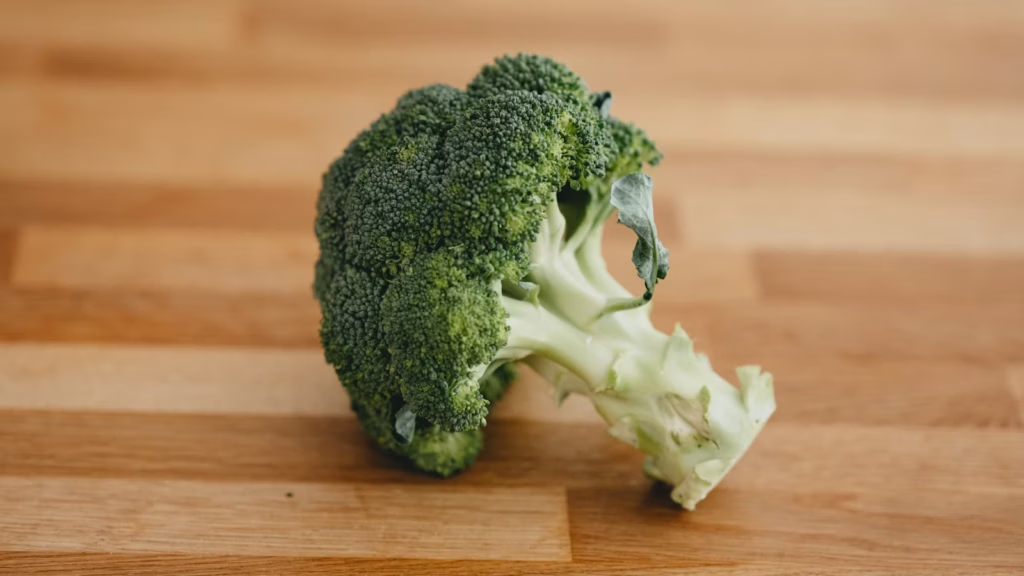
The florets are ready for dinner, and a thick stalk is left on the board looking like an unfinished chore. Broccoli stems are edible, raw or cooked, when the vegetable is sound and prepared properly. Trim the dry end and remove the tough outside where needed; the center can become sticks, thin slices, or small pieces for a cooked dish.
A little attention to the stalk can turn one head of broccoli into more than a bowl of florets.
Broccoli stems: start with a sound stalk
A thick stem can have a fibrous outside around a more tender center. I’d judge that center after trimming rather than dismissing the whole stalk because the first cut feels woody.
- Check the head: look for firm stalks and compact buds. Maine Extension recommends broccoli with firm clusters that haven’t opened.
- Separate toughness from spoilage: a dry cut end is different from a vegetable that looks rotten. Don’t use peeling as a way to rescue spoiled produce.
- Expect a different texture: the stalk is dense and doesn’t have the same branching surface as the florets. Cut it with its own cooking needs in mind.
- Keep the goal practical: use the tender portion that remains after trimming. If a section stays unpleasantly fibrous, you don’t have to force it into dinner.
What matters to me here is using food that still has a good purpose. There’s no prize for keeping every last tough shaving, and there’s no need to promise that stems and florets taste or behave exactly alike.
Trim, peel, and choose an even cut
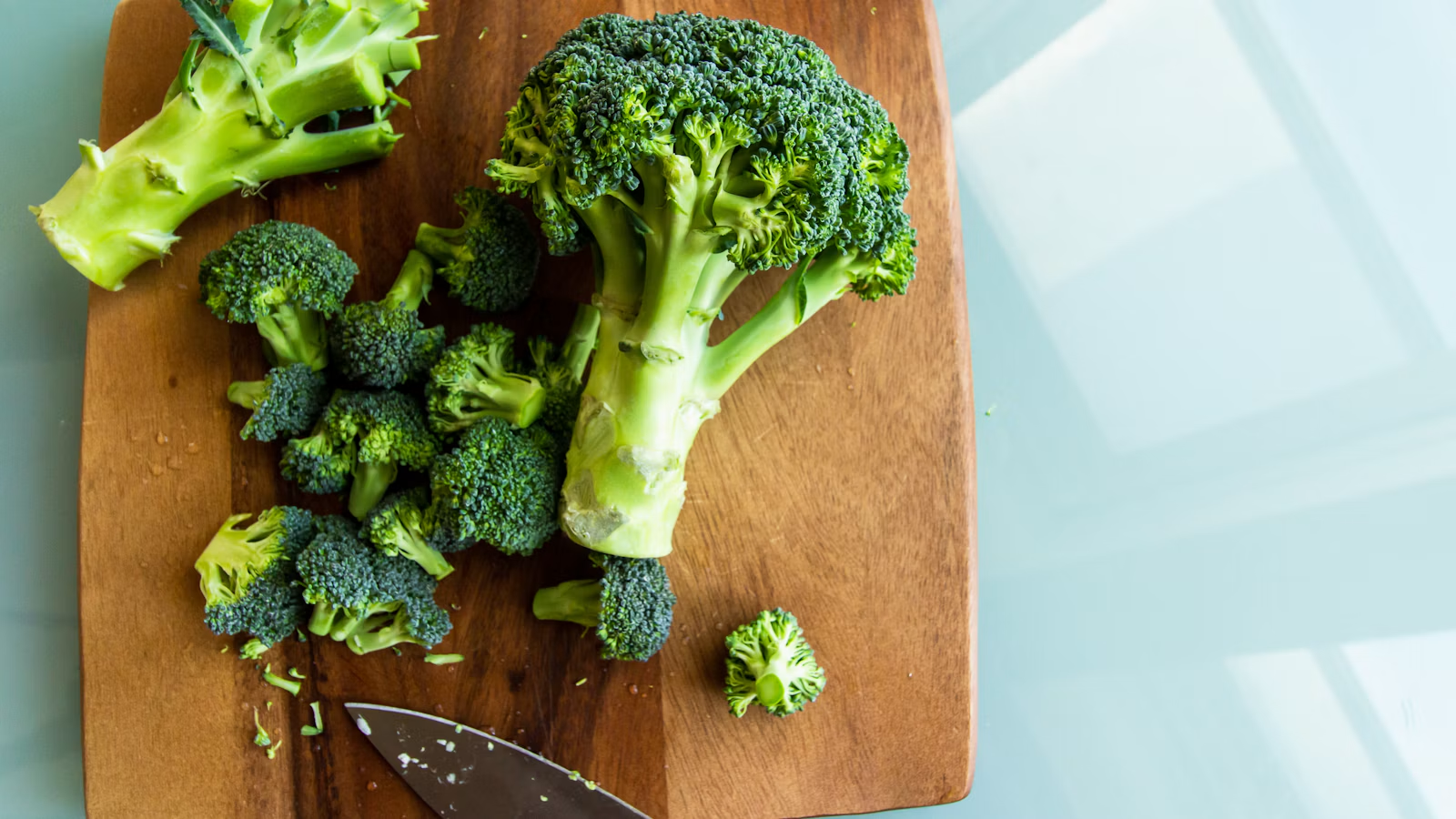
Illinois Extension advises trimming and peeling the stalk. Start with safe washing and a stable board, then remove the outer layer gradually so you can see how much tender flesh is left.
- Wash your hands and rinse the broccoli under running water before cutting. FDA guidance recommends washing produce even when you plan to peel it; skip soap or detergent.
- Cut away the florets at their branches, leaving the main stem where you can handle it safely.
- Trim the dry bottom end. Rest the stalk securely on the board and use a vegetable peeler or controlled knife cuts to remove the tough surface.
- Look at the cut face as you work. Remove fibrous areas rather than automatically taking a thick slice from every side.
- Choose the shape for the dish: slim sticks for a snack plate, thin coins or strips for a skillet, or small even pieces for soup.
- Keep pieces close in thickness. A chunky end and a paper-thin slice won’t become tender on the same schedule.
I’d slow down around awkward curves instead of trying to peel the stalk in one impressive motion. The preparation is finished when the usable portion suits the dish, not when it looks like a perfect cylinder.
Give the cut pieces one simple job
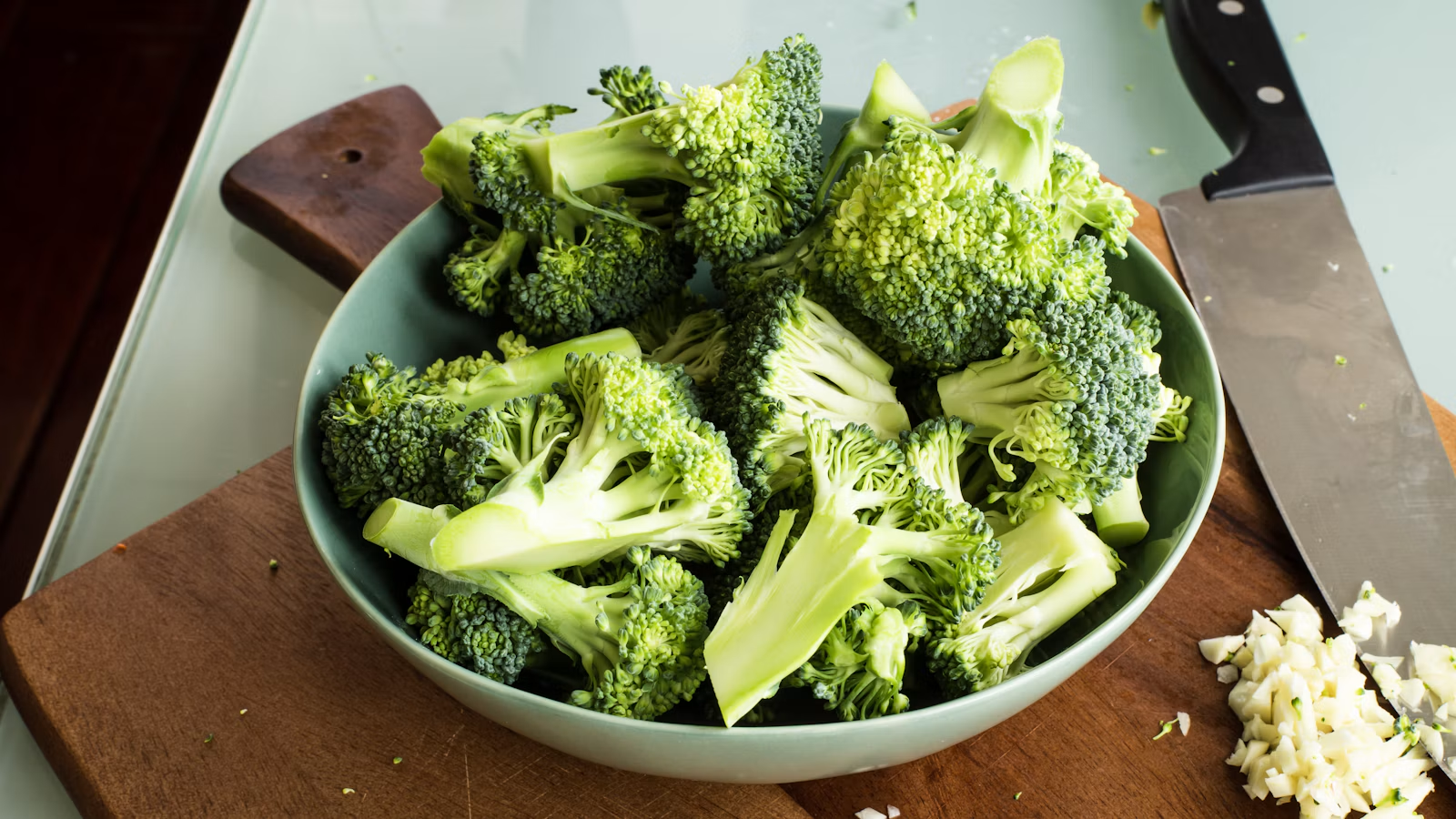
Maine Extension suggests peeled stalks in soups, stews, stir-fries, or a vegetable platter. That leaves room to fit them into a meal you already intended to make, rather than building an entire menu around a single leftover stem.
- Crunch beside a dip: use slim sticks or thin slices from a tender peeled stalk. Keep the prepared vegetable and your serving utensils clean.
- A skillet vegetable: thin pieces are easier to cook evenly than big stem chunks. If you’re combining them with florets, check each part separately as it cooks.
- A soup ingredient: cut the stalk into small pieces and cook until tender. For a blended soup, remove tough fibers first; a blender isn’t a substitute for trimming.
- A grated salad addition: finely shred a peeled, tender section and combine it with other crisp vegetables. Treat it as a fresh ingredient, not a way to hide old broccoli.
- A roasted side: use evenly sized pieces and a recipe suited to broccoli. Leave room for the vegetables to cook without piling them into a crowded mound.
The cut I’d choose depends on how the meal will be eaten. Small soup pieces should fit comfortably on a spoon; snack sticks should be easy to bite. Texture is more useful as a guide than the idea that every leftover needs the same treatment.
Store the rest with its next meal in mind
Maine Extension recommends refrigerating broccoli in a plastic bag and using it within three to five days for best quality. That’s a planning window for fresh broccoli, not permission to ignore spoilage or leave prepared pieces unrefrigerated.
- Keep it cold: FDA recommends a refrigerator at 40°F (4°C) or below for perishable produce. Refrigerate cut pieces promptly.
- Choose the next use now: a container labeled “for soup” is easier to use than an anonymous collection of stems hidden behind the milk.
- Protect ready-to-eat pieces: keep them away from raw meat, poultry, seafood, and the tools used for those foods.
- Freezing needs preparation: Illinois Extension recommends blanching broccoli before freezing. Follow established directions for the piece size and method instead of treating a raw bag of scraps as finished freezer preparation.
- Buy for your routine: if whole heads often go unused, smaller amounts may fit better. Tastiva’s fresh-versus-frozen vegetable guide can help with that decision.
Keep the habit small enough to repeat: when you prepare the florets, give the stalk a quick decision too. Use its tender portion in the meal, save it with a clear plan, or let an unusable section go.
Sarah Leung of The Woks of Life demonstrates trimming the tough outer layer and cutting broccoli stems into tender matchsticks. Her chicken stir-fry is one way to use the prepared stems; the same knife preparation helps with the other ideas above.
Sources
- University of Maine Extension — choosing, storing, and using broccoli stalks.
- Illinois Extension — preparing and preserving broccoli.
- FDA — selecting and serving produce safely.

Hi, I’m Laura, the voice behind Tastiva. I’ve always believed that eating well should feel enjoyable, comforting, and realistic—not like another complicated rule to follow. I love creating recipes that fit into everyday life, sharing simple nutrition ideas, and finding small ways to make meals feel a little better without losing the pleasure of good food.