
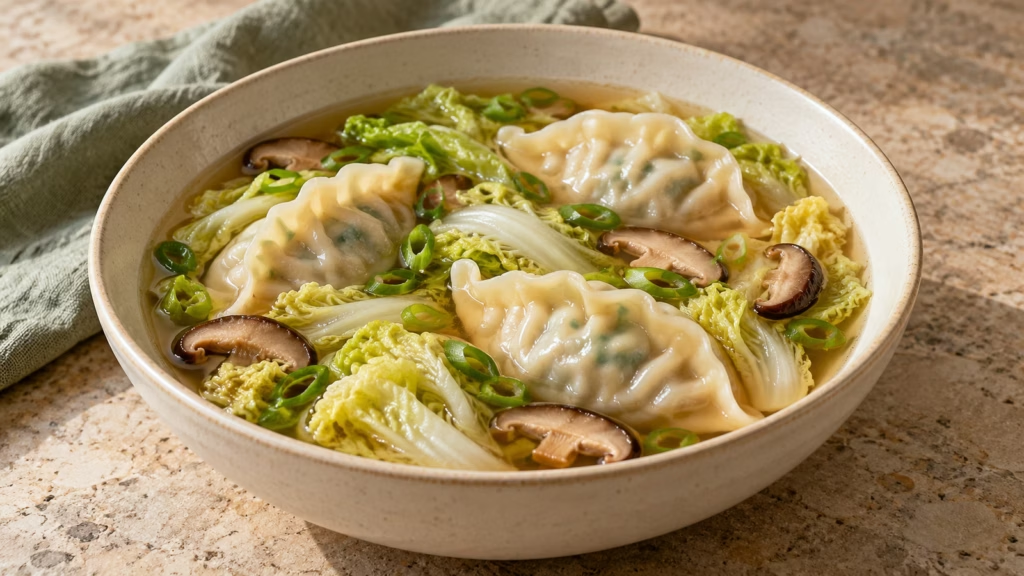
A bag of dumplings solves part of dinner. The cabbage taking up the crisper drawer can solve the rest. This cabbage dumpling soup puts fully cooked frozen vegetable gyoza into a light ginger-mushroom broth with plenty of napa cabbage, so you get tender wrappers, leafy sweetness and something worth spooning between bites.
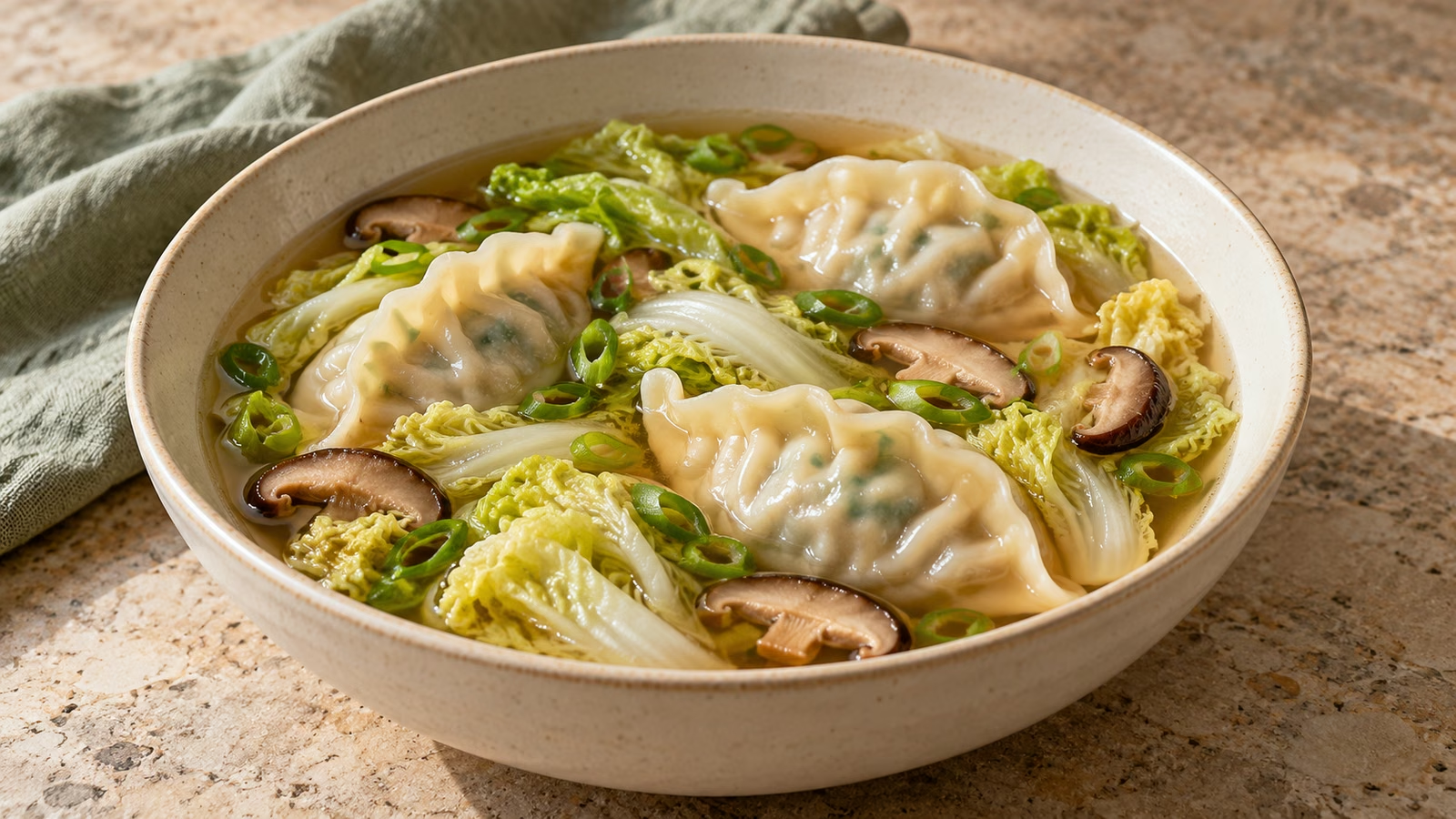
Give the cabbage ribs a head start, add the delicate leaves near the end, and let the dumpling package guide the heating.
Choose dumplings that belong in cabbage dumpling soup
I’d begin with the freezer bag, before choosing a pot. This recipe is built around fully cooked vegetable gyoza labeled suitable for soup, rather than raw homemade dumplings. Trader Joe’s Thai Vegetable Gyoza are one example: the maker describes them as fully cooked and suitable for adding to soup. Check the package you actually buy because products can change.
- Look for a soup method. A wrapper intended only for pan-frying may need different handling. Follow the specified method instead of assuming all frozen crescents behave alike.
- Read the filling and allergen line. The specified gyoza contain wheat, soy and sesame. Vegetable in the name does not tell you everything about allergens or manufacturing.
- Use weight, then divide. Dumpling sizes differ. Distribute the cooked contents of the stated bag among four bowls rather than treating a fixed dumpling count as universal.
- Want a folding project? Our pork-and-cabbage steamed dumplings start from a raw filling and use a separate method. Make and cook those as directed before considering a soup serving.
Cabbage earned a place in Pinterest’s 2026 Cabbage Crush forecast, which included growing interest in cabbage dumplings. That forecast used earlier global search data, not a live ranking of this recipe. For dinner, the more useful point is simple: a generous amount of cabbage makes a freezer shortcut feel like a composed bowl.
Build flavor before the delicate ingredients go in
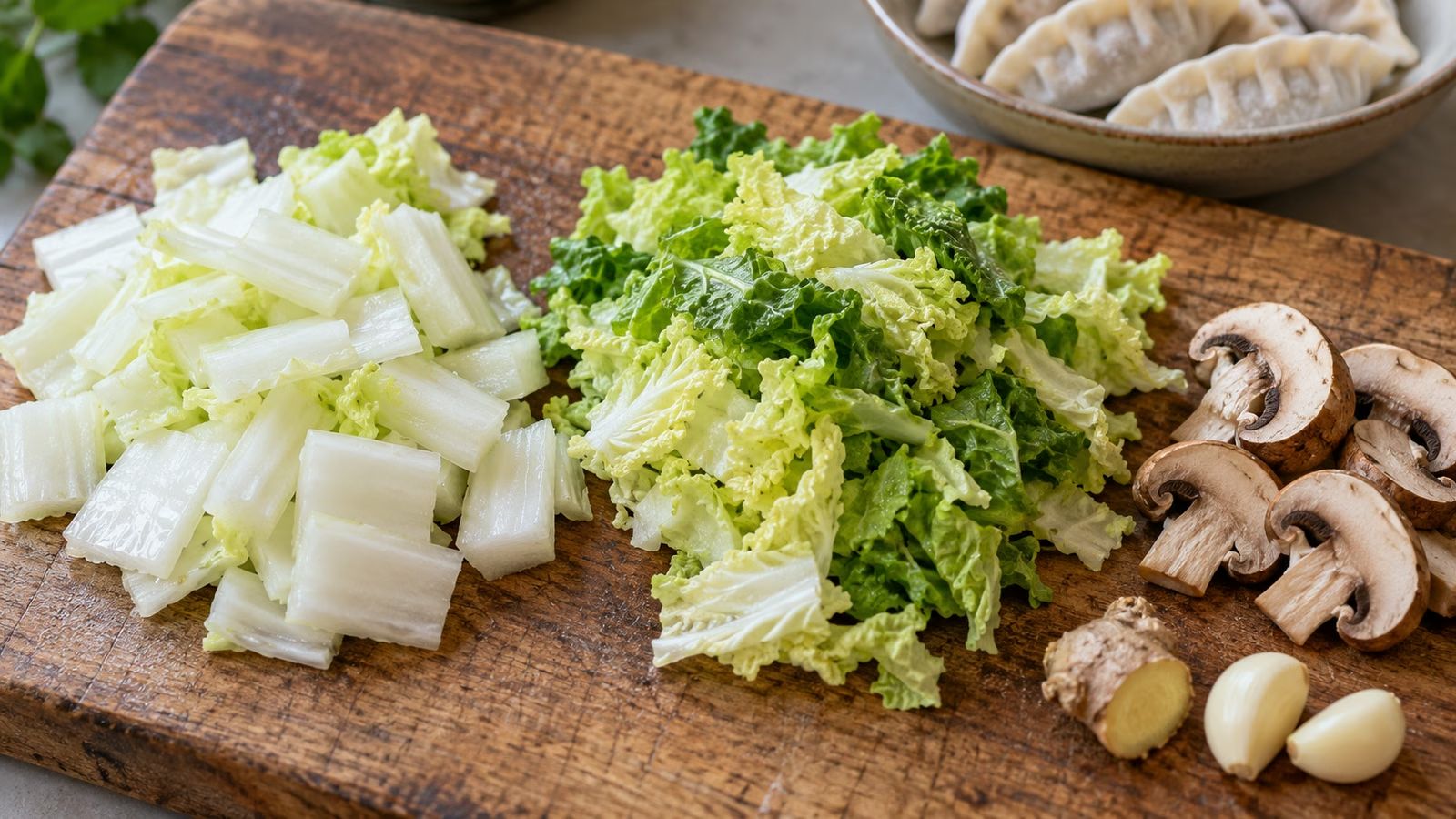
The mushrooms do the first round of flavor-building. Let some cut surfaces turn golden before adding ginger and garlic; the aromatics need only a brief turn in the hot oil. Water then picks up those savory pan juices without bringing in another layer of packaged-stock salt.
- Keep the napa parts separate. Short pieces of white rib need more cooking than thin leaves. Two piles on the board are enough; this is dinner preparation, not cabbage filing.
- Leave room in the pot. The cabbage starts bulky, and the dumplings need liquid around them. A 5-quart pot gives you working space without a crowded surface.
- Choose the finish deliberately. Soy sauce adds salt and savoriness, rice vinegar brings a little brightness, and toasted sesame oil supplies aroma. Add them at the end, then taste.
- Keep the broth light. I prefer this bowl without a creamy base. A clear broth leaves the ginger, mushrooms and cabbage easy to notice.
Keep wrappers intact and substitutions realistic
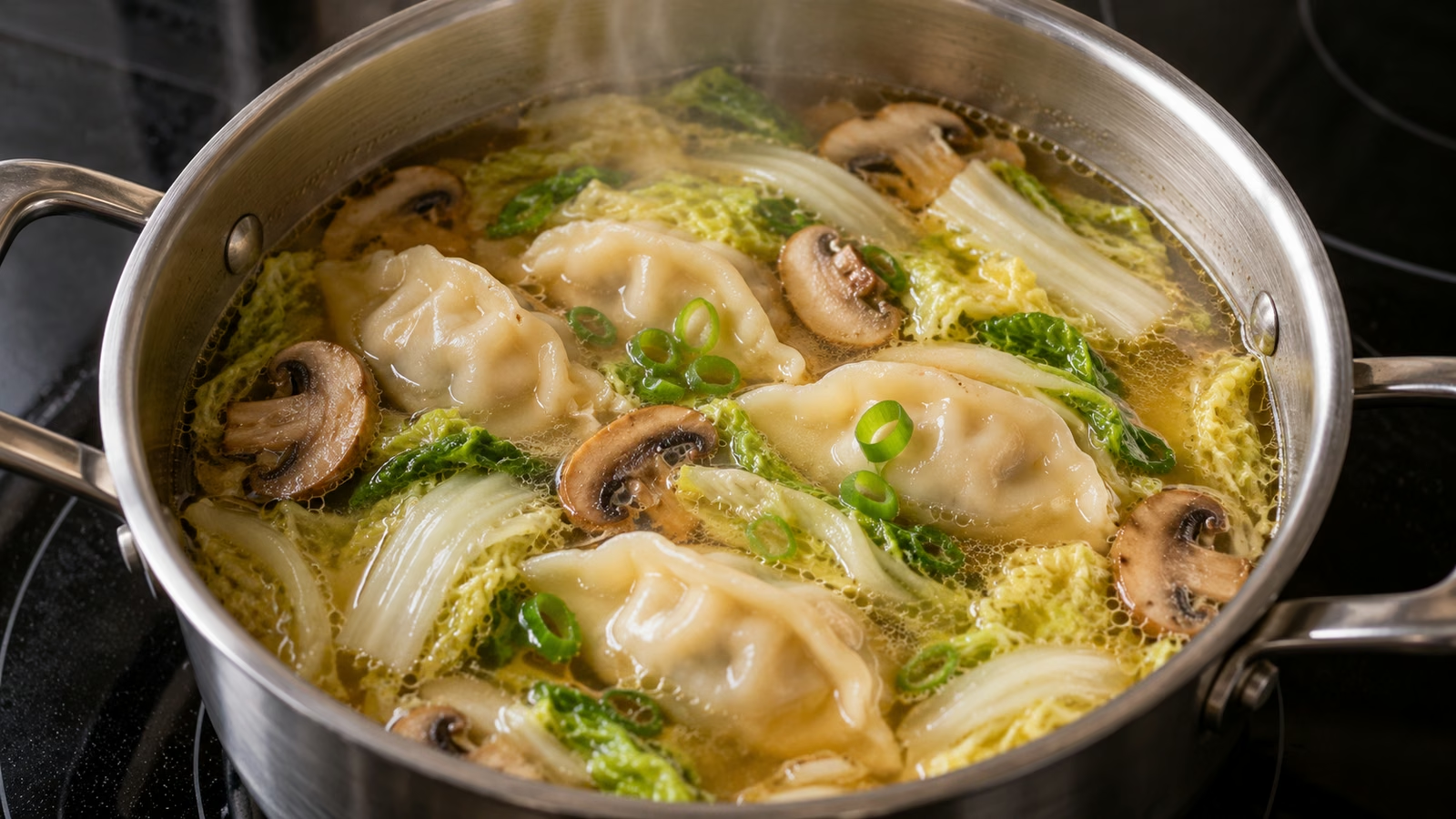
A crowded rolling boil and repeated stirring are hard on tender wrappers. Once the dumplings are in, use the heat level their instructions call for and move them gently. Floating, translucent dough or a steaming pot does not replace the package’s full heating directions or a temperature check.
- Green cabbage: slice it more finely and cook it until nearly tender before adding dumplings. It is firmer than napa, so the same clock can leave a crunchy surprise.
- Different mushrooms: ordinary white button mushrooms are a practical swap by weight. Dried mushrooms need a different preparation and are not an equal-weight replacement.
- Broth instead of water: use an unsalted vegetable broth and reassess the soy sauce. The nutrition estimate uses water, so a carton changes those numbers.
- Different dumplings: if the package requires a separate method, cook them separately and add them at serving. Do not use the suggested soup timing for raw meat fillings.
- Gluten-free needs: changing soy sauce to tamari does not remove wheat from the wrappers. Every component needs to fit the person’s requirements.
Serve promptly, and plan leftovers around the wrappers
The soup is most appealing when the leaves still have some character and the wrappers have not spent an afternoon absorbing broth. I’d serve it as a light meal, with an extra dish or bread if that suits your appetite. Those additions are separate from the recipe’s estimated nutrition.
- For make-ahead meals: prepare the vegetable base and heat only the dumplings you will serve. Chill the remaining base promptly, then add a fresh portion of cooked dumplings when reheating.
- Chill safely: use shallow containers and refrigerate within 2 hours, or within 1 hour above 90°F (32°C). Keep the refrigerator at 40°F (4°C) or below.
- Use refrigerated leftovers within 3–4 days. Reheat to 165°F (74°C), checking the food itself. The wrappers will be softer; extra simmering will not restore their original texture.
Those storage limits follow FoodSafety.gov’s guidance for soups and leftovers. If you know you will need several meals, separate portions before serving rather than repeatedly warming the whole pot.
Cabbage Dumpling Soup Recipe

Ingredients
- 1 tablespoon canola oil 14 g
- 8 ounces cremini mushrooms 225 g; sliced
- 1 tablespoon finely grated fresh ginger 6 g
- 3 cloves garlic 9 g; finely chopped
- 6 cups water 1.42 liters
- 1 pound napa cabbage 450 g trimmed; cut into short strips, white ribs and green leaves kept separate
- 16 ounces fully cooked frozen vegetable gyoza 454 g; use a product labeled suitable for soup, such as Trader Joe’s Thai Vegetable Gyoza
- 2 tablespoons less-sodium soy sauce 30 ml; nutrition based on Kikkoman Less Sodium Soy Sauce
- 1 tablespoon unseasoned rice vinegar 15 ml
- 1 teaspoon toasted sesame oil 4.5 g
- 3 scallions 30 g; thinly sliced
Equipment
- 1 large soup pot 5-quart or larger
- Knife and cutting board
- Measuring cups and spoons
- Instant-read thermometer
- ladle
Instructions
- Rinse the cabbage and scallions under running water. Cut the cabbage into short strips, keeping the thick white ribs separate from the thin green leaves. Slice the mushrooms and prepare the ginger, garlic and scallions.
- Heat the canola oil in a 5-quart or larger pot over medium-high heat. Add the mushrooms and cook for 5 to 7 minutes, stirring occasionally, until softened with some golden edges. Lower the heat to medium; stir in ginger and garlic for 30 seconds, just until fragrant.
- Add the water and cabbage ribs. Bring to a simmer, then cook for about 3 minutes, until the ribs begin to soften.
- Add the frozen, fully cooked gyoza and bring the soup back to the level of simmer specified on their package. Follow the package’s soup-heating directions; allow approximately 5 to 7 minutes for this stage, but let the label and doneness govern. Stir gently once to separate them. Add the cabbage leaves for the last 2 minutes. Heat the dumpling centers thoroughly to 165°F (74°C). If your dumplings need a different method or contain raw filling, cook them separately according to their package and add them only when safely cooked.
- Turn off the heat. Gently stir in the soy sauce, rice vinegar, sesame oil and scallions. Taste the broth and adjust with a small splash of water or a little more soy sauce if needed. Divide the dumplings and vegetables among four bowls and ladle over the broth. Serve promptly.
Nutrition
Notes
Tried this recipe?
Let us know how it turned out!Sources
- Trader Joe’s: Thai Vegetable Gyoza, ingredients and nutrition
- Kikkoman: Less Sodium Soy Sauce nutrition and unseasoned rice vinegar
- USDA: Standard Reference vegetable nutrient data
- Pinterest Predicts 2026: Cabbage Crush and data period
- FoodSafety.gov: prompt chilling, storage times and safe reheating temperatures
Hi, I’m Laura, the voice behind Tastiva. I’ve always believed that eating well should feel enjoyable, comforting, and realistic—not like another complicated rule to follow. I love creating recipes that fit into everyday life, sharing simple nutrition ideas, and finding small ways to make meals feel a little better without losing the pleasure of good food.