
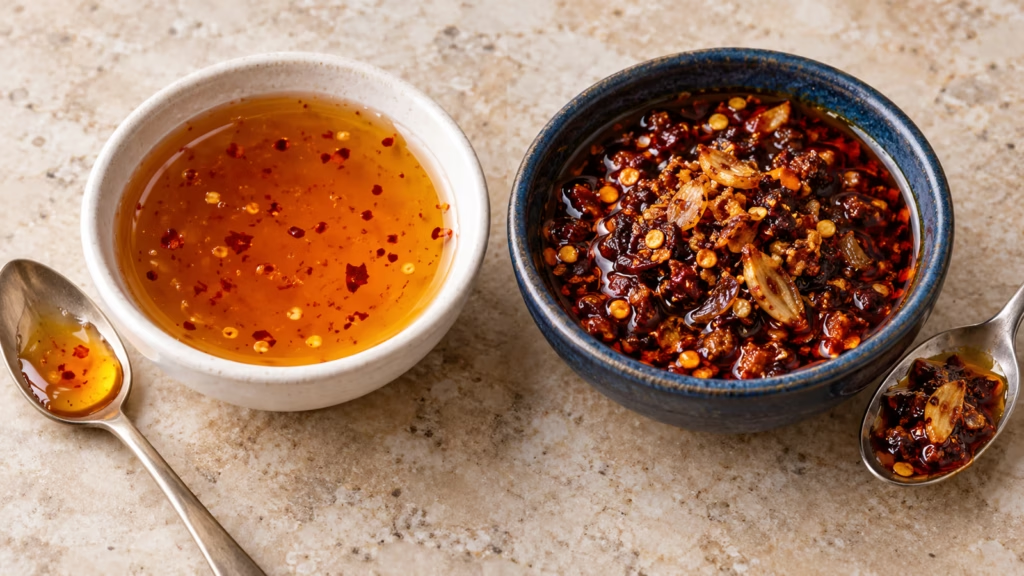
There are two jars beside dinner, and both promise a little heat. Hot honey vs. chili crisp is really a choice about what else you want: hot honey adds syrupy sweetness and chile warmth, while chili crisp brings seasoned oil and crunchy bits. For a sweet finish on pizza or cheese, reach for the honey; for savory texture on noodles, rice, or eggs, start with the crisp.
Choose the finishing touch your food is missing: a sweet drizzle or a savory crunch.
Hot honey vs. chili crisp: the base changes the job
Hot honey starts with honey and chiles; some versions include vinegar. Mike’s Hot Honey, for example, lists honey, chili peppers, and vinegar. Chili crisp is an oil-based condiment with chile pieces and other crisp ingredients, often fried garlic or shallots. It comes from a different culinary tradition, and treating it as “honey without the sugar” misses most of its character.
- Sweetness: Honey supplies the main flavor and sticky body in hot honey. Chili crisp can contain sugar, but sweetness is not necessarily its defining feature.
- Texture: Hot honey pours in a ribbon, sometimes with pepper flecks. Chili crisp carries solids that you spoon out along with the oil; brands differ considerably in how crunchy they are.
- Savory depth: Chili crisp may contain fermented soybeans, mushrooms, seaweed, garlic, or other seasonings. Those ingredients change a dish beyond simply making it hotter.
- Heat: Neither category is automatically the hotter one. Pepper choice, concentration, and the individual product matter more than the name on the front.
Both have a place in the current condiment conversation. Datassential featured hot honey and chili crisp in the menu-and-flavor section of its Spring 2026 presentation to the Foodservice Packaging Institute. That industry attention is a reason to understand their differences, not a reason to assume they do the same job.
Choose by what is already on the plate
I’d decide from the food outward rather than choosing whichever jar has the louder reputation. A rich, salty bite can welcome sweetness; a soft bowl may need crisp pieces. You can use either condiment on many of the same foods, but you will be making a different finish.
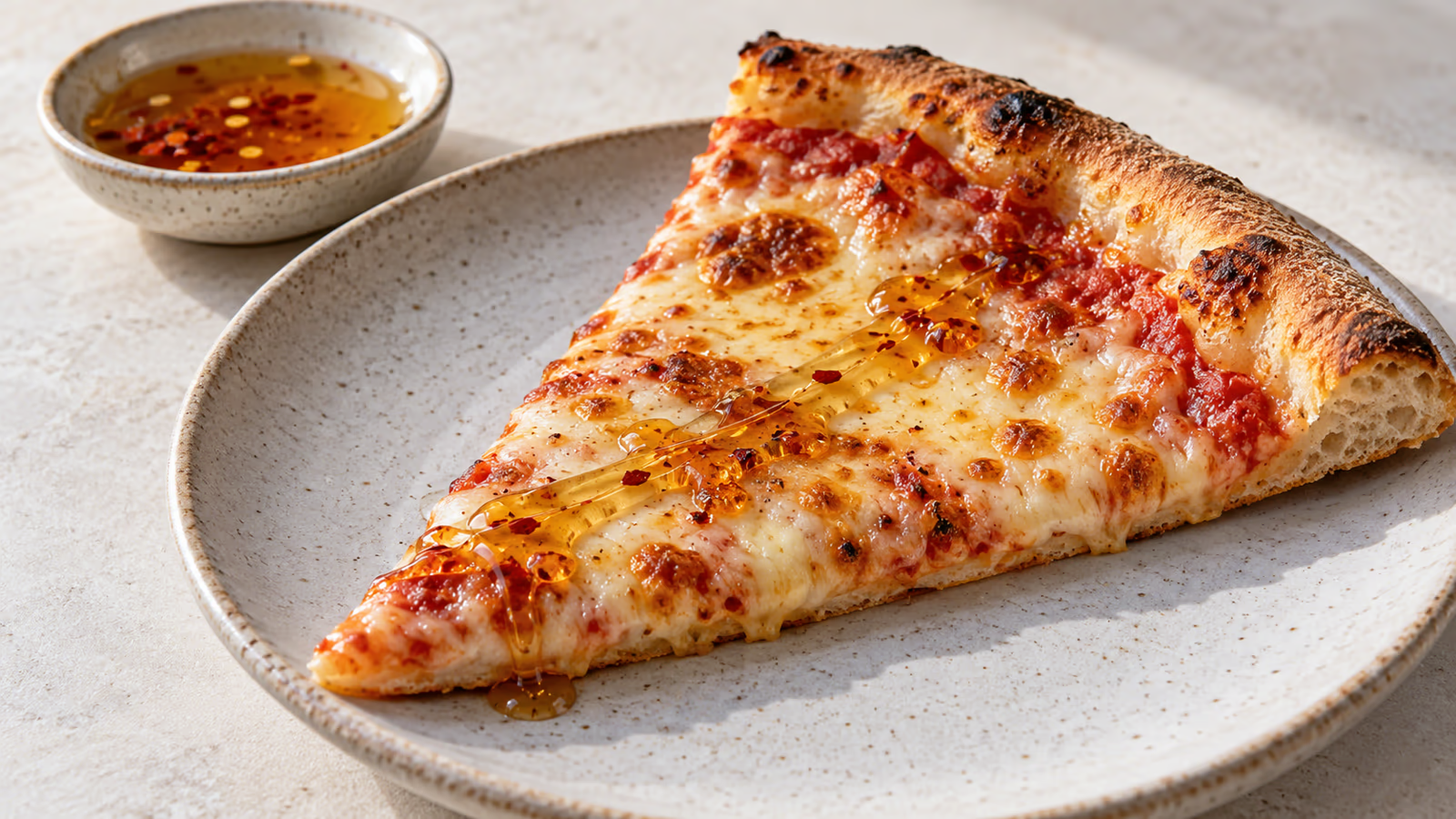
- Pizza and salty cheese: A fine hot-honey drizzle adds sweet heat without many extra solids. Chili crisp gives a more garlicky, oily finish and noticeable bits between bites.
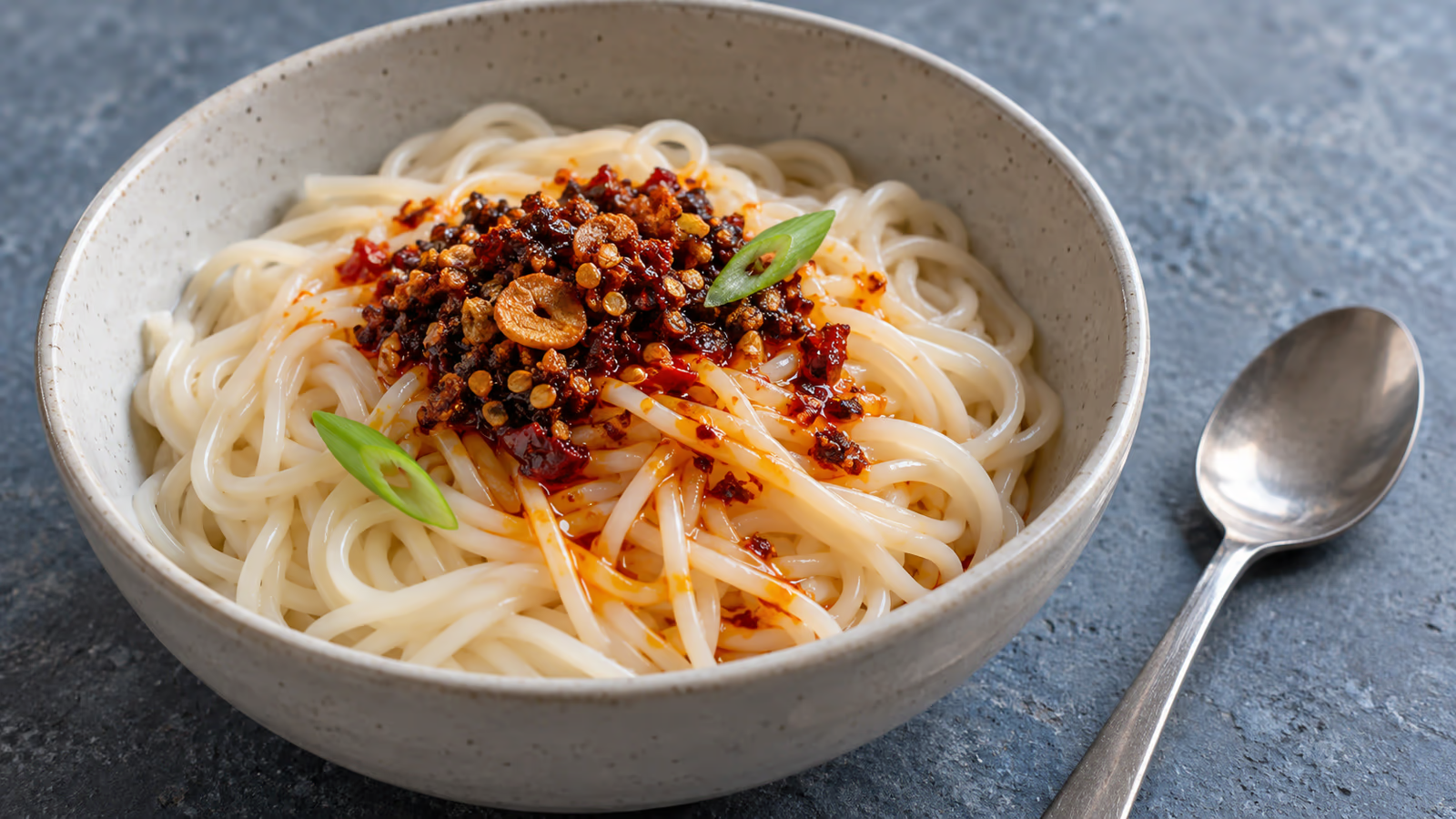
- Noodles, rice, and eggs: Chili crisp is a useful first choice when the dish needs savory seasoning and texture. Spoon in some solids, not just the oil floating at the top.
- Roasted vegetables: Try hot honey when a little sweetness belongs with the browned edges. Choose chili crisp when you want a savory, textured topping instead.
- Sandwiches: Hot honey can make a thin sweet layer; chili crisp adds oily crunch. With either one, use a light hand if the filling already includes a sweet sauce or generous mayonnaise.
- Dumplings: Chili crisp can join the dipping sauce or sit beside it. Hot honey would make a deliberately sweeter variation, not an equivalent replacement for the original seasoning.
For the first taste, put a small amount on one bite before dressing the whole portion. That is especially helpful with an unfamiliar jar. Dinner does not need to become a heat-tolerance interview.
A swap changes more than the spiciness
These condiments can substitute for each other as optional toppings if you like the changed result. They are less interchangeable inside a recipe that relies on honey’s sweetness or chili crisp’s oil and solids. I would skip a rigid tablespoon-for-tablespoon rule between two unknown products.
- Replacing hot honey: Chili crisp removes much of the sweet, syrupy effect and adds oil and crunchy pieces. In a finishing drizzle, that may be welcome; in a honey-based glaze, it changes the structure of the sauce.
- Replacing chili crisp: Hot honey makes the food sweeter and does not supply the same fried aromatics or oil. It cannot recreate a crunchy topping by itself.
- Adding hot honey to cooked food: Drizzle at the end when you want control over the amount and a clear honey flavor. Follow a recipe’s timing when it is meant to cook into a glaze.
- Adding chili crisp: Stir the jar with a clean utensil so you can collect both oil and solids. Add it near serving if keeping the crisp pieces distinct is your priority.
- Using both: Try them together on a single bite first. Reduce other sweeteners or oily toppings if the combination starts to feel heavy.
Dry pepper flakes are another separate ingredient: they add pepper pieces without supplying either condiment’s full base. Tastiva’s guide to red pepper flakes and chili flakes explains how to read that jar. And gochujang is a fermented paste, with its own flavor and consistency, rather than a third interchangeable hot sauce.
Read the specific label before you buy or store it
The short ingredient list of one hot honey does not describe every sauce sold under that name. The same goes for chili crisp. Fly By Jing’s Original Sichuan Chili Crisp, for instance, lists oils, chile, fermented soybeans, garlic, shallots, and seasonings, and declares soy and sesame. Other formulas can use different ingredients and allergens.
- Compare like portions: Check the serving size before comparing sugar, sodium, fat, or calories. A teaspoon and a tablespoon are not the same helping.
- Check dietary fit: Honey is animal-derived. Some chili crisps are vegan, but that does not establish the ingredients or allergen suitability of every jar.
- Keep storage product-specific: Follow the manufacturer’s opening and refrigeration instructions. Advice for plain honey cannot automatically cover every hot-honey sauce or homemade mixture.
- Keep utensils clean: Take out what you need rather than carrying food crumbs or moisture back into either container.
- Keep honey away from infants: The CDC advises against giving honey to children younger than 12 months. That matters for honey-containing foods too.
If the question is a grainy jar of plain honey, the honey storage and crystallization guide covers that issue separately. For choosing tonight’s topping, the useful question is simpler: does this plate need sweetness, texture, or a little of both?
In this CBS Mornings feature, Fly By Jing founder Jing Gao demonstrates chili crisp and several ways to serve it. The focus is the savory, oil-based condiment, giving you a closer look at the side of this comparison that hot honey cannot reproduce.
Sources
- Datassential: Spring 2026 FPI presentation, menu growth comparison
- Mike’s Hot Honey: ingredients, serving size, and storage guidance
- Fly By Jing: Original Sichuan Chili Crisp ingredients and allergens
- CDC: foods to avoid for infants, including honey before 12 months

Hi, I’m Laura, the voice behind Tastiva. I’ve always believed that eating well should feel enjoyable, comforting, and realistic—not like another complicated rule to follow. I love creating recipes that fit into everyday life, sharing simple nutrition ideas, and finding small ways to make meals feel a little better without losing the pleasure of good food.