
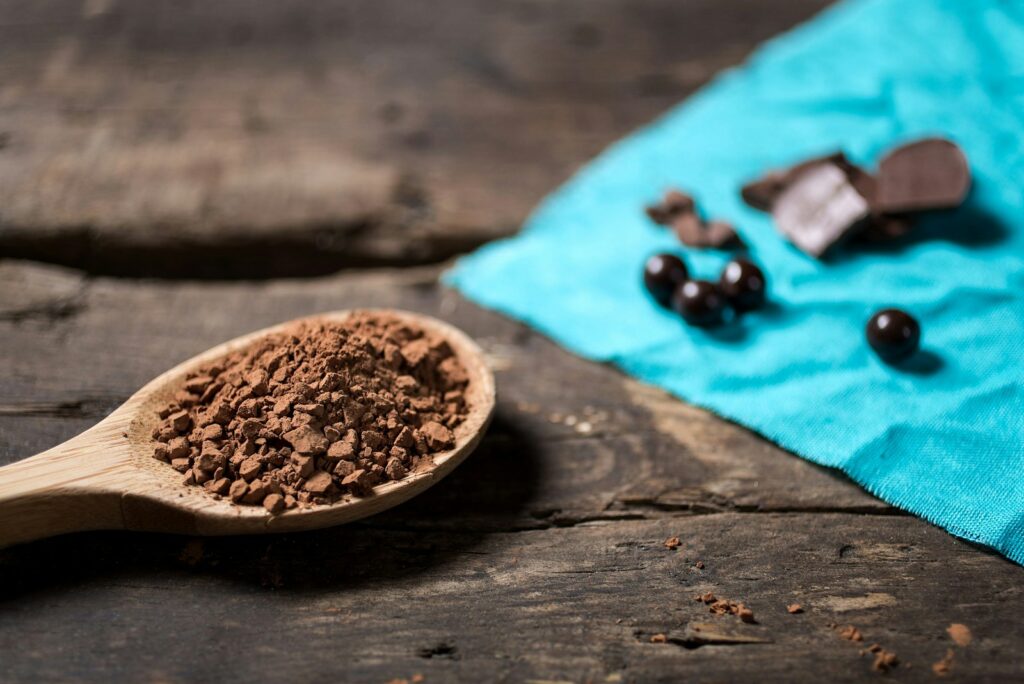
Cacao and cocoa come from the same plant, Theobroma cacao. On U.S. shelves, “cacao” often signals a less-roasted, minimally processed product, while “cocoa” often means a roasted powder—and “Dutch-process cocoa” has been treated with alkali. But that split is not a dependable legal or technical rule. I’d start with the form in the bag: Is it powder, nibs, or chocolate? Is it unsweetened? Was it processed with alkali? And what does your recipe need?
Think of cacao and cocoa as clues, not guarantees. The ingredient list and processing notes tell you far more than the name on the front.
Why the two names do not tell the whole story
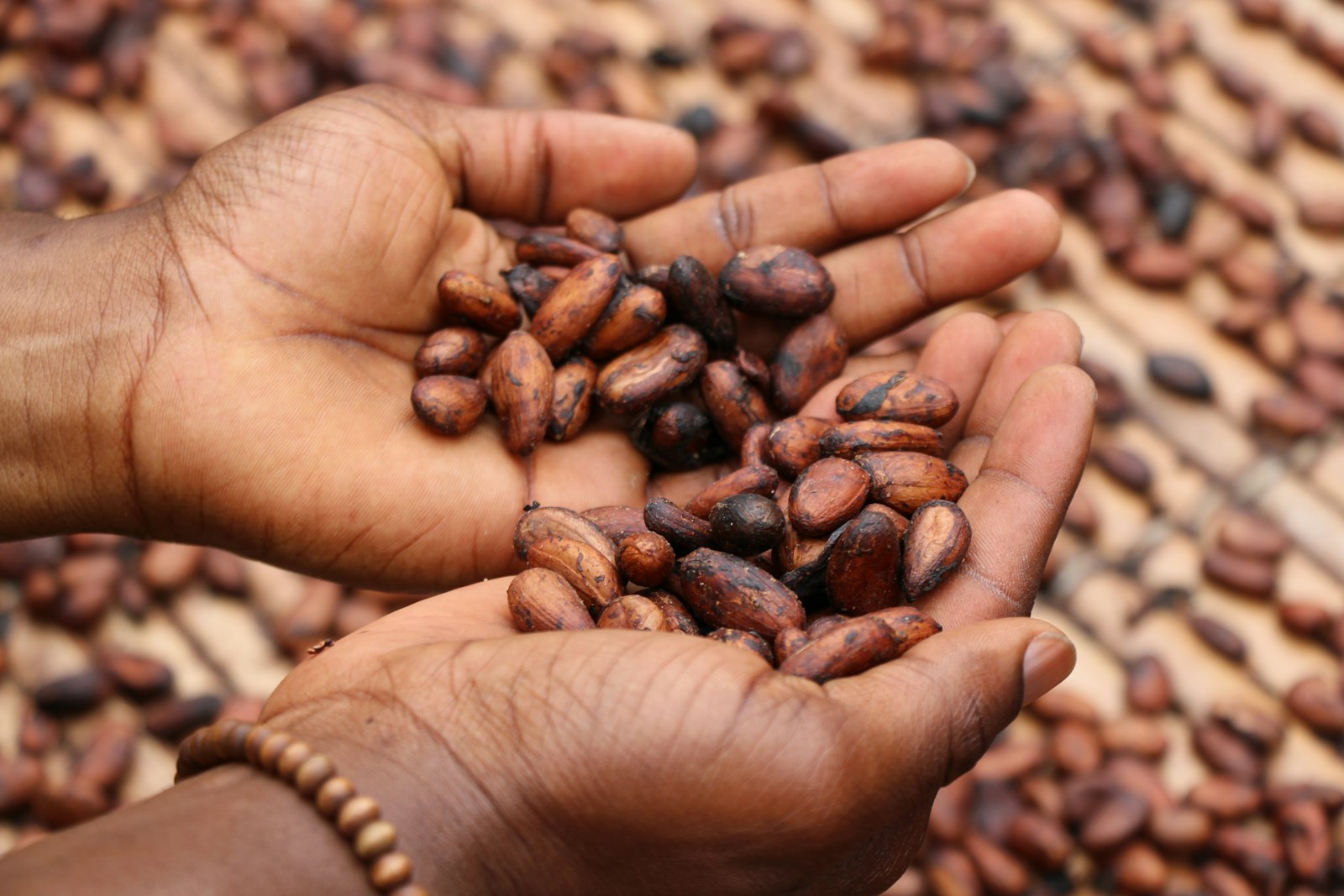
The journey begins with cacao seeds, commonly called beans. Producers ferment and dry them, then usually roast them. Once the shells are removed, the pieces inside are nibs. Grinding nibs releases their natural cocoa butter and creates a paste called chocolate liquor or cocoa mass—despite the name, it contains no alcohol. Pressing out much of that butter leaves a cake that can be milled into powder.
Retail language makes this process sound more divided than it is. A company may call a lightly roasted or lower-temperature powder “cacao,” reserving “cocoa” for a conventionally roasted product. Another may use the words interchangeably. Even “raw” does not give you one universally enforced processing temperature, and fermentation generates heat.
U.S. rules illustrate the overlap: federal standards allow the same nibs to be called “cacao nibs” or “cocoa nibs,” and those nibs may be heated with alkali if the label discloses it. In other words, cacao is not an automatic promise that a food is raw, unroasted, or nutritionally superior.
Powder, nibs, and chocolate side by side
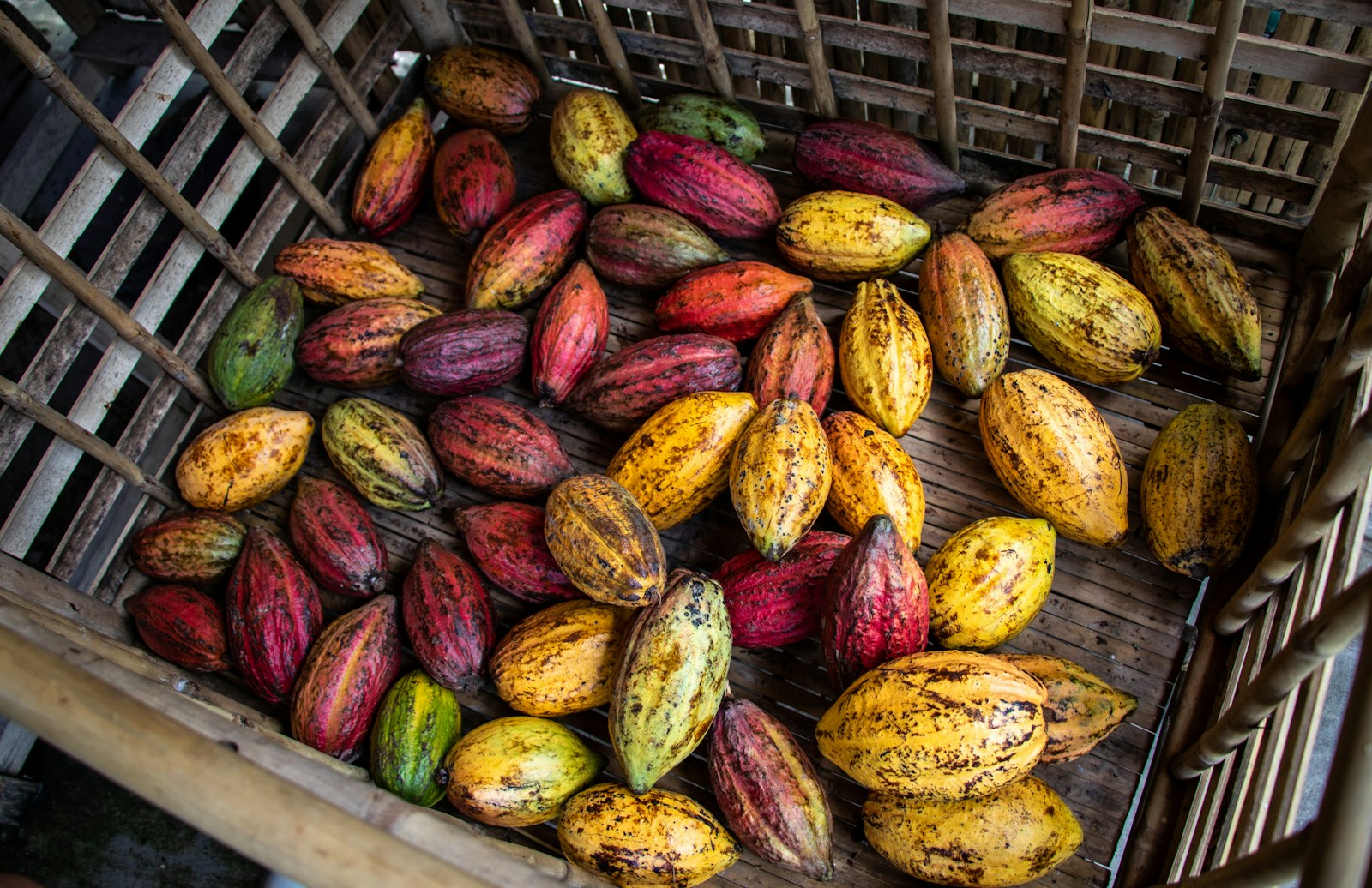
The form matters much more in the kitchen than the spelling. Here is what you are actually buying:
| Product | What it is | Flavor and texture | Best uses |
|---|---|---|---|
| Cacao powder | A brand’s name for finely ground, partly defatted cacao solids; often unsweetened and not alkalized, but check | Usually bold, bitter, sometimes fruity or sharp | Smoothies, oatmeal, drinks, no-bake treats, some baking |
| Natural cocoa powder | Unsweetened, partly defatted powder that has not been Dutch-processed | Bright, distinctly chocolatey, mildly acidic | Cakes and cookies formulated with baking soda, frostings, hot cocoa |
| Dutch-process cocoa | Cocoa treated with alkali; the label should say “processed with alkali” | Darker, smoother, mellower, sometimes earthy | Recipes written for Dutch cocoa, ice cream, sauces, drinks |
| Cacao or cocoa nibs | Shelled bean pieces that retain their cocoa butter | Crunchy, intense, bitter, nutty | Granola, cookies, salads, yogurt, crunchy toppings |
| Unsweetened or dark chocolate | Ground nibs with cocoa butter; dark chocolate also generally contains sugar | Solid, rich, melts smoothly | Baking, ganache, sauces, eating |
Nibs are not tiny chocolate chips, and powder is not simply pulverized nibs: their fat levels and behavior are different. Likewise, a 70% chocolate bar is not 70% cocoa powder. That percentage refers to cacao-derived ingredients—which may include cocoa solids and cocoa butter—while the rest may include sugar, vanilla, emulsifiers, or other ingredients.
Flavor, nutrition, and smarter label reading
Fermentation, drying, roasting, alkalization, origin, and bean variety all shape flavor. Roasting builds deep chocolate notes; alkalization softens acidity and bitterness and deepens color. A cacao-labeled powder may taste brighter, but there is no guarantee. Choose the profile that suits the food: lively in a fruit smoothie, perhaps, or rounded and dark in chocolate pudding.
Unsweetened powders contribute fiber and minerals such as iron and magnesium. Nibs retain more cocoa butter, while sweetened chocolate brings additional sugar and often more calories per serving. Cocoa also contains flavanols, but the amount varies widely with the bean and processing. Research shows that alkalization can substantially reduce flavanols; the word cacao, however, does not prove that a package contains more. Unless a maker provides tested flavanol content, avoid ranking products by the front-label language alone.
Turn the package over. For powder, look for one ingredient—cacao or cocoa—and note “processed with alkali” if present. Make sure you are not holding a sweetened drink mix. When two bags make competing wellness promises, I’d compare Nutrition Facts using equal gram weights, especially for added sugar, fiber, saturated fat, iron, and magnesium. For chocolate, read the ingredient list as well as the cacao percentage. Those details give you a fairer comparison than rustic packaging or wellness claims.
Can you substitute cacao for cocoa?
Usually, unsweetened cacao powder and unsweetened natural cocoa powder can trade places 1:1 by weight in smoothies, oatmeal, pudding, frosting, and many recipes without chemical leavening. Expect a shift in bitterness, acidity, and fruitiness. Because powders can pack differently in a cup, a kitchen scale gives the most reliable swap.
Baking deserves more care. Natural cocoa is acidic and is often paired with baking soda; Dutch-process cocoa is alkalized and is commonly used in formulas balanced with baking powder. Swapping one for the other can change rise, spread, color, and flavor. Here I’d let the leavener settle the argument: if a cake, brownie, or cookie recipe specifies Dutch-process or natural cocoa—especially when baking soda is involved—follow that instruction rather than choosing by the words cacao or cocoa.
Do not replace powder directly with nibs or a chocolate bar. Nibs add crunch and cocoa butter; chocolate adds substantial fat and, unless unsweetened, sugar. Either one changes the recipe’s moisture and structure. Use nibs as a mix-in, and choose a recipe designed for melted chocolate when that is the result you want. The simple rule is wonderfully unglamorous: shop by form, ingredients, and function, not by which word sounds more wholesome.
Sources
- eCFR: 21 CFR Part 163—Cacao Products
- eCFR: 21 CFR § 163.110—Cacao Nibs
- Harvard T.H. Chan School of Public Health: Dark Chocolate
- Miller et al., “Impact of Alkalization on the Antioxidant and Flavanol Content of Commercial Cocoa Powders”
- FDA: How to Understand and Use the Nutrition Facts Label
- USDA FoodData Central

Hi, I’m Laura, the voice behind Tastiva. I’ve always believed that eating well should feel enjoyable, comforting, and realistic—not like another complicated rule to follow. I love creating recipes that fit into everyday life, sharing simple nutrition ideas, and finding small ways to make meals feel a little better without losing the pleasure of good food.