
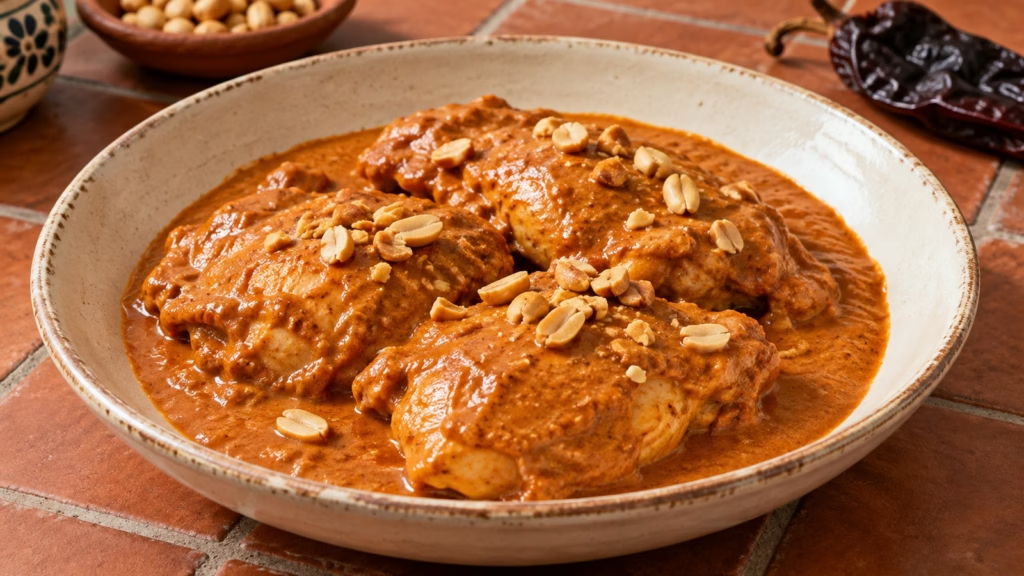
Peanuts may make you think of a sweet spread, but a skillet of pollo encacahuatado takes them in a savory direction. Toasted peanuts, roasted tomatoes and ancho chiles become a reddish sauce that clings to chicken thighs, with a little cinnamon and cumin behind it. The useful trick is to keep that sauce moving and loose enough to flow while the chicken finishes cooking.
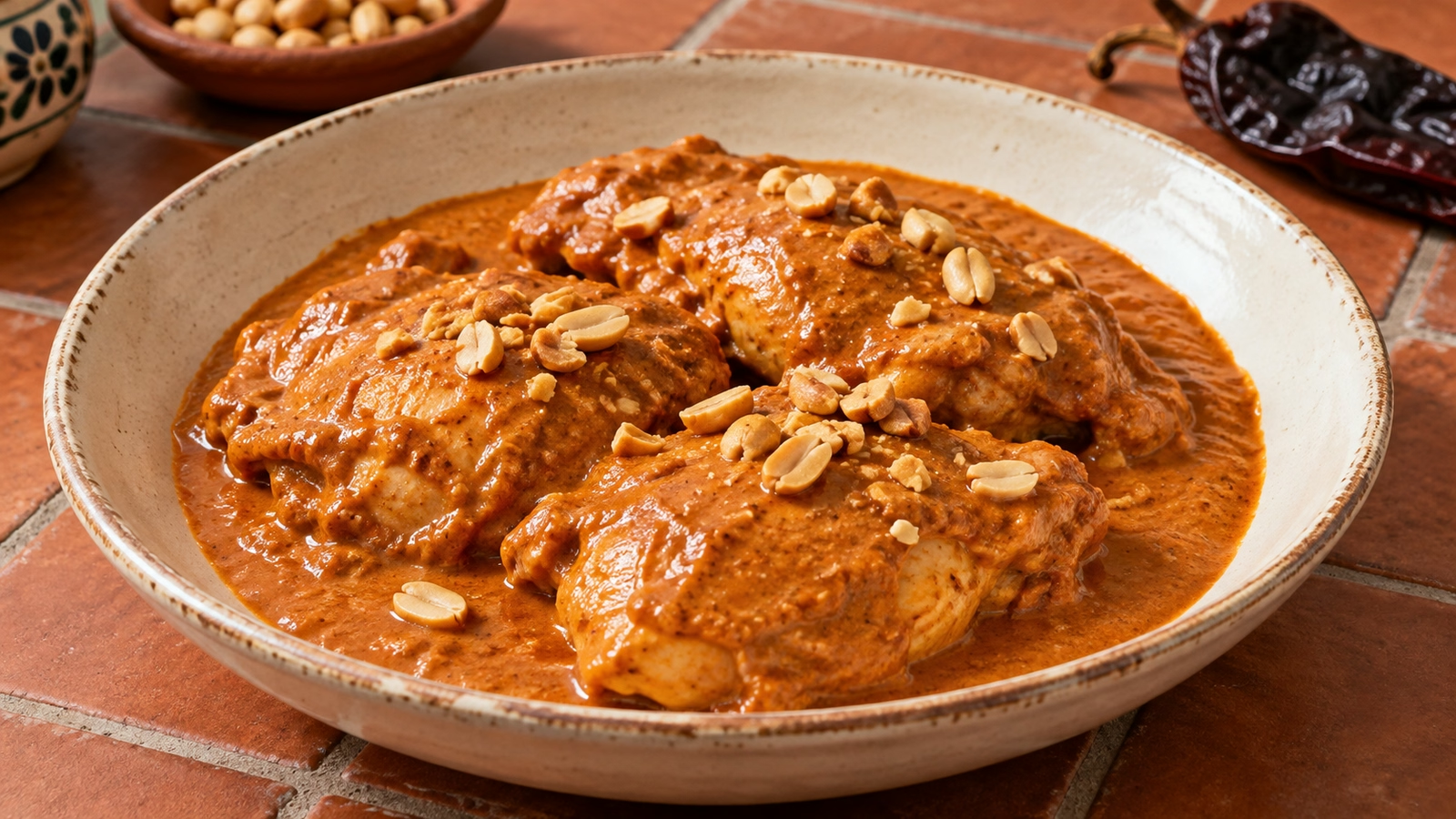
Let the peanuts thicken the sauce, then use water and gentle heat to keep it generous and spoonable.
What makes pollo encacahuatado distinctive
Encacahuatado describes a peanut-based preparation, and Mexican versions vary in their chiles, spices and meat. The Centro de Estudios de Historia de México includes a chicken version in its recipe collection. Here, the emphasis is on a manageable ancho-and-tomato sauce, with boneless thighs that are easy to portion.
I would keep the ingredient list focused rather than make the dish sweeter to match an expectation about peanuts. There is no cream, chocolate or sweetened peanut butter in this version. The roasted tomatoes and mild warmth of the spices have plenty to do.
- Plain peanuts: use unsalted, shelled peanuts and rub away loose papery skins. Salted or heavily seasoned snack peanuts change the sauce before cooking begins.
- Ancho chiles: weigh them after removing the stems and seeds. Their size varies, so a count of two is less reliable than the 30-gram target.
- Chicken thighs: 900 grams of boneless, skinless meat supplies six portions. Bone-in pieces require a different timing check and cannot be substituted by the same weight without changing the yield.
- Allergen note: peanuts are central to this dish. This recipe is not suitable for someone with a peanut allergy, and a casual seed swap does not establish safety.
Toast and roast before blending
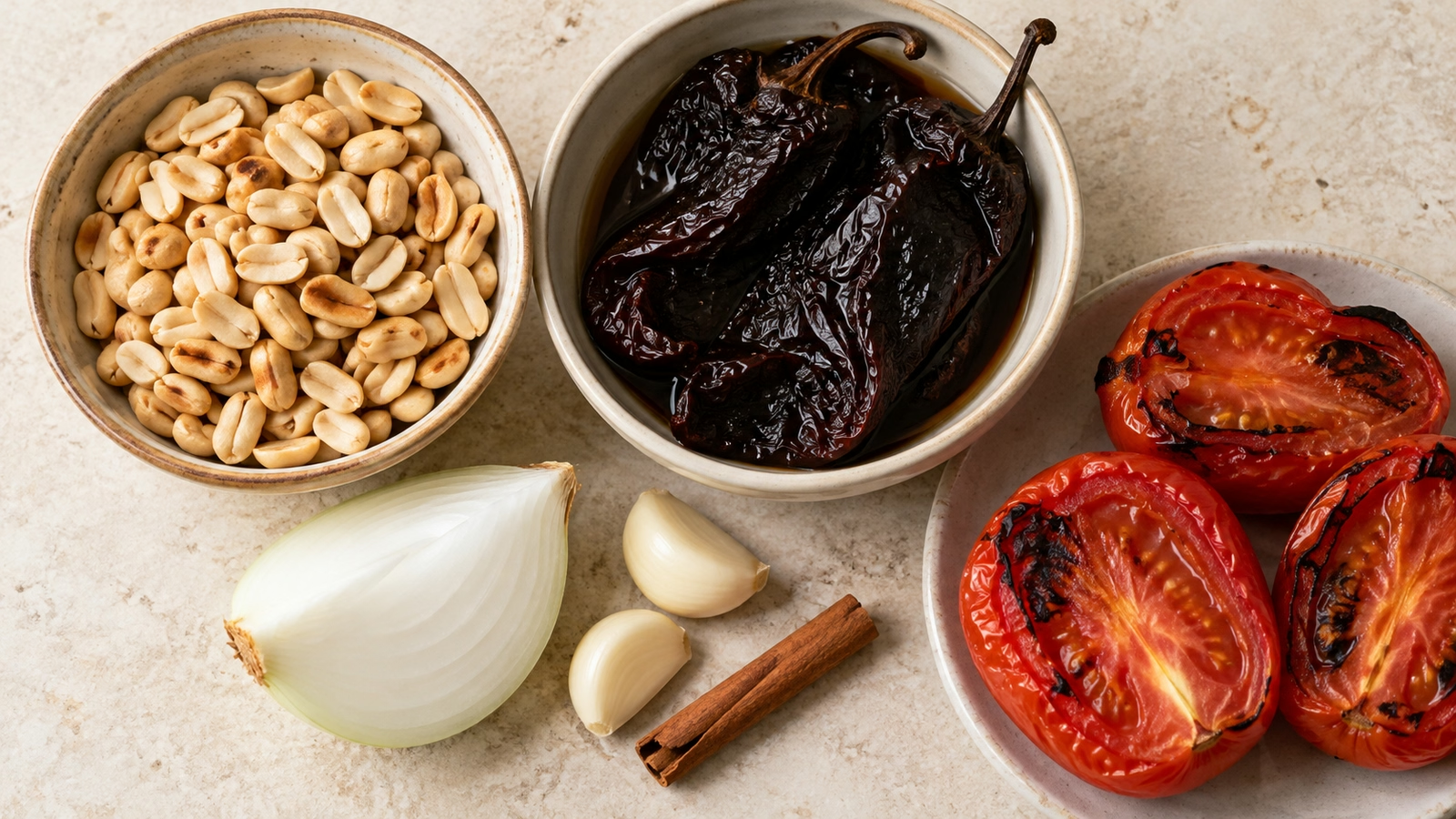
Give the peanuts and chiles separate turns in the skillet. Peanuts need time to become lightly golden; dried chiles need only brief contact before they soak. Combining them in one pan makes it harder to stop each at the right point.
- Peanuts: stir over medium-low heat and remove them as soon as they smell toasted. Reserve a small measured amount for the finish.
- Chiles: toast without smoke or black spots, then soak until flexible. Burned chile does not become less bitter because it is blended.
- Tomatoes and onion: soften them on a griddle or heavy skillet, turning so they pick up browned spots. Save the tomato juices for the blender.
- Garlic: add it toward the end of the roasting time. It is much smaller than a tomato and does not need the same appointment with the heat.
- Spices: use the measured ground cinnamon and cumin. They should support the peanuts and chile, rather than turn the sauce into a spice cupboard tasting.
A smooth sauce that will not catch on the bottom
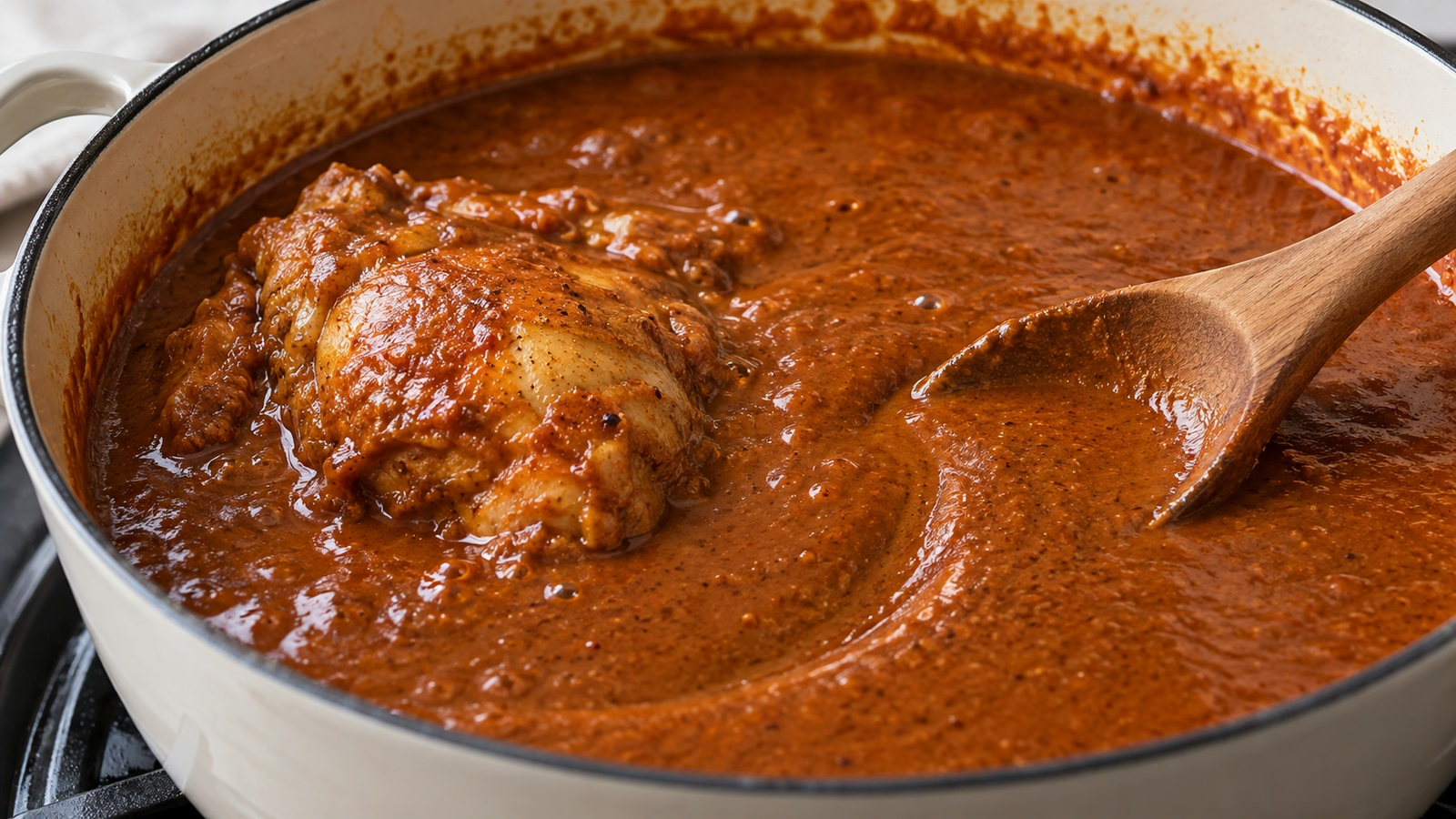
The blender does the texture work before the sauce reaches the chicken. Add enough of the measured water for the mixture to circulate, then stop and scrape down if it leaves a thick ring above the blades. Follow your blender’s hot-liquid instructions or let the roasted ingredients cool first.
Once the sauce is in the pot, I would choose a broad, heavy pan and keep a spoon nearby. Peanut sauce is quick to leave a stubborn layer underneath when it gets too thick. A quiet simmer and regular stirring are more useful than an impressive cloud of steam.
- Brown the chicken briefly: this gives the surfaces color, but it does not cook the centers. Transfer the pieces to a clean plate while you start the sauce.
- Cook the blended sauce: stir it in the same pan for a few minutes, scraping the bottom gently. Then add the remaining water and return the chicken with its juices.
- Watch the trail: a spoon should move through the sauce easily. If it leaves a trench that stays open, add hot water in small amounts.
- Measure doneness: chicken must reach 165°F in the thickest part. Test the meat itself, not the surrounding sauce.
- Taste last: add the remaining salt only after the sauce has cooked. Different peanuts and enhanced chicken products can change what it needs.
Serve the sauce, and keep leftovers in small portions
Spoon some sauce onto each plate before adding the chicken, then finish with the reserved chopped peanuts. Plain rice or warm corn tortillas work alongside, especially when you want something to catch the sauce. If you keep cooked rice in freezer portions, this is a useful sauce to serve alongside it.
For a second meal, loosen the refrigerated sauce before heating it hard. It naturally becomes thicker as it sits, so a little water is a practical correction. Keep the garnish separate if you want its crunch.
- Cool safely: use shallow containers and refrigerate within two hours, or one hour above 90°F. Do not wait for a large pot to reach room temperature.
- Store cold: keep at 40°F or below and eat within three to four days.
- Reheat fully: stir the sauce and bring the chicken and sauce to 165°F throughout. A hot edge does not establish a hot center.
- Read the estimate: card nutrition includes all the sauce, oil and peanut garnish, divided into six portions. Rice and tortillas are additional; missing nutrient values are not zeros.
Pollo Encacahuatado Recipe

Ingredients
- 900 g boneless skinless chicken thighs about 2 lb raw, without added solution
- 10 g canola oil about 2 tsp
- 6 g fine salt about 1 tsp, divided
- 180 g raw unsalted peanuts about 6 1/3 oz, shelled and loose skins removed; reserve 10 g after toasting
- 500 g ripe red tomatoes about 1.1 lb
- 120 g white onion about 4 1/4 oz, in wedges
- 12 g garlic about 4 peeled cloves
- 30 g dried ancho chiles about 2 large chiles, weighed without stems and seeds
- 1 g ground cinnamon about 1/2 tsp
- 2 g ground cumin about 1 level tsp
- 700 ml water about 3 cups, plus more as needed
Equipment
- 1 Heavy skillet or griddle
- 1 Wide heavy pot with lid
- 1 Blender
- 1 Kitchen scale
- 1 Instant-read thermometer
Instructions
- Toast the peanuts in a dry skillet over medium-low heat for 4–6 minutes, stirring until lightly golden. Transfer to a plate and reserve 10 g for serving. Briefly toast the cleaned ancho chiles separately, then soak in hot water for 15 minutes and drain.
- Roast the tomatoes and onion on the skillet or griddle for 12–15 minutes, turning until softened and spotted with brown. Add the garlic near the end so it softens without burning. Retain tomato juices.
- Blend the peanuts except the reserved garnish with the chiles, roasted vegetables and juices, cinnamon, cumin and 500 ml of the water until no hard pieces remain. Work in batches if needed and cool hot ingredients first unless your blender allows them.
- Pat the chicken dry without rinsing and season with 3 g salt. Heat the oil in the wide pot and brown the thighs 3–4 minutes per side. They will not yet be cooked through. Move them to a clean plate.
- Carefully add the blended sauce to the same pot and cook 5 minutes over medium-low heat, stirring along the bottom. Add the remaining 200 ml water and return the chicken with its juices.
- Partially cover and simmer gently for 20–25 minutes, stirring carefully. Add hot water a little at a time if the sauce becomes pasty. Check that the thickest part of every piece reaches at least 165°F.
- Taste and add up to the remaining 3 g salt if needed. Divide among six plates, spoon over the sauce and scatter on the reserved peanuts. The sauce should coat the chicken and slide from a tilted spoon.
Nutrition
Notes
Tried this recipe?
Let us know how it turned out!Sources
- Centro de Estudios de Historia de México: pollo encacahuatado
- FoodSafety.gov: safe minimum cooking temperatures
- USDA: leftover storage
- USDA FoodData Central: ingredient composition
Hi, I’m Laura, the voice behind Tastiva. I’ve always believed that eating well should feel enjoyable, comforting, and realistic—not like another complicated rule to follow. I love creating recipes that fit into everyday life, sharing simple nutrition ideas, and finding small ways to make meals feel a little better without losing the pleasure of good food.