
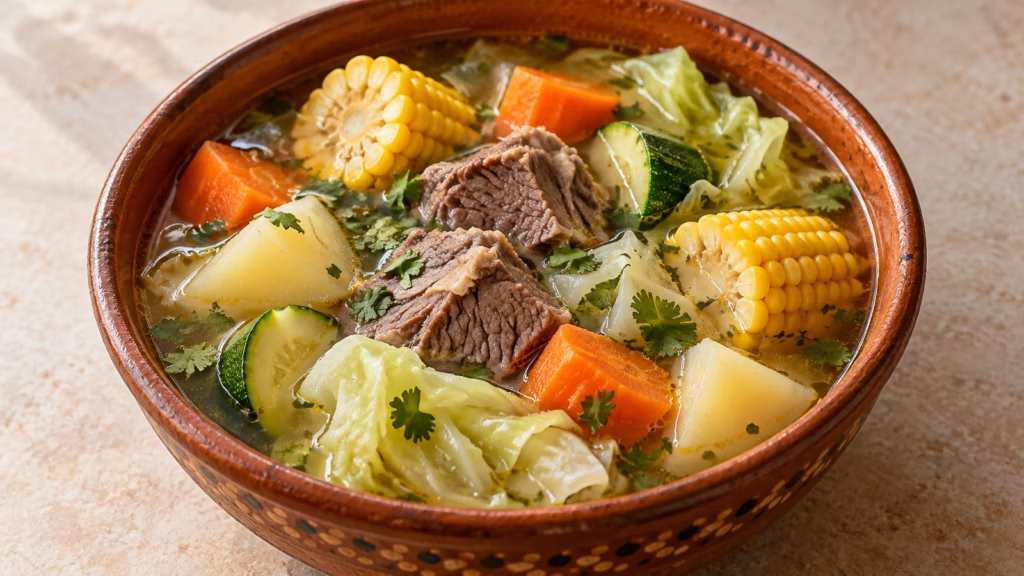
Caldo de res asks for a generous pot and a little patience. The beef needs time to become tender; the vegetables need far less. Keeping those two jobs separate is what gives you a bowl with soft meat, sweet corn and vegetables you can still recognize, rather than everything collapsing into the broth together.
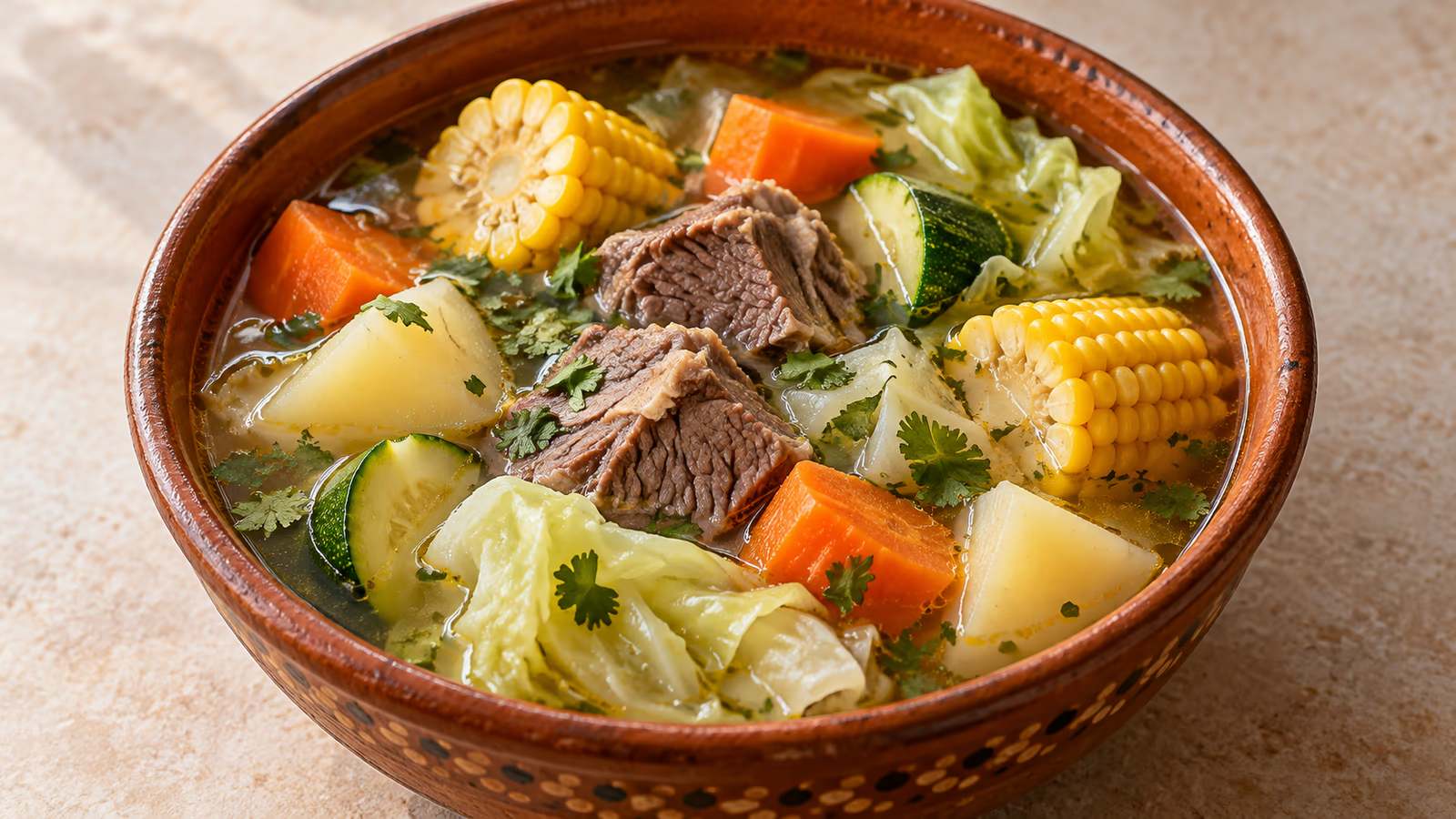
Let the beef set the pace, then add the vegetables when the broth is ready for them.
This is a clear-broth version made with boneless chuck, carrots, potatoes, corn, zucchini and cabbage. It makes six substantial servings, with lime and cilantro offered at the table. I’d choose wide bowls and give everyone a fair share of the larger pieces before ladling the broth over them.
Choose beef that welcomes a slow simmer
Beef shank and marrow bones are familiar choices for caldo de res, while regional and family versions vary. Mely Martínez also describes chuck as an option. Boneless chuck keeps this version straightforward to portion and avoids having to navigate bones at the table. It still needs a gentle, patient simmer; a quick boil won’t give it the same tenderness.
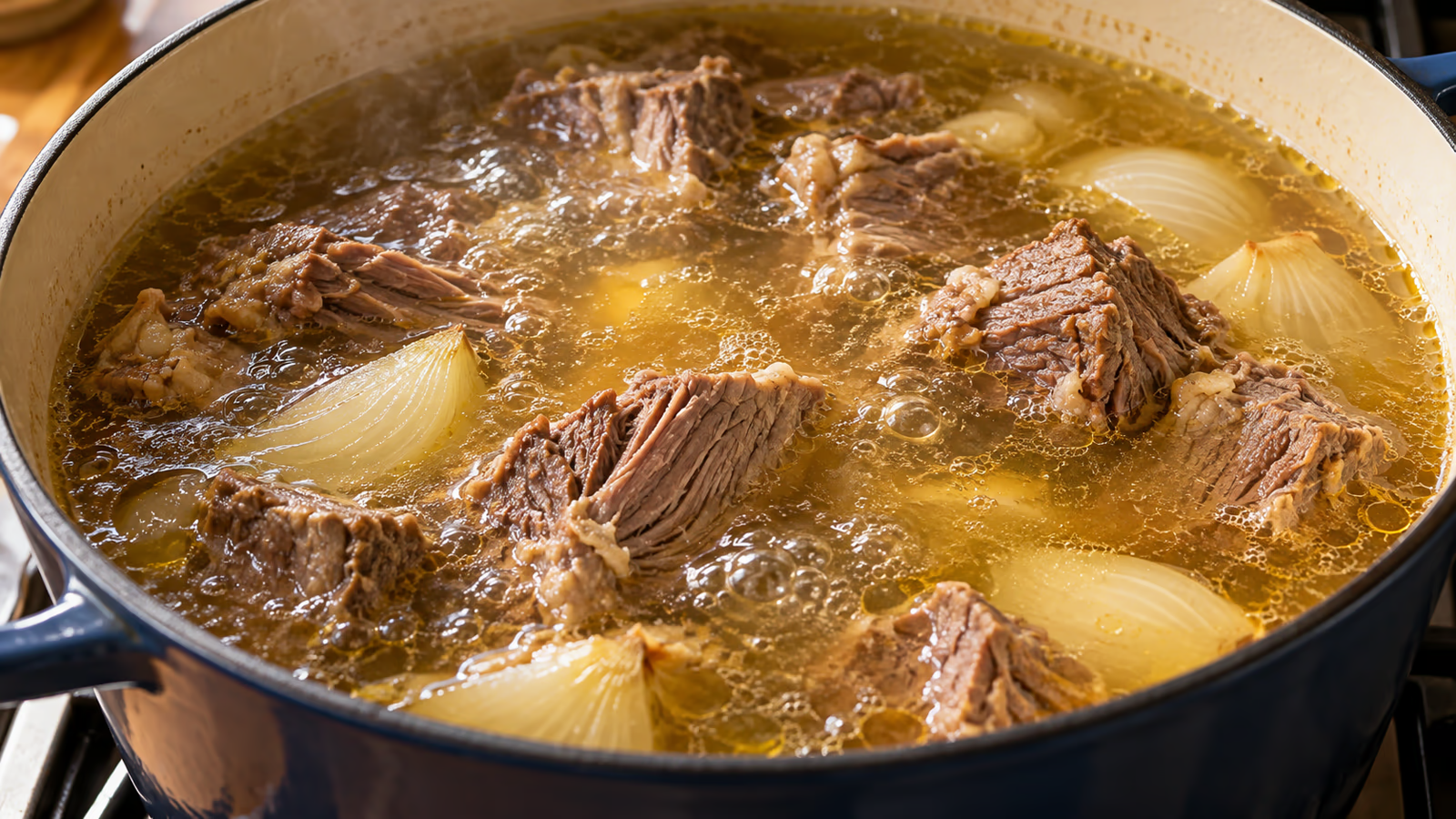
Trim obvious thick patches of exterior fat, then cut the beef into roughly two-inch pieces. Small cubes can break up before the rest of the pot is ready. Put the meat in a large pot with onion, garlic and water, bring it toward a boil, then lower the heat so the surface moves gently.
- Use a six- to eight-quart pot so there is room for the vegetables later.
- Skim surface foam with a spoon if you want a clearer-looking broth.
- Keep the meat mostly submerged, adding hot water as needed instead of letting the pot reduce to a stew.
Prepare the vegetables in useful sizes
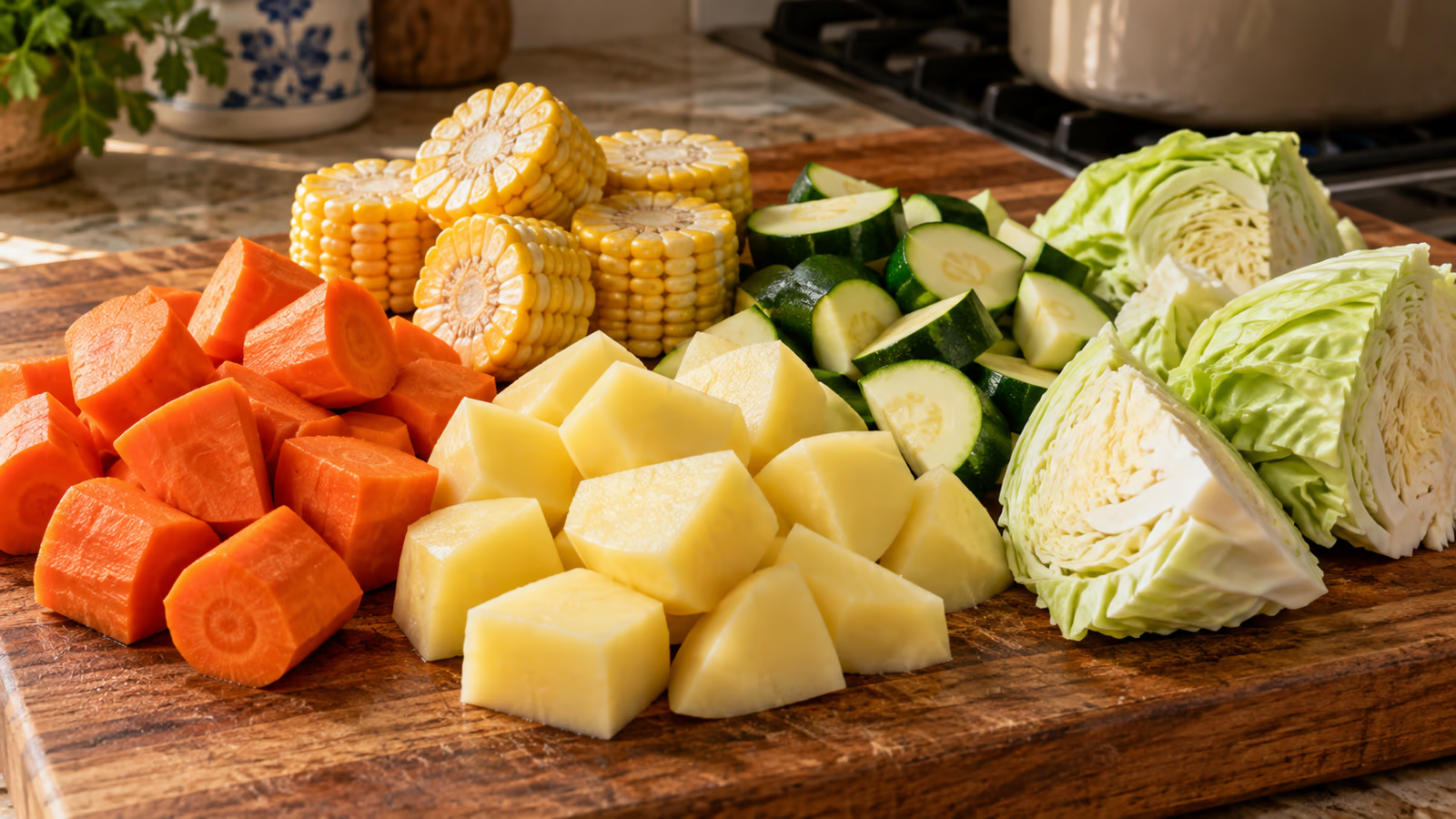
While the beef cooks, wash and cut the vegetables. Give carrots and potatoes pieces large enough to survive the remaining simmer, and keep the zucchini in thick chunks. Corn rounds belong in the bowl for their flavor and texture, but they don’t have to be tiny. Cut them carefully on a stable board with a sturdy knife.
Use ordinary green cabbage for this version. Its firm leaves hold up better to a longer simmer than delicate napa leaves. If that is the cabbage you have, our green cabbage and napa comparison explains why the timing needs to change. Weigh the trimmed portion rather than relying on the size of a whole head.
- Keep carrot, potato and corn together for the first vegetable addition.
- Keep zucchini and cabbage separate so they can join closer to the end.
- Choose similar sizes within each vegetable, rather than trying to make every ingredient the same shape.
Add the vegetables after the meat is tender
Check the beef with a fork before putting the vegetables in. A piece should yield readily when pressed and pulled apart. If it is still tight and chewy, continue simmering and check again later. The exact time depends on the cut and the size of the pieces, so the clock is a reminder to check, not a reason to rush.
Once the beef is tender, add the carrots, potatoes and corn. Give them a head start before adding zucchini and cabbage. Keep the simmer gentle and turn the larger pieces carefully rather than stirring hard. Check a potato with the tip of a knife; the center should be tender without the outside falling away.
Taste the broth near the end. Water evaporates and vegetables add their own flavor, so early seasoning is only a starting point. The card uses a measured amount of salt for a reproducible estimate, but you can use less. If the broth tastes too concentrated, add a little hot water and bring the pot back to a simmer.
Serve generously and cool leftovers promptly
Lift the beef and vegetables into bowls first, then add broth. Put out lime wedges and chopped cilantro so each person can finish their own serving. Tortillas or rice can go alongside if wanted, but the potatoes and corn already make this a substantial soup. Those extras are separate from the recipe’s nutrition estimate.
A large stockpot cools slowly, so divide leftovers into shallow containers rather than leaving the whole pot on the counter. Refrigerate within two hours, or within one hour if the surroundings are above 90°F (32°C). Keep at 40°F (4°C) or below and use within three to four days. Small containers also make tomorrow’s lunch easier to find.
Reheat the portion you need to 165°F (74°C), stirring gently so the broth and solid pieces heat evenly. You can freeze portions for longer storage, though potatoes and zucchini may become softer after thawing. Thaw in the refrigerator and add fresh lime at the table; it gives the reheated bowl a bright finish without changing the character of the soup.
Caldo de Res Recipe

Ingredients
- 2 pounds boneless beef chuck 907 g after trimming thick exterior fat; cut into 2-inch pieces
- 10 cups water 2.4 liters, plus more as needed
- 1 medium onion, quartered 150 g prepared weight
- 4 cloves garlic, peeled and lightly crushed 12 g
- 1 1/2 teaspoons fine salt 9 g; divided, or use less to taste
- 2 large carrots, cut into thick pieces 200 g prepared weight
- 2 medium potatoes, scrubbed and cut into large chunks 300 g; skin may be left on
- 2 ears fresh sweet corn, husked and cut into rounds about 290 g edible kernels; cobs are not eaten
- 1 medium zucchini, cut into thick chunks 250 g
- 200 g green cabbage, cut into large pieces about 3 cups loosely packed
- lime wedges and chopped cilantro optional; not included in nutrition
Equipment
- 1 6- to 8-quart soup pot with a lid
- 1 sturdy knife and stable cutting board
- 1 ladle
- 1 Food thermometer for reheating
Instructions
- Place the beef, water, onion, garlic and half the salt in a large soup pot. Bring toward a boil, then reduce to a gentle simmer. Skim surface foam as desired. Partially cover and simmer for about 90–120 minutes, or until the beef yields easily to a fork. Add hot water as needed to keep the meat mostly submerged.
- While the beef cooks, wash and prepare the vegetables. Keep the zucchini and cabbage separate from the carrots, potatoes and corn.
- Once the beef is tender, add the carrots, potatoes and corn. Add a little hot water if needed to keep the vegetables largely in the broth. Simmer gently for about 15–20 minutes, until the potatoes are nearly tender.
- Add the zucchini and cabbage and simmer for another 10–15 minutes, until all the vegetables are tender. Turn the larger pieces gently rather than stirring vigorously. Taste the broth and add the remaining salt as needed; use less if preferred.
- Divide the beef and vegetables among six bowls, then ladle over the broth. Offer optional lime wedges and cilantro at the table. Cooking time may vary with the beef cut and piece size; tenderness is the deciding cue.
Nutrition
Video
Notes
Tried this recipe?
Let us know how it turned out!Sources
- Mely Martínez, Mexico in My Kitchen: caldo de res and its variations
- USDA: safe storage of leftovers
- USDA: safe reheating
- USDA FoodData Central: ingredient nutrition data
Hi, I’m Laura, the voice behind Tastiva. I’ve always believed that eating well should feel enjoyable, comforting, and realistic—not like another complicated rule to follow. I love creating recipes that fit into everyday life, sharing simple nutrition ideas, and finding small ways to make meals feel a little better without losing the pleasure of good food.