
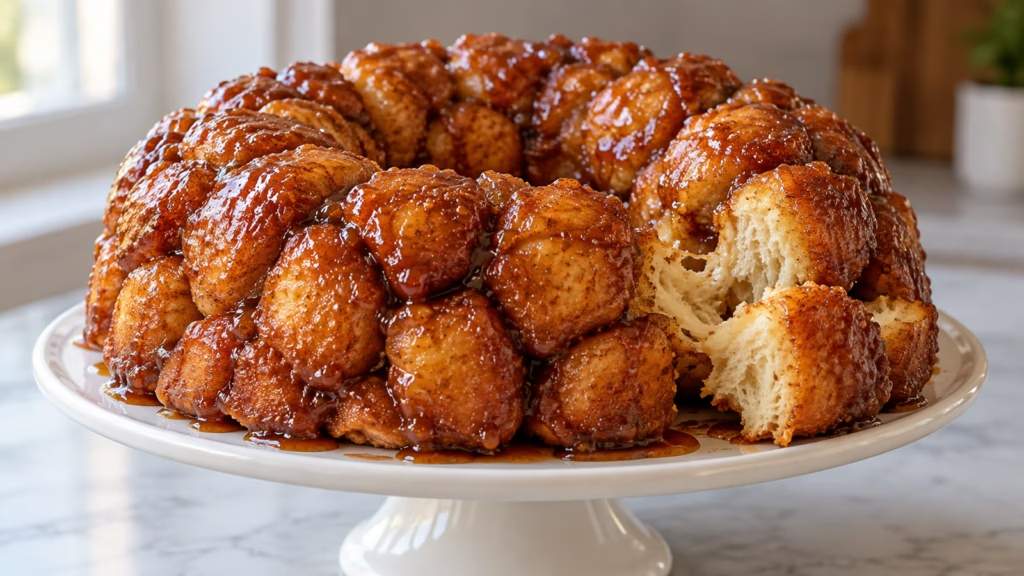
Monkey bread is a good reason to put a serving plate in the middle of the table and let everyone choose a piece. Small balls of soft yeast dough bake together under cinnamon sugar and a buttery brown-sugar coating. The pleasure is in pulling them apart: sticky edges on the outside, a tender bread center within.
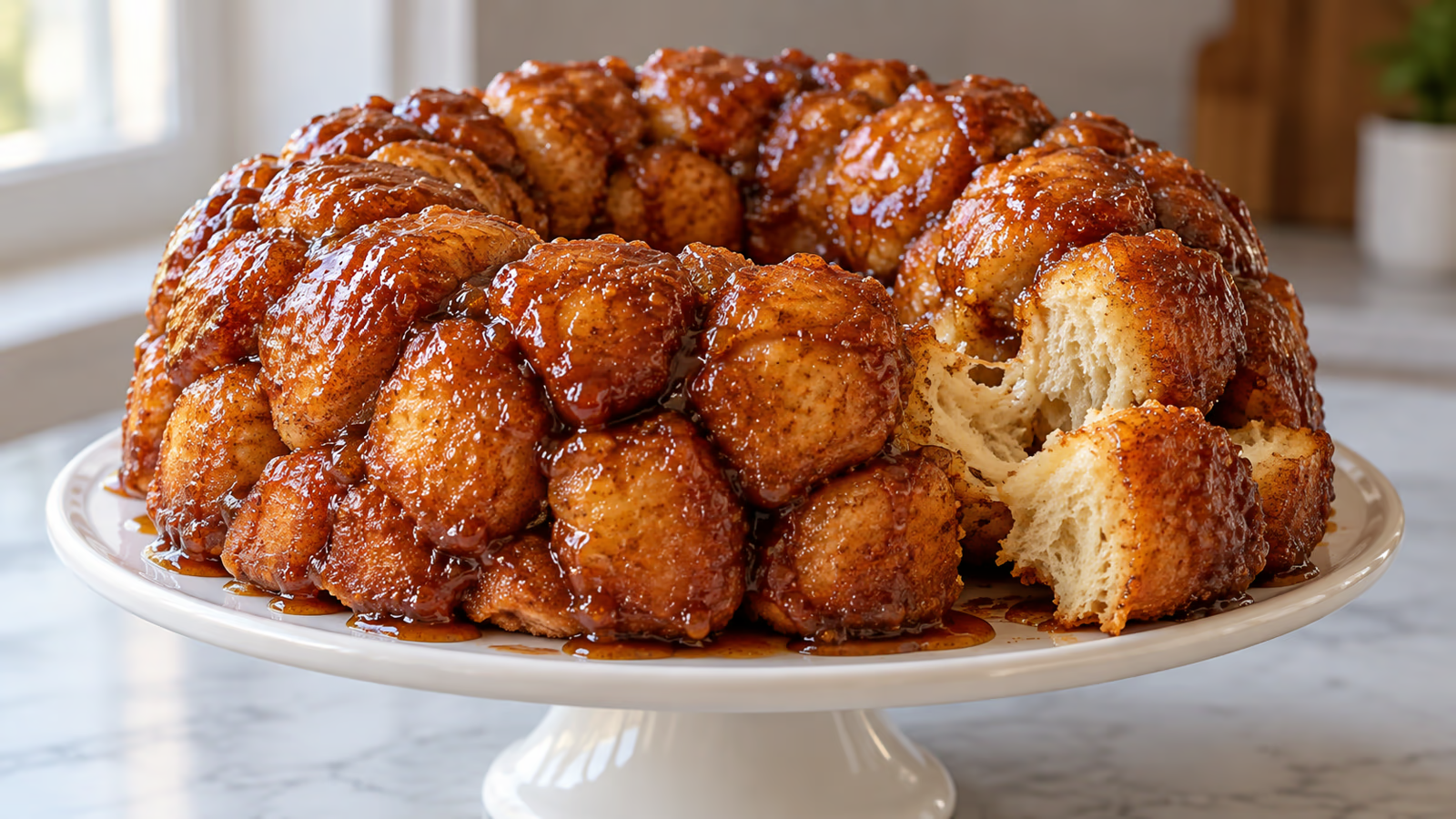
Give the dough time to become soft bread, then let the cinnamon coating do the decorating.
This monkey bread recipe uses homemade dough rather than refrigerated biscuits. It needs a leisurely morning or afternoon, with much of that time spent waiting for the dough to rise. I’d skip extra icing here; the cinnamon and brown sugar already give the finished ring a generous sweet finish.
Start with a soft dough and a realistic schedule
Milk, eggs and butter make this an enriched dough. It should feel soft and slightly tacky after kneading, rather than dry enough to leave every surface spotless. A little stickiness is easier to manage with a dough scraper than with repeated handfuls of flour, which can turn a tender bread into a heavy one.
Use a scale for the flour if possible. Measuring by cups can pack in more than intended, especially when the cup is pushed directly into the bag. Keep a little extra flour nearby for the work surface, but add it sparingly. The amount in the card is the starting formula, not an invitation to keep dusting until the dough is stiff.
- Warm the milk gently and check its temperature. Very hot milk can damage yeast before the dough gets started.
- Let melted butter cool slightly before adding it to the eggs and yeast mixture.
- Knead until the dough becomes elastic. A small stretched piece should form a thin membrane before tearing, a useful checkpoint described by King Arthur Baking.
Let the rise guide you, then shape evenly
Transfer the dough to a lightly greased bowl, cover it and look for a clear increase in volume. A cool kitchen slows the process, while a warm spot speeds it up. Marking the starting level on a straight-sided container makes the change easier to judge than trying to remember how the dough looked an hour ago.
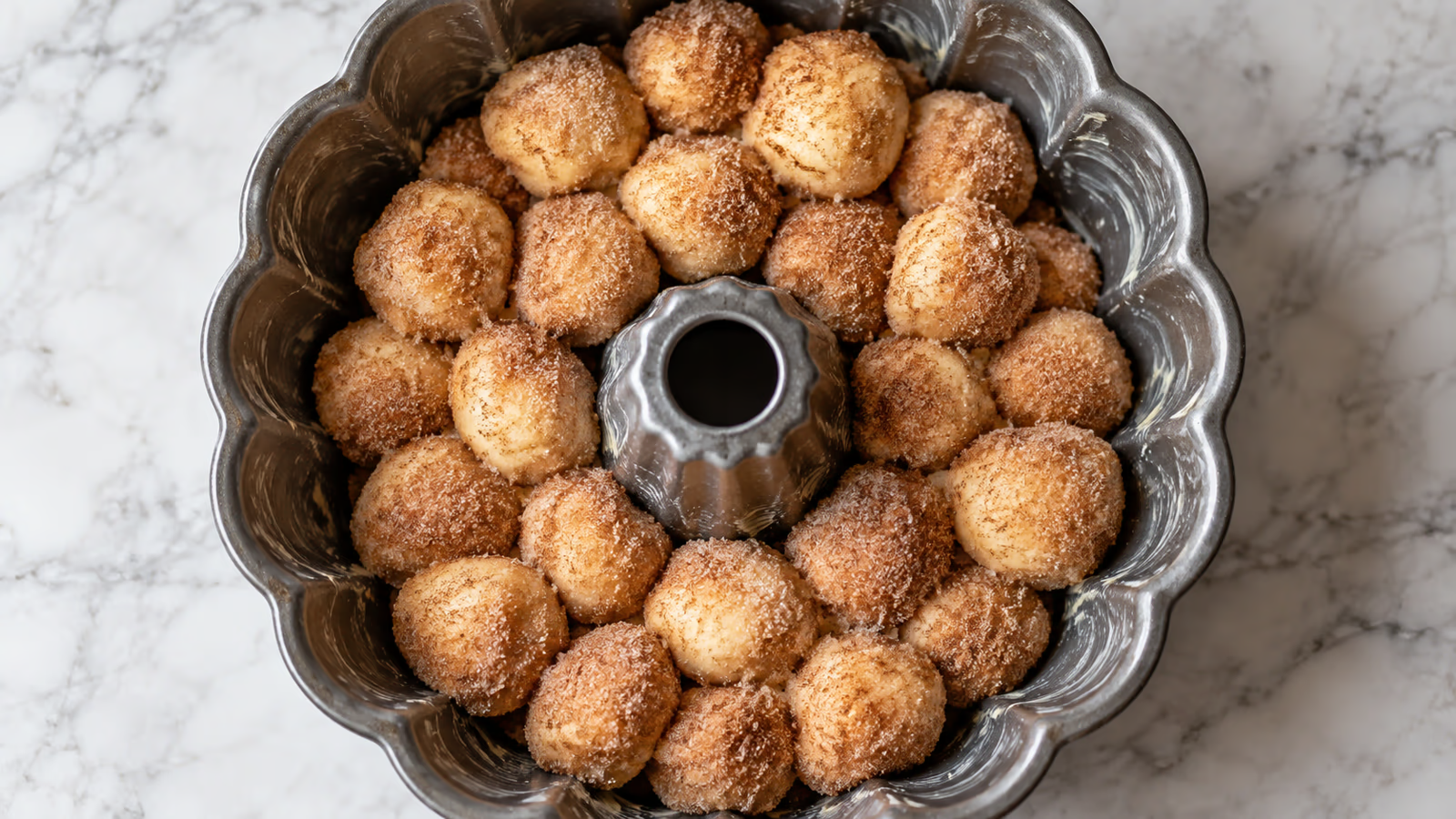
After the first rise, gently press out the large air pockets and divide the dough into small pieces. Aim for similar sizes so the ring bakes evenly. You do not need perfectly smooth, identical balls; the coating and the way they settle together make this a forgiving shape.
- Set up the melted butter and cinnamon sugar beside the prepared pan before you start rolling.
- Coat each piece, then place it loosely into the pan. Don’t press the whole layer flat.
- Use a 10- to 12-cup Bundt pan. A smaller decorative pan can leave too little room for the dough to expand.
Bake for the bread inside the sticky coating
The top can look beautifully brown before the inner pieces are fully baked. That is the main trap with a tall ring of coated dough. Bake on the middle rack and check a central dough piece, not just the sugary surface. A thermometer in an inner bread piece should read about 190°F (88°C), away from the hot sugar and pan. If the top is browning quickly, loosely shield it with foil while the center finishes.
The brown-sugar sauce includes a little vanilla. Our pure vanilla extract guide explains what the label means if you are choosing a bottle. Use a measured teaspoon here; more liquid is not a shortcut to a stronger, better-balanced coating. Keep the sauce ingredients separate from the butter used for dipping so both amounts reach the right place.
A rimmed baking sheet on the rack below can catch an occasional drip without crowding the Bundt pan itself. When the bread is done, let it stand briefly before turning it out. Hot sugar can burn, so use dry oven mitts and a large heatproof plate with a rim rather than a small flat board.
Serve warm, with room for a second piece
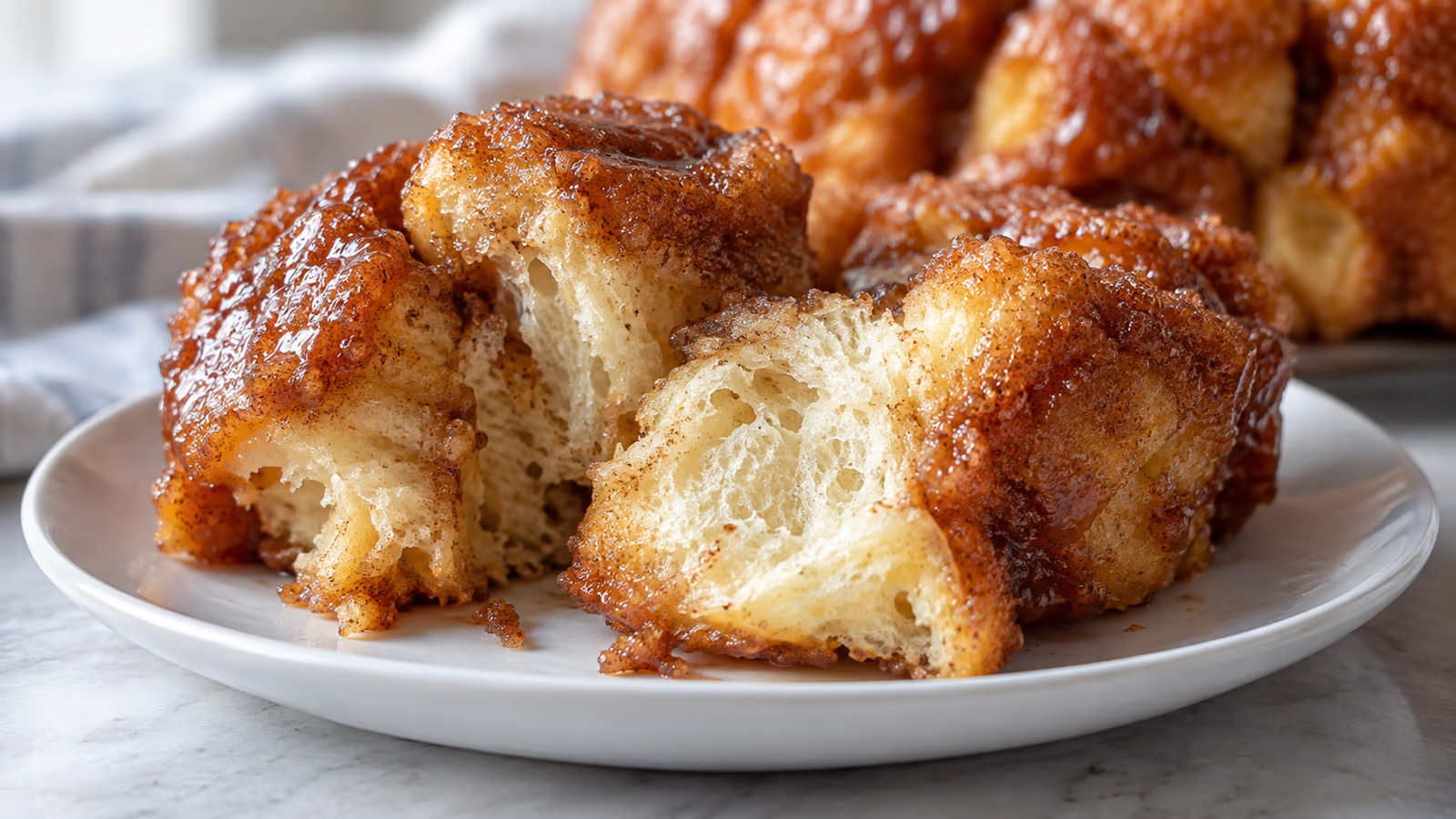
Invert the pan carefully while the coating is still warm enough to release. Let the bread cool until comfortable to handle before pulling off a piece. Serving forks or small tongs are helpful for a shared table, and a knife works if you would rather divide the ring into more even portions.
The card divides the full batch into fourteen servings and includes all the measured coating in its nutrition estimate. Some butter and sugar may remain in the bowls or pan, so actual portions vary. This is a sweet bread for sharing; there is no need to dress it up as a high-protein breakfast or make a health promise it cannot support.
Once completely cooled, wrap leftovers well to protect the soft crumb. Keep at cool room temperature for up to a day, or refrigerate for a few days; freeze portions for a longer pause. Rewarm small portions gently until comfortable to eat. Do not taste the raw dough, and clean flour-dusted tools and surfaces after shaping.
Monkey Bread Recipe

Ingredients
- 1 1/2 cups whole milk 360 ml, approximately 366 g; warmed to 110°F (43°C)
- 2 1/4 teaspoons active dry yeast 7 g; one standard packet
- 1/4 cup granulated sugar 50 g
- 2 large eggs 100 g without shells
- 5 tablespoons unsalted butter, melted and cooled slightly 71 g
- 1 teaspoon fine salt 6 g
- 5 cups all-purpose flour 625 g; spoon and level if measuring by volume
- 3/4 cup unsalted butter, melted 170 g, divided into 113 g for dipping and 57 g for sauce
- 1 1/4 cups granulated sugar 250 g
- 1 tablespoon ground cinnamon 8 g
- 2/3 cup packed brown sugar 130 g
- 1 teaspoon pure vanilla extract 4.2 g
- nonstick baking spray for greasing the bowl and pan; use a product appropriate for your pan
Equipment
- 1 10- to 12-cup Bundt pan
- 1 stand mixer with dough hook or large mixing bowl
- 1 Kitchen scale
- 1 rimmed heatproof serving plate
- 1 Food thermometer
Instructions
- Combine warm milk, yeast and the dough sugar; wait 5–10 minutes for foaming. Mix in eggs, cooled butter, salt and flour. Knead for 5–7 minutes, or until soft and elastic, using minimal extra flour.
- Cover in a lightly greased bowl and let rise until doubled, about 1–2 hours. Grease the Bundt pan thoroughly. Mix coating sugar with cinnamon.
- Press down the dough and divide into about 40–45 similar pieces. Roll into balls; dip each in the 113 g melted butter, then cinnamon sugar. Arrange loosely in the pan. Cover and rest 20 minutes while heating the oven to 350°F (177°C).
- Combine the remaining 57 g butter with brown sugar and vanilla; pour over the dough. Bake 35–45 minutes, until browned and the inner bread is fully baked, not wet dough; a thermometer in a central bread piece should read about 190°F (88°C), away from the pan and sugary gaps. Loosely cover with foil if browning early.
- Rest 5–10 minutes. Using dry oven mitts, carefully invert onto a large rimmed heatproof plate. Let cool until comfortable to handle before serving; the sugar coating is very hot.
Nutrition
Video
Notes
Tried this recipe?
Let us know how it turned out!Sources
- Sally McKenney: homemade monkey bread formula and video
- King Arthur Baking: the windowpane test
- King Arthur Baking: proofing bread
- FDA: raw flour safety
- USDA FoodData Central: ingredient nutrition data
King Arthur Baking: checking a pull-apart bread’s internal temperature
Hi, I’m Laura, the voice behind Tastiva. I’ve always believed that eating well should feel enjoyable, comforting, and realistic—not like another complicated rule to follow. I love creating recipes that fit into everyday life, sharing simple nutrition ideas, and finding small ways to make meals feel a little better without losing the pleasure of good food.