
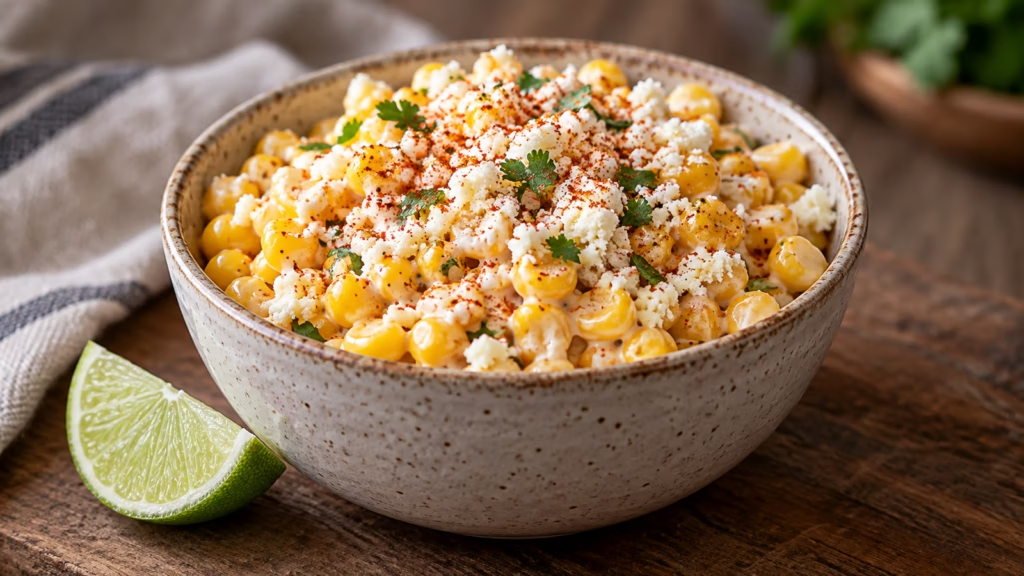
The first spoonful of an esquite should bring a little of everything: tender corn, warm broth, lime, creamy mayonnaise and crumbly cheese. Keeping those parts distinct until serving makes the cup feel generous without turning it into a bowl of heavy dressing. This version starts with fresh sweet corn and leaves the final stirring to the person holding the spoon.
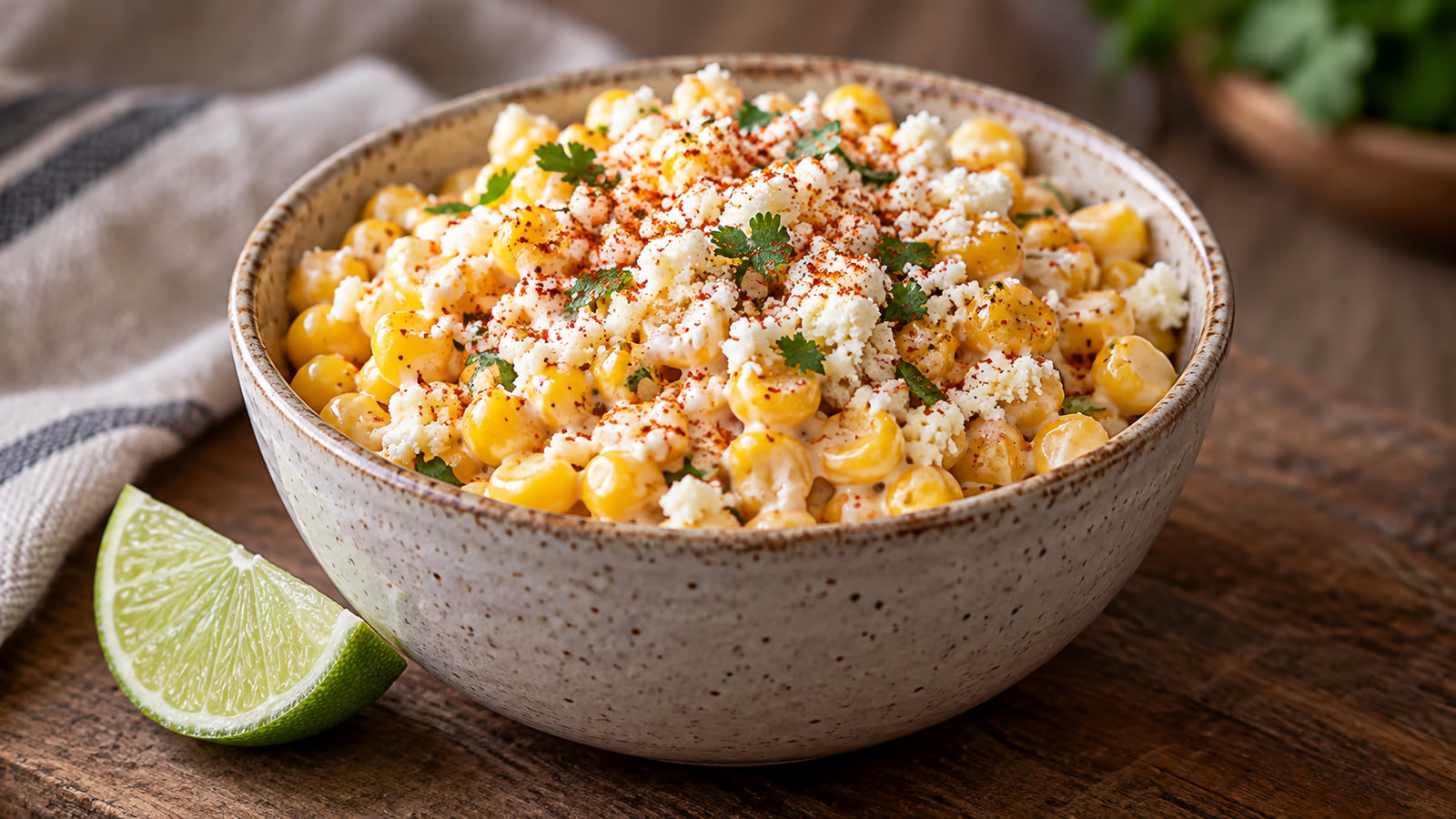
Keep a little broth with the corn, then let the lime, cheese and chile meet in the cup.
You’ll often see the dish called esquites, in the plural. Here, four small bowls or sturdy cups make it easy to serve as a snack or alongside dinner. I’d put out the chile separately when sharing; the same corn can suit someone who wants a mild spoonful and someone who wants considerably more heat.
Choose the corn for the version you’re making
This recipe uses the sweet corn commonly available in U.S. grocery stores. Chef Rick Bayless explains that the milk-stage field corn used by many Mexican vendors has a different, starchier character. Sweet corn makes a more tender, sweeter version, so this is a practical home adaptation rather than a claim that every cup in Mexico tastes the same.
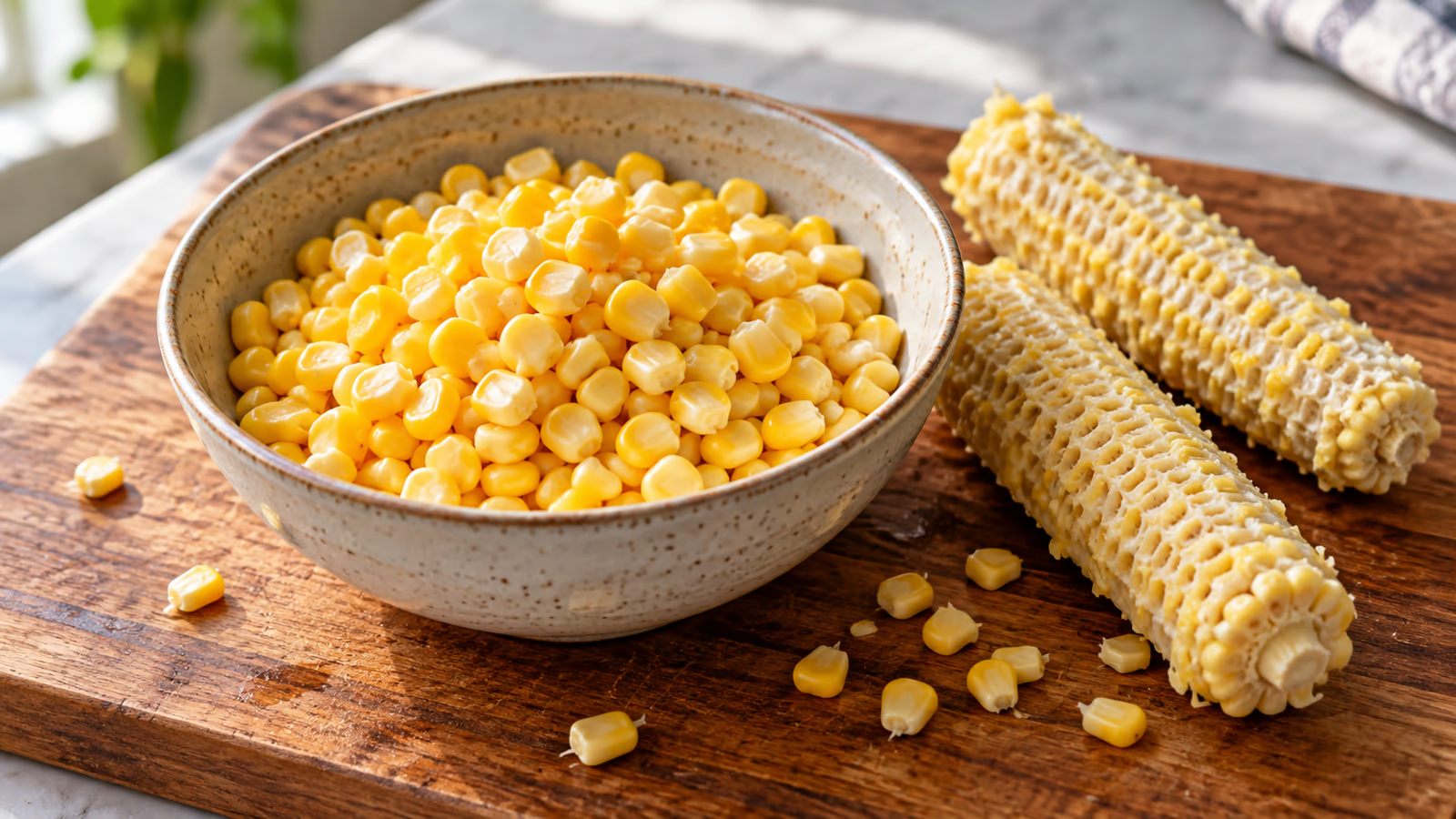
Buy ears with plump kernels and remove the husks and silk before cutting. You need 600 grams of kernels for four portions; ear size varies, so weigh the cut corn if you can. A large bowl gives the kernels somewhere to land, but a stable cutting board is easier to control than balancing a cob over a narrow bowl.
- Stand the trimmed cob securely on its flat end and slice downward carefully, keeping fingers above the knife.
- Cut off the kernels without shaving deeply into the hard cob. Tough bits won’t soften like the corn itself.
- Frozen plain corn is a practical alternative. Follow its package cooking directions and judge tenderness rather than assuming the fresh-corn timing will be exact.
Make a small pot of corn and broth
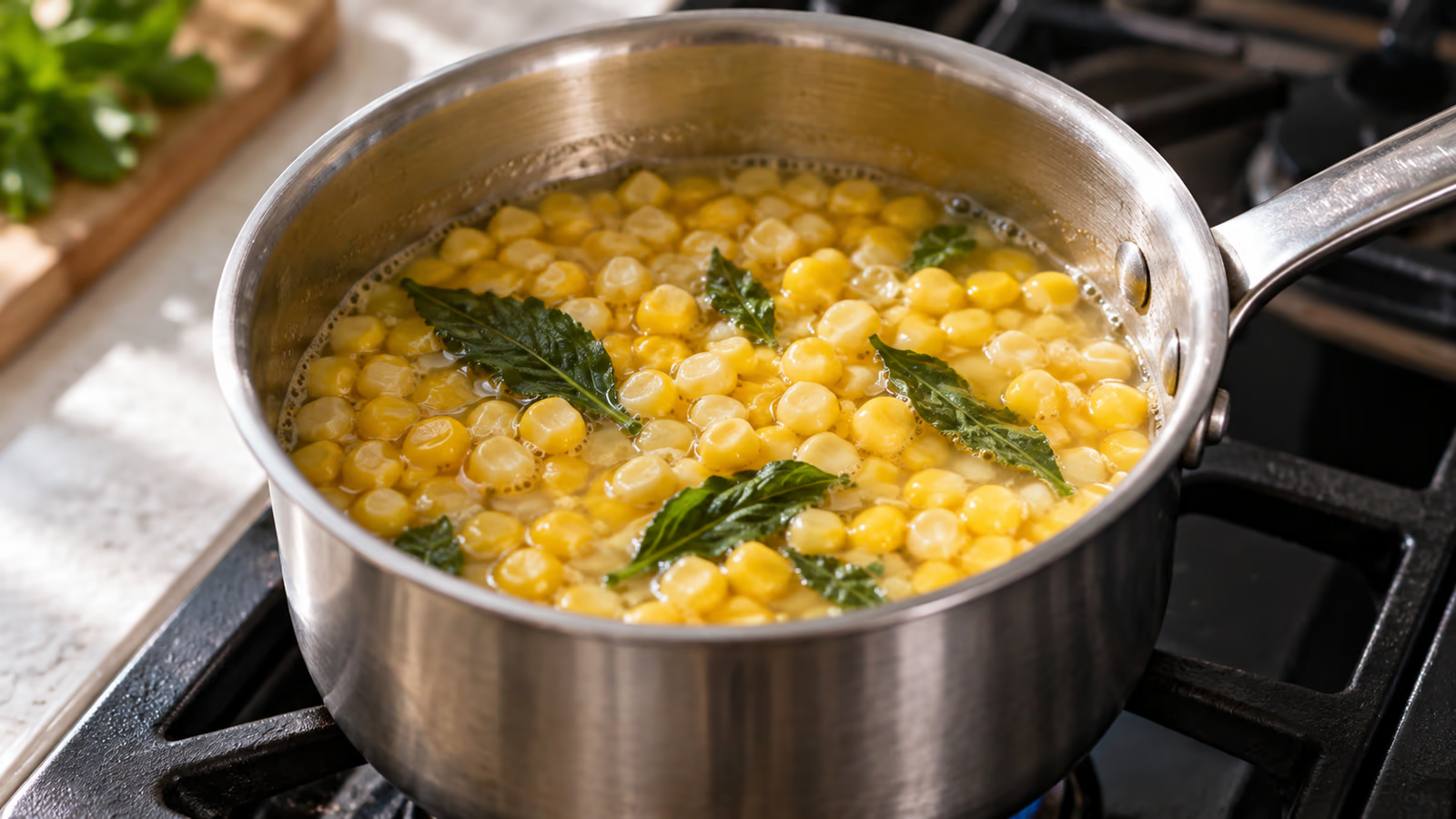
Put the kernels in a saucepan with water and, if available, a small sprig of fresh epazote. The herb has a distinctive flavor, but there’s no need to replace it with a random dried herb mixture. Leaving it out gives a simpler corn broth. Use epazote as a culinary ingredient here, not a supplement or remedy.
Bring the pan to a simmer and keep it partially covered. Check that the corn stays surrounded by liquid; add a little hot water if the level falls too far. The aim is tender kernels with enough cooking liquid left to spoon into the cups, rather than a dry, browned pan of corn.
- Taste a cooled kernel to judge tenderness before serving.
- Keep the heat gentle enough that the saucepan does not boil dry.
- Remove the epazote sprig if its stem is tough, then season the broth lightly. The cheese will add salt too.
Build each cup instead of dressing the whole pan
Ladle the cooked corn into four cups with a little broth. Add lime juice, a spoonful of mayonnaise and crumbled queso fresco, then finish with a small pinch of chile. The cheese in this version is queso fresco made with pasteurized milk. Cotija is another familiar option, but it is generally firmer and saltier, so begin with less.
Give everyone room to stir. Filling a cup right to the rim makes the first turn of the spoon a spill rather than a pleasure. A small bowl works just as well when you’re sitting at a table. Keep extra lime nearby and add it gradually; you can always brighten another spoonful without making the entire pot sharply sour.
These cups can stand on their own, or you can serve smaller portions beside baked cod tacos with lime slaw. The recipe card includes the measured mayonnaise and cheese in its estimate. Extra toppings and a main dish are additional, which matters more than trying to attach a blanket “light” or “healthy” label to the cup.
Plan ahead without losing the contrast
If you’re preparing dinner in stages, cook the corn first and keep the toppings refrigerated until needed. Store any planned leftovers before adding the mayonnaise and cheese. Separate components are easier to reheat and let you adjust the amount of broth when you come back to them.
Refrigerate perishable food in shallow containers within two hours, or within one hour above 90°F (32°C). Keep it at 40°F (4°C) or below and use the cooked corn within three to four days. Follow shorter storage instructions on the cheese or mayonnaise if applicable. Lime juice and chile do not make the finished cups safe to leave out.
Reheat the corn and broth to 165°F (74°C), stirring so the heat is even, then add the cold toppings just before eating. A little extra water can restore the broth if the corn has absorbed it. Finish with a fresh squeeze of lime, find a spoon, and keep the serving simple.
Esquite Recipe

Ingredients
- 4 cups fresh sweet corn kernels 600 g; about 4–6 ears depending on size
- 3 cups water 720 ml; add more as needed to cover the corn
- 1 small sprig fresh epazote optional, about 3 g
- 1/2 teaspoon fine salt 3 g
- 1/4 cup regular mayonnaise 60 g
- 1/2 cup crumbled queso fresco made with pasteurized milk 60 g
- 2 tablespoons fresh lime juice 30 g
- 1 teaspoon chili powder 2 g; adjust heat to taste
Equipment
- 1 medium saucepan with a lid
- 1 sharp knife and stable cutting board
- 1 ladle
- 4 heatproof serving cups or small bowls
Instructions
- Remove corn husks and silk. Trim the cob ends flat, stand each securely on a cutting board, and carefully cut off the kernels without cutting deeply into the cob. Measure 600 g of kernels.
- Put the corn, water and optional epazote in a medium saucepan. Add enough water to cover the kernels by about 1 inch if needed. Bring to a simmer, partially cover and cook gently for about 20–25 minutes, or until the corn is tender. Add hot water if the level drops too far.
- Remove any tough epazote stem. Stir in the salt and taste a cooled spoonful of broth. Keep the seasoning modest because the cheese adds salt.
- Divide the corn among four heatproof cups or bowls with enough broth to moisten it generously. Leave room for stirring. Divide the lime juice, mayonnaise and queso fresco among the cups, then sprinkle with chili powder. Serve immediately with spoons.
Nutrition
Video
Notes
Tried this recipe?
Let us know how it turned out!Sources
- Rick Bayless: esquites and corn varieties
- USDA: storing leftovers safely
- USDA: reheating food safely
- USDA FoodData Central: ingredient nutrition data
Hi, I’m Laura, the voice behind Tastiva. I’ve always believed that eating well should feel enjoyable, comforting, and realistic—not like another complicated rule to follow. I love creating recipes that fit into everyday life, sharing simple nutrition ideas, and finding small ways to make meals feel a little better without losing the pleasure of good food.