
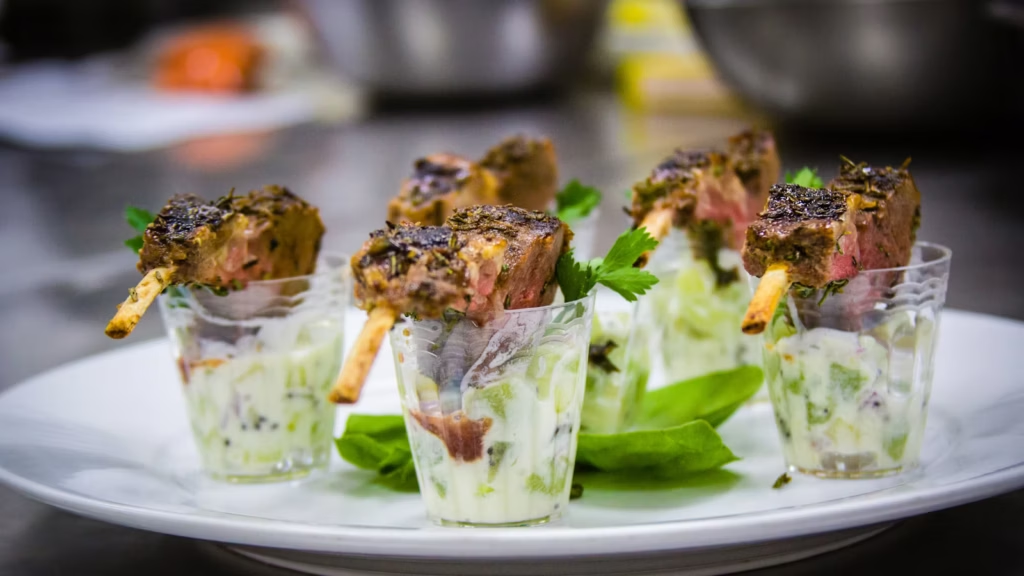
Charcuterie cups take everything people like about a grazing board—salty meat, creamy cheese, crisp crackers, fresh fruit—and turn it into an appetizer no one has to hover over. I like them for busy parties because each guest gets a sensible mix, the table stays tidier, and I can refresh a few cups at a time instead of rebuilding one enormous board.
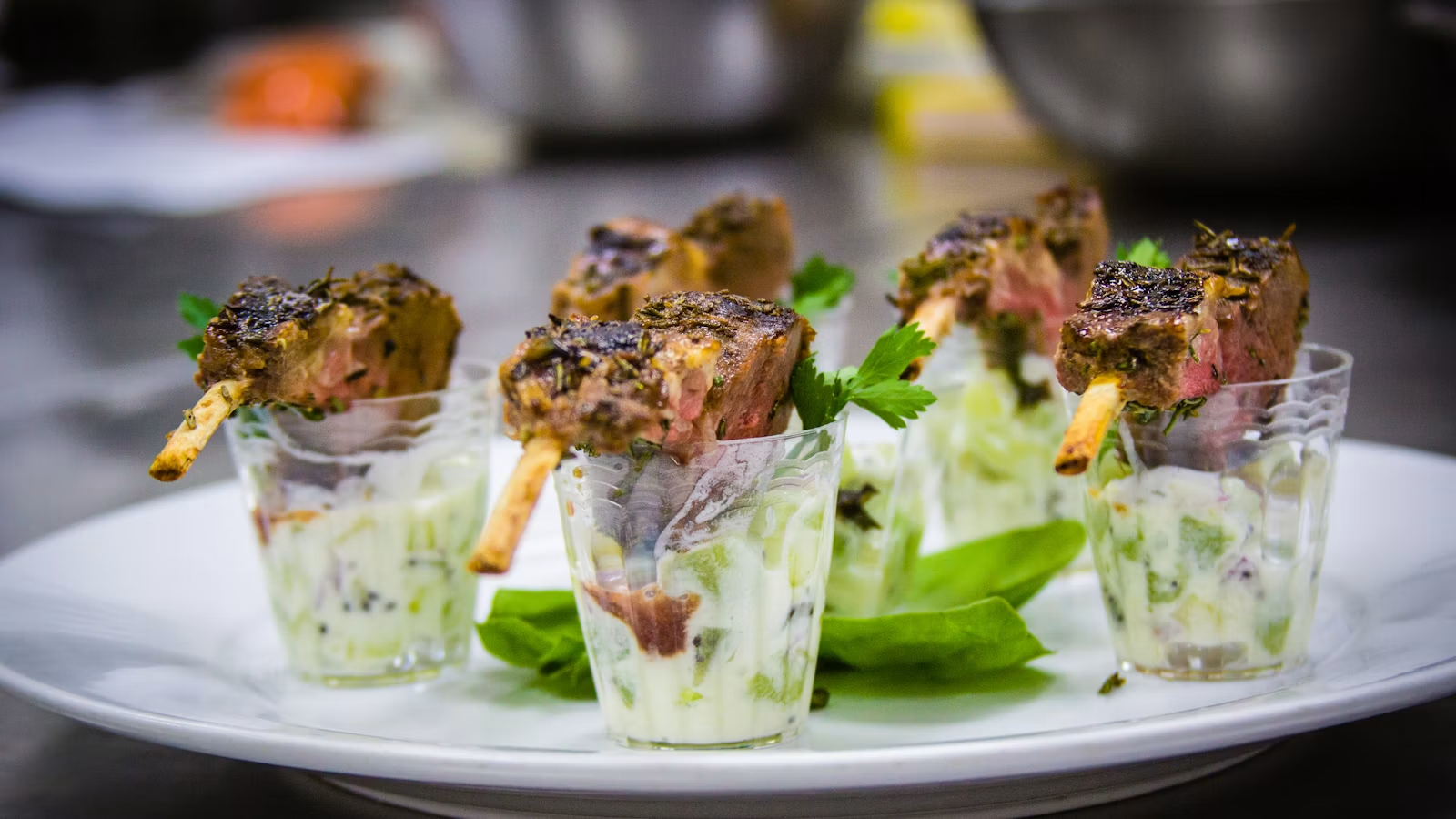
The best charcuterie cups are generous enough to feel festive, but not so packed that guests need a treasure map to find the cheese.
Why charcuterie cups work for parties
A communal board is beautiful, but it creates a small traffic jam the moment everyone arrives hungry. Individual cups solve that problem. They are easy to carry, simple to portion, and much less likely to collect abandoned toothpicks or half-broken crackers. They also help the host see exactly how much food is ready and how much should stay cold.
This version makes 12 cups, which is a good starting point for a gathering where other food will be served. If the cups are the main appetizer, plan on one or two per person. For a longer party, prepare a second tray and keep it refrigerated until the first tray is nearly gone.
The clear cups are useful for more than looks. Guests can see what they are choosing, and you can spot an empty compartment before the tray leaves the kitchen. I also find the portions more relaxed than formal plated appetizers: every cup can be slightly different, which makes the spread feel abundant without requiring perfect rows. If children will be eating, use shorter blunt picks and place the meat and cheese lower in the cup so everything is easy to reach.
Choose a balanced mix without overfilling
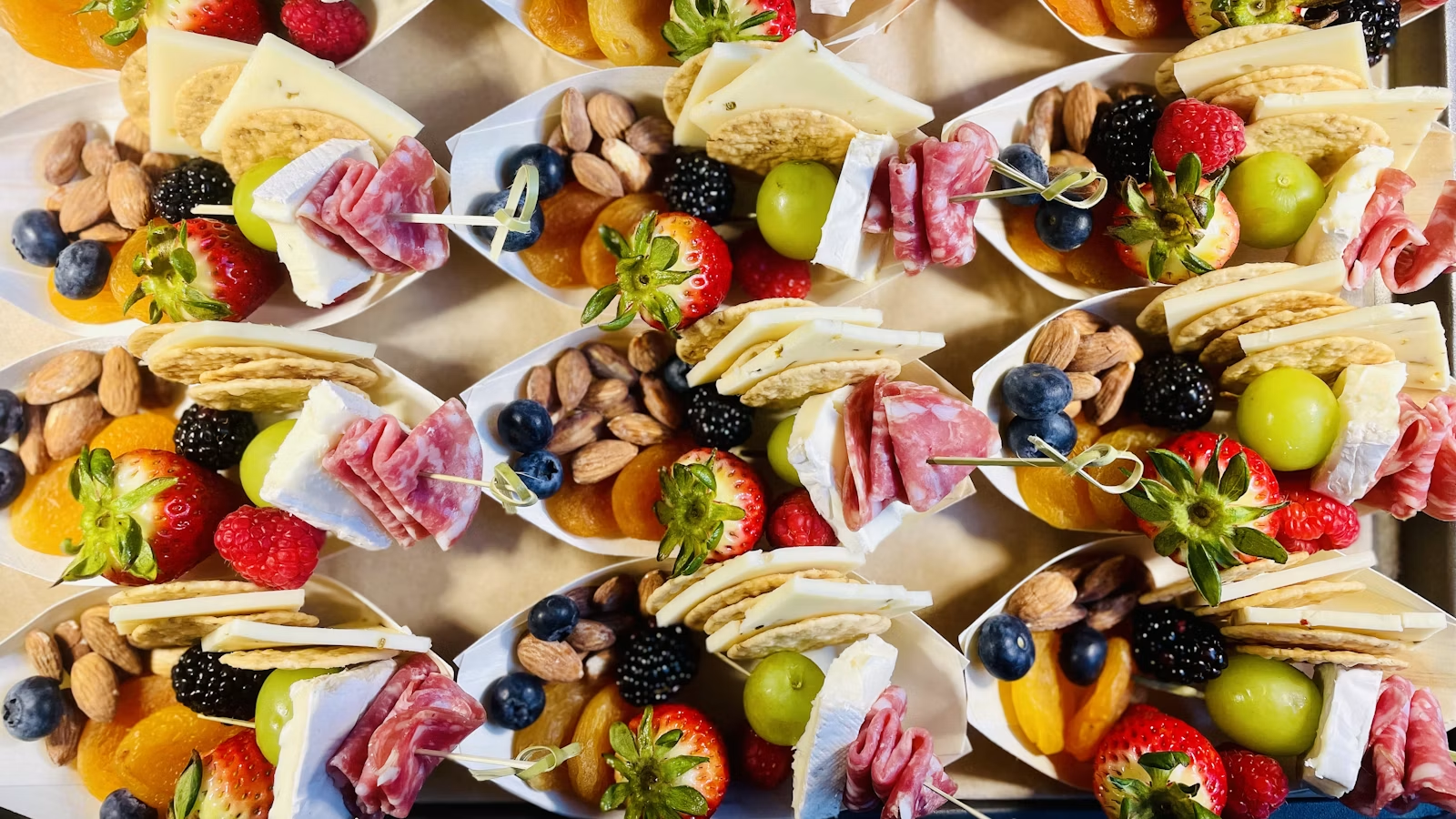
Think in contrasts rather than trying to include every item from the deli counter. One or two cured meats, two cheeses, a juicy fruit, something briny, and one crisp element make a complete cup. The recipe below uses prosciutto and salami, cheddar and mozzarella, grapes and strawberries, plus olives, cornichons, breadsticks, and crackers.
Keep wet and dry ingredients apart whenever you can. Pat fruit, mozzarella, olives, and pickles thoroughly dry before they go into the cups, and add crackers at the last minute. This one step prevents the disappointing soggy-cracker situation that can make an otherwise lovely appetizer feel tired.
For variety, swap one meat for mortadella, use a firm goat cheese instead of mozzarella, or add dried apricots in place of strawberries. Avoid too many strong flavors in one cup. A very smoky cheese, spicy salami, olives, and pickles can become more of a salt parade than a balanced bite.
Charcuterie cups recipe
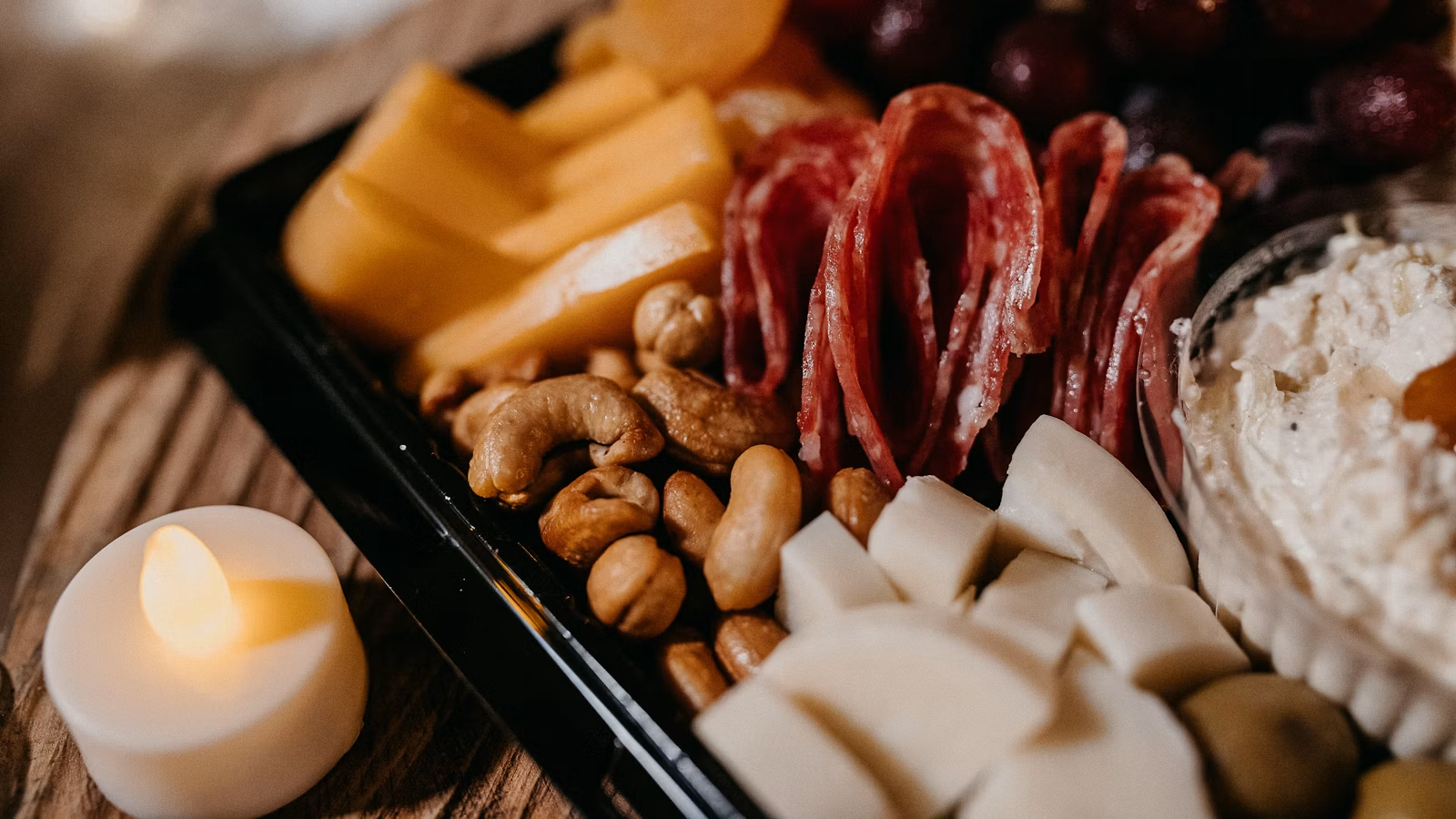
The recipe card contains the full amounts and assembly steps. A 9-ounce clear cup gives the ingredients enough room to stand upright without demanding a comically long skewer. Fold the meats loosely rather than compressing them; the ruffles look inviting and make each slice easier to pull off.
Before I assemble the first cup, I line up all 12 cups and divide the fruit and cheese across them. It is a tiny catering trick that prevents the final cup from becoming the lonely one with a single grape and no cheddar. Then I add the skewers, breadsticks, and garnishes, adjusting the height as I go. If a cup looks crowded, remove something; the goal is an appetizer guests can actually eat while standing.
Charcuterie Cups Recipe

Ingredients
- 12 thin breadsticks
- 24 small crackers add just before serving
- 12 thin slices prosciutto
- 12 thin slices salami
- 6 ounces cheddar cheese cut into 24 cubes
- 6 ounces small mozzarella pearls drained and patted dry
- 1 cup seedless grapes washed and thoroughly dried
- 1 cup small strawberries or halved large berries, patted dry
- 1/2 cup pitted olives drained and patted dry
- 12 cornichons or mini pickles patted dry
- 12 small sprigs fresh rosemary optional garnish
Equipment
- 12 clear 9-ounce cups
- 12 6-inch skewers or sturdy cocktail picks
- 1 Cutting board
- 1 Sharp knife
- 1 serving tray
Instructions
- Wash the fruit, then dry it very well. Drain and dry the mozzarella, olives, and pickles. Cut the cheddar into 24 bite-size cubes.
- Thread one folded slice of prosciutto, one folded slice of salami, two cheddar cubes, and two mozzarella pearls onto each skewer. Vary the order so the colors look lively rather than too arranged.
- Divide the grapes, strawberries, olives, and cornichons among the 12 cups. Nestle one prepared skewer and one breadstick into each cup.
- Place the cups on a tray, cover loosely, and refrigerate until serving. Keep them at 40°F (4°C) or below.
- Add two crackers and a rosemary sprig to each cup just before serving so the crisp ingredients stay crisp. Set out only the number of cups guests are likely to eat promptly, replenishing from the refrigerator as needed.
Nutrition
Video
Notes
Tried this recipe?
Let us know how it turned out!Make-ahead, serving, and food-safety tips
You can build the meat-and-cheese skewers and portion the chilled ingredients up to eight hours ahead. Arrange the cups on a rimmed tray, cover them loosely, and refrigerate. Wait to add the breadsticks and crackers until guests are about to arrive. Fresh rosemary is optional, but a small sprig gives the cups height and a lovely herbal scent without adding another ingredient guests must eat.
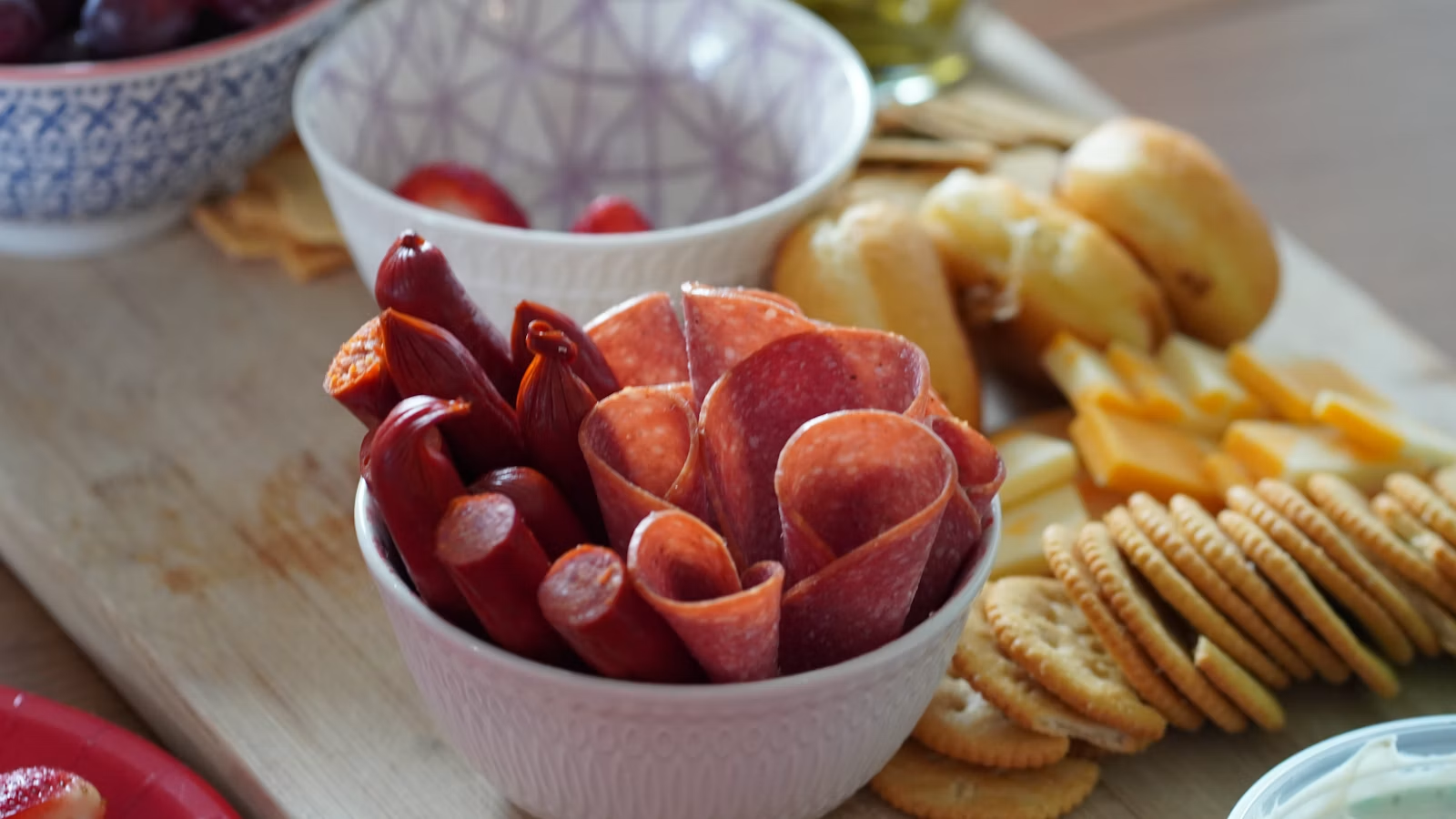
Food safety matters because these cups contain cured meat and cheese, not because a party needs to feel like a laboratory. Keep perishable ingredients at 40°F (4°C) or below before serving. The USDA advises discarding perishable food left in the 40–140°F danger zone for more than two hours, or more than one hour when the temperature is above 90°F (32°C). Setting out smaller batches makes that guidance much easier to follow.
Use clean hands, utensils, and work surfaces, especially when several ingredients are being handled at once. If guests may have allergies, label cups that contain nuts and keep separate utensils for any specialty versions. Leftover cups that stayed properly chilled can be covered and refrigerated, but remove the crackers first so they do not soften.
Sources
- USDA Food Safety and Inspection Service: Danger Zone (40°F–140°F)
- University of Nebraska–Lincoln Extension: Charcuterie Boards and Food Safety
- FoodSafety.gov: Four Steps to Food Safety
Hi, I’m Laura, the voice behind Tastiva. I’ve always believed that eating well should feel enjoyable, comforting, and realistic—not like another complicated rule to follow. I love creating recipes that fit into everyday life, sharing simple nutrition ideas, and finding small ways to make meals feel a little better without losing the pleasure of good food.