
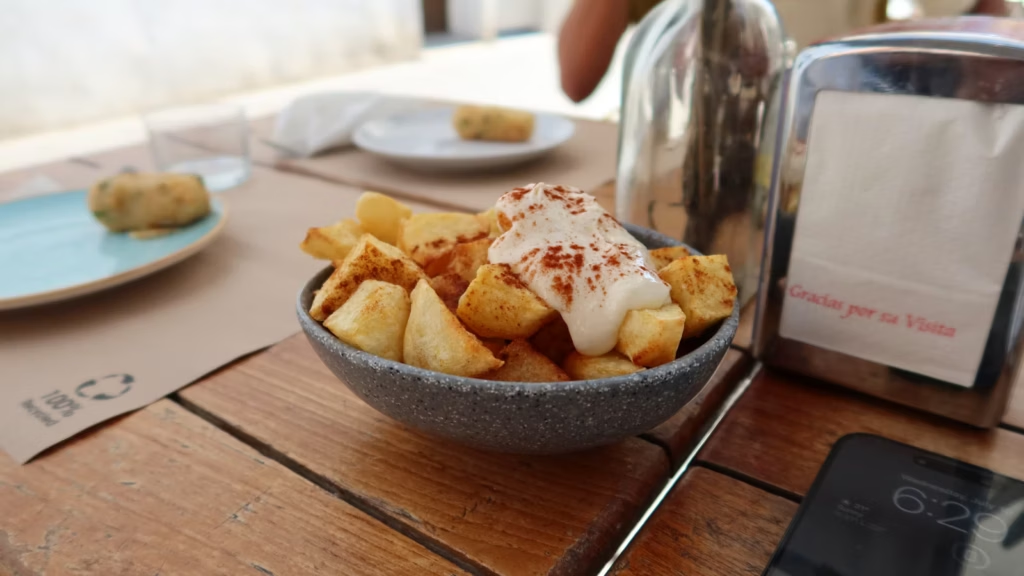
This patatas bravas recipe turns a short list of ingredients into the contrast that makes the Madrid tapa so satisfying: deeply crisp potato edges, fluffy centers, and a glossy sauce with paprika heat and vinegar brightness. Traditional versions fry the potatoes; this home-kitchen method parboils and roasts them at high heat, creating a craggy crust without managing a pot of frying oil. The salsa brava stays closer to Madrid’s paprika-thickened style than to a ketchup-based shortcut.
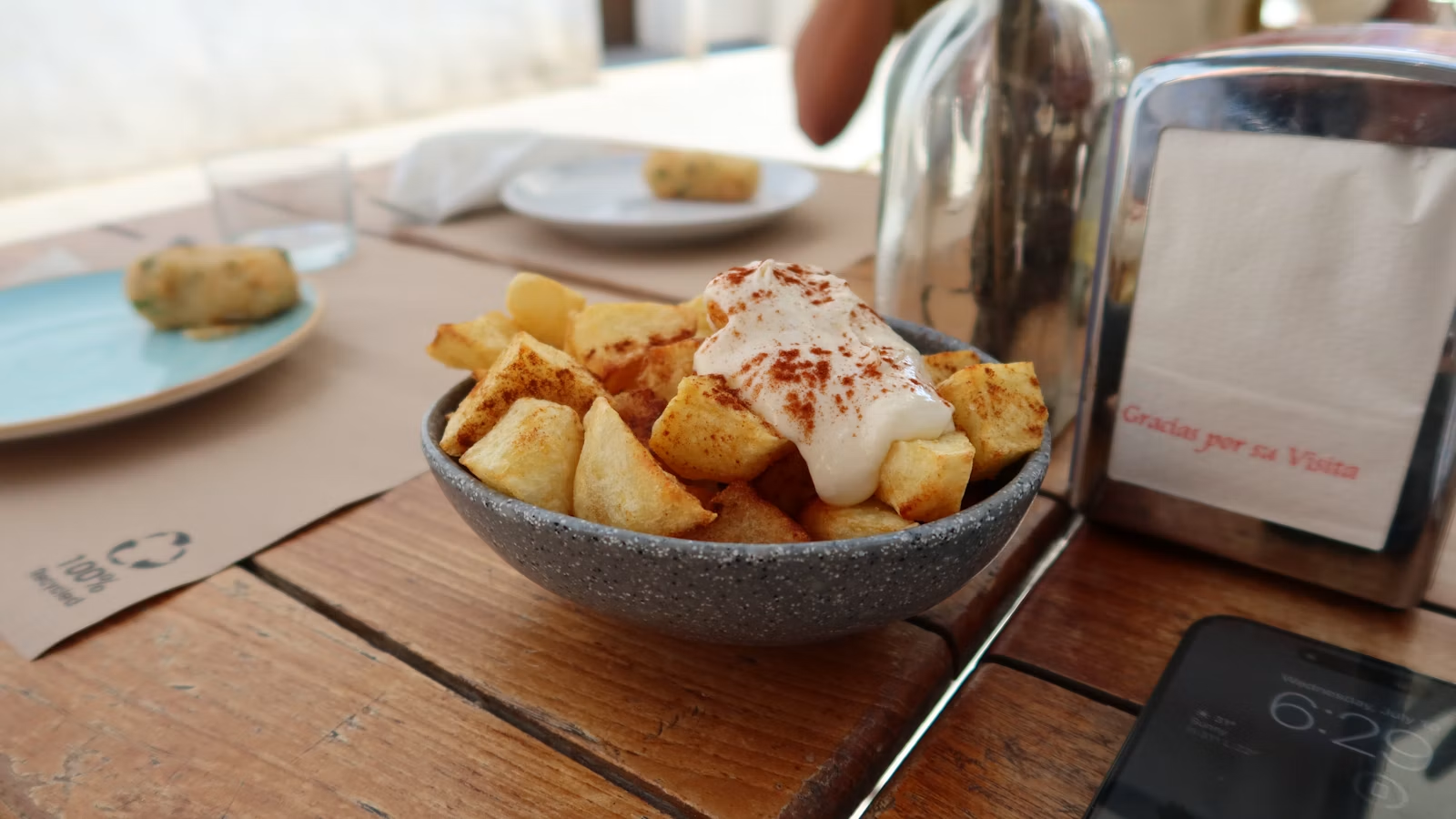
Bravas should arrive with enough sauce to announce themselves and enough bare crust to keep every potato crisp.
What makes this patatas bravas recipe “brava”?
Patatas bravas are fried potato pieces served with a spicy sauce, a combination closely associated with Madrid’s tapas culture. Madrid’s tourism office notes that the dish became a city classic during the twentieth century, with famous bars developing their own protected sauces. “Brava” means fierce or bold, and the heat traditionally comes from hot paprika or chile rather than from making the potatoes aggressively spicy.
There is no single sauce across Spain. Some versions contain tomato; others use a roux of olive oil and flour seasoned with sweet and hot pimentón, loosened with stock, and sharpened with vinegar. This patatas bravas recipe uses the second approach, with smoked paprika for depth and cayenne for adjustable heat. Optional aioli adds cool garlic richness without replacing the brava sauce.
Choose a potato that crisps and stays creamy
Yukon Gold potatoes hold their shape and offer a naturally creamy center; russets become even fluffier and develop a rougher crust. Either works. If you want a fuller comparison, this guide to Yukon Gold potatoes explains their texture and best uses. Cut consistent 1½-inch pieces so the centers finish together, and give the chunks enough room on the sheet pan for steam to escape.
Parboil, rough the edges, then roast hard
A small amount of baking soda raises the water’s alkalinity and softens the potato surface during parboiling. After draining, shaking the chunks with olive oil creates a starchy paste around their edges. That layer becomes a crisp shell in a 450°F oven. Let the potatoes steam dry before adding oil, preheat fully, and avoid crowding. Turn them after the first side has browned rather than repeatedly moving them.
The potatoes are naturally gluten-free, but the brava sauce in this version uses wheat flour. For a gluten-free plate, replace it with an equal amount of sweet rice flour and confirm that the stock and spices are labeled appropriately. This guide to whether potatoes are gluten-free covers the cross-contact details.
Make salsa brava without scorching the paprika
Cook garlic gently in olive oil, whisk in flour, then add the paprikas and cayenne for only a few seconds. Ground paprika burns quickly and turns bitter, so the warm stock should be ready beside the stove. Whisk it in gradually, simmer until the sauce coats a spoon, and finish with sherry vinegar. Taste only after the vinegar is added; acidity changes how both salt and chile register.
Patatas Bravas Recipe

Ingredients
- 2 1/2 pounds Yukon Gold or russet potatoes peeled and cut into 1 1/2-inch chunks
- 1/2 teaspoon baking soda
- 2 teaspoons fine salt divided
- 1/4 cup extra-virgin olive oil
- 3 tablespoons extra-virgin olive oil
- 2 cloves garlic finely grated
- 2 tablespoons all-purpose flour
- 1 1/2 teaspoons sweet Spanish paprika
- 1 teaspoon smoked paprika
- 1/4 teaspoon cayenne pepper plus more to taste
- 1 1/4 cups low-sodium vegetable stock warm
- 1 tablespoon sherry vinegar
- 1/4 teaspoon fine salt plus more to taste
- 1/2 cup garlic aioli optional, for serving
- 2 tablespoons fresh parsley chopped
Equipment
- 1 large rimmed sheet pan
- 1 Large pot
- 1 small saucepan
Instructions
- Heat the oven to 450°F (232°C). Add the potatoes to a large pot and cover with cold water by 1 inch. Stir in the baking soda and 1 teaspoon salt. Bring to a boil and simmer for 7 to 9 minutes, until the edges are tender but the centers still hold.
- Drain well and let the potatoes steam dry for 2 minutes. Return them to the pot, add the 1/4 cup olive oil and remaining teaspoon salt, and shake firmly until the edges look roughed and coated with a starchy paste.
- Spread the potatoes on a large rimmed sheet pan with space between pieces. Roast for 20 minutes, turn, then roast for 15 to 20 minutes more until deeply golden and crisp.
- Meanwhile, heat 3 tablespoons oil in a small saucepan over medium-low. Cook the garlic for 30 seconds. Whisk in the flour for 1 minute, then the sweet paprika, smoked paprika, and cayenne for 15 seconds. Gradually whisk in the warm stock.
- Simmer the sauce for 4 to 6 minutes until glossy and thick enough to coat a spoon. Whisk in the sherry vinegar and salt. Taste and adjust cayenne, vinegar, or salt.
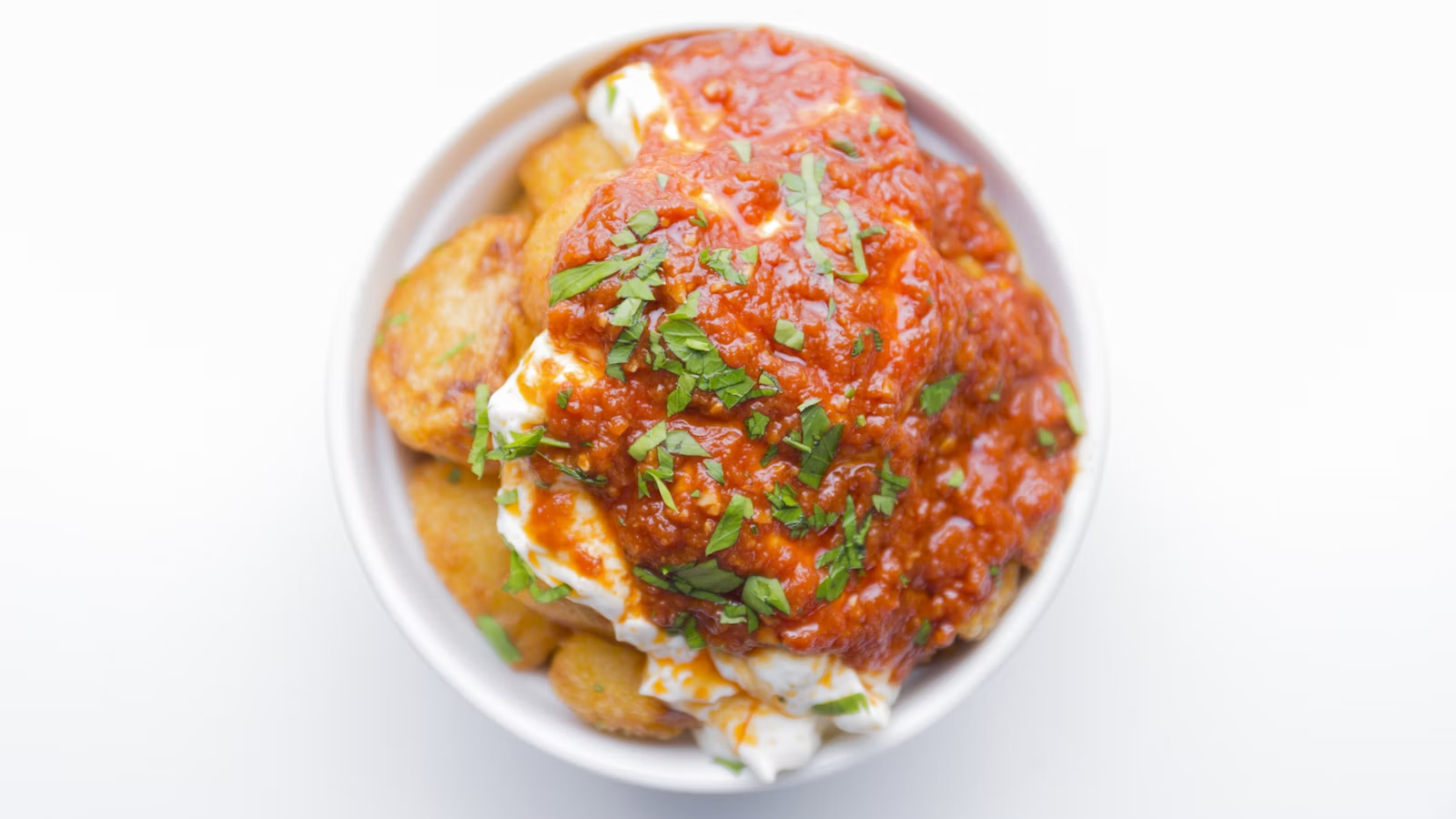
- Pile the hot potatoes onto a platter. Spoon over enough salsa brava to coat some edges while leaving crisp areas exposed. Add aioli if using, scatter with parsley, and serve immediately.
Nutrition
Video
Notes
Tried this recipe?
Let us know how it turned out!
Sauce at the last moment and serve hot
Patatas bravas lose their best texture when they sit under sauce. Spoon the salsa over the potatoes immediately before serving, leaving some golden corners exposed. Add small dots of aioli if you like, then parsley for freshness. For this patatas bravas recipe, the sauce can be made three days ahead and reheated gently with a splash of stock; the potatoes should be cooked as close to serving time as possible.
Refrigerate leftovers within two hours. Re-crisp potatoes in a 425°F oven or air fryer, and warm the sauce separately. Avoid microwaving them together, which softens the crust. Use refrigerated leftovers within three to four days, though the flavor and texture are best on the first day.
For a tapas spread, plan roughly six to eight potato chunks per person and serve bravas alongside olives, roasted peppers, or a simple green salad. Use a broad platter instead of a deep bowl so the bottom pieces do not steam. If the sauce thickens while waiting, whisk in hot stock one teaspoon at a time; it should flow from a spoon but still cling to the potatoes. Keep extra salsa on the side for guests who want more heat without sacrificing the crisp surface.
Sources
- Tourism Madrid: Patatas bravas history and Madrid tradition
- Tourism Madrid: Traditional appetisers and patatas bravas
- Serious Eats: Spanish tapas and patatas bravas techniques
- FDA: Safe food handling and cooling leftovers
Hi, I’m Laura, the voice behind Tastiva. I’ve always believed that eating well should feel enjoyable, comforting, and realistic—not like another complicated rule to follow. I love creating recipes that fit into everyday life, sharing simple nutrition ideas, and finding small ways to make meals feel a little better without losing the pleasure of good food.