
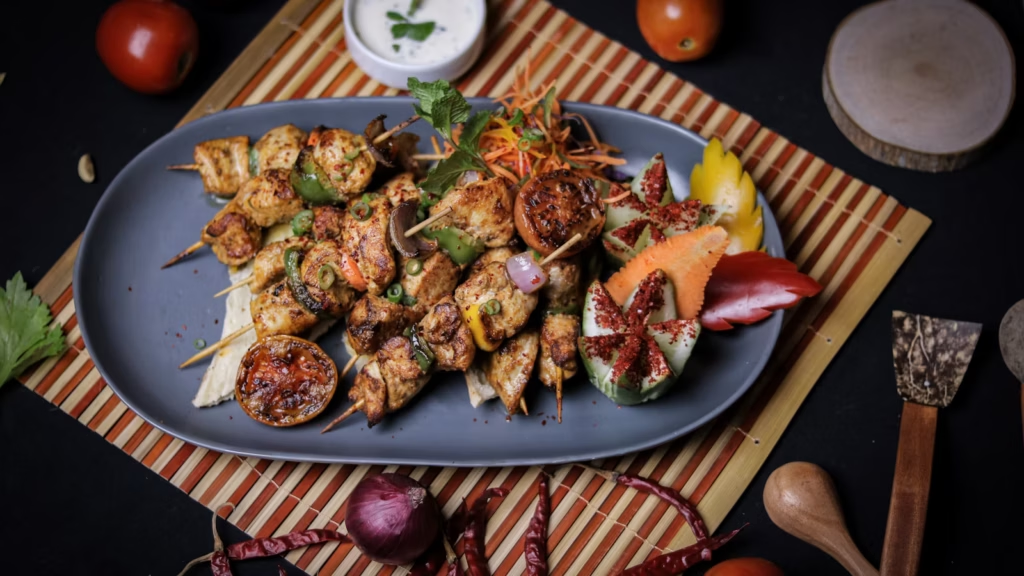
This chicken shish recipe gives you the part of a good kebab that matters most: juicy chicken with browned, smoky edges and enough lemon, garlic, and warm spice to taste lively all the way through. The yogurt marinade is quick to whisk together, the skewers cook in minutes, and the vegetables earn their place instead of decorating the plate.
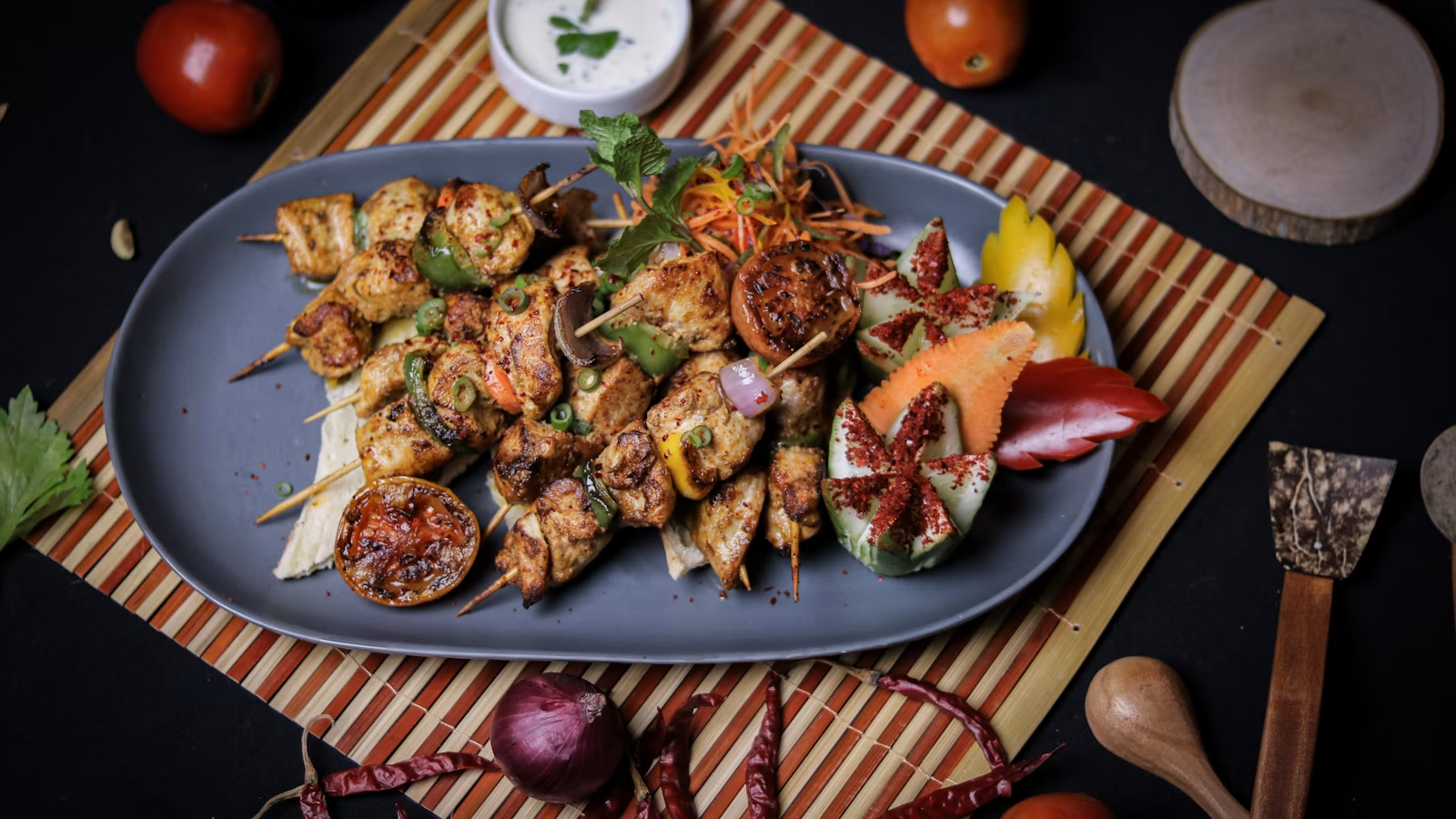
A skewer should have char, not a collection of pale chicken cubes commuting together.
Shish means skewer, and versions of marinated chicken skewers appear across Turkish, Armenian, and Arab cooking. The details vary—some marinades are led by yogurt and lemon, others by tomato or pepper paste—but evenly cut meat, a hot grill, and careful turning are the useful constants. This version leans Turkish, with yogurt, tomato paste, paprika, cumin, and oregano.
Why this chicken shish recipe stays juicy
Chicken thighs tolerate the fierce heat of a grill better than very lean breast and bring more flavor to the skewer. Cut them into pieces about 1 1/2 inches across. Smaller bits dry before they brown; oversized chunks can scorch outside while the middle waits. Similar pieces are more important than ruler-perfect pieces.
Yogurt clings to the chicken and carries the seasoning into every corner. Its gentle acidity softens the surface without giving the meat the chalky texture that a long bath in straight lemon juice can cause. Our plain yogurt guide explains why its tang works so well in marinades and sauces.
The marinade and the right resting time
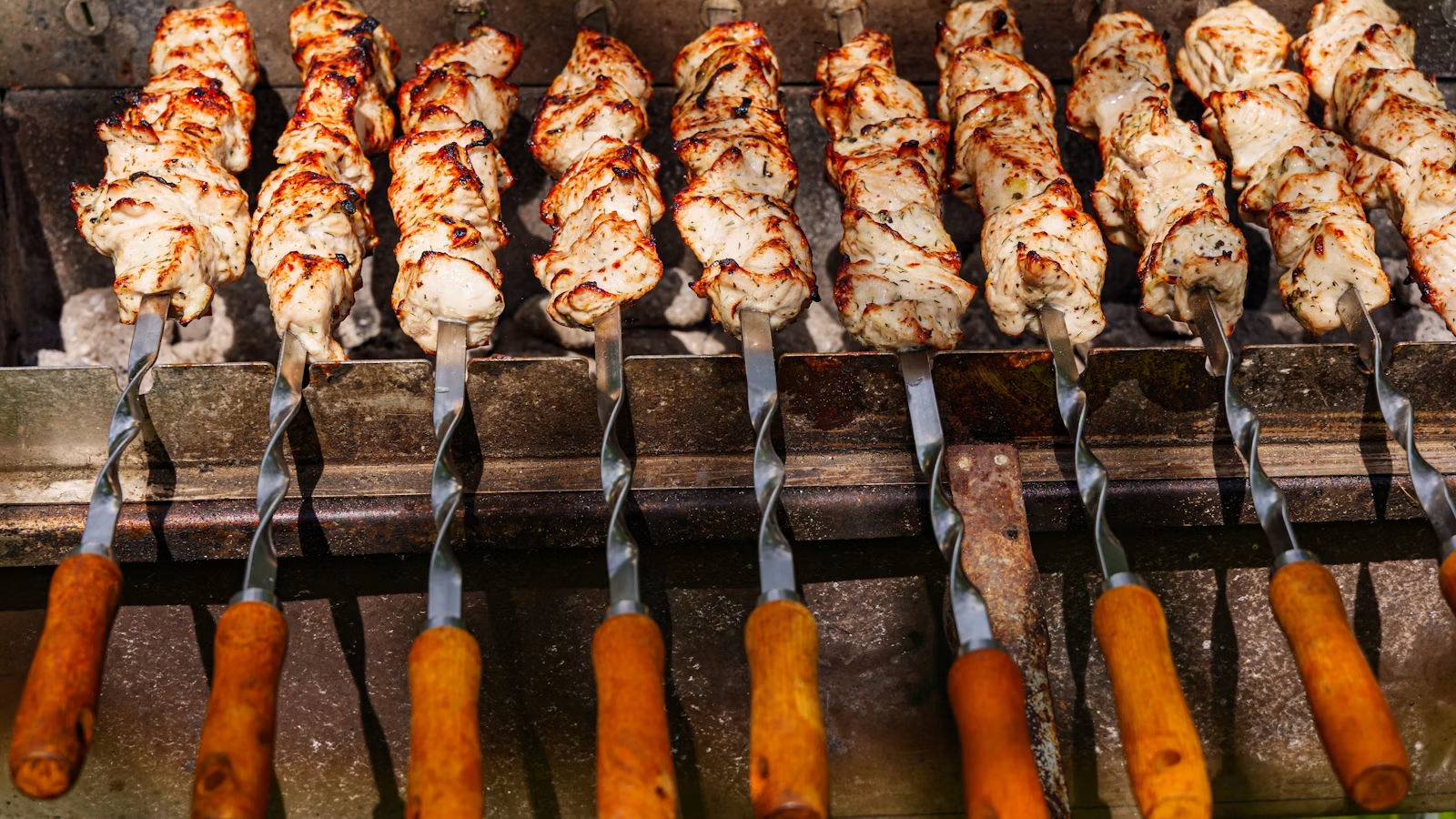
Whisk the yogurt with olive oil, lemon juice, tomato paste, garlic, paprika, cumin, oregano, salt, and pepper before the chicken goes in. This distributes the tomato paste and spices evenly, so you do not discover one fiercely seasoned cube among five shy ones. Two hours in the refrigerator is enough for flavor and tenderness.
You can marinate the chicken for up to 12 hours, but overnight is the sensible limit. More time is not automatically more flavor, especially with lemon in the bowl. Keep the marinade cold, and do not use the raw-chicken marinade as a finishing sauce. That is not rustic; that is a cross-contamination problem.
Bell pepper and red onion add sweetness and color. Cut them close to the chicken’s size, but thread everything loosely enough for hot air to move between pieces. If your grill has uneven zones, put chicken on separate skewers from vegetables so each can come off when ready.
How to cook chicken shish
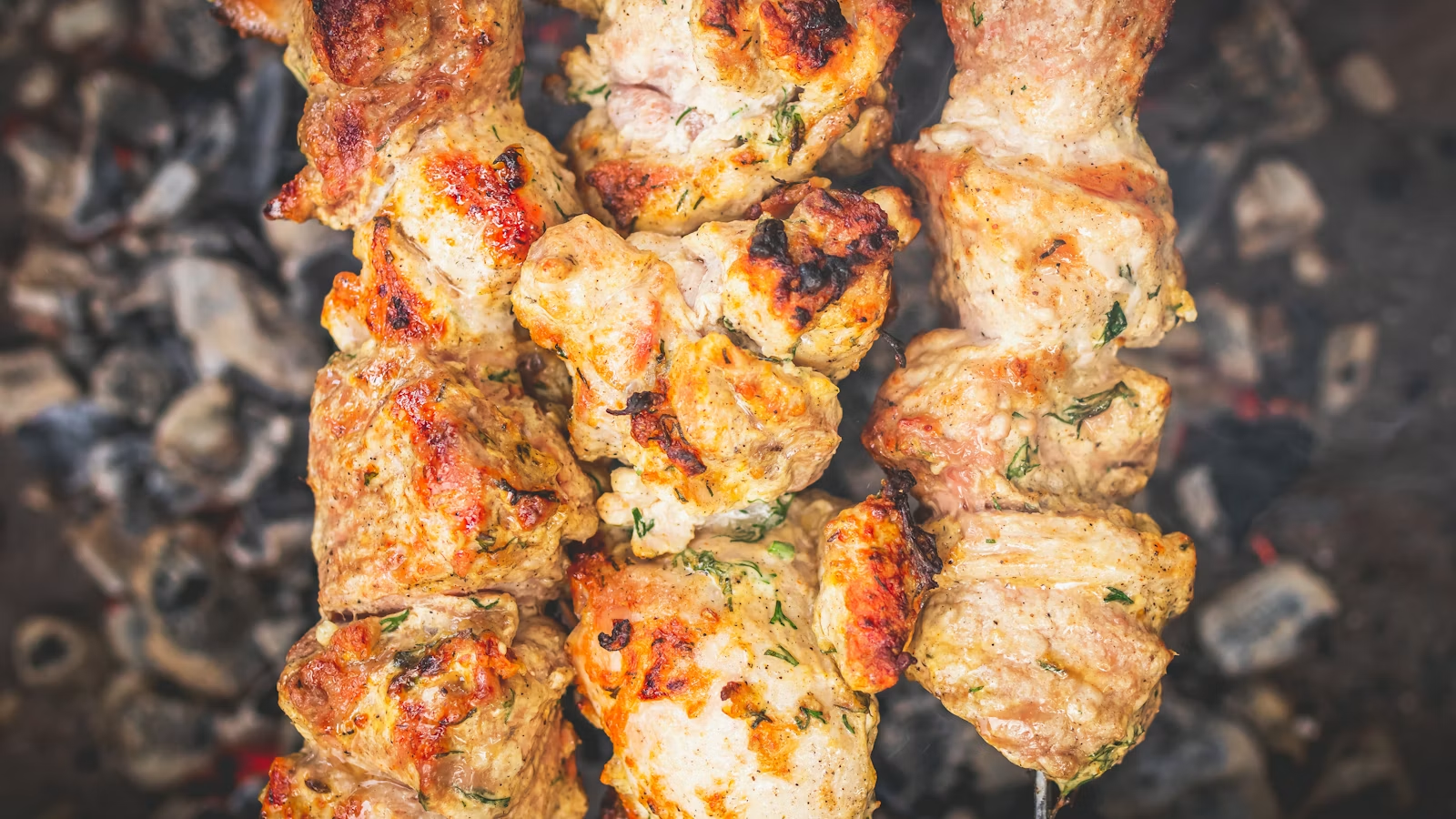
Heat the grill or grill pan to medium-high before the skewers arrive. Clean and oil the grates, shake excess marinade from the chicken, and lay the skewers down with a little breathing room. Turn every three or four minutes rather than fussing constantly; contact with the hot surface is how the brown crust develops.
The chicken shish recipe takes about 12 to 14 minutes on a properly heated grill. Check the largest piece from the side with an instant-read thermometer. The USDA recommends 165°F (74°C) for poultry. Once there, move the skewers to a clean platter and rest them for five minutes before squeezing over more lemon.
Chicken Shish Recipe

Ingredients
- 1 1/2 pounds boneless skinless chicken thighs cut into 1 1/2-inch pieces
- 1/2 cup plain Greek yogurt
- 2 tablespoons olive oil plus more for the grill
- 2 tablespoons fresh lemon juice
- 1 tablespoon tomato paste
- 3 cloves garlic finely grated or minced
- 1 teaspoon sweet paprika
- 1 teaspoon ground cumin
- 1 teaspoon dried oregano
- 3/4 teaspoon fine salt
- 1/2 teaspoon black pepper
- 1 red bell pepper cut into 1 1/2-inch pieces
- 1 small red onion cut into 1 1/2-inch pieces
Equipment
- 1 large mixing bowl
- 6 metal or wooden skewers
- 1 grill or grill pan
- 1 Instant-read thermometer
Instructions
- Whisk the yogurt, olive oil, lemon juice, tomato paste, garlic, paprika, cumin, oregano, salt, and black pepper together in a large bowl.
- Add the chicken and toss until every piece is coated. Cover and refrigerate for 2 hours. Do not marinate longer than 12 hours.
- If using wooden skewers, soak them in water for 30 minutes. Heat a grill or grill pan to medium-high and oil the grates. Thread chicken, bell pepper, and onion onto the skewers without packing them tightly.
- Grill the skewers for 12 to 14 minutes, turning every 3 to 4 minutes, until the chicken is browned, lightly charred, and cooked through.
- Check the largest piece from the side with an instant-read thermometer; it should reach 165°F (74°C). Transfer the skewers to a clean platter and rest for 5 minutes before serving.
Nutrition
Video
Notes
Tried this recipe?
Let us know how it turned out!Grill pan, broiler, and skewer tips
A ridged grill pan gives good color but less smoky flavor. Work in batches so the temperature does not collapse, and open a window because yogurt marinade can smoke. Under a broiler, place the skewers on a rack over a foil-lined tray, about 5 to 6 inches from the heat, and turn them frequently.
Metal skewers conduct heat and never need soaking. Wooden skewers should sit in water for 30 minutes, though their exposed tips may still darken. If the handles look vulnerable, wrap them loosely in foil. Flat skewers are especially useful because the chicken turns with the skewer instead of spinning like a tiny, stubborn carousel.
What to serve with chicken shish
Serve the skewers with warm flatbread, rice or bulgur, chopped tomato and cucumber, lemon wedges, and a cool yogurt sauce. A little feta works too; its saltiness is useful against the sweet charred vegetables. Slide the meat from the skewers before handing dinner to children or anyone wearing a particularly optimistic white shirt.
Refrigerate leftovers promptly and use them within three days. Reheat gently in a covered skillet with a splash of water, or eat the chicken cold in a salad. The cooked pieces freeze reasonably well, but fresh herbs, crisp vegetables, and yogurt sauce should be added after thawing.
Sources
- TasteAtlas: Şiş Tavuk Recipe
- Tesco: Chicken Shish Kebabs
- Good Food Middle East: Chicken Kebabs
- USDA FSIS: Doneness Versus Safety
Hi, I’m Laura, the voice behind Tastiva. I’ve always believed that eating well should feel enjoyable, comforting, and realistic—not like another complicated rule to follow. I love creating recipes that fit into everyday life, sharing simple nutrition ideas, and finding small ways to make meals feel a little better without losing the pleasure of good food.