
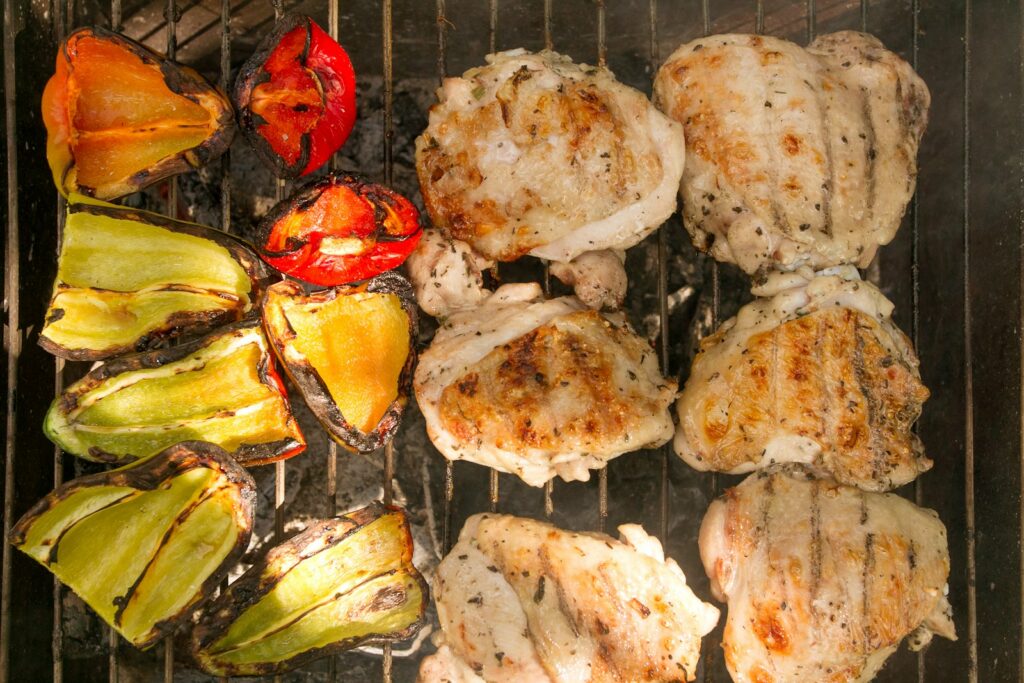
Looking up chicken thigh calories can produce several different answers that all seem plausible. The missing details are often skin, preparation, and portion weight. In the USDA entries used here, 100 grams of roasted thigh meat contains about 179 calories without skin or 232 calories with skin. Those weights describe the edible portion, not the bone, and they don't include added oil, sauce, or breading.
Match the nutrition entry to the chicken on your plate before you start calculating.
Chicken thigh calories depend on the form you're measuring
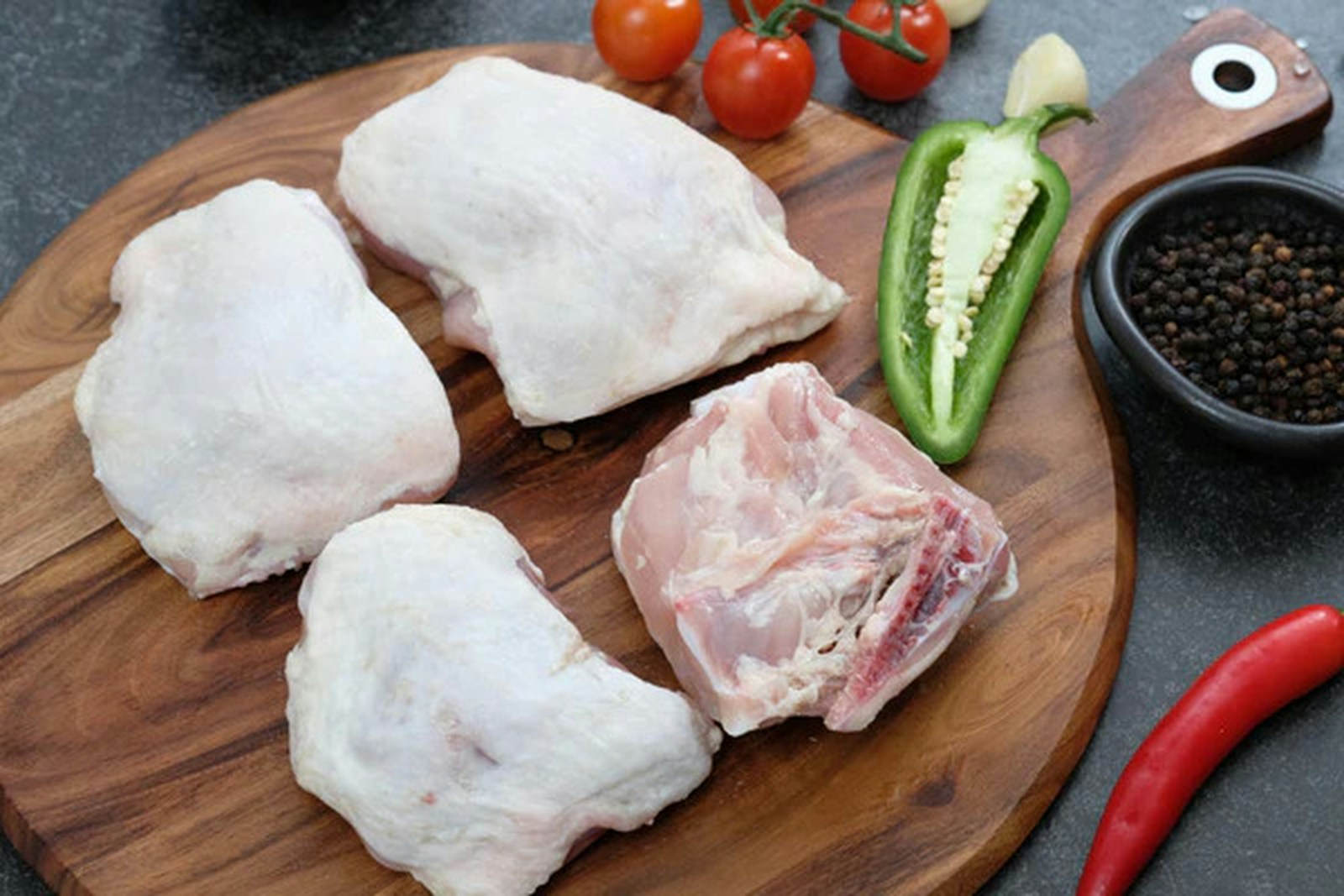
A raw skinless thigh and a roasted skin-on thigh aren't the same food for nutrition comparisons. Cooking changes moisture, skin changes the fat content, and bones add weight without being part of the edible serving. A database number needs those details attached to remain useful.
The table below uses specific USDA SR Legacy entries from FoodData Central. Values are per 100 grams of the edible portion and rounded for readability. They're reference values, not a laboratory analysis of every chicken thigh sold.
| Chicken thigh form | Calories per 100 g | Protein | Total fat |
|---|---|---|---|
| Raw, meat only | 121 | 19.7 g | 4.1 g |
| Raw, meat and skin | 221 | 16.5 g | 16.6 g |
| Roasted, meat only | 179 | 24.8 g | 8.2 g |
| Roasted, meat and skin | 232 | 23.3 g | 14.7 g |
These are separate database samples, not before-and-after measurements of the same thigh. Don't subtract one row from another to calculate how many calories cooking “creates.” I think this is the most important detail in the comparison: a more specific number is only better when it describes the food you're actually measuring.
Turn a weighed portion into a useful estimate
For the roasted meat-only entry, an 85-gram portion—about 3 ounces—works out to roughly 152 calories. The same weight of roasted meat and skin works out to about 197 calories. These estimates come from multiplying the 100-gram value by 0.85; they aren't claims about the size of one average thigh.
A whole thigh can vary considerably in size. If you're tracking intake, “one thigh” is less precise than a weight that excludes the bone and matches whether you ate the skin. For a bone-in piece, weigh the edible portion after removing the bone when using a cooked meat-only or meat-and-skin entry.
- Choose an entry for raw chicken if you're measuring the raw edible meat.
- Choose a cooked entry that reasonably matches your method if you're measuring cooked meat.
- Include the skin only when the entry and the portion both include it.
- Leave the bone out of the edible weight.
- Record added ingredients separately rather than assuming they're included in plain-chicken data.
As a worked example, 150 grams of roasted, skinless thigh meat would be 179 × 1.5, or about 269 calories, before additions. The calculation is straightforward; choosing the right starting entry is the part that deserves attention. A package label for your exact product may be more appropriate when it includes a marinade or other ingredients.
Account for cooking ingredients without overcomplicating dinner
Oil, butter, glaze, breading, and sauce can change the total. A plain roasted-thigh entry doesn't automatically cover those additions. If you're calculating a whole recipe, use the actual ingredient quantities and the number or weight of servings rather than attaching one plain-chicken number to the finished dish.
Some cooking fat or sauce may remain in the pan, so a home calculation is still an estimate. Keep your method consistent and avoid pretending that a rounded database value delivers single-calorie precision. For most home tracking, a sensible, repeatable estimate is more useful than elaborate arithmetic built on uncertain portions.
My preference is to keep nutrition information descriptive, not judgmental. Leaving the skin on for flavor or taking it off for a particular recipe is a choice, not a moral distinction. The table explains a difference; it doesn't decide what you should enjoy for dinner.
Keep food safety separate from calorie calculations

Whether you choose skin-on or skinless thighs, cook poultry to 165°F (74°C), checking with a food thermometer in the thickest part away from bone. FoodSafety.gov lists the same minimum for all poultry. Appearance alone can't establish that a thigh is safely cooked.
Keep raw chicken separate from ready-to-eat foods, and use a clean plate and utensils after cooking. Refrigerate leftovers promptly and follow safe storage guidance; Tastiva's chicken refrigerator-storage guide covers that next practical question. A nutrition calculation never replaces safe handling.
The source records for this comparison are USDA foods 173627, 172385, 172388, and 173625, respectively. Keeping those forms visible makes the numbers easier to interpret and reproduce. When another chart gives a different value, check its cut, skin, cooking method, and serving basis before assuming either number applies to your plate.
Sources
- USDA FoodData Central: SR Legacy data and food descriptions
- FoodSafety.gov: Safe minimum internal temperatures

Hi, I’m Laura, the voice behind Tastiva. I’ve always believed that eating well should feel enjoyable, comforting, and realistic—not like another complicated rule to follow. I love creating recipes that fit into everyday life, sharing simple nutrition ideas, and finding small ways to make meals feel a little better without losing the pleasure of good food.