
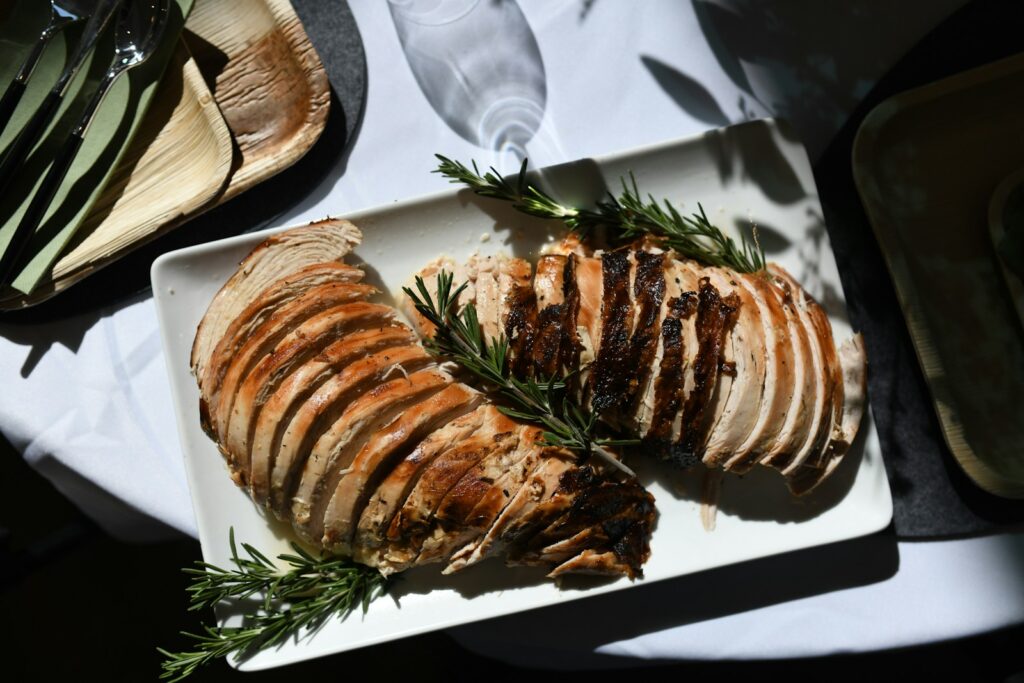
Turkey doesn't have to wait for a holiday centerpiece. Turkey meat can mean a whole bird, breast, thigh, ground meat, or prepared deli slices, and those choices aren't interchangeable in the kitchen or on a nutrition label. Choose the form that fits your meal, compare like with like, and cook all raw turkey to a safe internal temperature of 165°F (74°C).
Buy the cut your dinner needs, not the version of turkey you happen to picture first.
Which turkey meat fits your meal?
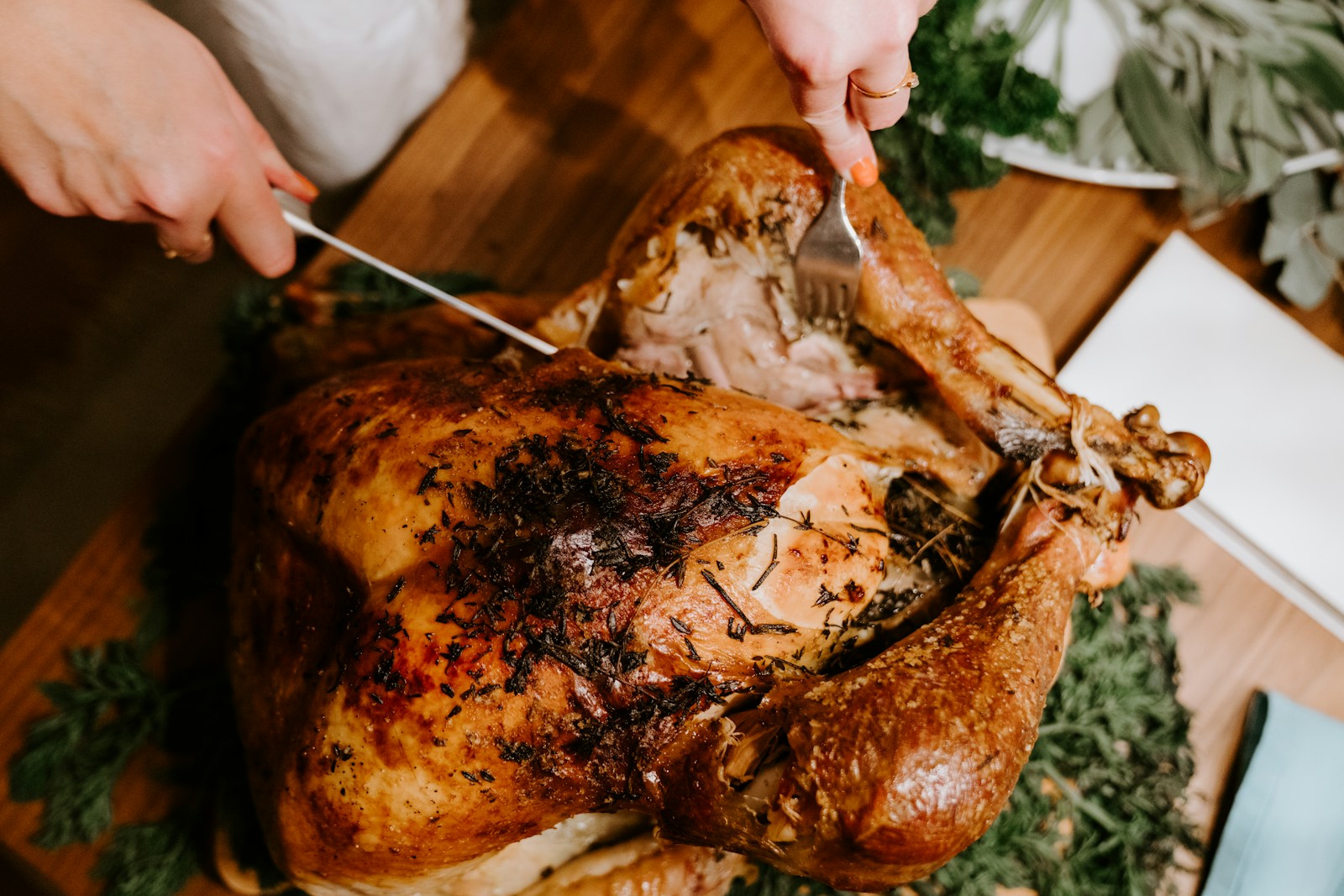
Breast, thighs, and ground turkey give you different starting points. Breast meat suits sliced servings and recipes developed for that cut; thighs bring a different flavor and fat content; ground turkey can fit patties, meatballs, or sauces when you follow a suitable recipe. A whole bird is only one option.
Check whether the package is raw, cooked, seasoned, injected with a solution, or otherwise prepared. Those details affect both cooking and nutrition. I wouldn't assume that a package labeled “turkey” has the same ingredients as a plain fresh cut, especially when comparing sodium or planning seasoning.
| Turkey form | Useful meal direction | What to check before buying |
|---|---|---|
| Breast | Sliced roast or a recipe for breast pieces | Bone, skin, portion size, and any added solution |
| Thigh | A recipe designed for dark meat | Bone-in versus boneless and the intended cooking method |
| Ground turkey | Meatballs, patties, or a cooked sauce | Lean percentage, ingredients, and package directions |
| Cooked deli turkey | Sandwiches and cold meal components | Serving size, sodium, allergens, and storage instructions |
For a small household, a manageable cut can make more sense than a whole bird. Think about the equipment you have and the meals you actually want. A bargain-sized package isn't especially convenient if you don't have a safe plan to portion, cook, or freeze it.
Compare nutrition using the same portion and preparation
USDA FoodData Central entries show why “turkey calories” needs a little context. The following comparison uses 100 grams of roasted, meat-only turkey from whole-bird entries: no skin, bones, gravy, or added oil. Values are rounded and describe those database foods, not every retail product.
| Roasted turkey, meat only | Calories per 100 g | Protein | Total fat |
|---|---|---|---|
| Breast | About 147 | About 30.1 g | About 2.1 g |
| Thigh | About 165 | About 27.7 g | About 6.0 g |
The source entries are USDA SR Legacy foods 171496 and 171532, available through FoodData Central. Both provide protein; the thigh entry contains more fat. That doesn't make one a universally better dinner. Flavor preference, preparation, serving size, and the rest of the meal all belong in the decision.
Keep comparisons fair by matching raw with raw or cooked with cooked, and skin-on with skin-on or meat-only with meat-only. Ground turkey also varies by formulation, so use its own label. My priority would be accurate information about the package you're using, not a single nutrition number expected to represent every form of the bird.
Cook for the cut, then verify the temperature
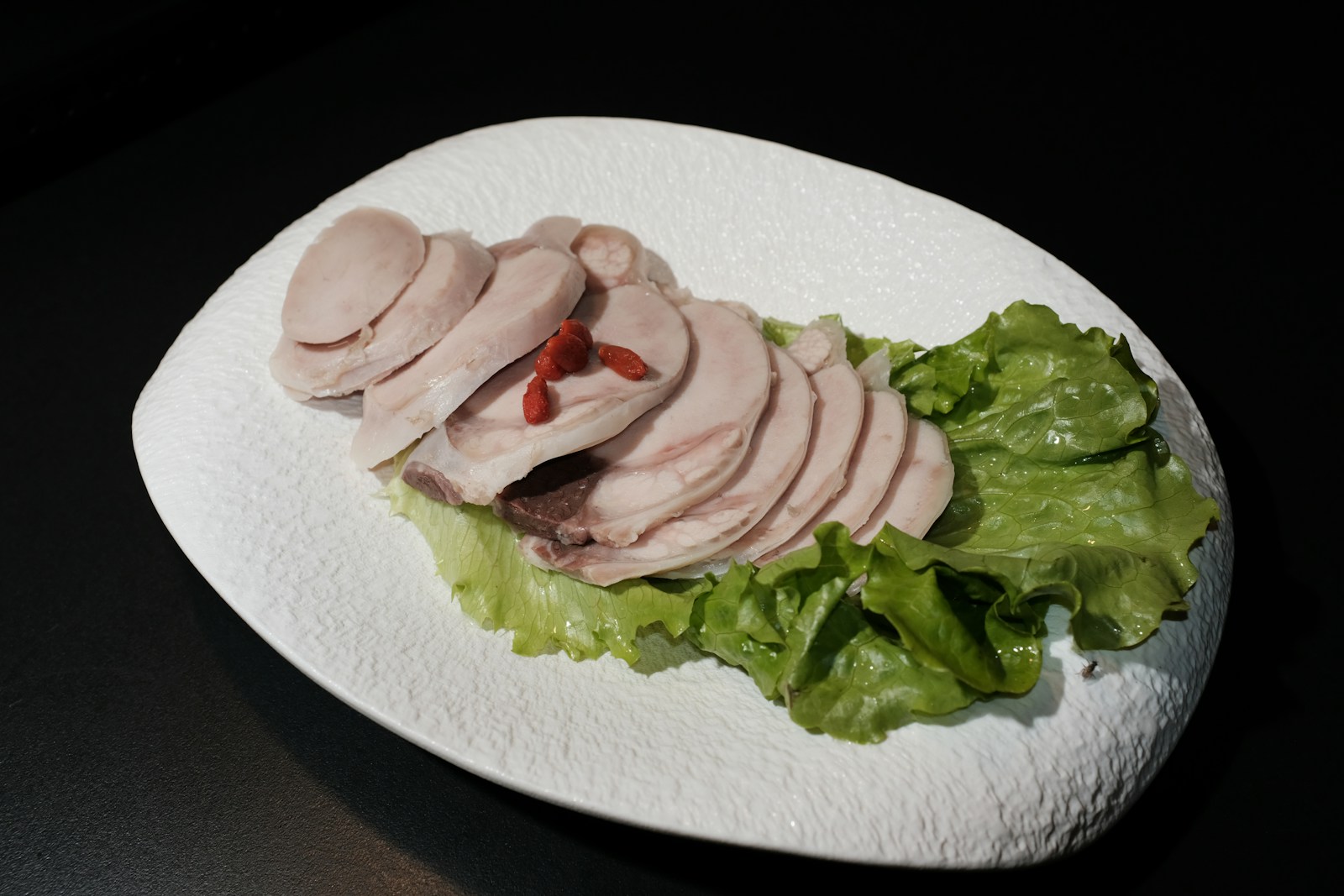
All raw poultry, including ground turkey, needs to reach 165°F (74°C), according to the FoodSafety.gov temperature chart. Use a food thermometer in the appropriate thickest part, avoiding bone. Color and clear-looking juices aren't dependable substitutes for a temperature reading.
Use a tested recipe for your cut and equipment. A breast roast, a thigh braise, and a ground-turkey patty need different handling, even though they share the same poultry safety minimum. Don't apply the cooking time from one form to another simply because the total package weight looks similar.
- Read thawing and cooking directions before the day you plan to serve the meat.
- Keep raw turkey and its juices away from ready-to-eat foods.
- Use clean utensils and surfaces for cooked meat rather than returning it to a raw-meat plate.
- Check more than one area when the cut's shape makes uneven cooking possible.
- Follow recipe instructions for resting, slicing, and serving after the safe temperature is reached.
For ground turkey, follow the recipe's approach to moisture and seasoning rather than assuming it behaves exactly like every ground-beef mixture. A leaner label can mean a different cooking result. If you're changing a recipe, make a modest batch first and keep the substitution clearly identified.
Plan the leftovers before cooking extra
Store raw poultry at 40°F (4°C) or below and generally use it within one to two days, or freeze it. Refrigerated cooked poultry keeps for three to four days when handled safely, according to FoodSafety.gov's cold-storage chart. Follow product-specific instructions for prepared deli meats rather than applying the raw-poultry rule to them.
Refrigerate cooked turkey promptly in manageable portions, and reheat leftovers to 165°F (74°C). A container for tomorrow's lunch and a portion for the freezer are easier to use than an unplanned pile of leftovers. Keep sauces or components separate when that suits the meal and their storage needs.
Turkey can fit sandwiches, rice bowls, salads, soups, and other ordinary meals; it doesn't need a holiday theme to earn its place. For broader context on protein, Tastiva's daily protein guide can help you think beyond one ingredient. Start with the right cut, follow a reliable recipe, and let the meal—not the occasion—make the decision.
Sources
- USDA FoodData Central: SR Legacy nutrition data downloads
- FoodSafety.gov: Safe minimum internal temperatures
- FoodSafety.gov: Cold food storage chart

Hi, I’m Laura, the voice behind Tastiva. I’ve always believed that eating well should feel enjoyable, comforting, and realistic—not like another complicated rule to follow. I love creating recipes that fit into everyday life, sharing simple nutrition ideas, and finding small ways to make meals feel a little better without losing the pleasure of good food.