
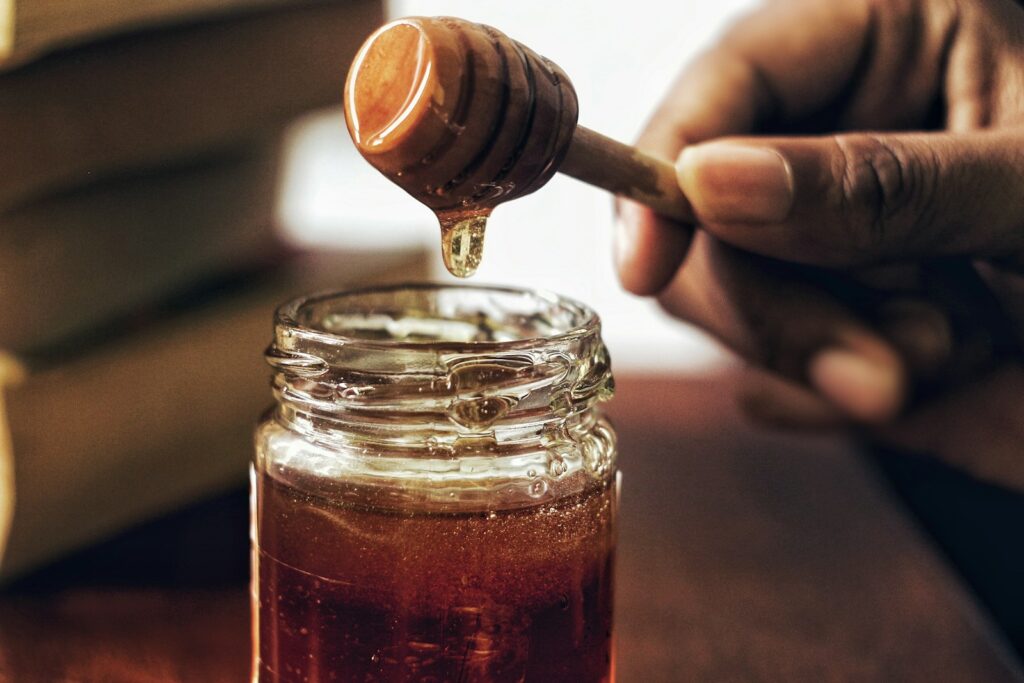
A jar of honey can sit quietly in the cupboard until one day it looks thick, pale, and grainy. Does honey expire? Pure honey can keep for a very long time when stored properly, and crystallization alone isn't spoilage. But “honey lasts” isn't a guarantee for a contaminated jar, a diluted mixture, or every product with honey in its name.
A grainy texture may need a warm-water bath, not a trip to the trash.
Why properly stored honey lasts so long
Honey's concentrated sugars and relatively low water content make it different from many perishable foods. University of Wyoming Extension explains that properly stored honey doesn't spoil in the usual way, while added moisture can allow fermentation. Keeping water out matters as much as remembering to replace the lid.
That distinction applies to plain honey, not automatically to honey sauces, drinks, dressings, or homemade mixtures with fresh ingredients. Once you add other foods or liquid, follow guidance for the finished preparation. A spoonful of honey doesn't make everything around it shelf-stable.
I would read a date on the jar alongside its wording and storage instructions, rather than treating age alone as the whole answer. Quality can change over time even when a food is long-lasting. If the label is unclear or the product isn't simply honey, ask the manufacturer instead of borrowing advice meant for a different product.
Crystallized honey isn't the same as spoiled honey
Crystallization happens when some of honey's sugars form crystals. The texture may become grainy, thick, or almost solid, and its appearance can become lighter or cloudy. Purdue Extension identifies this as a natural change and explains that the crystals can be dissolved with gentle warming.
The speed varies, so two jars needn't change at the same time. Crystallization by itself doesn't prove that honey is fake, spoiled, or superior in quality. A smooth jar and a grainy jar can simply be at different stages or have different characteristics.
| What you notice | What it may mean | Sensible next step |
|---|---|---|
| Grainy, thick honey with no other concerning change | Natural crystallization | Use it as a spread or warm it gently |
| A different shade from another honey | A different product or source | Don't judge safety by color comparison alone |
| Obvious mold or unexpected contamination | The jar is no longer suitable to use | Discard it; don't scrape away the problem |
| Fermented or distinctly off odor, with suspicious foaming | Possible fermentation or spoilage | Discard rather than taste-testing |
| A honey mixture with added ingredients | Different storage requirements | Follow its specific instructions or a tested recipe |
My first question would be whether only the texture has changed. That's different from a jar that smells wrong, has visible contamination, or has been diluted by repeated wet utensils. A good shelf-life reputation shouldn't talk you into eating something with a concerning history.
How to soften crystallized honey gently
If the honey is otherwise suitable to use, you can leave it grainy and spread it on toast. If you want it pourable again, a warm-water bath is a practical option. Use a heat-safe glass container and avoid sudden temperature changes that could crack the glass; don't place a plastic squeeze bottle in hot water unless its manufacturer specifically permits that use.
- Warm water in a pan, then remove it from the heat.
- Place the suitable glass honey container in the warm water, keeping water out of the honey.
- Stir carefully with a clean, dry utensil as the honey softens.
- Refresh the warm water if necessary, without boiling the honey or heating it directly on the burner.
- Dry the outside, close the jar, and return it to suitable storage once handled safely.
Gentle warming is enough for the purpose; there's no need to chase a dramatic bubbling transformation. Excessive heat can alter flavor and color. Warm only what you need if that's more convenient, especially when most of the jar is perfectly pleasant as a spread.
The goal is texture, not sterilization. Warming honey this way doesn't rescue contaminated honey, and it doesn't make honey suitable for babies. Keep those safety questions separate from whether the syrup pours neatly from a spoon.
Store it dry—and keep all honey away from infants
Keep plain honey tightly closed in a dry cupboard away from heat and direct sunlight, following the manufacturer's directions. Use clean, dry utensils, and avoid letting tea, water, butter, or crumbs enter the jar. Those little habits preserve the conditions that make honey a long-lasting pantry ingredient.
The CDC's botulism guidance says not to give honey to children younger than one year. This includes honey and honey-containing products; choosing processed rather than raw honey doesn't remove the warning. Ordinary home cooking isn't a reason to disregard it.
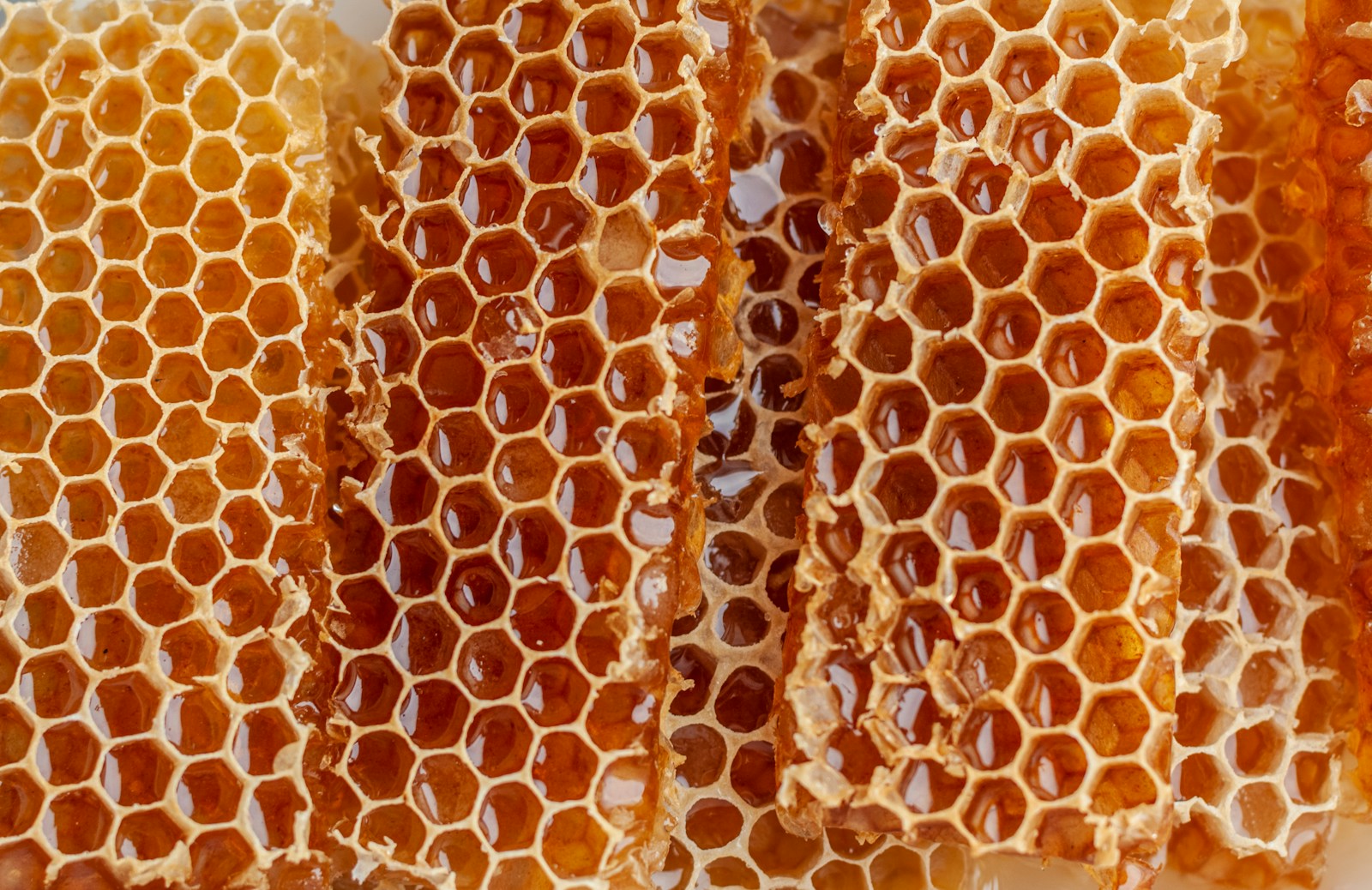
For everyone else, use the jar according to its condition and handling, not a slogan about lasting forever. If you're wondering about honey still in its wax structure, Tastiva's honeycomb guide covers that different form. A clean, well-stored jar of plain honey can remain useful for a long time—and a few crystals don't need to end its kitchen career.
Sources
- University of Wyoming Extension: Honey storage, moisture, and crystallization
- Purdue Extension: Honey forms and gentle warming
- CDC: Preventing infant botulism

Hi, I’m Laura, the voice behind Tastiva. I’ve always believed that eating well should feel enjoyable, comforting, and realistic—not like another complicated rule to follow. I love creating recipes that fit into everyday life, sharing simple nutrition ideas, and finding small ways to make meals feel a little better without losing the pleasure of good food.