
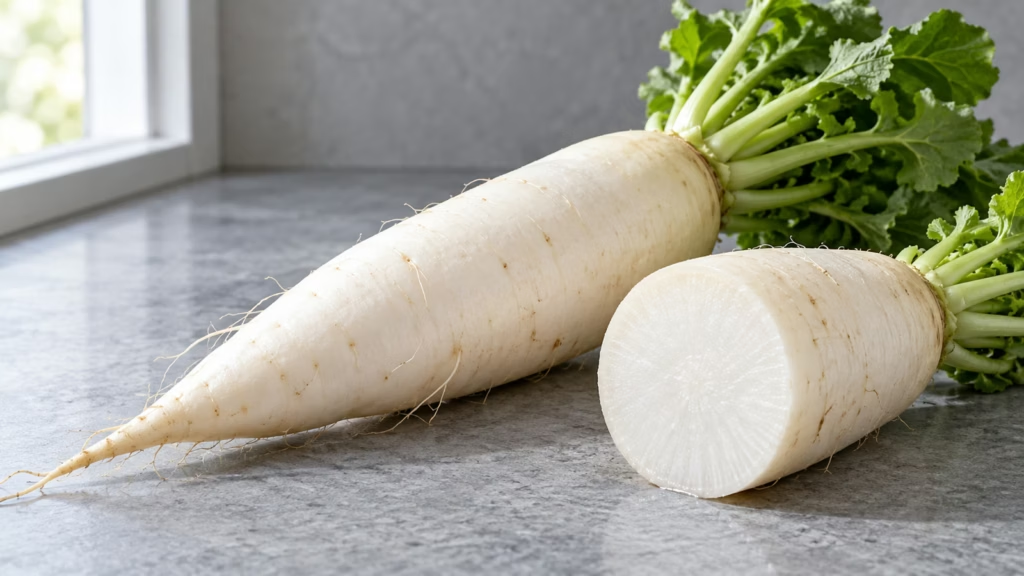
A daikon radish can take up an impressive amount of the cutting board, leaving you wondering whether dinner needs quite that much radish. The useful answer is that one root can do several jobs: slice it raw for crispness, grate it for a sharp condiment, or simmer thicker pieces until tender. The cut and cooking method matter more than the root’s rather dramatic size.
Choose the texture you want first: daikon can be a crisp salad ingredient or a tender part of a warm, brothy meal.
What daikon radish tastes like
Daikon is a radish commonly seen as a long white root, although varieties differ in shape and color. Its raw flesh is juicy and crunchy, with a sweet-peppery character that is often milder than a small red radish. The University of Rhode Island’s preparation guide describes that balance of crispness, sweetness, and gentle spice.
- Raw: Thin slices and matchsticks keep the refreshing crunch. They work well where you want a vegetable with some bite.
- Grated: The finely broken-down root becomes moist and spoonable, a different texture from salad shreds. Use it as the recipe directs rather than treating every grated preparation as interchangeable.
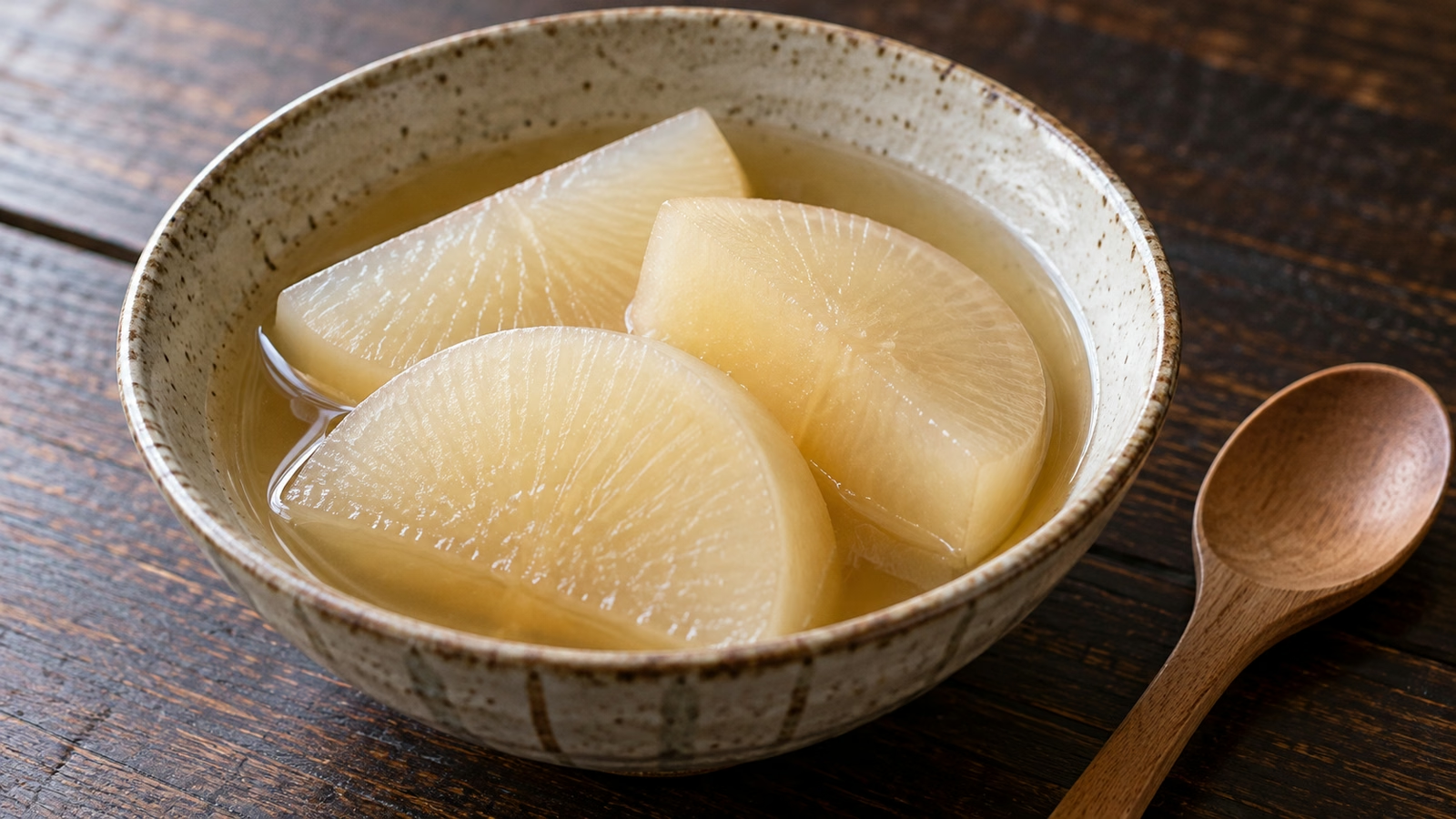
- Cooked: Simmering softens the root. Thick pieces can become tender and slightly translucent while retaining their shape.
- Across the root: Kikkoman notes that the upper portion near the leaves tends to be sweeter, while the lower portion is often sharper. Use this as a useful starting point, not a guarantee that every root tastes identical.
I would try a small, properly washed slice before deciding how to use the rest. If the raw flavor is stronger than you want, a cooked dish may be a better fit than a bowl of plain radish sticks. You can enjoy the ingredient without insisting on its sharpest version.
Wash, peel, and cut for the dish
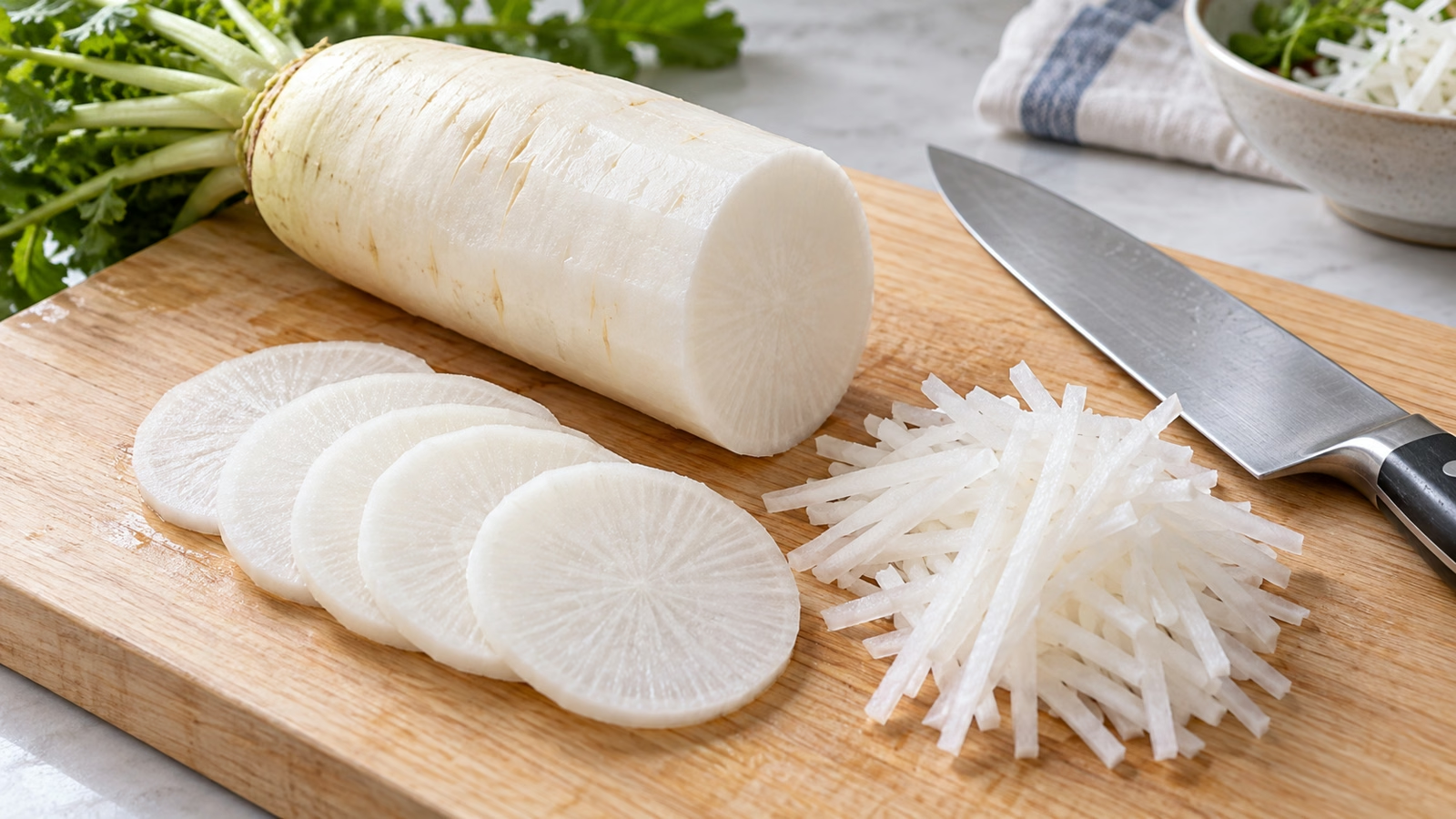
Start with a firm, weighty root and avoid wrinkled or damaged produce. Wash before peeling so surface dirt is not carried inward by the knife. FDA recommends running water and a clean brush for firm produce, rather than soap or detergent.
- Remove the tops. If leaves are attached, separate them from the root for storage. Keep sound greens for a suitable cooked use if wanted.
- Make the root manageable. Cut a long daikon into shorter sections on a stable board. A flat cut face helps keep it from rolling.
- Peel as needed. Follow the dish’s instructions. For simmering, removing a fibrous outer layer can improve the texture; the amount depends on the particular root.
- Choose the shape. Thin rounds suit a crisp salad, matchsticks mix easily with shredded carrots, and thicker half-moons suit soups or simmered dishes.
- Keep pieces consistent. Similar thickness matters when you want a batch to become tender together. A thin sliver and a large chunk will not cook at the same pace.
The cutting examples in Kikkoman’s daikon guide show how much the preparation can change with the dish. I would start with simple half-moons or matchsticks rather than an elaborate decorative cut. The useful skill is control, not speed.
Use daikon radish raw, simmered, or lightly pickled
A large root does not have to become one large dish. Plan two modest uses: perhaps a small raw salad today and a soup tomorrow. That makes its size an advantage and gives you a chance to notice how differently the same vegetable behaves.
- For a crunchy salad: Combine thin daikon slices with cucumber, or use matchsticks with carrot. Add the dressing close to the point your recipe recommends so you get the intended texture.
- For a broth-based dish: Simmer evenly cut pieces until a skewer or fork enters easily. Check the center instead of assuming that a translucent edge means the whole piece is tender.
- For grated daikon: Use a clean grater and follow a preparation designed for that condiment. Its moisture and sharpness are part of its role.
- For namasu: This Japanese daikon-and-carrot preparation uses sweetened vinegar for a crisp, tangy side. Follow a complete recipe, including its salting and draining steps.
- For pickling: Distinguish a refrigerator preparation from a shelf-stable canned product. A splash of vinegar does not turn an improvised jar into safely preserved food.
For a vegetable-based simmering liquid, Tastiva’s homemade vegetable stock guide offers a useful foundation. For namasu, Namiko Hirasawa Chen’s Just One Cookbook recipe explains the preparation and its place at the table; the related video appears below.
Store the remaining root with a plan
Keep daikon refrigerated rather than leaving a cut section on the counter. URI advises separating the greens and storing the root wrapped in a damp paper towel or in a plastic bag; a sound root may keep for up to two weeks under suitable conditions. Treat that as a possible quality window, not a promise for every root you bring home.
- Protect cut sections: Wrap the cut surfaces or use a suitable covered container, and refrigerate promptly.
- Use the greens separately: Do not leave an aging leafy top attached while waiting to use the root. Check its condition and plan a prompt use.
- Do not confuse texture with safety: Discard produce with obvious decay. Cooking does not make spoiled vegetables a sensible ingredient.
- Follow the finished dish: Soup, dressed salad, and refrigerator pickles have different storage instructions. Use the guidance for the exact preparation.
- Keep preservation specific: For canning or other longer-term preservation, use a tested method with the correct ingredient proportions and processing directions.
I would label a saved section with its intended use, such as “soup,” so it does not become another mystery piece in the crisper. Just One Cookbook’s namasu demonstration shows one practical way to use daikon’s crisp raw texture alongside carrot.
Sources
- University of Rhode Island: daikon selection, preparation, and storage
- Kikkoman: daikon cuts and culinary uses
- Just One Cookbook: namasu
- FDA: safe produce preparation
- National Center for Home Food Preservation: safe pickling principles

Hi, I’m Laura, the voice behind Tastiva. I’ve always believed that eating well should feel enjoyable, comforting, and realistic—not like another complicated rule to follow. I love creating recipes that fit into everyday life, sharing simple nutrition ideas, and finding small ways to make meals feel a little better without losing the pleasure of good food.