
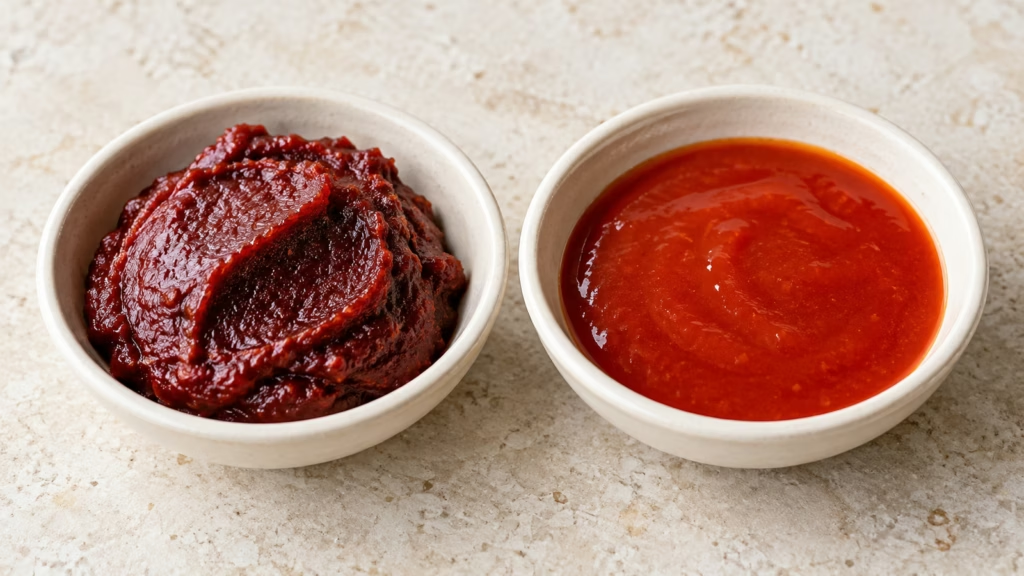
The recipe calls for gochujang, but the refrigerator offers a bottle of sriracha. The gochujang vs sriracha question is not just which one is hotter: gochujang is a thick fermented seasoning paste, while sriracha is a ready-to-use chile sauce. A swap changes body, acidity, sweetness, and savory depth together.
Match the condiment to its job before trying to match its heat.
Gochujang vs sriracha: paste and sauce
Traditional Korean gochujang combines red pepper with a grain component, fermented soybean ingredients, and salt. Formulas vary, but its concentrated texture makes it useful as the foundation of a sauce. Sriracha refers to a family of chile sauces associated with Thailand, with several well-known versions made elsewhere.
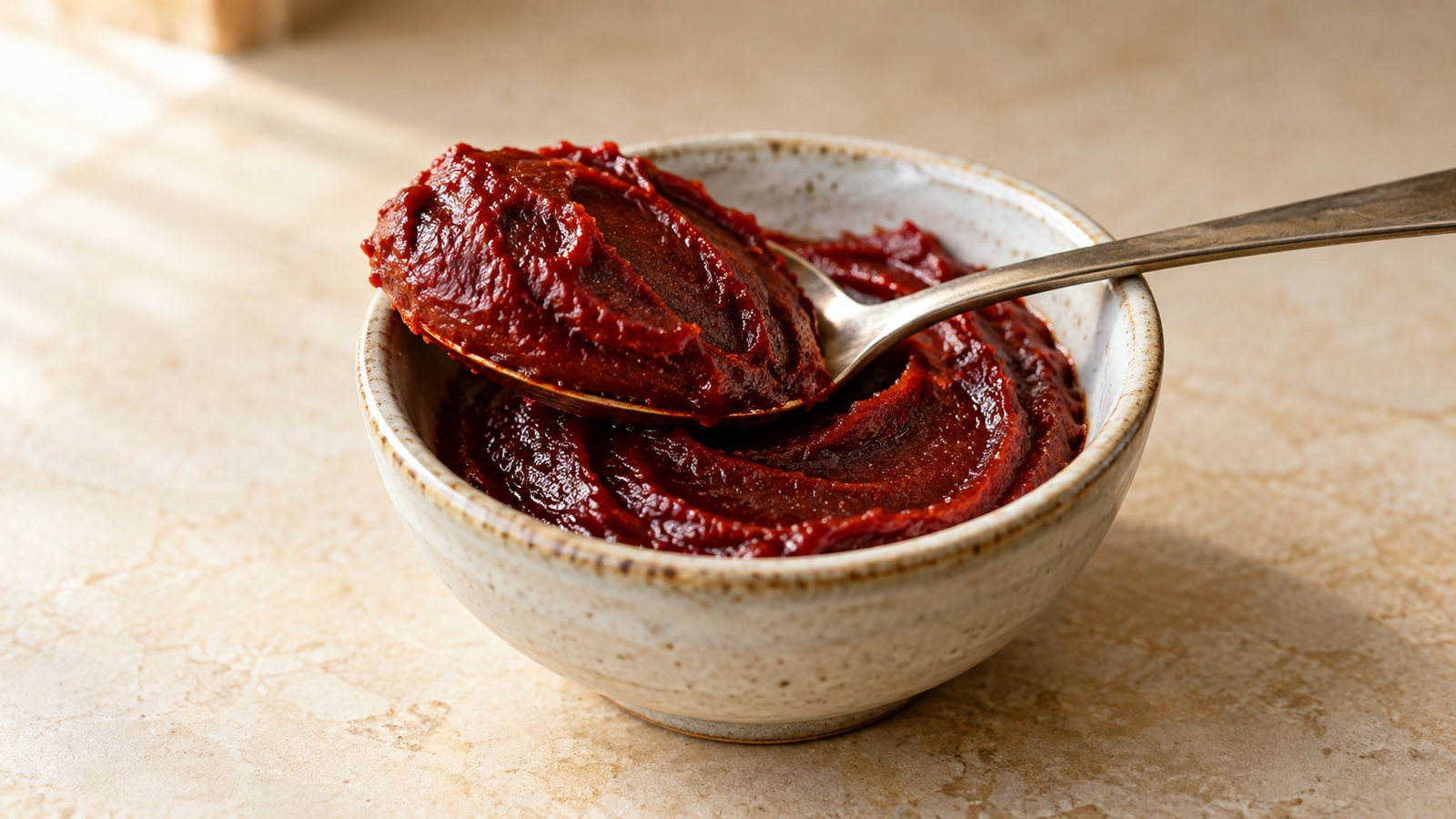
- Gochujang: Dense, savory, salty, and often sweet. It usually needs loosening or balancing when used as a sauce.
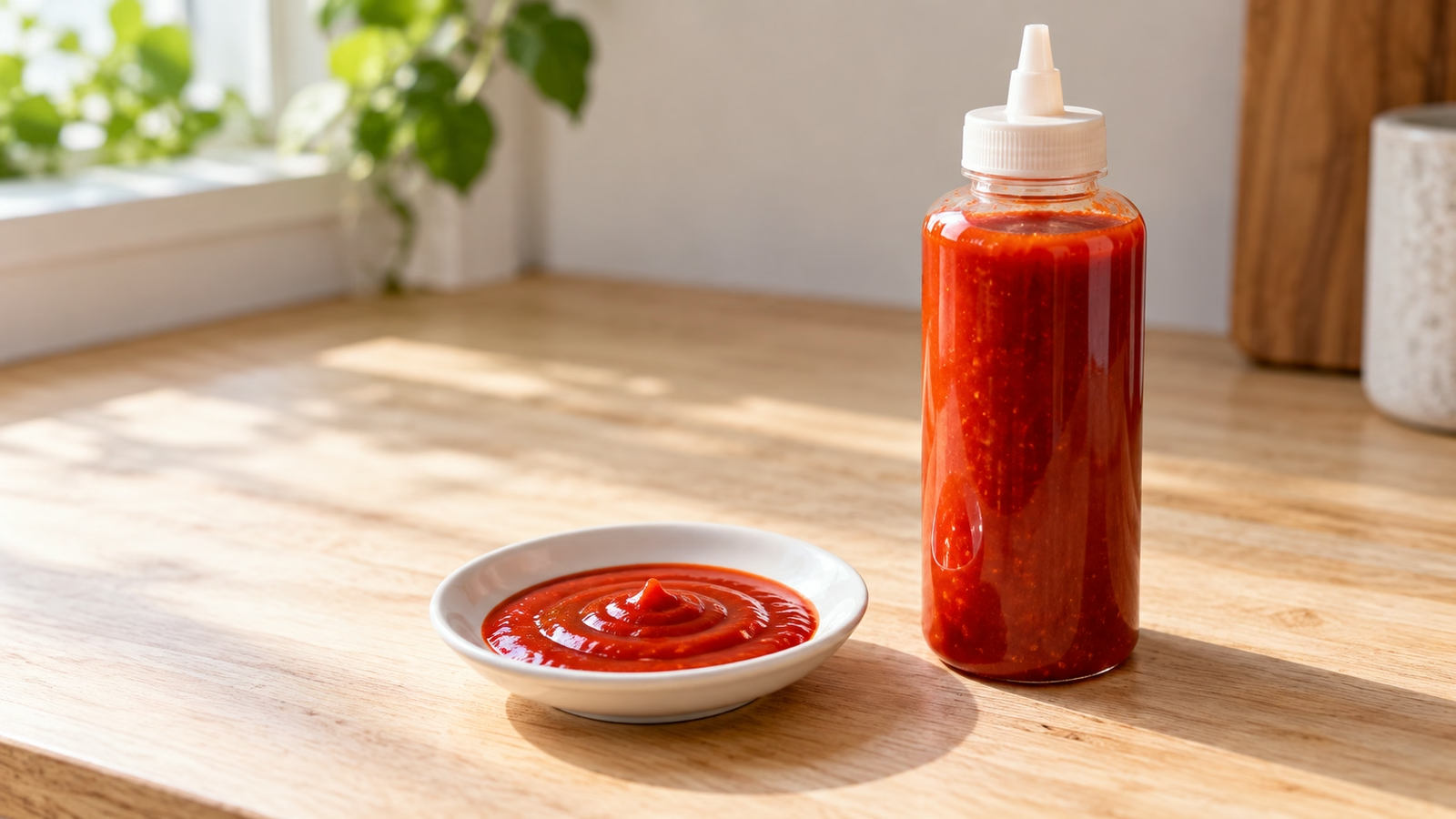
- Sriracha: More readily pourable or squeezable, commonly with garlic and acidity. It can go straight onto a finished dish.
- Heat: Neither name guarantees a particular intensity. Brand, formulation, and the amount used matter.
- Color: A deep red appearance does not tell you how much chile heat, sugar, or salt the product contains.
I would compare a tiny taste of each in a spoonful of plain rice or another neutral food rather than tasting large amounts straight from the container. You are trying to understand the seasoning, not win a contest with the refrigerator door.
Use each where its texture helps
Gochujang can anchor a glaze, marinade, stew, or mixed dipping sauce. Its body helps it cling, but it also needs enough liquid and careful heat to avoid catching on a hot pan. Sriracha can supply a quick finishing note in eggs, noodles, sandwiches, or mayonnaise without the same thickening effect.
- Building a sauce from scratch: Choose gochujang when fermented depth and body are central to the idea.
- Adding a final squeeze: Choose sriracha when you want chile, garlic, and tang without mixing a separate sauce.
- Glazing vegetables: Either can be part of a glaze, but adjust liquid and sweetness for the product rather than using the same formula automatically.
- Seasoning a large pot: Start small, stir thoroughly, and taste after the flavor has dispersed.
The current interest has a documented regional basis: Bidfood’s 2026 UK research lists gochujang among ingredients attracting chef attention and sriracha among flavors consumers want to try. That supports a useful comparison; it does not prove that either product is new or universally more popular.
When the substitution is worth trying
A swap is easiest when the condiment plays a small supporting role. If a spoonful simply adds warmth to a large sauce, you have room to adjust. If the recipe is built around gochujang’s flavor and thickness, sriracha alone will not reproduce it, even if you add enough to match the heat.
- Replacing a little gochujang: Add sriracha gradually, reduce other acidic ingredients initially, and expect a thinner result.
- Replacing a sriracha finish: Loosen a small amount of gochujang with water and a little acid, then taste. Do not assume the original sauce’s sweetness or salt is needed.
- For a creamy dip: Mix either into the creamy base separately and taste before adjusting. This is a forgiving place to compare them.
- For a named traditional dish: Use the intended ingredient where possible, or describe the result as an adaptation.
There is no honest universal exchange ratio. One tub can be much denser or sweeter than another, and one sriracha can be more acidic than the bottle beside it. Tastiva’s gochujang ingredient guide gives broader background if you are buying the paste for the first time.
Read labels and keep the open container usable
Compare equal serving weights when checking sodium or sugar. A tablespoon of paste and a teaspoon of sauce are not an equal comparison, and front-label claims do not replace the ingredient list. Fermentation also does not establish a probiotic benefit for the amount you eventually eat.
- Allergens: Gochujang often contains soy and may contain wheat. Sriracha formulas vary too; check the current label.
- Dietary needs: Do not assume every flavored sauce is vegan, gluten-free, or free of a particular allergen.
- Storage: Follow the maker’s instructions after opening. Use a clean spoon for paste and keep bottle openings clean.
- Planning: Buy a size you will use. A small tub with a few planned meals is more useful than an oversized container chosen only because it is fashionable.
For a first purchase, I would choose based on the next dish: gochujang for a sauce you will build, sriracha for a sauce you want ready to use. Keeping both can make sense, but one does not make the other redundant.
Maangchi’s gochujang demonstration gives a closer look at the ingredients behind the thick fermented paste. It covers making gochujang, rather than a sriracha substitution, and helps explain why matching heat alone cannot reproduce its texture and flavor.
Sources
- Maangchi: gochujang ingredient guide
- Huy Fong: current sriracha product description
- Bidfood: 2026 survey findings and scope

Hi, I’m Laura, the voice behind Tastiva. I’ve always believed that eating well should feel enjoyable, comforting, and realistic—not like another complicated rule to follow. I love creating recipes that fit into everyday life, sharing simple nutrition ideas, and finding small ways to make meals feel a little better without losing the pleasure of good food.