
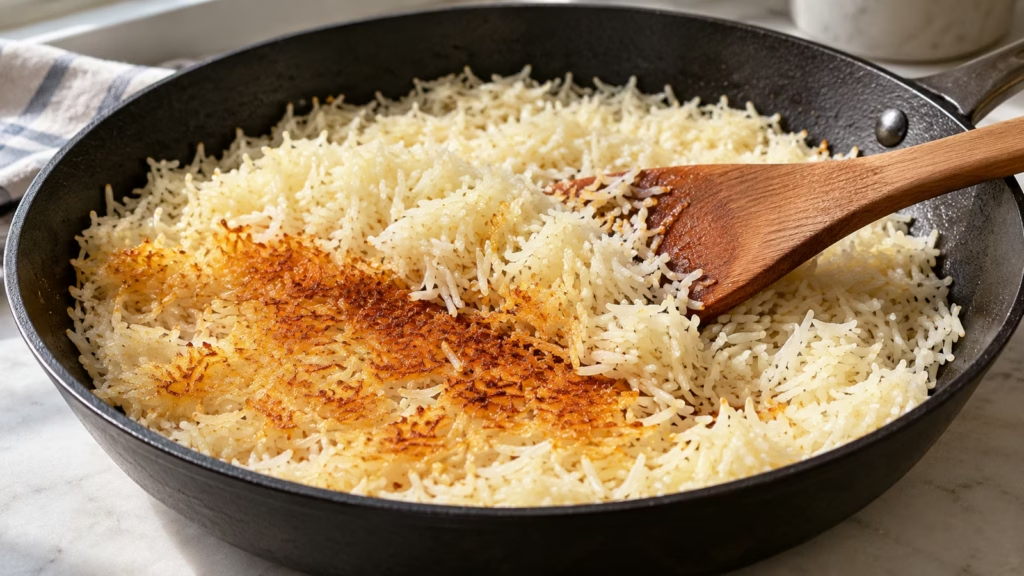
The rice is cooked, the oven is ready, and the recipe suddenly mentions yesterday. Do you really need day-old rice for crispy rice? Not as a universal rule. Cooled rice is useful for loose, crunchy grains, while pressed rice cakes need a method that lets them hold their shape. Overnight refrigeration is one convenient starting point, not a guarantee of crispness.
Choose the rice for the texture you want, then give moisture somewhere to go.
Day-old rice for crispy rice: start with the format
“Crispy rice” can mean scattered golden grains, a skillet crust, or compact cakes with crunchy edges. Those are different cooking jobs. I would identify the intended shape before borrowing advice from another recipe, because rice that separates easily is helpful in a salad and less helpful when you need a tidy square.
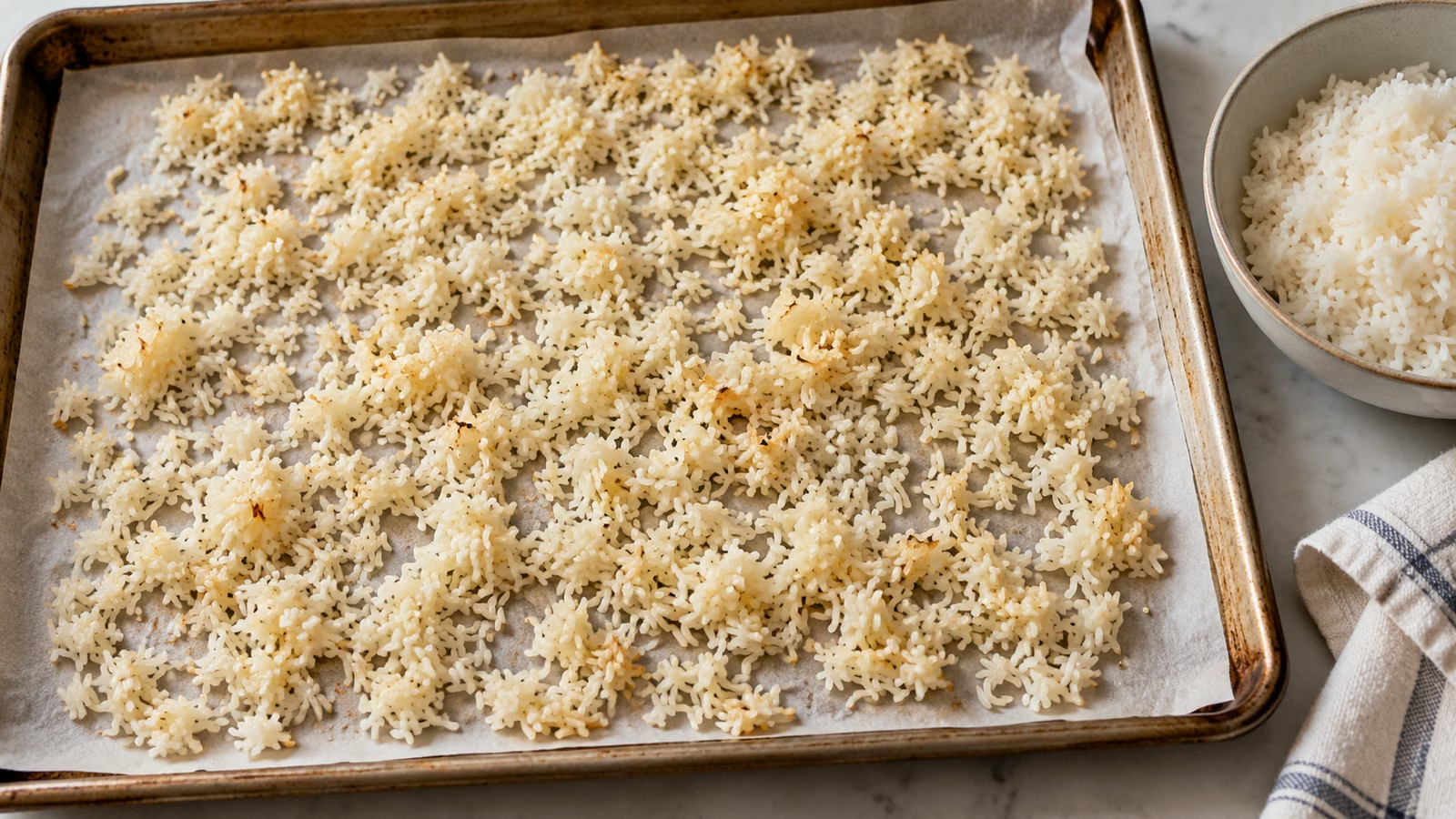
- Loose grains for salads: Use cooked rice you can separate and distribute in a shallow layer. Cool rice is easier to handle without crushing it into paste.
- Pressed cakes or rounds: Follow a recipe built around rice that holds together, plus its pressing and chilling steps. Removing every trace of stickiness would work against the shape.
- A skillet crust: Contact with the pan matters. A browned underside with tender rice above is a different target from a tray of crisp grains.
- Fried rice: The usual goal is separate, tender grains with some toasted flavor, rather than making the entire batch crunchy.
Mahatma’s crispy rice rounds, for example, use a one-to-two-hour refrigerator chill after cooking, showing that an overnight wait is not inherent to every format. By contrast, USA Rice’s salad technique starts with cooled rice and spreads it thinly for baking.
What to do when your rice was cooked today
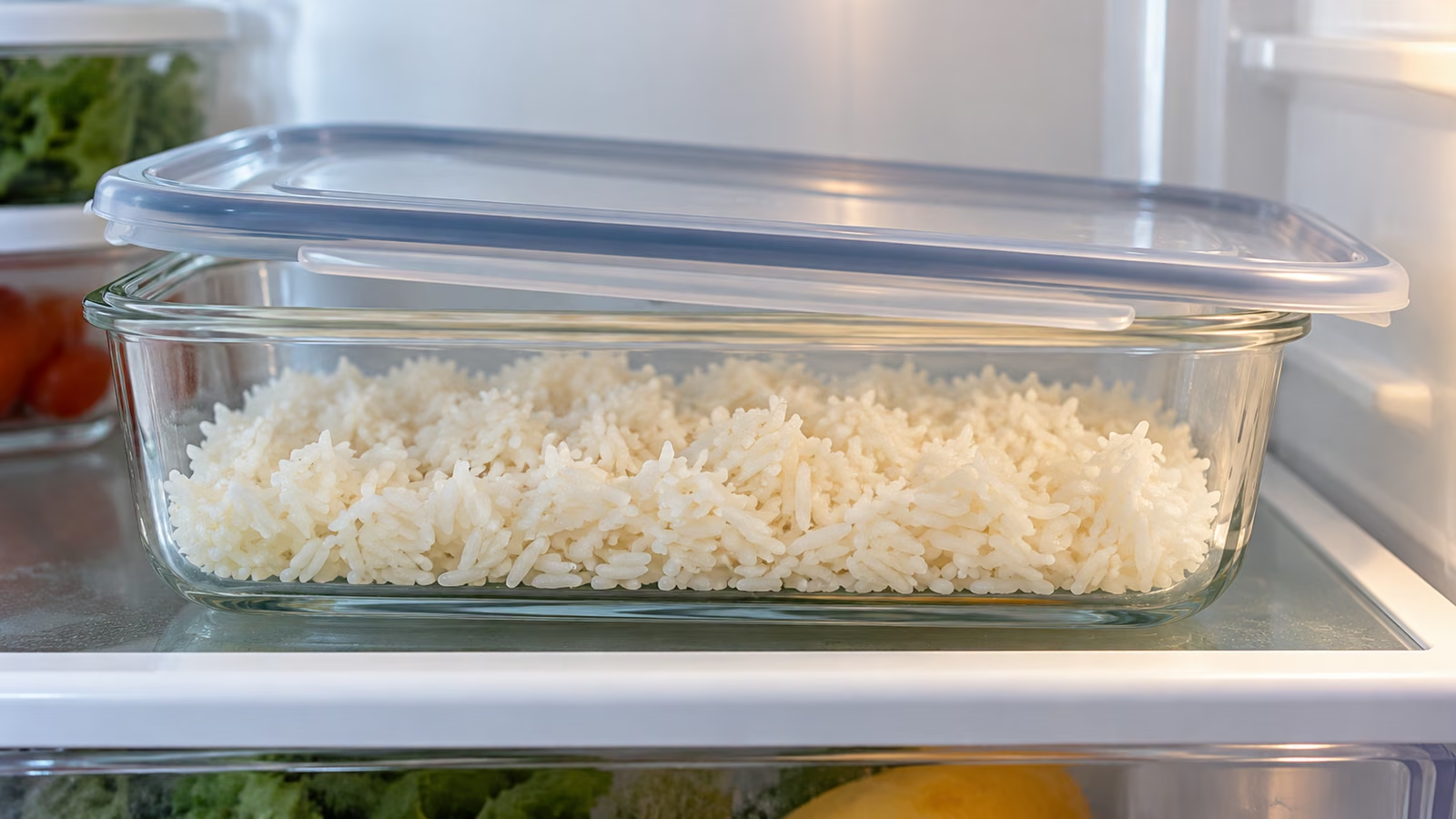
Same-day rice needs a sensible transition from the pot to the next cooking step. Do not pour a steaming, tightly packed mound onto a pan and expect it to behave like separated chilled grains. Cook the rice fully according to its package, fluff gently, then spread it in shallow containers and refrigerate promptly when cooling it for later use.
- Use the right starting measurement. A recipe calling for cooked rice cannot be followed with the same volume of dry rice.
- Check the whole method. Rice variety, cooking liquid and equipment affect the result. Do not automatically subtract water from every recipe in pursuit of dryness.
- Separate gently. Loosen chilled clumps with a fork or clean fingers. Leave small clusters if your crisping method calls for them; avoid dense handful-sized lumps.
- Do not force a soaked or mushy batch. More browning will not restore the distinct grain structure it has already lost. Choose a softer rice dish instead.
For fried rice specifically, J. Kenji López-Alt’s recipe and tests allow freshly cooked rice after a brief spread-out rest, as well as refrigerated rice. That is useful evidence against an absolute calendar rule, though it does not replace the chilling instructions for pressed cakes. I’d keep the method and the promised texture together.
Cool for the next step without leaving rice out
A counter is not a rice-drying appliance. USDA recommends shallow containers and prompt refrigeration; hot food can go directly into the refrigerator. Divide a large batch so it does not remain as one deep, slowly cooling mass.
- Refrigerate promptly. The upper limit is two hours out of temperature control, or one hour when the surroundings exceed 90°F (32°C). These are limits, not cooling goals.
- Keep the refrigerator at 40°F (4°C) or below. Leave room for air to circulate around containers.
- Track the original cooking day. Use refrigerated leftovers within 3–4 days. Crisping them again does not erase their earlier storage history.
- Reheat leftovers thoroughly. USDA’s target is 165°F (74°C) throughout. A browned patch on top does not by itself tell you the center’s temperature.
- Discard rice handled unsafely. Do not try to rescue it by frying longer.
The reason is more than a texture concern. FDA describes a heat-resistant toxin that some Bacillus cereus can form in improperly stored food, including rice. Safe handling comes before crisping. For longer-term planning, Tastiva’s guide to freezing cooked rice in portions covers that separate job.
When yesterday’s rice still refuses to crisp
Even a well-chilled batch can disappoint when the layer is too deep or liquid goes in too early. The growing interest in crunchy rice reflects a broader texture trend noted by USA Rice in July 2026, but the practical question stays simple: what is preventing the surface from browning?
- Wet clumps: Break them apart before cooking. A browned shell around a damp lump is not the same as evenly toasted grains.
- Too much rice for the pan: Spread it thinner or work in batches. A larger batch needs more surface area.
- Dark spots beside pale patches: Turn or redistribute the rice as the method directs, checking areas closest to the pan’s edges.
- Crunch disappears after assembly: Keep dressings, juicy vegetables and sauces separate until serving. Add only what the dish needs.
- Crunch becomes hardness: Stop before every grain is deeply browned. Fully cooked rice and a measured baking or frying method are better starting points than chasing the darkest possible color.
I’d judge the finished rice by the dish it is joining: a pleasant crisp edge can be enough. If you want a bowl built around that contrast, use the measurements and baking cues in our crispy rice salad with cucumber, edamame and lime. For the earlier preparation decision, our rice-rinsing guide explains why the dish and package directions matter.
J. Kenji López-Alt demonstrates how rice behaves across three cooking setups in this fried-rice video. The goal here is separate fried-rice grains, rather than pressed crispy cakes or a fully crisp salad topping; keep the recipe-specific shaping and safe-cooling guidance above.
Sources
- USA Rice: cooled rice and thin-layer salad technique
- Mahatma: same-day chilling for shaped crispy rice
- Serious Eats: fresh and refrigerated rice for fried rice
- USDA FSIS: safe cooling, storage and reheating
- FDA: heat-resistant cereulide toxin and improper storage

Hi, I’m Laura, the voice behind Tastiva. I’ve always believed that eating well should feel enjoyable, comforting, and realistic—not like another complicated rule to follow. I love creating recipes that fit into everyday life, sharing simple nutrition ideas, and finding small ways to make meals feel a little better without losing the pleasure of good food.