
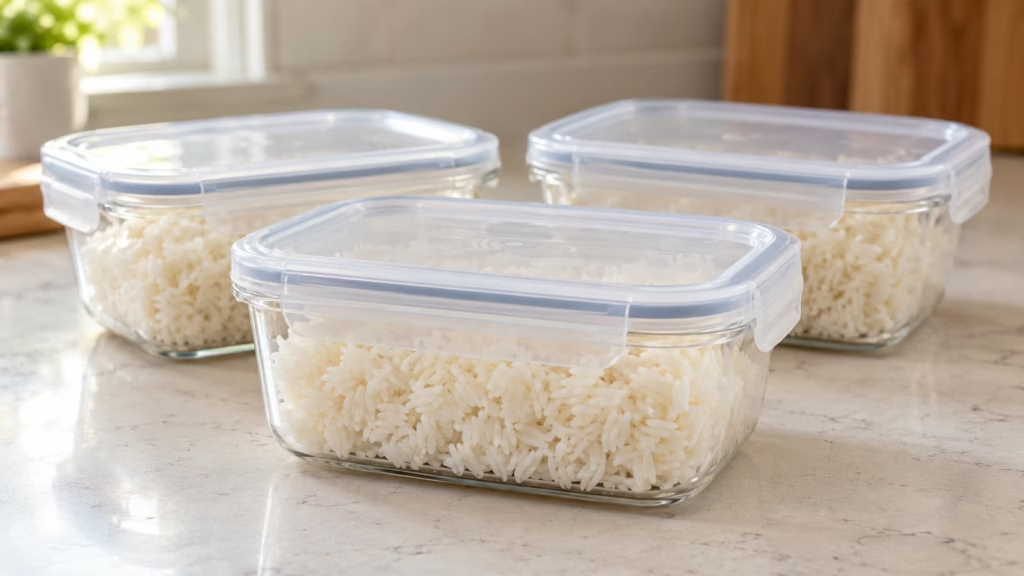
A pot of rice can be just the right size for dinner and somehow still leave tomorrow’s dinner behind. If you’re wondering how to freeze cooked rice, divide it into shallow portions, cool it promptly under refrigeration, seal it in freezer-safe packaging, and freeze it. Later, add a little moisture and reheat only the portion you need to 165°F (74°C) throughout.
Give each freezer portion a job: one meal, one easy package, and a clear date.
How to freeze cooked rice without a giant frozen block
Small portions make this a useful kitchen shortcut. I’d pack rice for the meals you actually make: a side for two people, an individual lunch, or the amount a particular casserole requires. A freezer full of manageable portions is easier to use than a container you need to thaw just to remove a few spoonfuls.
- Start with correctly handled rice. Freeze freshly cooked rice promptly rather than treating the freezer as a rescue for leftovers of uncertain age or handling.
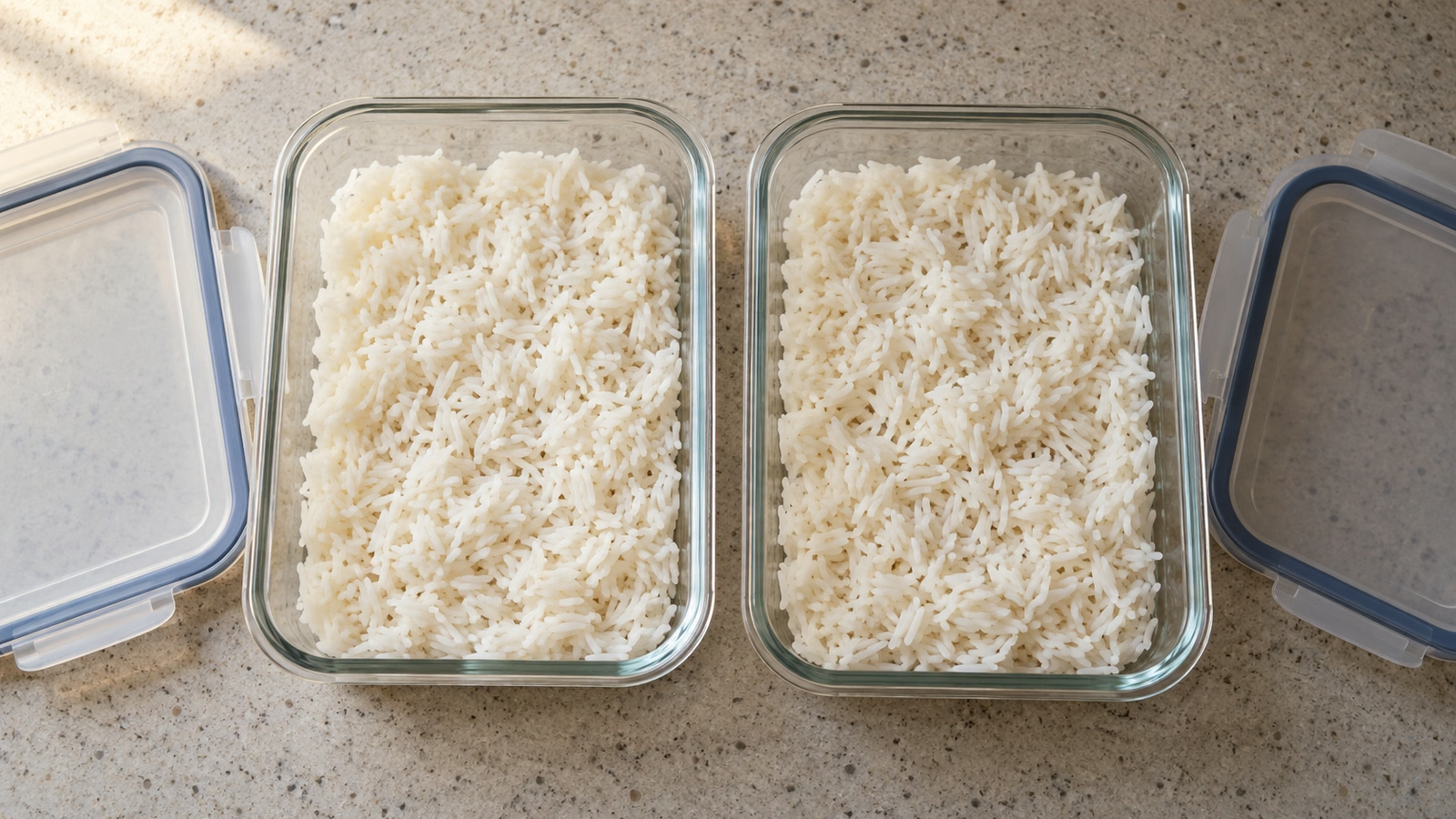
- Divide into shallow containers. Spread the rice out instead of leaving it in a deep cooking pot. Put the portions in the refrigerator promptly; don’t wait for the whole pot to reach room temperature.
- Use freezer-safe packaging. Choose a tight container or a sturdy freezer bag. For bags, move chilled rice into a thin, flat layer and gently press out excess air before sealing.
- Label what matters. Write cooked rice, the variety, the portion size, and the freezing date. Mark whether it includes any other ingredients.
- Freeze in usable portions. Lay bags flat until frozen, then arrange them upright if that suits your freezer. Keep room for cold air to circulate.
Cook the rice to the texture you want before storing it. Freezing won’t repair a scorched bottom or turn mushy grains into a fluffy side. If the starting point needs attention, Tastiva’s brown-rice cooking guide covers measured liquid, grain types, and texture checks.
Cool promptly; freezing doesn’t reset food safety
The FDA’s home storage advice applies to cooked rice and takeout leftovers: refrigerate or freeze perishable food within two hours, or one hour when the air is above 90°F (32°C). Keep the refrigerator at 40°F (4°C) or below and the freezer at 0°F (−18°C). Those limits are reasons to portion promptly, not invitations to leave rice out until the deadline.
- After serving: Put the remainder away promptly. Account for time spent sitting out during the meal as well as afterward.
- With takeout: Consider the whole trip home and any time on the table. Freeze only rice whose handling you can reasonably trust.
- If it stayed out too long: Discard it. A pleasant smell cannot establish that leftovers are safe.
- If you’re planning ahead: Freeze the extra portion early, while its storage history is clear. Don’t wait until you’ve lost track of when it was cooked.
Freezing stops bacterial growth while food stays properly frozen; it does not kill most bacteria. I would give the cooling and handling step more attention than the shape of the container. Good packaging preserves quality, but it can’t undo unsafe handling.
Use the date as a quality guide
USA Rice lists up to six months for frozen cooked rice. Treat that as a useful quality planning window, rather than a promise that every portion will keep the same texture. The federal cold-storage guidance distinguishes quality windows from safety: food kept continuously frozen at 0°F (−18°C) remains safe, but its quality declines over time.
- Plain white or brown rice: Label the variety so you can choose the right texture for the meal. Use older portions first.
- Rice with sauce, meat, or vegetables: Follow the storage and reheating requirements for the whole dish. A plain-rice recommendation doesn’t replace them.
- Dry patches or ice inside a poorly sealed bag: Check the packaging. Tastiva’s freezer-burn guide explains the quality problem; confirm the batch’s safe handling separately.
- A forgotten portion: If the date or handling history is unknown, don’t let a tidy package make the decision for you.
A simple rotation helps: keep the oldest portions easy to reach, and check your freezer before cooking a new large batch. For an illustrative plan, two one-cup packages can serve different lunches more conveniently than one two-cup package. Choose the amount for your appetite and recipe; this is packaging advice, not a serving-size rule.
Reheat with moisture and check the center
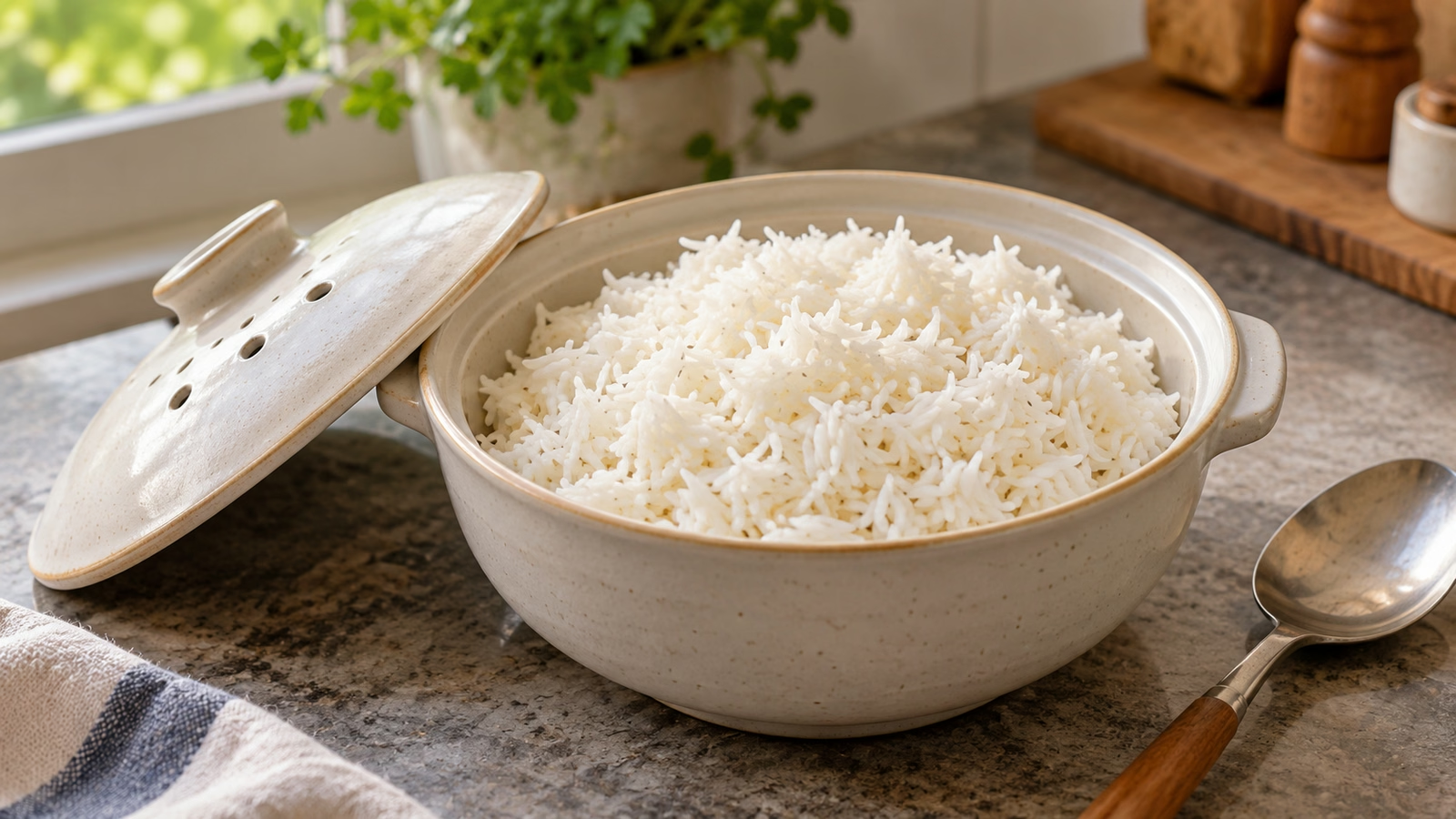
A frozen portion can go straight into a suitable reheating method; you don’t need to leave it on the counter to thaw. USA Rice recommends adding 2 tablespoons of liquid per cup of cooked rice. Its microwave timing for frozen rice is about two minutes per cup, but power, portion shape, and starting temperature vary. A timer is a starting point; 165°F (74°C) throughout is the leftover reheating target.
- Microwave: Transfer rice to a microwave-safe dish, add the liquid, and cover with a microwave-safe vented cover. Heat, stir to redistribute cold spots, and continue until the whole portion reaches the target.
- Stovetop: Put rice and liquid in a saucepan, cover, and heat gently. Break apart and stir the rice as it loosens; check that the center heats thoroughly.
- In another dish: Add it where the recipe calls for cooked rice, then heat the finished dish safely. Frozen cooked rice cannot replace dry rice cup for cup in a method designed to absorb cooking liquid.
- After heating: Fluff and serve. Reheat the amount you plan to eat, rather than repeatedly warming the entire stash.
I’d start with a covered bowl or pan because the added moisture belongs around the grains, not evaporating into the kitchen. If a reheated portion is softer than you wanted, use it beside a sauce or in a suitable soup. Keep the safety check separate from the texture judgment.
Judi Klee, who holds a master’s degree in nutrition, explains freezing cooked rice in portions and using it later. Pair the portioning demonstration with the article’s safety checks: cool promptly in shallow containers, refrigerate within two hours (one hour above 90°F), and reheat to 165°F (74°C), rather than relying on a short heating time.
Sources
- USA Rice: storing and reheating cooked rice
- FDA: prompt refrigeration, appliance temperatures, and freezer safety
- FoodSafety.gov: freezer storage windows describe quality
- FoodSafety.gov: safe leftover reheating temperature

Hi, I’m Laura, the voice behind Tastiva. I’ve always believed that eating well should feel enjoyable, comforting, and realistic—not like another complicated rule to follow. I love creating recipes that fit into everyday life, sharing simple nutrition ideas, and finding small ways to make meals feel a little better without losing the pleasure of good food.