

A cold can looks innocent beside lunch: no sugar, no calories, and somehow easy to file under “basically flavored fizz.” Then bedtime arrives and your brain is still reorganizing the kitchen cabinets. Does Coke Zero have caffeine? Yes. In the United States, Coca-Cola says a 12-fluid-ounce serving of Coca-Cola Zero Sugar contains about 34 milligrams of caffeine. A separate Coca-Cola Zero Sugar Caffeine Free product is available for people who want neither sugar nor caffeine.
Zero sugar does not mean zero caffeine—the words to look for are “caffeine free,” not simply “zero.”
How much caffeine is in Coke Zero?

The current U.S. product page lists about 34 mg in 12 fl oz (355 ml). Container sizes and formulas can differ by market, flavor, fountain mix, and reformulation, so the package in your hand is the final reference. If caffeine is not quantified on the label, the manufacturer’s current regional website or consumer line is more reliable than an old chart.
Thirty-four milligrams is less than the amount in most same-size cups of brewed coffee, but it is not nothing. The U.S. Food and Drug Administration gives broad typical ranges: a 12-ounce caffeinated soft drink may contain 23–83 mg, green tea about 37 mg, black tea about 71 mg, and regular brewed coffee 113–247 mg. Brand, preparation, and serving size change every one of those numbers.
| Drink (12 fl oz) | Typical caffeine |
|---|---|
| Coca-Cola Zero Sugar | About 34 mg |
| Caffeinated soft drink | 23–83 mg |
| Green tea | About 37 mg |
| Black tea | About 71 mg |
| Regular brewed coffee | 113–247 mg |
Those comparisons use the same 12-ounce volume so you can see concentration, not so you will drink coffee from a soda can. A large restaurant cup may hold far more than 12 ounces, and refills are easy to lose count of. I would total the caffeine I actually drink, not the number of containers on the table.
Why a modest amount can still affect your evening
Caffeine sensitivity varies. Genetics, body size, pregnancy, medications, smoking status, regular use, and health conditions influence how quickly it is cleared and how strongly it feels. One person can drink 34 mg after dinner and sleep normally; another may notice restlessness, a faster heartbeat, reflux, or a lighter night.
The FDA cites 400 mg per day as an amount not generally associated with negative effects for most adults, but that is not a target and it is not personalized clearance. It includes coffee, tea, soda, energy drinks, chocolate, supplements, and some medicines. Pregnancy, breastfeeding, heart rhythm concerns, anxiety, migraines, and interacting medication are good reasons to ask a clinician about a lower personal limit.
Timing matters because caffeine can remain in the body for hours. If sleep is fragile, try moving the last caffeinated drink earlier rather than arguing with the ceiling at midnight. Our article on coffee and health takes the same practical view: the dose, the clock, and your response matter more than whether a drink has a wellness halo.
How to find the genuinely caffeine-free version
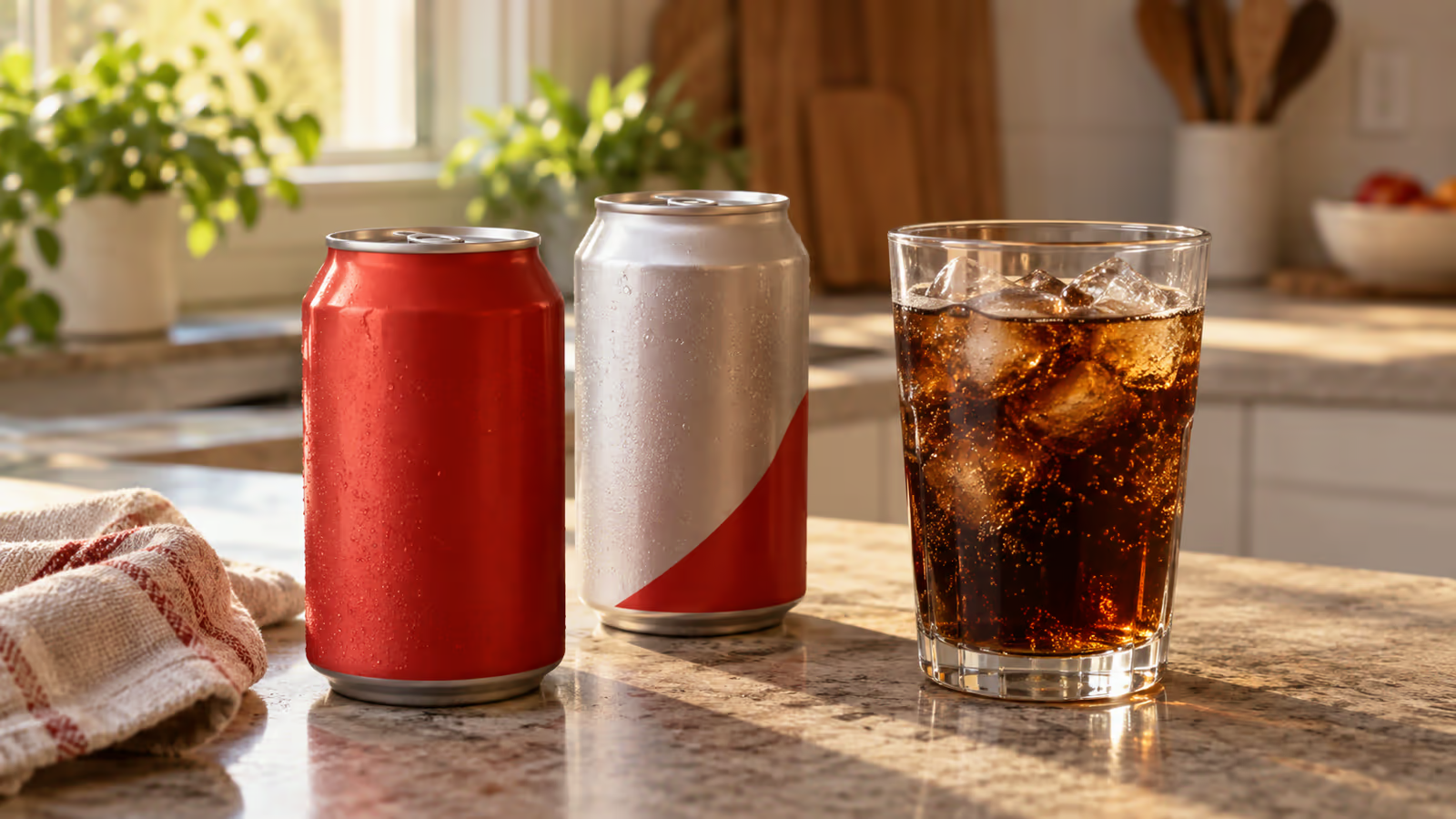
Look for Caffeine Free on the front of the package and then check the ingredient list. “Zero Sugar” describes sugar, not stimulant content. “Decaf” and “caffeine free” also are not interchangeable across every beverage category, which is why exact package wording matters.
Availability changes. A store may carry regular Coke Zero, a flavored version, a caffeine-free version, or no caffeine-free option at all. Fountain dispensers can be especially confusing because button colors and product names are easy to skim. When avoiding caffeine is medically important, ask the restaurant to confirm the syrup rather than relying on the cup.
- Regular Coca-Cola Zero Sugar: about 34 mg caffeine per 12 fl oz in the current U.S. formula.
- Coca-Cola Zero Sugar Caffeine Free: the separate option intended to contain no caffeine.
- Diet Coke: a different formula and product; do not use its caffeine number for Coke Zero.
- International products: check the local label because recipes and package sizes can change.
A simple way to decide whether the can fits
Start with the time of day. If you want the flavor at lunch and sleep well, 34 mg may fit easily within your total. If you are choosing it at 8 p.m. because “zero” sounded stimulant-free, the caffeine-free version is the more direct match. The answer is not that everyone must avoid it; the answer is to know what you are choosing.
Next, notice patterns rather than chasing a perfect universal cutoff. Jitters, palpitations, anxiety, headache, stomach upset, and sleep disruption are signals to reduce the dose or timing and discuss symptoms when needed. Cut back gradually if you use caffeine every day, since abrupt withdrawal can bring headaches and fatigue.
So yes, Coke Zero has caffeine in its standard U.S. version. The amount is modest beside many coffees, but its effect belongs to your whole day. Read the exact can, add the drinks together, and let bedtime have a vote.
Sources
- The Coca-Cola Company: Coca-Cola Zero Sugar Product Information and Caffeine FAQ
- U.S. Food and Drug Administration: How Much Caffeine Is Too Much?
- National Library of Medicine: Pharmacology of Caffeine

Hi, I’m Laura, the voice behind Tastiva. I’ve always believed that eating well should feel enjoyable, comforting, and realistic—not like another complicated rule to follow. I love creating recipes that fit into everyday life, sharing simple nutrition ideas, and finding small ways to make meals feel a little better without losing the pleasure of good food.