
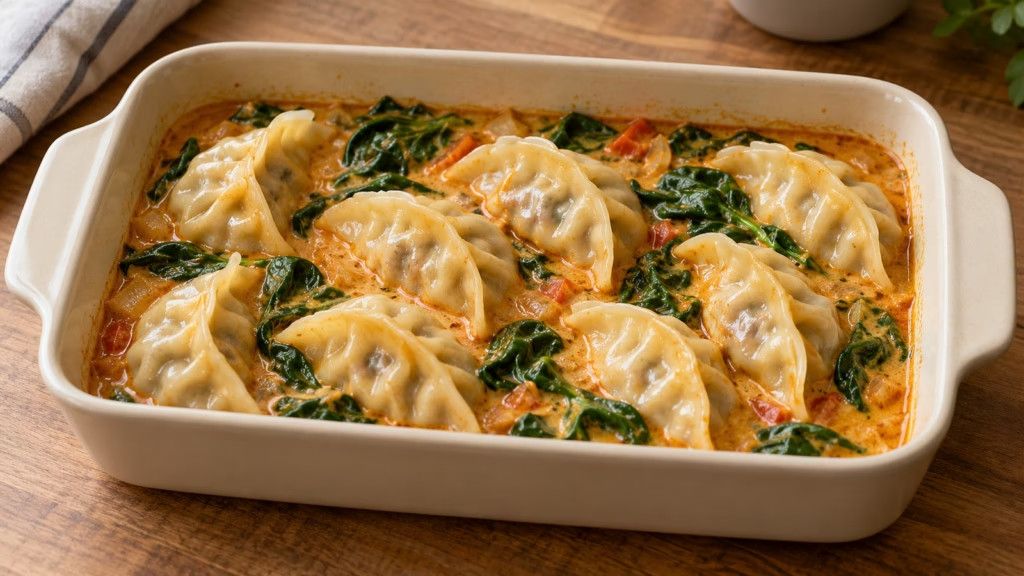
The frozen dumplings are lined up in a creamy sauce, and dinner looks almost too easy. A dumpling bake can be a handy oven-based shortcut, but the important decision comes before the timer: choose a complete recipe that fits your dumplings, baking dish and sauce. I’d pay more attention to moisture and the center of the filling than to whether the surface looks ready for a photograph.
The sauce can be bubbling while the middle still needs heat; check the food, not just the clock.
What the dumpling bake shortcut actually does
Instead of filling and folding dough, this version of dinner starts with frozen dumplings and cooks them in a sauce. The covered pan traps moisture, so the result belongs closer to a saucy braise than to the crisp-bottomed potstickers you fry in a skillet. If crispness is your main goal, that difference matters before you switch cooking methods.
The format remains part of the autumn food conversation: PureWow’s September 2026 trend coverage includes dumpling bakes among the freezer shortcuts carrying into soup season. That is current editorial coverage, not a measured ranking of every recipe online.
- Convenience: the frozen filling and wrappers are already assembled. You still need to follow a recipe and check doneness.
- Texture: sauce-contacted wrappers tend toward soft and tender; exposed edges can behave differently.
- Flavor: the dumpling filling, curry paste or sauce, and finishing ingredients all contribute. More sauce ingredients do not automatically mean a better balance.
- A different project: if you want to make the wrappers’ filling yourself, our steamed pork-and-cabbage dumpling recipe covers that process. It is not a substitute for the instructions on a bag of frozen dumplings.
Check the package and the complete recipe together
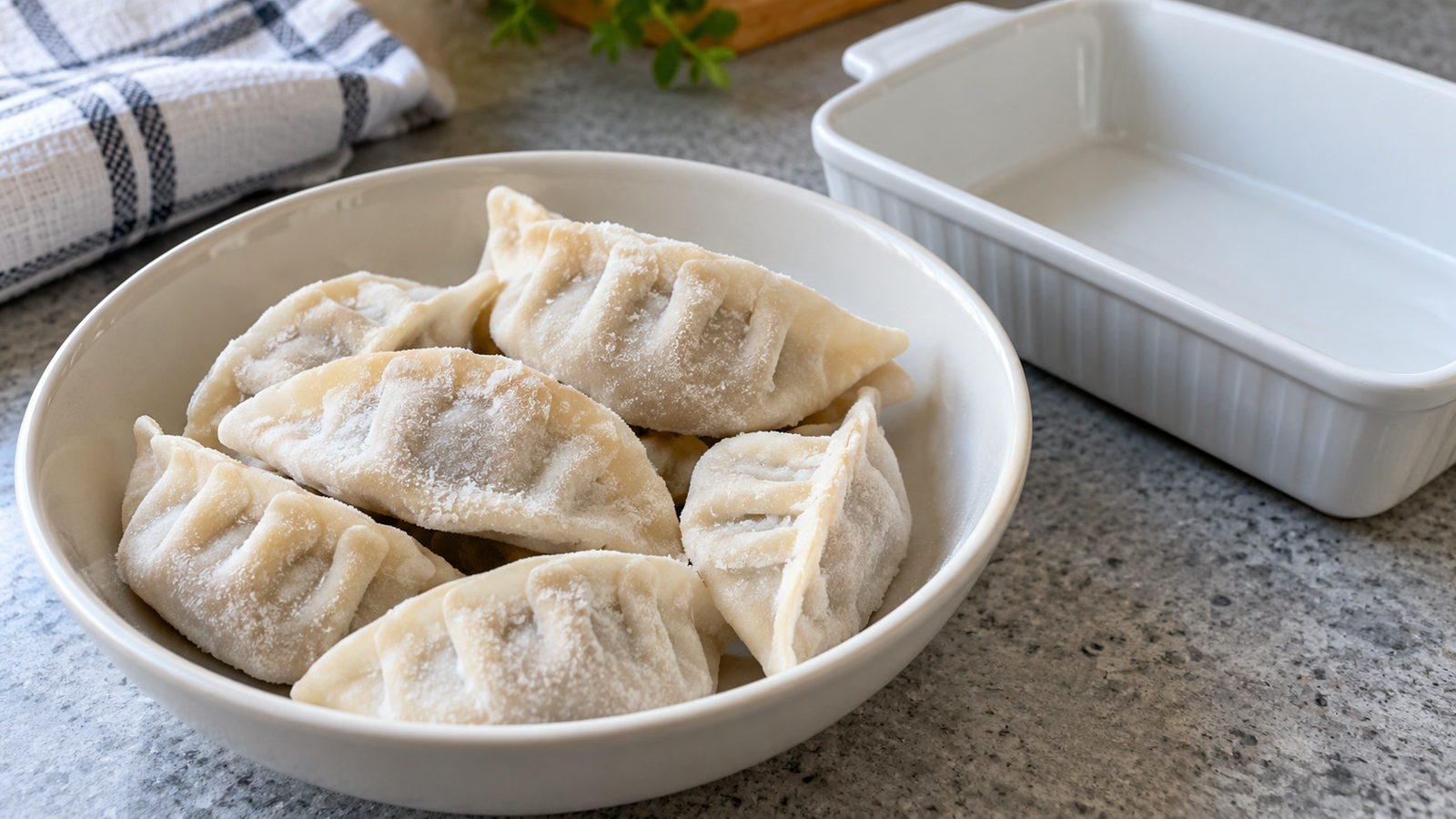
Two bags with similar-looking crescents may have different fillings, sizes and cooking instructions. Some dumplings contain raw meat; others are fully cooked. Read the package rather than guessing from their frozen appearance, and use a reliable recipe that specifies a suitable product and method.
| Check | Why it matters | A useful decision |
|---|---|---|
| Filling and cooking status | Raw and fully cooked products need appropriate handling | Follow the package and chosen recipe |
| Size and wrapper style | Thick or large dumplings heat differently | Avoid a casual swap without instructions |
| Allergen information | Wrappers, fillings and sauces may contain different allergens | Read every component’s label |
| Sauce amount and pan size | Depth and crowding change how the dish heats | Use the dimensions and amounts in the recipe |
A source recipe should tell you what to buy, how much sauce to use, the pan size, oven setting and complete sequence. For example, Pampered Chef’s published dumpling bake gives a specific six-serving combination with spinach and coconut milk. Its measurements and timing belong to that recipe, rather than acting as a universal formula for every freezer bag.
Let sauce, space and the cover do their jobs
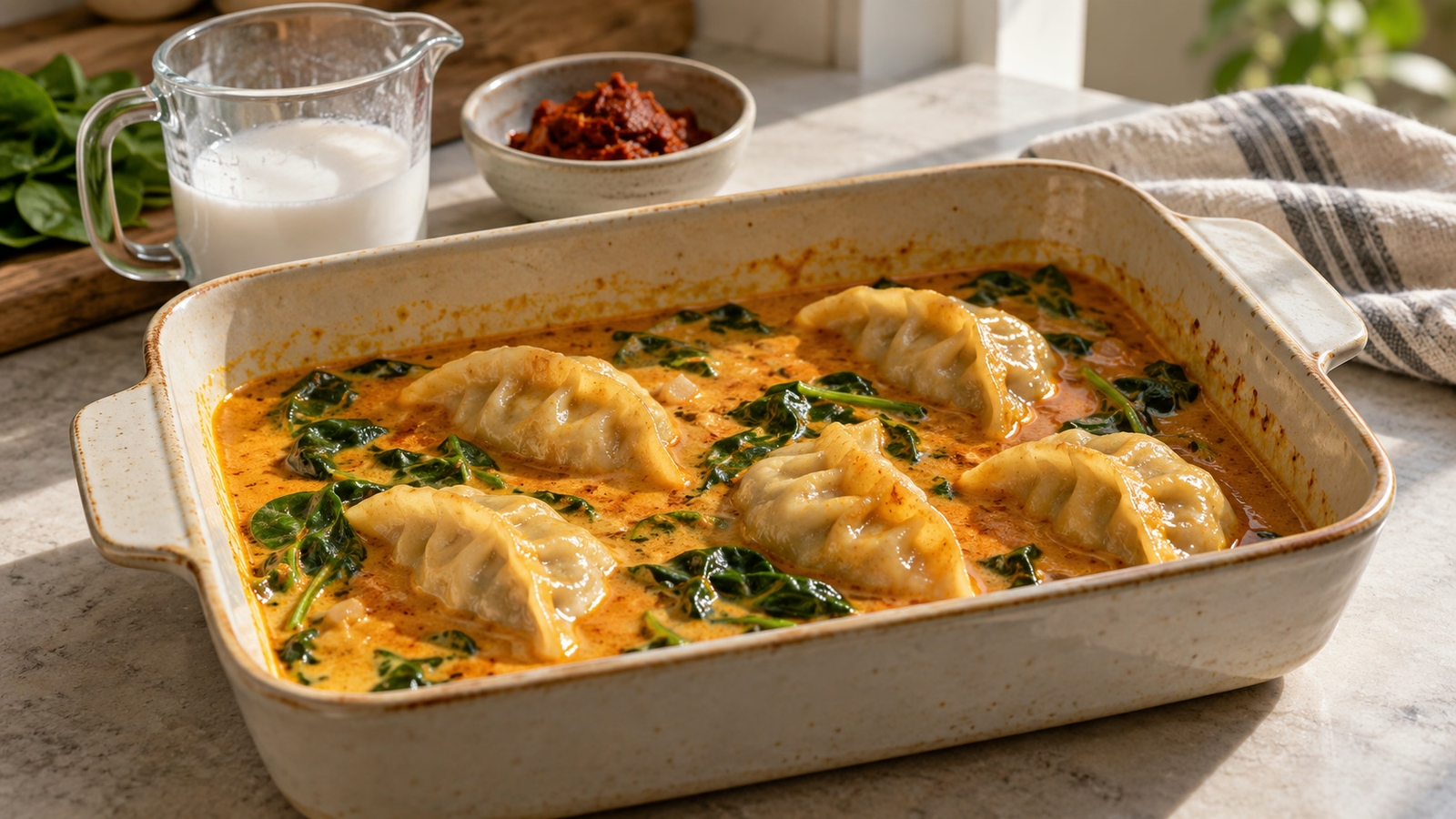
A covered saucy bake asks the wrappers to absorb moisture while the filling heats. Too little liquid, a loose cover or an overcrowded pan can leave the result uneven. I would stick with the chosen recipe’s arrangement first; a deeper dish is not simply the same pan with taller sides.
- Use the stated pan: changing its footprint changes the depth of sauce and the way the dumplings sit in it. Keep a single layer if that is what the recipe specifies.
- Mix the sauce as directed: distribute concentrated curry paste and seasonings rather than leaving a salty or fiery pocket beside one dumpling.
- Keep the cover secure: if the method calls for foil or a lid, that step is part of the cooking environment, not a decorative suggestion.
- Watch substitutions: coconut beverage, coconut milk and coconut cream are different products. A thin carton beverage will not necessarily give the sauce described in a canned-milk recipe.
- Add a finish deliberately: a little fresh lime or a chosen crunchy topping can bring contrast, but it does not fix an underheated filling.
Curry paste, dumplings, soy sauce and chili crisp can all contribute salt or heat. Taste the sauce before it touches raw dumplings, or after the finished dish reaches a safe temperature and keep optional additions modest. I’d choose one clear finish rather than turning the top of the pan into a condiment reunion.
Use a thermometer, then store leftovers promptly
A browned edge and a bubbling sauce are useful cooking observations, but they do not replace checking the center. FoodSafety.gov lists casseroles at 165°F (74°C). Follow the package’s cooking method as well, and confirm at least 165°F (74°C) in the filling in several places, including near the middle of the pan.
- Finish the full cooking method: if the center is not ready, continue cooking and recheck. Do not rely on a cut-open dumpling’s color alone.
- Serve a portion that fits the meal: dumpling count is not a consistent serving measure across brands. Use the recipe yield and package information, then consider any rice, vegetables or other sides.
- Read nutrition in context: the filling, sauce and toppings determine the dish’s protein, sodium and saturated fat. A spinach layer does not make those differences disappear.
- Cool safely: refrigerate perishable leftovers within two hours, or within one hour when the surrounding temperature is above 90°F (32°C). Divide a large amount into shallow containers.
- Keep and reheat: USDA recommends three to four days in the refrigerator for leftovers and reheating them to 165°F (74°C).
Those storage and reheating limits come from USDA’s leftovers guidance. Keep the refrigerator at 40°F (4°C) or below, and do not stretch the clock because the sauce still smells pleasant.
A dumpling bake earns its place when the shortcut actually suits the dinner you want: a tender, saucy meal with manageable prep. Settle the package, recipe and pan questions first, then let the oven do the work it was asked to do.
Herman Chan of Herman at Home demonstrates a coconut-curry variation with peanut butter and mushrooms. Use the assembly as a visual guide, keep the recipe’s specific pan and ingredient amounts together, and confirm the dumpling filling reaches at least 165°F (74°C) rather than relying on the video’s timing alone.
Sources
- PureWow: September 2026 fall food trend coverage
- Pampered Chef: a complete dumpling bake recipe
- FoodSafety.gov: safe minimum temperatures
- USDA: leftovers and food safety

Hi, I’m Laura, the voice behind Tastiva. I’ve always believed that eating well should feel enjoyable, comforting, and realistic—not like another complicated rule to follow. I love creating recipes that fit into everyday life, sharing simple nutrition ideas, and finding small ways to make meals feel a little better without losing the pleasure of good food.