
Some evenings, the thought of washing a pan is enough to change the dinner plan. A snack plate dinner can be a real meal when you build it with substantial food, rather than a few decorative bites: start with protein, add bread or another starch, bring in produce, and include something flavorful. No stove, elaborate board, or carefully folded salami required.
Make the plate generous enough to be dinner, and simple enough that you actually want to assemble it.
The snack plate dinner formula
Think of this as meal assembly, not an appetizer competition. The foods stay separate, but they still need to add up to an eating opportunity that suits you. A handful of crackers and three cucumber rounds might be a pleasant nibble; they may not be what you wanted after a long day.
I’d choose one main protein-containing food first, then build around its flavor and texture. Beans, eggs, canned fish, nuts, seeds, and soy foods are among USDA’s protein-food options; yogurt and cheese can also contribute protein. The point is a useful amount, not a tiny garnish chosen because it technically contains some.
- Protein anchor: Try canned beans with hummus, ready-cooked eggs with cheese, canned fish, Greek yogurt, or tofu specifically labeled ready to eat.
- Bread or another starch: Add pita, bread, crackers, tortillas, or a ready-to-eat grain option whose package permits cold serving. Choose an amount you would reasonably eat as part of dinner.
- Produce: Use washed cucumber, carrots, tomatoes, apples, pears, or other fruit and vegetables you enjoy. A mixture gives you different colors and textures without much work.
- Flavor and richness: Hummus, nut or seed butter, avocado, olive oil, cheese, or a favorite dip can help the components taste good together. Some foods cover more than one role.
Four no-cook combinations to start from
These are illustrative starting portions for one adult, not calorie targets or personalized meal prescriptions. Increase or reduce the amounts according to appetite, your other meals, and individual advice. Every cooked ingredient below is purchased ready to eat or already safely prepared; there is no hidden step asking you to boil eggs at dinnertime.
| Combination | Protein-containing foods | Bread, grain, or starch | Produce and finishing touch |
|---|---|---|---|
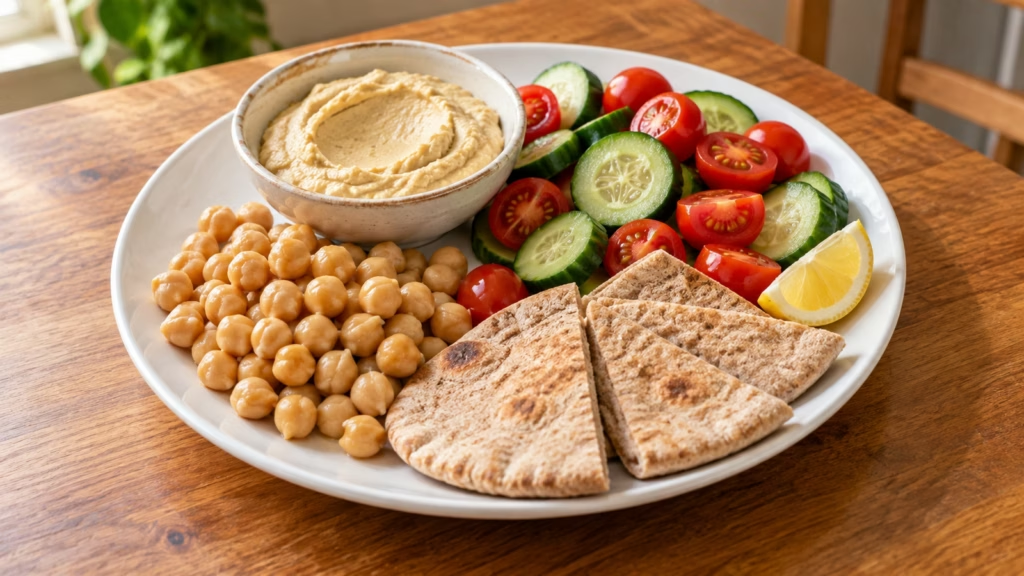
| Chickpea and hummus plate | ½ cup drained canned chickpeas + ⅓ cup hummus | 1 medium whole-wheat pita | About 1 cup cucumber and tomatoes; lemon to taste |
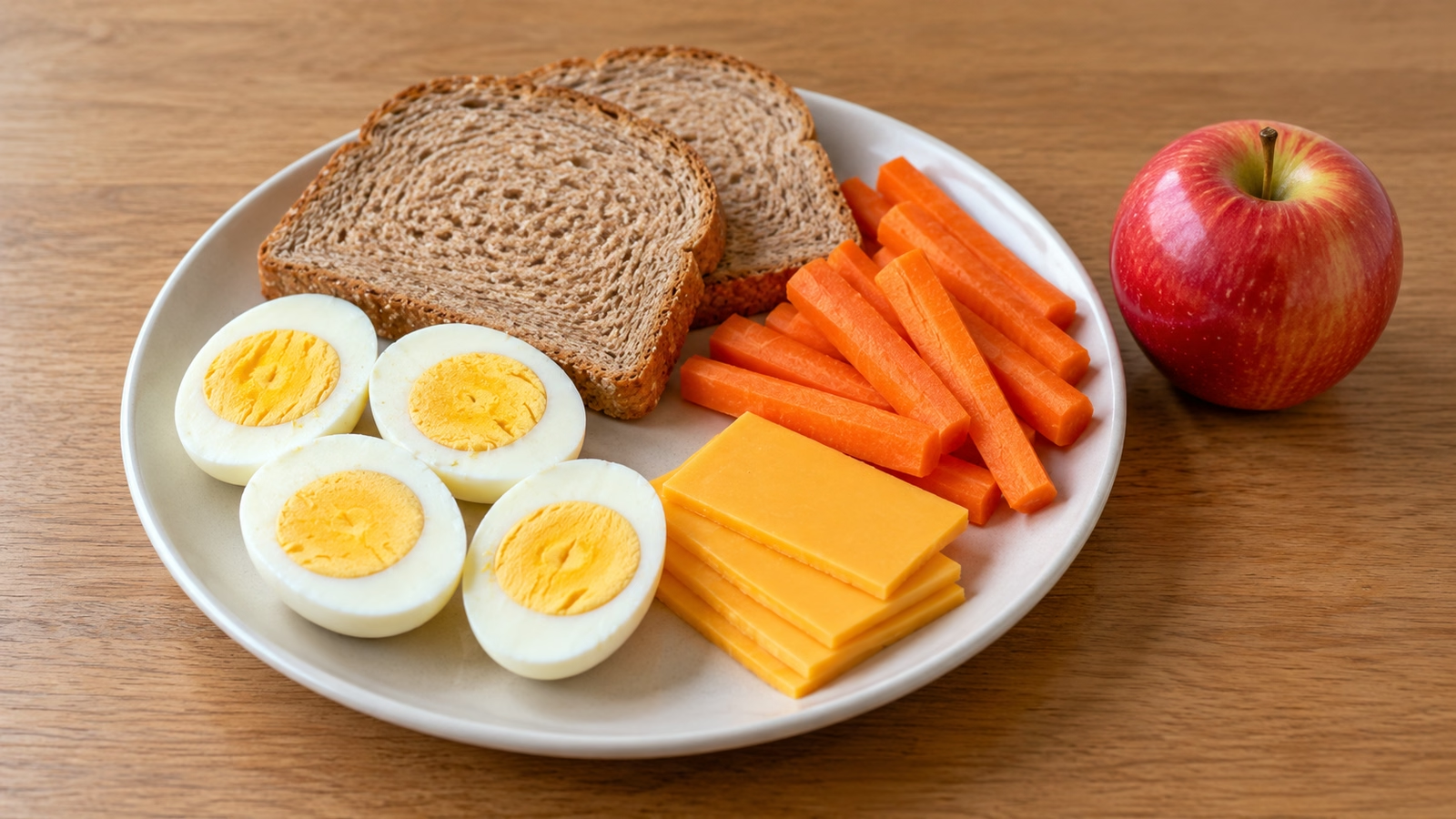
| Egg and cheese plate | 2 ready-cooked eggs + 1 oz cheese | 2 slices whole-wheat bread | Carrot sticks and an apple |
| Tuna and bean plate | 1 tuna pouch (about 2.6 oz) + ½ cup drained white beans | 2 slices bread or a comparable amount of crackers | Cucumber and tomatoes; olive oil and lemon to taste |
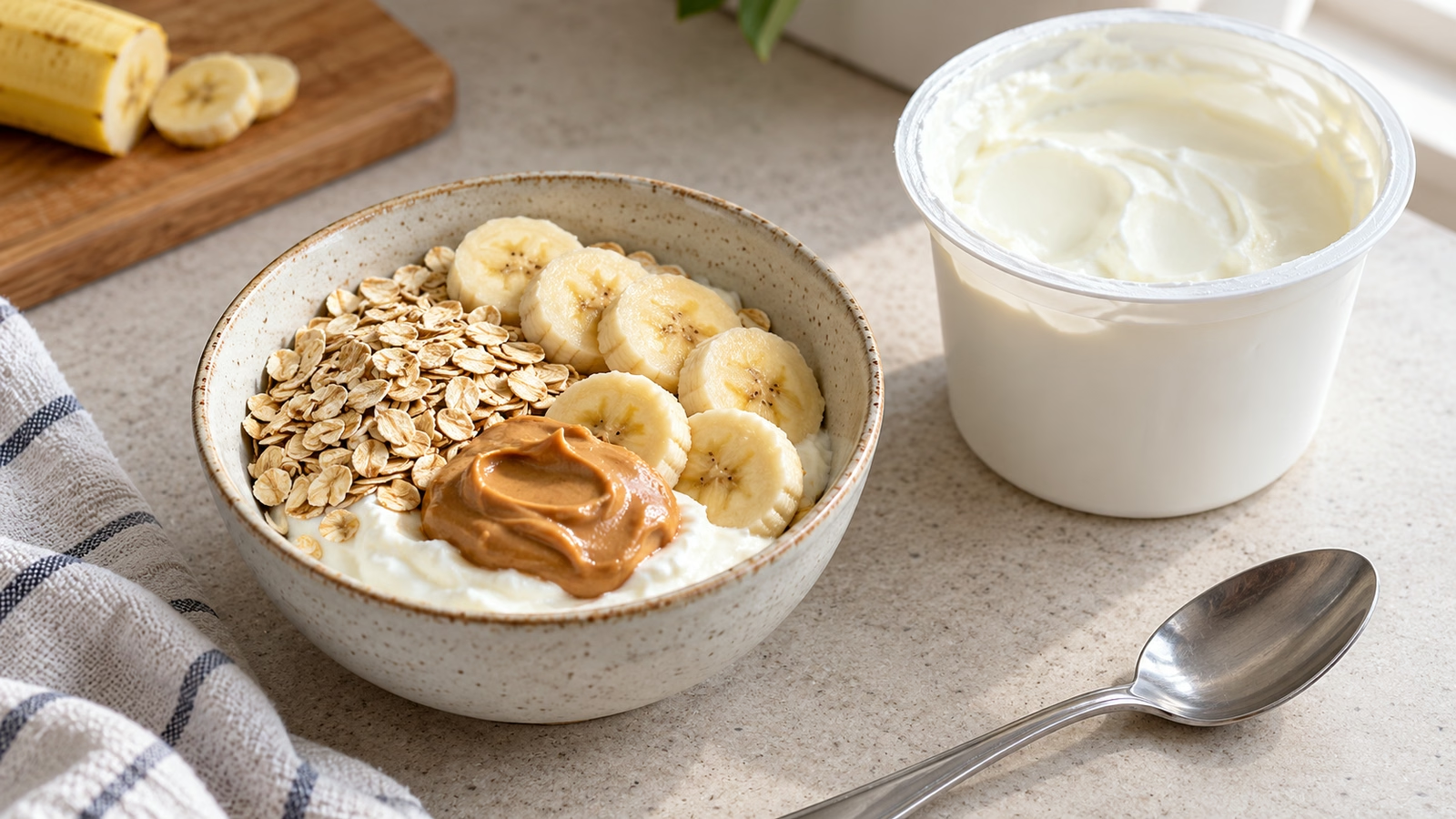
| Yogurt and peanut butter bowl | 1 cup plain Greek yogurt + 2 tbsp peanut butter | ½ cup rolled oats, if suitable for this preparation | 1 banana; cinnamon if you like |
A bowl counts, too. Yogurt, oats, fruit, and peanut butter need not be confined to breakfast, and they work especially well when savory food does not appeal. Let rolled oats soften in the yogurt if you prefer a gentler texture, following the oat package’s preparation guidance; use a ready-to-eat cereal instead if your product requires cooking.
- Still hungry after assembling? Add more of the protein or starchy component, another piece of fruit, or another food you want. Do not keep adding raw vegetables solely to preserve an arbitrary small portion.
- Need a plant-based version? The chickpea plate already provides one. For a yogurt plate, choose a suitable alternative and compare protein rather than assuming every plant-based yogurt matches dairy yogurt.
- Want crackers instead of bread? Use their labeled serving weight as information, not a dinner limit. Our whole grain crackers guide explains the grain and portion checks.
Keep the cost and cleanup modest
A snack plate can become surprisingly expensive when every component comes from a separate specialty package. I’d rather repeat a few dependable foods than buy five little tubs for one evening. Compare the cost of what you’ll actually use, including leftovers, and choose whole produce or larger tubs only when the savings are real for your household.
- Build from an open package: Use the remaining hummus, a few slices of bread, or the carrots already in the drawer before adding new ingredients to the shopping list.
- Choose two produce items: One crisp vegetable and one fruit can give enough contrast. The plate does not need a rainbow assembled from seven purchases.
- Use canned staples: Beans and fish are practical options to compare against sliced meats or specialty snack packs. Rinse beans if desired, and read sodium information when that matters to you.
- Plan tomorrow’s use: Remaining chickpeas can go into lunch, yogurt into another meal, and bread into the freezer. Our meal plan for one shows how package quantities can work across several days.
- Skip presentation equipment: A dinner plate and a small bowl for dip are enough. Put wet foods away from bread and crackers so they keep their crunch.
The same ingredients can make more than one kind of dinner. Chickpeas and cucumber can sit beside pita tonight and become a stuffed pita tomorrow; cheese and bread can become a sandwich. That flexibility is more useful than a plate that looks impressive once and leaves six half-used packages behind.
Keep ready-to-eat food safely chilled
No cooking does not mean no food-safety steps. Start with clean hands and utensils, wash ordinary fresh produce under running water, and keep it separate from raw meat and its preparation surfaces. FDA advises against washing produce with soap; produce labeled pre-washed or ready-to-eat can be used without rewashing.
Keep perishable foods at 40°F (4°C) or below until serving. USDA’s general rule is to refrigerate perishables within two hours, or one hour when the temperature is above 90°F (32°C); those limits include time spent assembling and serving. Set out what you expect to eat, leaving the rest refrigerated rather than grazing from the entire tub for the evening.
- Read the ready-to-eat wording: Frozen vegetables, tofu, and grain packages are not automatically safe for cold assembly just because they look prepared. Follow their specific instructions.
- Check storage directions: Use the shortest applicable storage limit among the foods on your plate. Assembling yesterday’s leftovers today does not restart their clock.
- Keep serving utensils clean: Spoon a portion of dip into a bowl instead of repeatedly dipping into the storage container. Refrigerate suitable leftovers promptly.
- Respect individual restrictions: Check allergens and any food-safety advice specific to pregnancy, immune suppression, or another health condition when choosing ready-to-eat foods.
Registered dietitian Hannah explains how snack-style dinners can be satisfying meals, with a focus on variety and portions that meet your needs. Her discussion of the social-media trend supports the same idea here: assemble enough food for dinner, and add more when you are still hungry.
Sources
- USDA MyPlate: Foods that contribute protein
- USDA: Meeting food-group goals on a budget
- FDA: Selecting, washing, and serving produce safely
- USDA FSIS: Safe handling and cold-food temperatures

Hi, I’m Laura, the voice behind Tastiva. I’ve always believed that eating well should feel enjoyable, comforting, and realistic—not like another complicated rule to follow. I love creating recipes that fit into everyday life, sharing simple nutrition ideas, and finding small ways to make meals feel a little better without losing the pleasure of good food.