
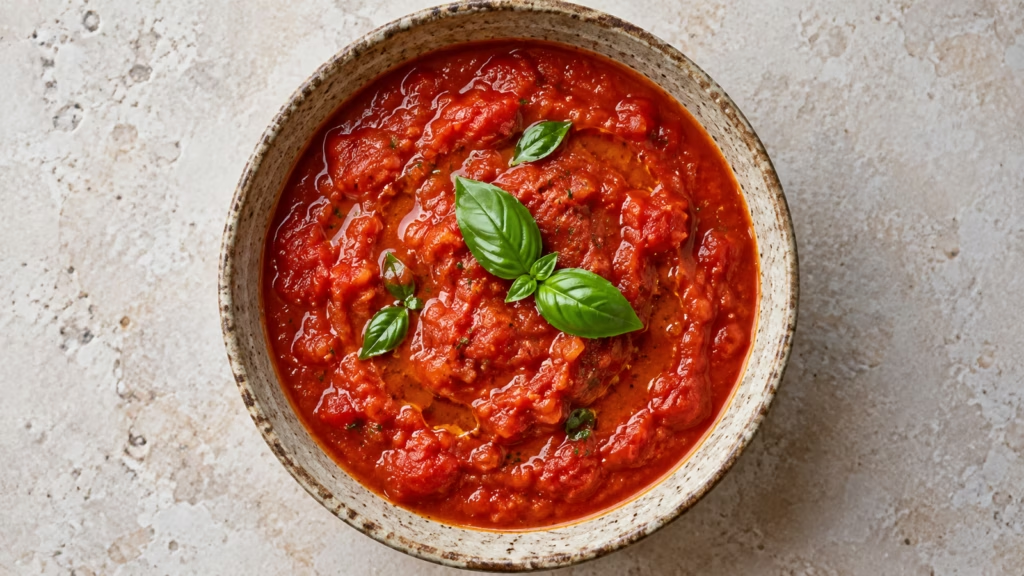
A can of tomatoes can become dinner, but the useful part of pomodoro sauce is knowing when to stop cooking it. You want enough body to cling to pasta, with a bright tomato flavor and a little softness from the onion. This version uses one large can, olive oil, garlic and basil, so there’s no need to build a long shopping list.
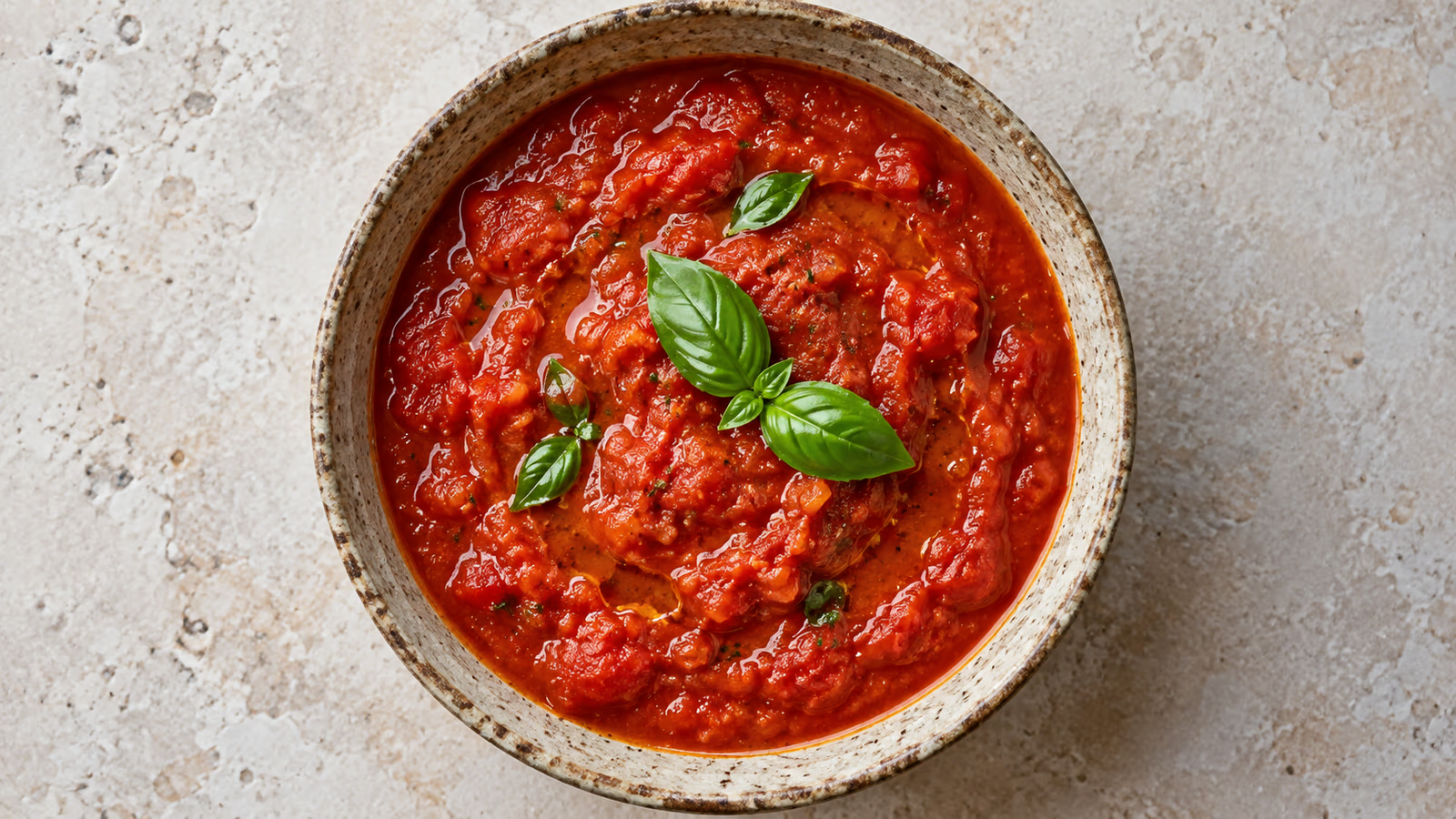
Let the sauce coat the spoon before you ask it to coat the pasta.
I’d keep this sauce slightly textured rather than chase a perfectly smooth finish. Crush the tomatoes thoroughly, let the onion soften, and save most of the basil for the end. The recipe makes four portions of sauce; pasta, cheese and other additions are separate.
Choose tomatoes that suit the sauce
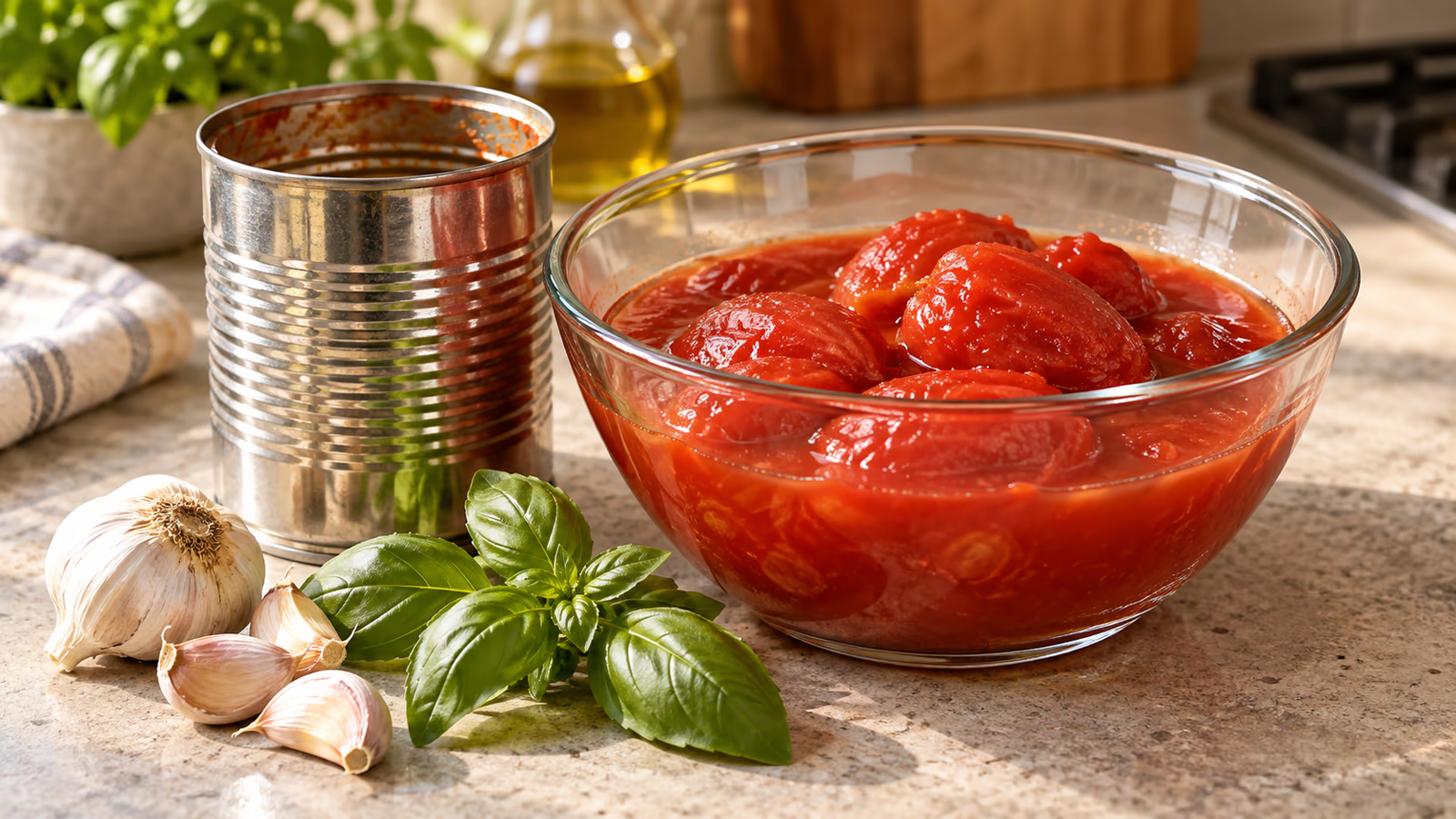
Whole peeled tomatoes give you control over the finished texture. Pour their juice into a bowl along with the tomatoes, then break the flesh into small pieces with a potato masher. Work slowly and keep the bowl low: tomato juice is surprisingly good at finding a clean shirt. You can also pulse the tomatoes briefly before cooking.
A no-salt-added can makes seasoning easier to manage. If yours already contains salt, begin with less than the amount in the card and taste near the end. There’s no need to buy a particular label for this version; read the ingredient list and choose plain tomatoes rather than a prepared pasta sauce with its own seasonings.
- Finely chop the onion so it softens into the sauce instead of staying in large crunchy pieces.
- Mince the garlic just before cooking. Keep it away from fierce heat, which can turn its flavor harsh.
- Rinse the basil and pat it dry. Tear it shortly before adding it to the finished sauce.
Build flavor with a gentle simmer
Start the onion in olive oil over medium-low heat. The goal is tenderness, not a dark browned base. Give it a stir when the edges begin to color and lower the heat if necessary. Add the garlic once the onion has softened; its smaller pieces need much less time before the tomatoes go in.
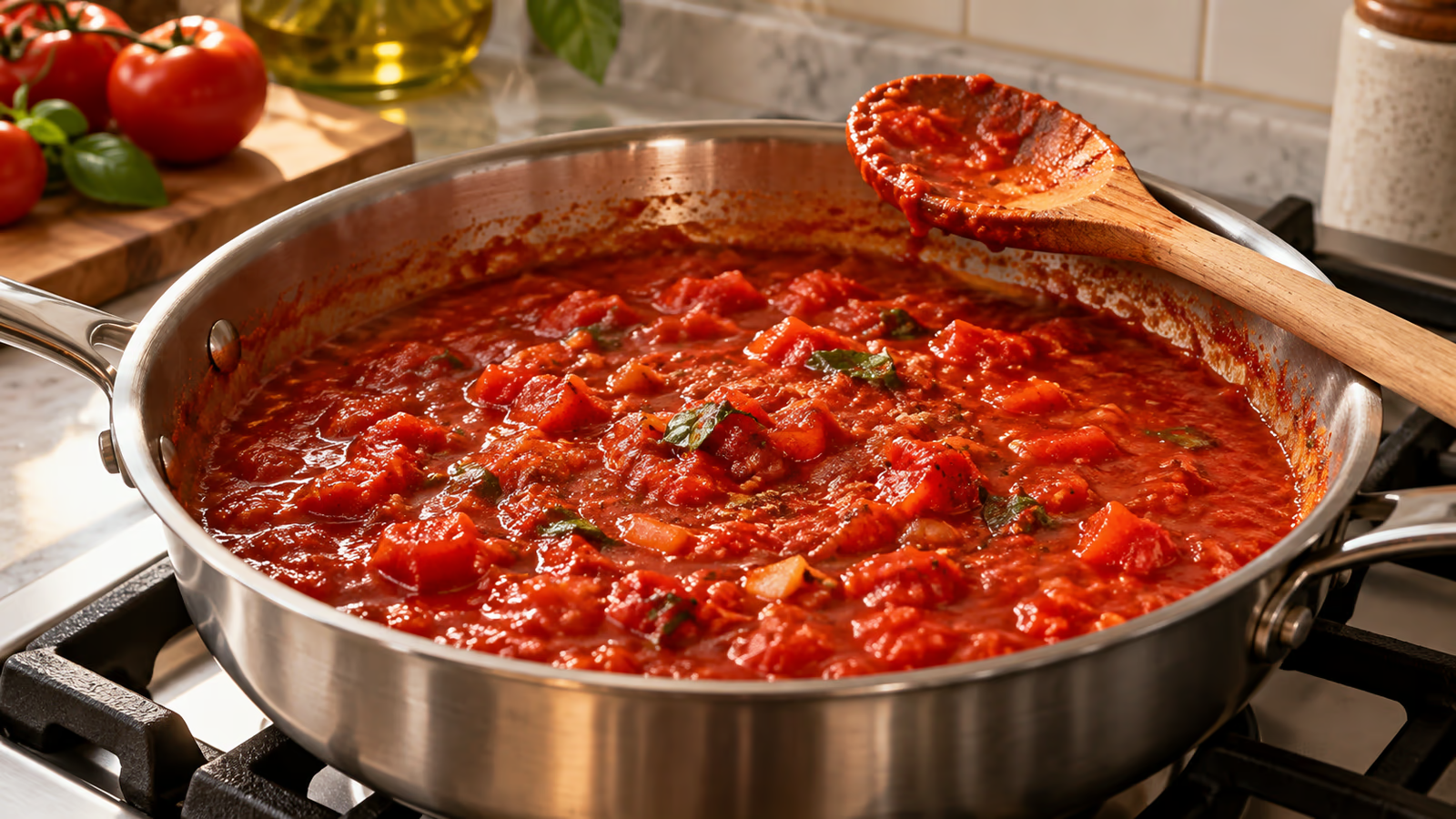
After adding the tomatoes and their juice, adjust the burner until small bubbles break the surface steadily. A rolling boil throws sauce around and makes the bottom harder to watch. Leave the pan uncovered so moisture can escape, and draw a spoon across the base regularly, especially as the sauce thickens.
- For a watery sauce, continue simmering uncovered and check it often rather than adding flour.
- For a sauce that is becoming too thick before the onion is tender, stir in a small splash of water.
- If the bottom scorches, move the unburned sauce to a clean pan without scraping up the burnt layer. Taste before deciding whether to keep it.
Match the texture to your dinner
The sauce is ready when it settles into a soft mound on the spoon but still moves easily when stirred. It will thicken a little more as it cools. A very wide pan may reach that point sooner than a narrow saucepan, so treat the cooking time as a guide and pay attention to what is in front of you.
For pasta, reserve some cooking water before draining. Put the cooked pasta into a pan with the sauce and toss over gentle heat, adding the reserved water a splash at a time until the strands or shapes are coated. Stop before the sauce turns soupy. Taste again after combining, particularly if the pasta water was well salted.
For another dinner direction, our pasta recipe ideas offer different shapes and combinations to consider. This tomato sauce also works as a spoonable base beneath cooked vegetables or beans. Those additions change the portion size and nutrition, so the recipe card calculates the sauce alone.
Keep the basil bright and the leftovers useful
Stir in the basil after the main simmer, then taste for salt and pepper. Pomodoro means tomato; it doesn’t require a heavy layer of dried herbs or a sweet finish. If you want cheese or chili flakes, add them to individual plates so the remaining sauce stays flexible for another meal.
Divide leftovers into shallow containers and refrigerate within two hours, or within one hour when the surroundings are above 90°F (32°C). Keep the refrigerator at 40°F (4°C) or below and use the sauce within three to four days. Don’t leave the whole pan on the counter waiting for it to become completely cold.
For a longer pause, freeze meal-size portions with a little expansion space. Thaw in the refrigerator, then reheat in a saucepan, stirring and adding a little water if needed, until the sauce reaches 165°F (74°C). Fresh basil can go on top at serving time. That leaves tomorrow’s dinner with a useful starting point.
Pomodoro Sauce Recipe

Ingredients
- 1 28-ounce can whole peeled tomatoes in juice, no salt added 794 g; use the juice too
- 2 tablespoons olive oil 27 g
- 1/2 small onion, finely chopped 75 g prepared weight
- 2 cloves garlic, minced 6 g
- 1/2 teaspoon fine salt 3 g; use less if the tomatoes are salted
- 1/4 teaspoon black pepper 0.5 g
- 1/4 cup loosely packed fresh basil leaves, torn 6 g
Equipment
- 1 medium heavy saucepan
- 1 potato masher
- 1 wooden spoon
- 1 Food thermometer for reheating
Instructions
- Empty the tomatoes and juice into a bowl. Mash into small pieces, or pulse briefly in a blender for a smoother texture.
- Warm the olive oil in a heavy saucepan over medium-low heat. Add the onion and cook, stirring, until softened, about 8–10 minutes. Add the garlic and stir for about 30 seconds without browning it.
- Add the tomatoes and juice, salt and pepper. Bring to a gentle simmer. Cook uncovered for about 25–30 minutes, stirring across the base regularly, until thick enough to coat a spoon. Lower the heat if it spits vigorously. Add a splash of water if it thickens before the onion is tender.
- Stir in the basil. Taste and adjust seasoning if needed. Divide into four portions of sauce. If tossing with pasta, use a little reserved pasta water to loosen the sauce; pasta and toppings are not included in the nutrition estimate.
Nutrition
Video
Notes
Tried this recipe?
Let us know how it turned out!Sources
- Chef Billy Parisi: pomodoro sauce technique
- USDA: safe storage of leftovers
- USDA: reheating food safely
- USDA FoodData Central: ingredient nutrition data
Hi, I’m Laura, the voice behind Tastiva. I’ve always believed that eating well should feel enjoyable, comforting, and realistic—not like another complicated rule to follow. I love creating recipes that fit into everyday life, sharing simple nutrition ideas, and finding small ways to make meals feel a little better without losing the pleasure of good food.