
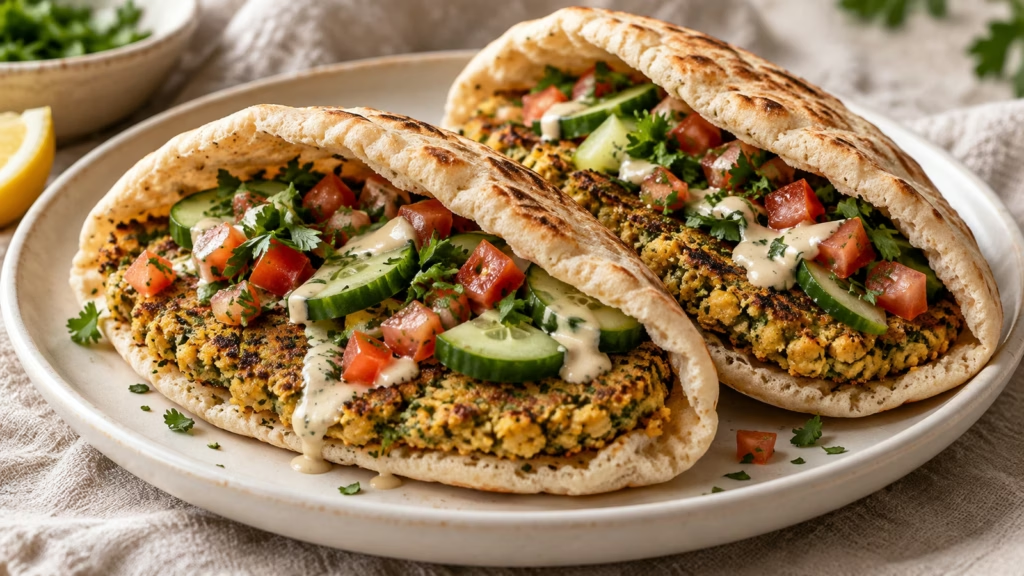
Falafel does not have to arrive as a pile of little balls. With falafel smash pita, a thin layer of herb-filled chickpea mixture goes straight onto the bread, then meets a hot skillet filling-side down. You get a broad browned surface, a soft pita backing, and room for cool cucumber, tomato, and lemon tahini. The important trade-off is planning: dried chickpeas need an overnight soak before dinner can happen.
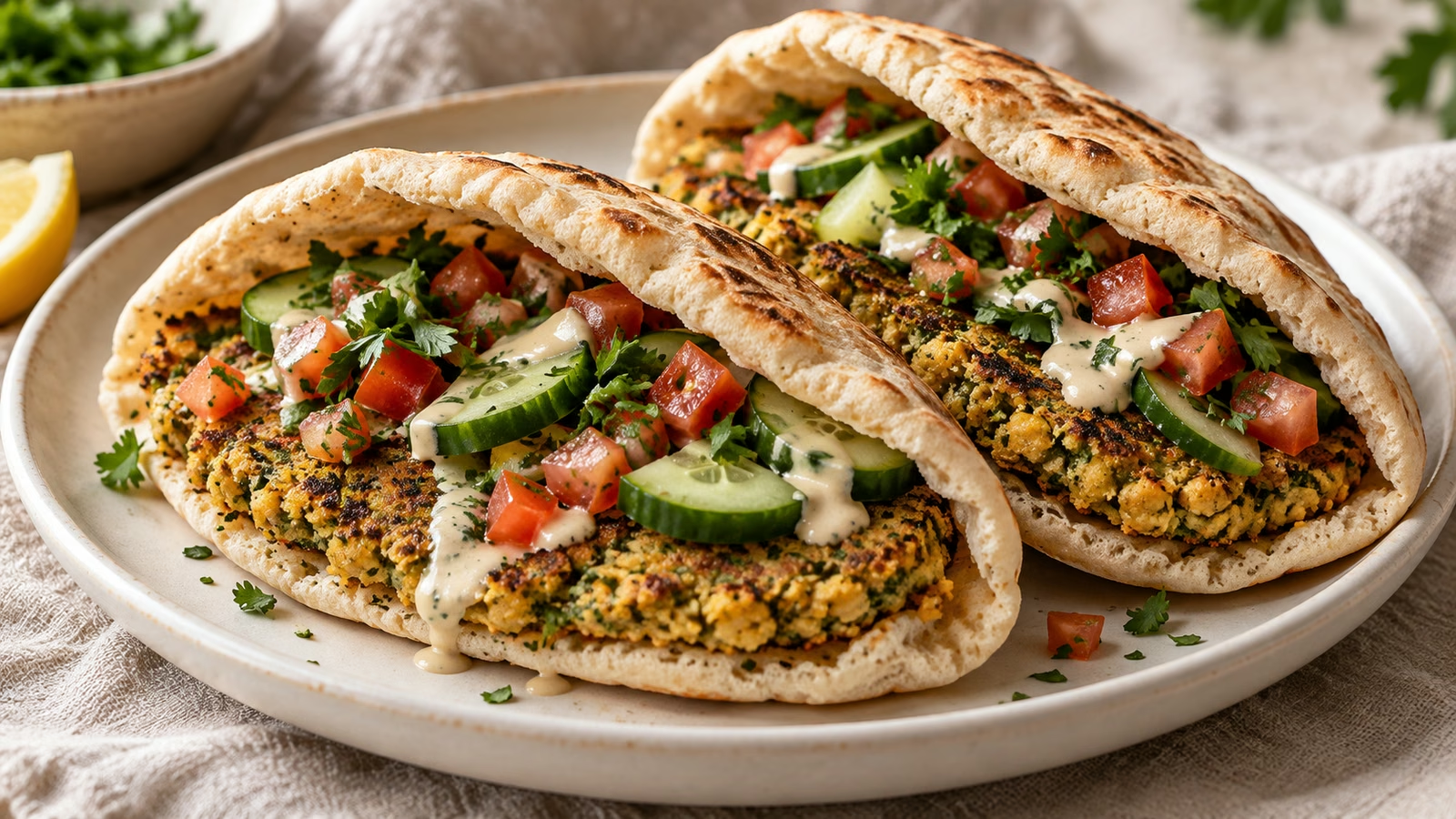
Spread the filling thin, give it room to brown, and keep the fresh toppings for the very last moment.
Why falafel smash pita works
The format borrows the flat, direct-pan contact of the viral smash-burger taco without turning falafel into meat. American recipe coverage of falafel smash pita goes back at least to BroccYourBody in 2023, with newer versions continuing to appear. I would call it an established viral idea worth cooking, rather than pretend the internet invented it this week.
Here, parsley, cilantro, cumin, and coriander flavor a coarse chickpea mixture. A thin coating cooks more evenly than a thick mound, while the pita becomes both the carrier and part of the crust. The lemon tahini brings richness and acidity; chopped vegetables keep the finished wrap from feeling one-note.
- Choose a flexible pita: Thin, roughly 6-inch rounds fold more easily than thick, stiff pocket breads.
- Plan for four individual pitas: A large skillet may still hold only one comfortably. Batch cooking is part of the stated cook time.
- Serve as you finish: Crisp falafel softens under wet toppings, so this is better assembled near the table than stacked in a covered bowl.
Start with soaked chickpeas, not a can
This recipe uses dried chickpeas soaked in plenty of water, then drained without boiling. Canned chickpeas are already cooked and much softer; substituting them changes the mixture substantially. Save that can for hummus or a salad rather than asking it to behave like hydrated dried beans.
- Drain thoroughly: Let soaked chickpeas sit in a colander, then blot obvious surface moisture. Water left clinging to them can make the paste loose.
- Dry the herbs: Rinse parsley and cilantro, then pat them dry before measuring. Tender stems are useful; thick woody stems are not.
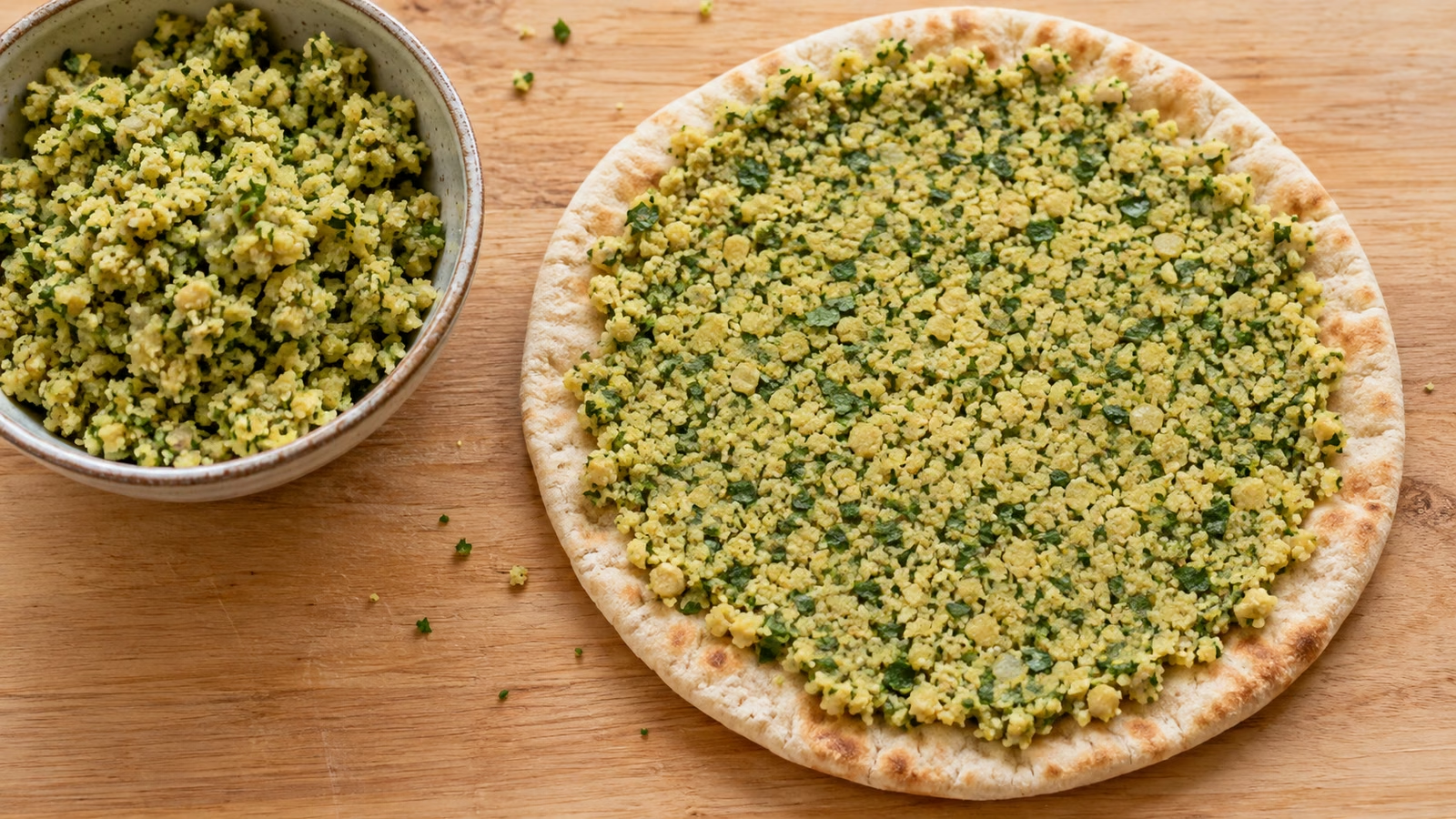
- Pulse, then inspect: Aim for fine, damp crumbs that hold together when pressed. Stop before the mixture becomes a smooth spread.
- Keep onion modest: The measured amount adds flavor without making the mixture overly wet. More onion is not automatically more helpful.
I prefer the chickpea layer to stay the focus, so the tahini sauce is deliberately simple. Our lemon tahini sauce guide explains the texture changes. Stir the tahini before measuring, then whisk with lemon and water. It may tighten before it loosens; keep whisking and add the water gradually rather than deciding the sauce has staged a rebellion.
Get a browned surface without a raw middle
Press the mixture firmly onto each pita in an even layer, no thicker than about ¼ inch. Pay attention to the center, where it is easiest to leave a hidden mound. Use medium heat and a measured amount of oil; a smoking-hot skillet can darken the outside before the chickpeas soften.
- Start filling-side down. Lower the pita into the skillet carefully, then leave it alone long enough for the surface to set.
- Look before flipping. Lift an edge with a broad spatula. The falafel should be well browned and release as a coherent layer, not smear across the pan.
- Check the filling. A small piece from the center should be hot and tender, without hard, gritty chickpea bits. Lower the heat and continue cooking if needed.
- Toast the bread briefly. Once flipped, the pita needs much less time. Over-toasting makes folding difficult and can dry the filling.
If the mixture detaches, resist repeated scraping and turning. Let the surface finish setting before sliding the spatula beneath it. For the next pita, press the mixture more firmly and check that the bread is dry. A slightly broken wrap is still useful cut into wedges and eaten open-faced.
Finish, serve, and manage leftovers
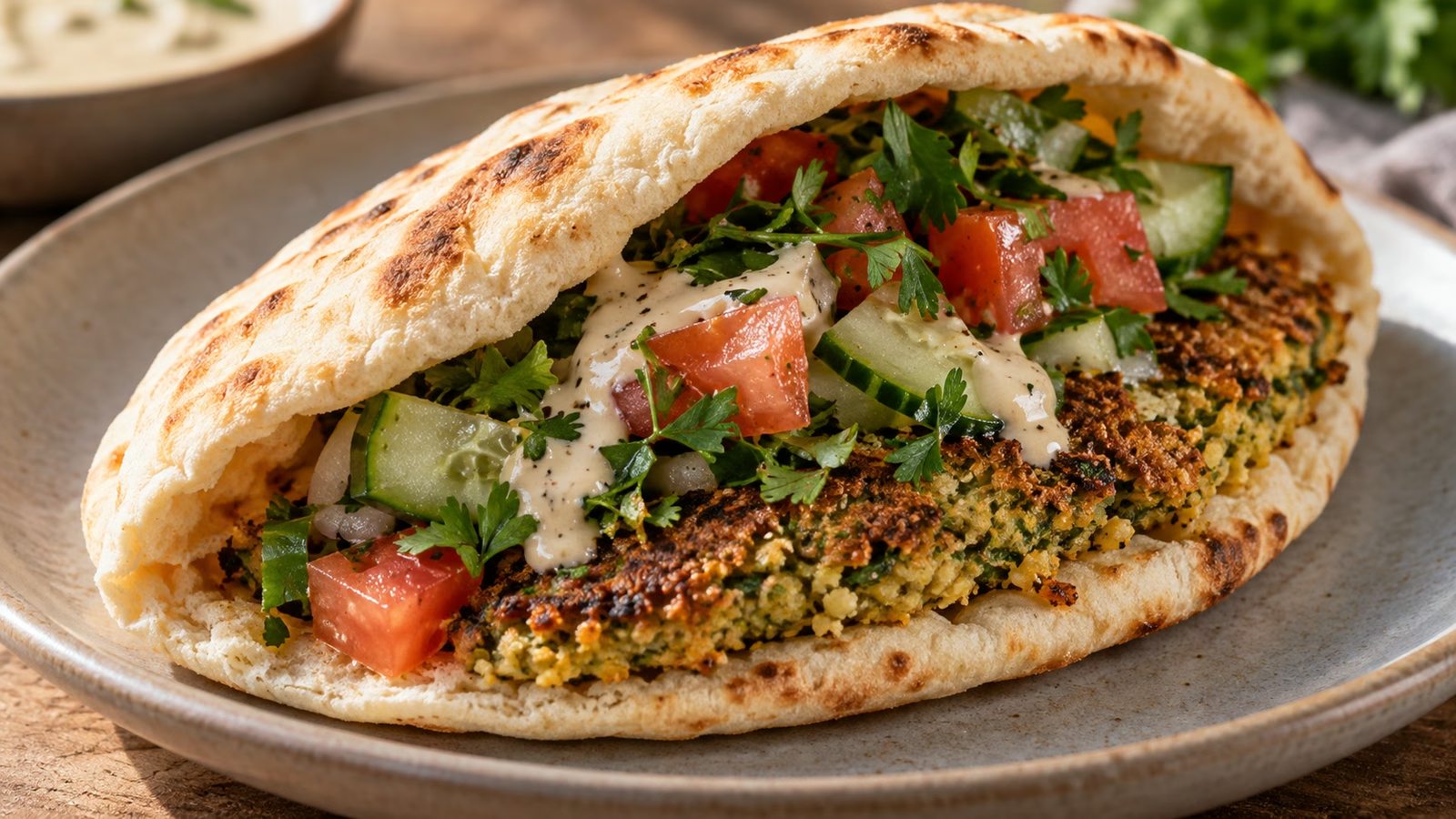
Scatter cucumber and tomato over the cooked filling, add a little tahini sauce, and fold gently. A crisp lettuce salad makes an easy side. I would keep extra sauce in a small bowl so everyone can choose the balance rather than soaking all four pitas in advance.
- Sesame and wheat: Tahini contains sesame, and ordinary pita contains wheat. Check every package if allergies are relevant; this recipe is not allergen-free.
- Unassembled leftovers: Refrigerate cooked pitas, vegetables, and sauce separately within two hours, or one hour above 90°F (32°C).
- Use within three days: Reheat the cooked pita to 165°F (74°C) before adding the cold toppings. Expect less crispness than on the first day.
- Nutrition context: The estimate includes one pita, one quarter of the filling, sauce, vegetables, and all measured cooking oil. Actual oil retention and pita brands vary.
Falafel Smash Pita Recipe

Ingredients
- 3/4 cup dried chickpeas 150 g; not canned
- 1/2 cup fresh parsley 20 g, loosely packed; reserve a little for garnish
- 1/4 cup fresh cilantro 10 g, loosely packed
- 1/3 cup chopped onion 50 g
- 2 garlic cloves 6 g
- 1 teaspoon ground cumin
- 1 teaspoon ground coriander
- 1/2 teaspoon baking powder
- 1/2 teaspoon fine salt 3 g
- 4 thin 6-inch pita breads about 60 g each
- 2 tablespoons olive oil divided
- 1/4 cup tahini 60 g, well stirred
- 2 tablespoons lemon juice
- 3 tablespoons water plus more if needed
- 1 cup thinly sliced or diced cucumber 150 g
- 1 cup diced tomato 150 g
Equipment
- 1 Large bowl
- 1 Colander
- 1 Food processor
- 1 Large skillet
- 1 Broad spatula
Instructions
- Cover the dried chickpeas with at least 3 inches of cold water and soak in the refrigerator for 12–18 hours. Drain thoroughly and blot surface moisture; do not cook them first.
- Pulse drained chickpeas, most of the parsley, cilantro, onion, garlic, cumin, coriander, baking powder, and salt in a food processor until fine damp crumbs form. Scrape the bowl as needed; stop before making a smooth purée.
- Divide among four pitas and press firmly into an even layer no thicker than ¼ inch.
- Whisk tahini with lemon juice, then gradually add the water until pourable.
- Heat a large skillet over medium heat with 1½ teaspoons oil. Add one pita filling-side down and cook about 4–5 minutes, until deeply golden and the chickpea layer is tender throughout. Adjust heat down if browning too quickly.
- Flip carefully and cook the bread side for 1–2 minutes. Repeat with remaining pitas and oil. Timing varies with pan and filling thickness; do not serve a hard or gritty center.
- Top with cucumber, tomato, the reserved parsley, and tahini sauce. Fold gently and serve immediately.
Nutrition
Notes
Tried this recipe?
Let us know how it turned out!Sources
- BroccYourBody: early falafel smash pita coverage
- Healthy Fitness Meals: soaked-chickpea falafel smash pita
- Soom Foods: falafel preparation reference
- USDA: leftovers and food safety
- USDA FoodData Central: ingredient nutrition data
Hi, I’m Laura, the voice behind Tastiva. I’ve always believed that eating well should feel enjoyable, comforting, and realistic—not like another complicated rule to follow. I love creating recipes that fit into everyday life, sharing simple nutrition ideas, and finding small ways to make meals feel a little better without losing the pleasure of good food.