
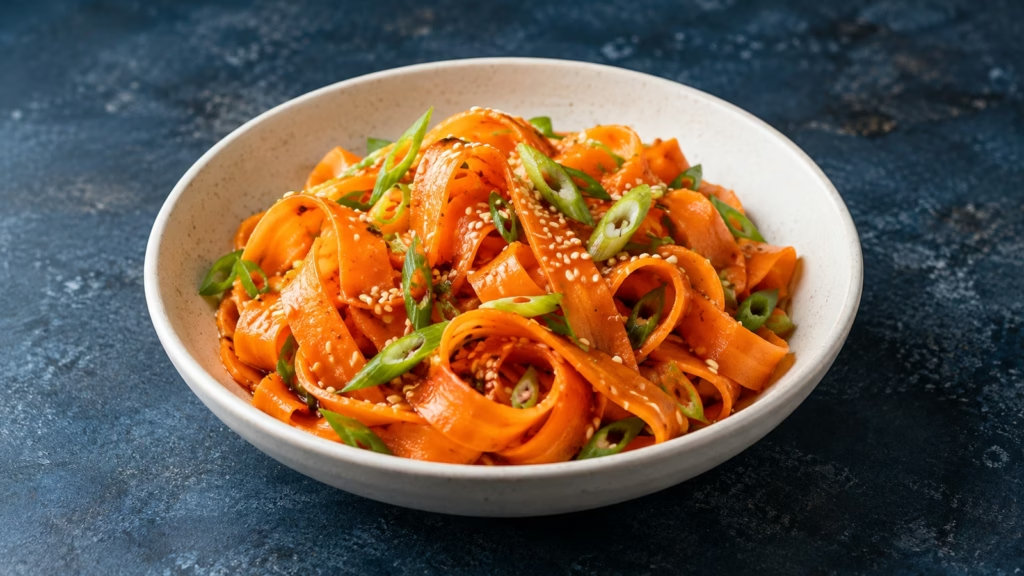
A bag of carrots can look like a sensible purchase right up until you need something interesting beside dinner. This carrot ribbon salad gives them a different job: thin, flexible strips coated in a sharp sesame-ginger dressing, with scallions and seeds for contrast. A vegetable peeler does the shaping, and a short rest takes the rigid edge off without cooking away the crunch.
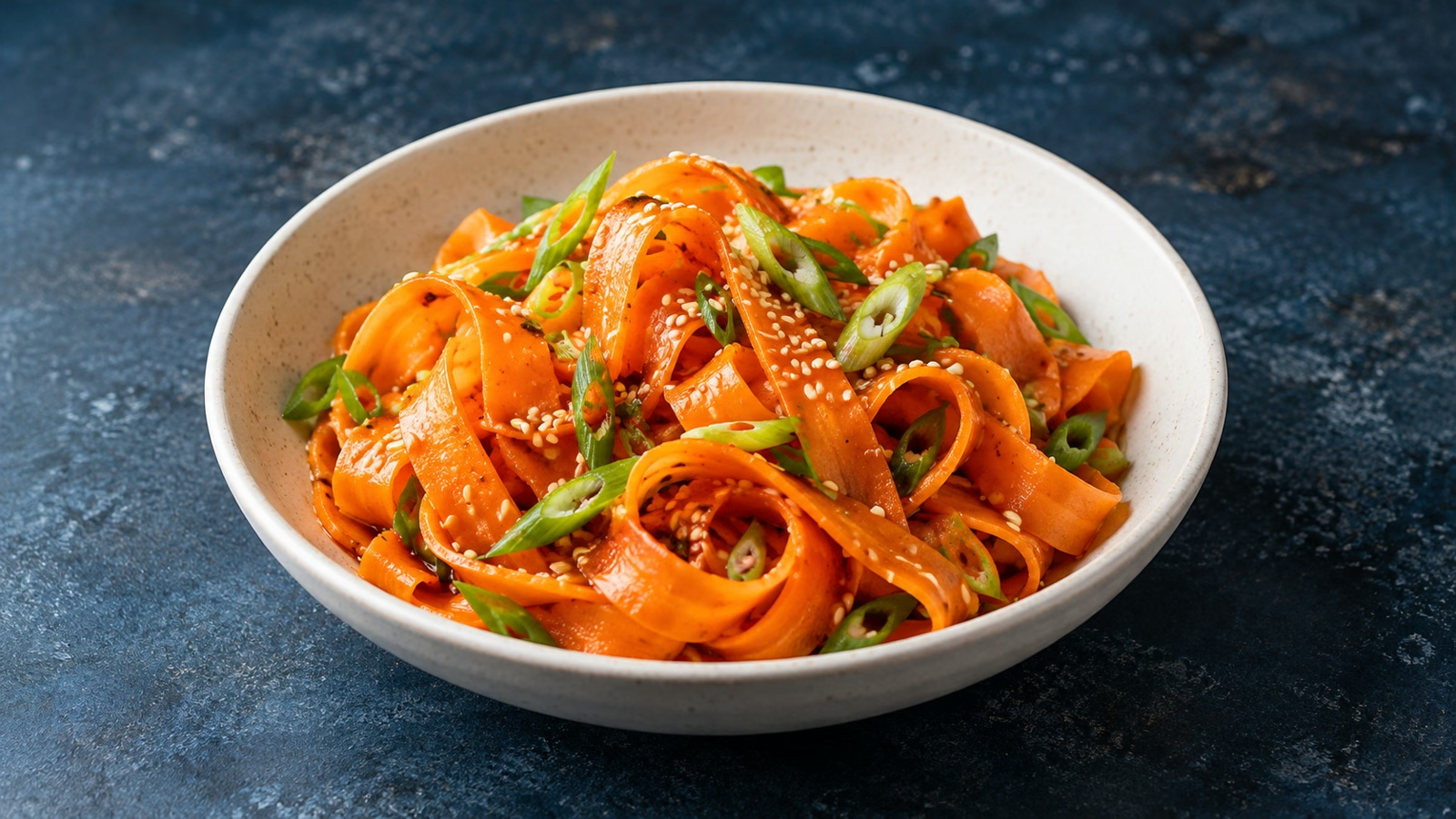
Aim for ribbons that bend easily; the dressing should cling to the carrots rather than collect underneath them.
Why carrot ribbon salad works
A ribbon is more than a pretty shape. Its broad, thin surface carries dressing differently from a thick carrot stick, so a modest amount of sesame oil and vinegar can season plenty of vegetable. I’d put the effort into consistent thickness before worrying about making every strip look identical.
The format also has a clear recent trail: Feel Good Foodie featured a viral-inspired carrot salad in March 2026 and made it an April cooking challenge. That is useful context for its popularity, not a reason to attach detox or hormone promises to a bowl of carrots.
- Thin slices soften slightly during a brief rest while retaining some bite.
- Rice vinegar supplies acidity; unseasoned vinegar keeps added sugar and salt under your control.
- Toasted sesame oil has a pronounced flavor, so it works here as a seasoning rather than the bulk of the dressing.
- Fresh ginger gives a warm edge that complements the carrots’ sweetness without requiring a sugary dressing.
Choose carrots that are easy to shave
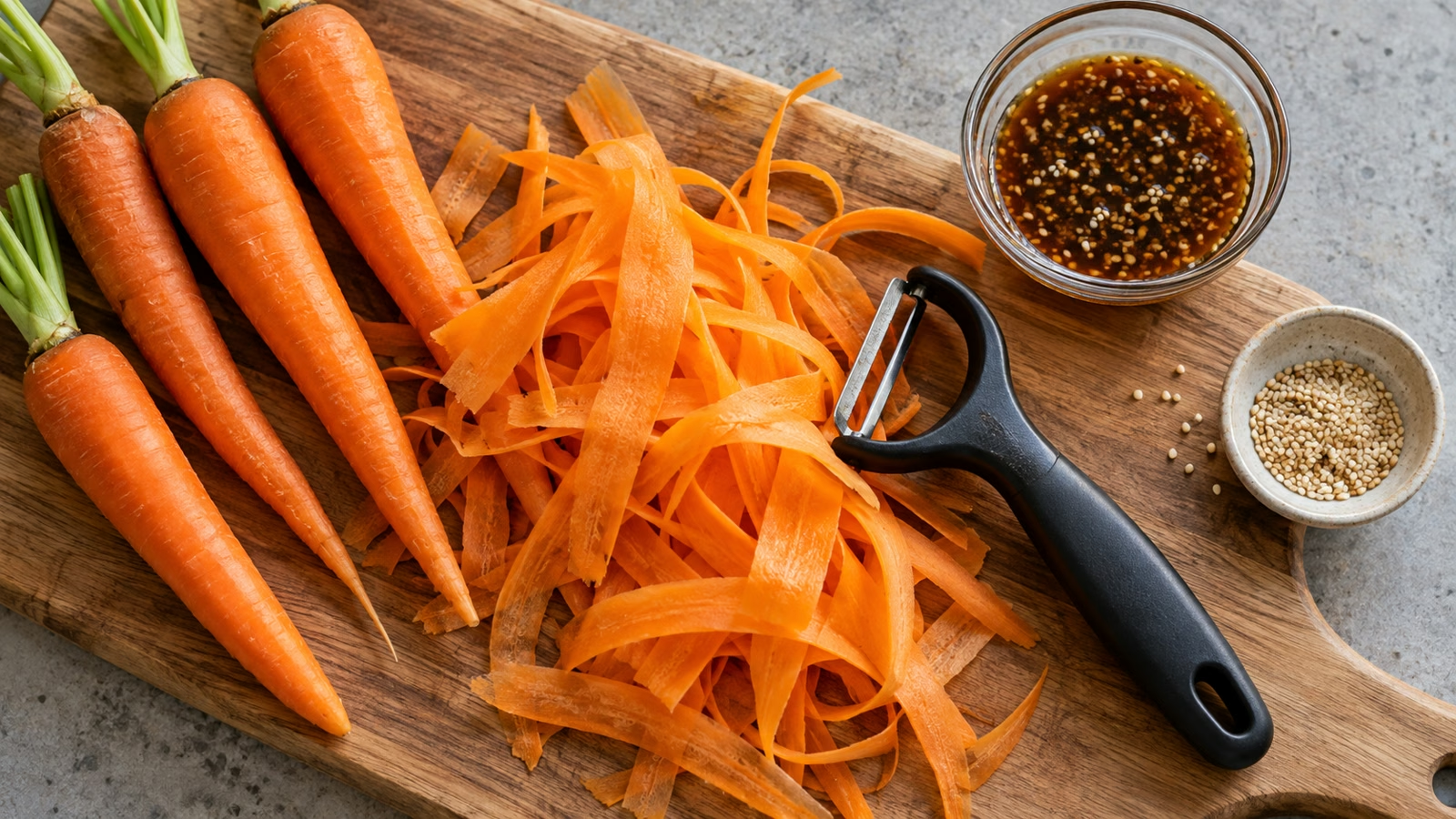
Large, firm carrots are easier to hold against a board than short, narrow ones. Scrub them under running water, trim the ends and peel the outer skin if it is rough. Rest one carrot on the board and pull the peeler away from your supporting hand, rotating the carrot as needed.
There is no prize for shaving the last slippery sliver. Once the core becomes awkward to hold, set it aside for chopping into another meal. I would rather have a slightly less photogenic leftover than turn a salad into a finger-endurance challenge.
- Dry the washed carrots before shaving so water does not dilute the dressing.
- Use gentle, steady pressure. Thick ribbons stay stiff and are harder to toss without snapping.
- A Y-peeler is convenient, but a straight peeler works too. A mandoline requires its guard and extra care.
- Bagged shredded carrots are a practical shortcut; expect a different texture, and taste after the rest before adding more dressing.
Balance the dressing without drowning the bowl
The starting dressing is deliberately small: vinegar, reduced-sodium soy sauce, toasted sesame oil, grated ginger and a little garlic. Whisk it separately so the garlic and ginger disperse before they meet the ribbons. Toss gently, wait five minutes, then taste a carrot rather than a spoonful of liquid.
A little dressing left behind is normal, especially after the salad sits. Adding more oil will not restore crispness. If your carrots are especially sweet, keep the vinegar as written; if the salad tastes too sharp to you, a small pinch of sugar is an optional adjustment rather than a required ingredient.
- Too salty: Add more unsalted carrot ribbons instead of trying to hide salt with sweetness.
- Too pungent: Use half the garlic next time; raw grated garlic is more assertive than a sliced cooked clove.
- Sesame allergy: This recipe is sesame-forward. Omitting both oil and seeds changes its flavor substantially, so choose another dressing rather than assuming a tiny amount is safe.
- Gluten avoidance: Replace soy sauce with an appropriately labeled gluten-free tamari and check every packaged ingredient. Sodium still varies by brand.
Serve it while the ribbons have some spring
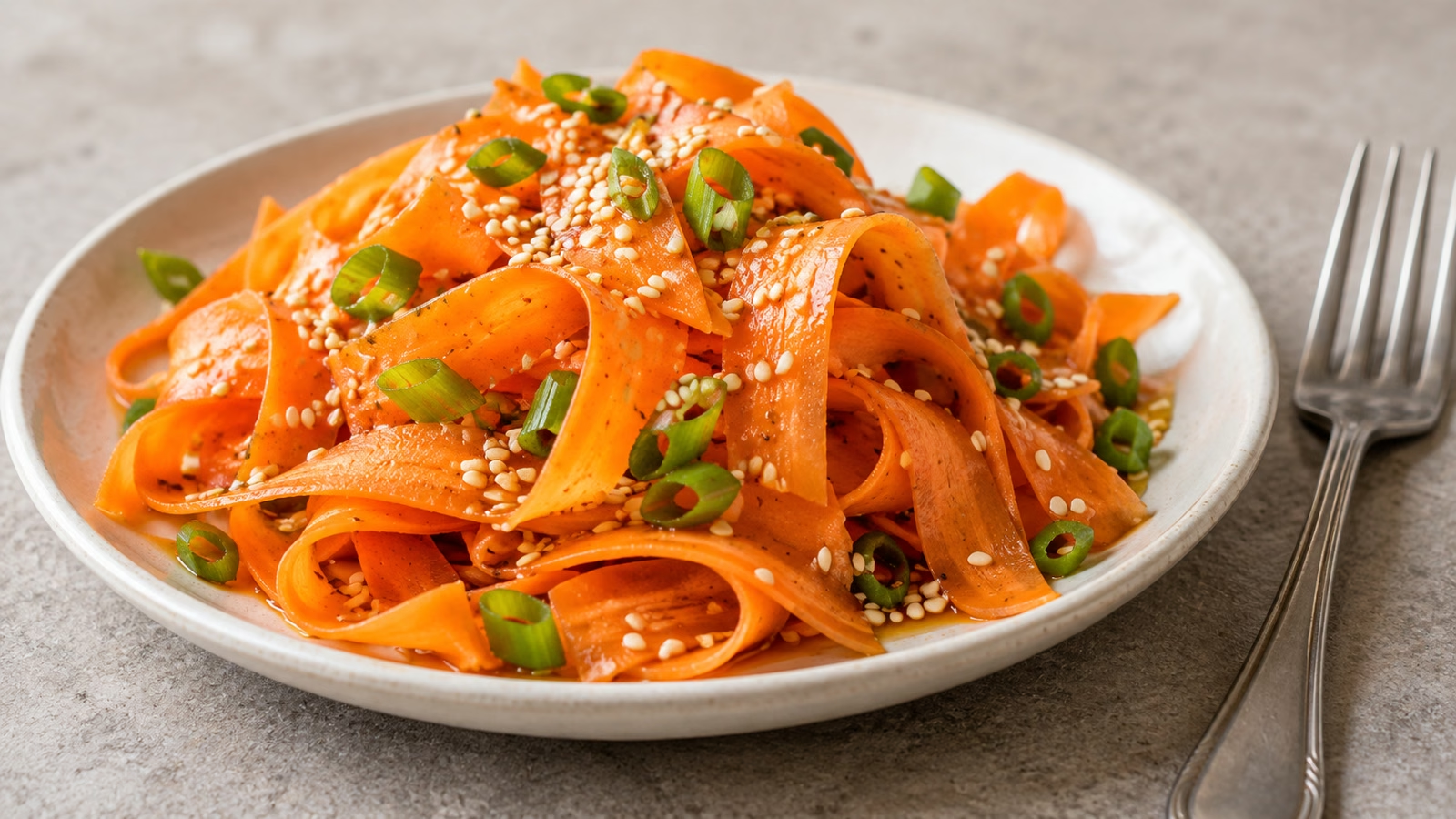
This is a side salad, not a complete meal on its own. Pair it with tofu, chicken, fish or beans and a starch you already like. It can also bring crunch to a grain bowl, but drain any pooled dressing first so the bowl does not become soupy. Tastiva’s rice-cooker quinoa guide gives you one straightforward base for that bowl.
For advance preparation, keep the dry ribbons and dressing in separate covered containers in the refrigerator, then toss near serving. Refrigerate dressed leftovers promptly and aim to eat them within two days for texture. Their softer second-day character is better suited to a bowl topping than a dramatic salad centerpiece.
- Add the sesame seeds near serving if you want their texture to remain distinct.
- Keep the finished salad cold at 40°F (4°C) or below; do not leave it at room temperature for more than two hours, or one hour above 90°F (32°C).
- The card’s nutrition is an estimate for one-quarter of the recipe, including the dressing and seeds. Different soy sauces can change sodium noticeably.
Carrot Ribbon Salad Recipe

Ingredients
- 450 g carrots about 1 pound, trimmed and peeled
- 2 scallions thinly sliced, 30 g
- 1 tablespoon toasted sesame seeds 9 g
- 2 tablespoons unseasoned rice vinegar 30 ml
- 1 tablespoon reduced-sodium soy sauce 15 ml
- 2 teaspoons toasted sesame oil 9 g
- 1 teaspoon fresh ginger finely grated, 2 g
- 1 small clove garlic finely grated, 3 g
- 1/8 teaspoon black pepper 0.25 g
Equipment
- 1 vegetable peeler
- 1 Cutting board
- 1 large mixing bowl
- 1 Whisk
- 1 Tongs
Instructions
- Wash and dry the carrots. Lay each carrot on a cutting board and shave thin ribbons with a vegetable peeler, working away from your supporting hand. Set aside the final narrow cores when they become awkward to hold.
- Whisk the vinegar, soy sauce, sesame oil, ginger, garlic and pepper in a large mixing bowl.
- Add the carrot ribbons and scallions. Lift and turn gently with tongs until evenly coated.
- Let stand for 5 minutes. Toss again, sprinkle with sesame seeds and serve. Refrigerate leftovers promptly.
Nutrition
Notes
Tried this recipe?
Let us know how it turned out!Sources
- Feel Good Foodie: March 2026 carrot salad and April challenge
- FDA: selecting and serving produce safely
- USDA FoodData Central
- Marukan: unseasoned rice vinegar nutrition
- USDA: safe food handling
Hi, I’m Laura, the voice behind Tastiva. I’ve always believed that eating well should feel enjoyable, comforting, and realistic—not like another complicated rule to follow. I love creating recipes that fit into everyday life, sharing simple nutrition ideas, and finding small ways to make meals feel a little better without losing the pleasure of good food.