
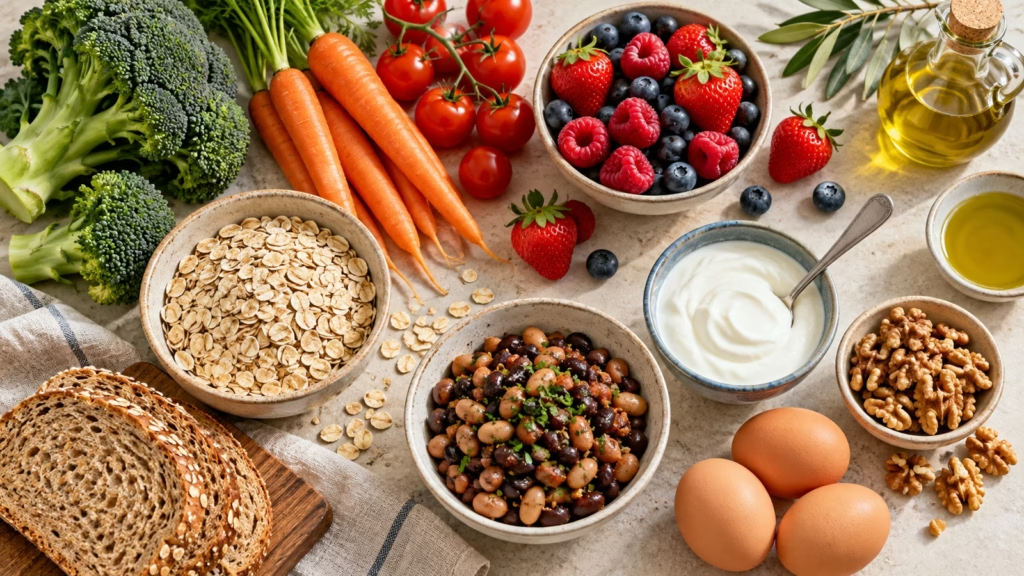
The U.S. food pyramid has changed again. The 2025–2030 Dietary Guidelines for Americans, released in January 2026, use a new inverted pyramid at RealFood.gov. If you remember the old grain-based triangle or the later MyPlate image, you are remembering earlier guides. The current picture is a starting point, but its written recommendations and serving guide matter more than the size of a food illustration.
Read a food guide as a set of choices to understand, not a picture you must copy onto every plate.
I’d keep the written guide beside the graphic, especially when a headline makes it sound as though an entire food group has disappeared. Whole grains are still included, plant proteins are still included, and individual needs still matter. Here is how to separate the current guidance from older images and turn it into a more useful grocery conversation.
Which food pyramid are you looking at?
The phrase “food pyramid” can refer to different countries, institutions, and decades. This guide concerns the current U.S. federal version. You can view the official new pyramid at RealFood.gov or open the 2025–2030 Guidelines PDF, whose cover shows the graphic.
- 1992 Food Guide Pyramid: the familiar upright triangle with a large grain section at its base.
- 2005 MyPyramid: vertical colored bands and a figure climbing steps, with further guidance online.
- 2011 MyPlate: a plate-shaped visual that replaced the earlier pyramid system.
- 2026 release: the 2025–2030 federal guidelines introduced the current inverted pyramid. MyPlate is part of the history, rather than the newest federal graphic.
USDA’s 2011 history of its food guides documents the earlier changes. The new graphic groups foods under protein, dairy and fats; vegetables and fruits; and whole grains. A smaller section in a picture is not the same thing as an instruction to eliminate that food group.
Use the written serving guide, not the picture’s proportions
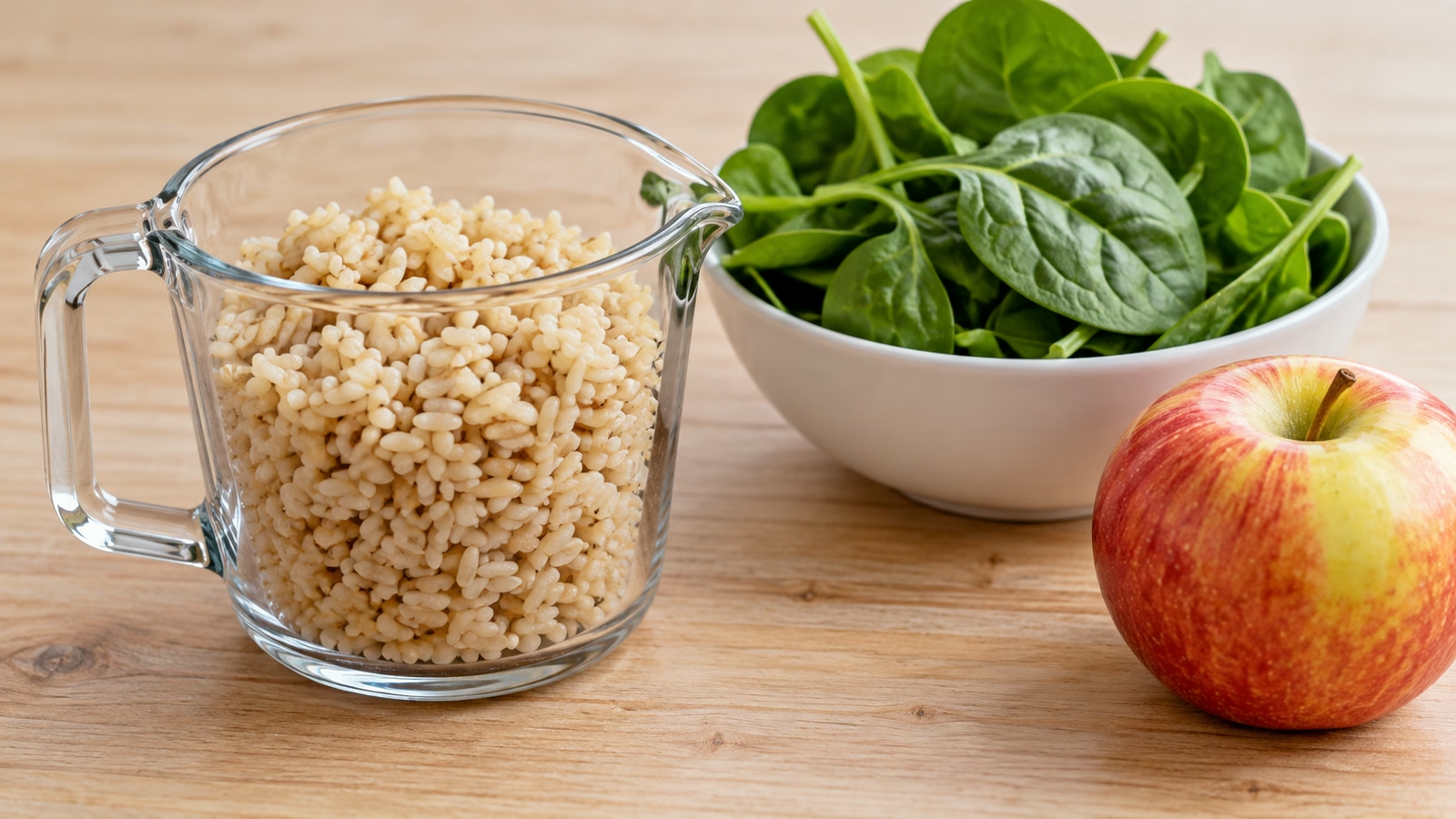
The official Daily Servings by Calorie Level companion gives serving definitions and amounts for different energy levels. A household portion and a defined serving are not necessarily the same: one bowl can hold more than one serving. The examples below describe that document, not a personal prescription.
- Vegetables: its serving examples include 1 cup raw or cooked vegetables or 2 cups leafy greens.
- Fruit: examples include 1 cup raw fruit or ½ cup dried fruit.
- Whole grains: examples include ½ cup cooked oats or brown rice, or a slice of whole-grain bread.
- Dairy: examples include 1 cup milk or ¾ cup yogurt. The companion also lists lactose-free products and fortified dairy alternatives as options.
At the guide’s 2,000-calorie level, the listed daily amounts include three vegetable servings, two fruit servings, three dairy servings, and two to four whole-grain servings. The main document also gives a protein goal of 1.2–1.6 grams per kilogram of body weight, adjusted for calorie needs. Those numbers do not mean every adult should adopt the 2,000-calorie pattern or the same portions.
For the protein distinction, Tastiva’s daily protein guide compares the newer federal goal with the long-standing adult adequacy reference. If you have prescribed protein limits or other medical nutrition needs, use your clinician’s advice instead of applying a population guide on your own.
Where the new guidance and heart-health advice differ
There is broad agreement on eating a variety of produce and whole grains and limiting added sugars. But details differ. In its response to the federal guidelines, the American Heart Association supported shared priorities while raising concerns about how some recommendations might affect sodium and saturated-fat intake.
- Dairy: the main federal document emphasizes full-fat dairy without added sugar. The AHA continues to favor low-fat or fat-free dairy.
- Fats: the federal document includes butter and beef tallow among cooking options while retaining a saturated-fat limit of no more than 10% of calories. The AHA emphasizes replacing saturated-fat sources with unsaturated-fat sources.
- Protein choices: the federal list includes animal and plant foods. The AHA encourages more plant-protein choices and fish, and limiting processed meat.
- Whole grains: their presence in the current guide is important. Do not read a reduced visual footprint as a recommendation to avoid oats, brown rice, or other whole grains.
Harvard nutrition experts have also questioned the emphasis on full-fat dairy and animal foods, particularly alongside the retained saturated-fat limit. That disagreement is worth making visible. An official policy document and a clinical organization’s dietary advice serve related purposes, but they do not always make identical recommendations.
Turn a food guide into a useful meal decision
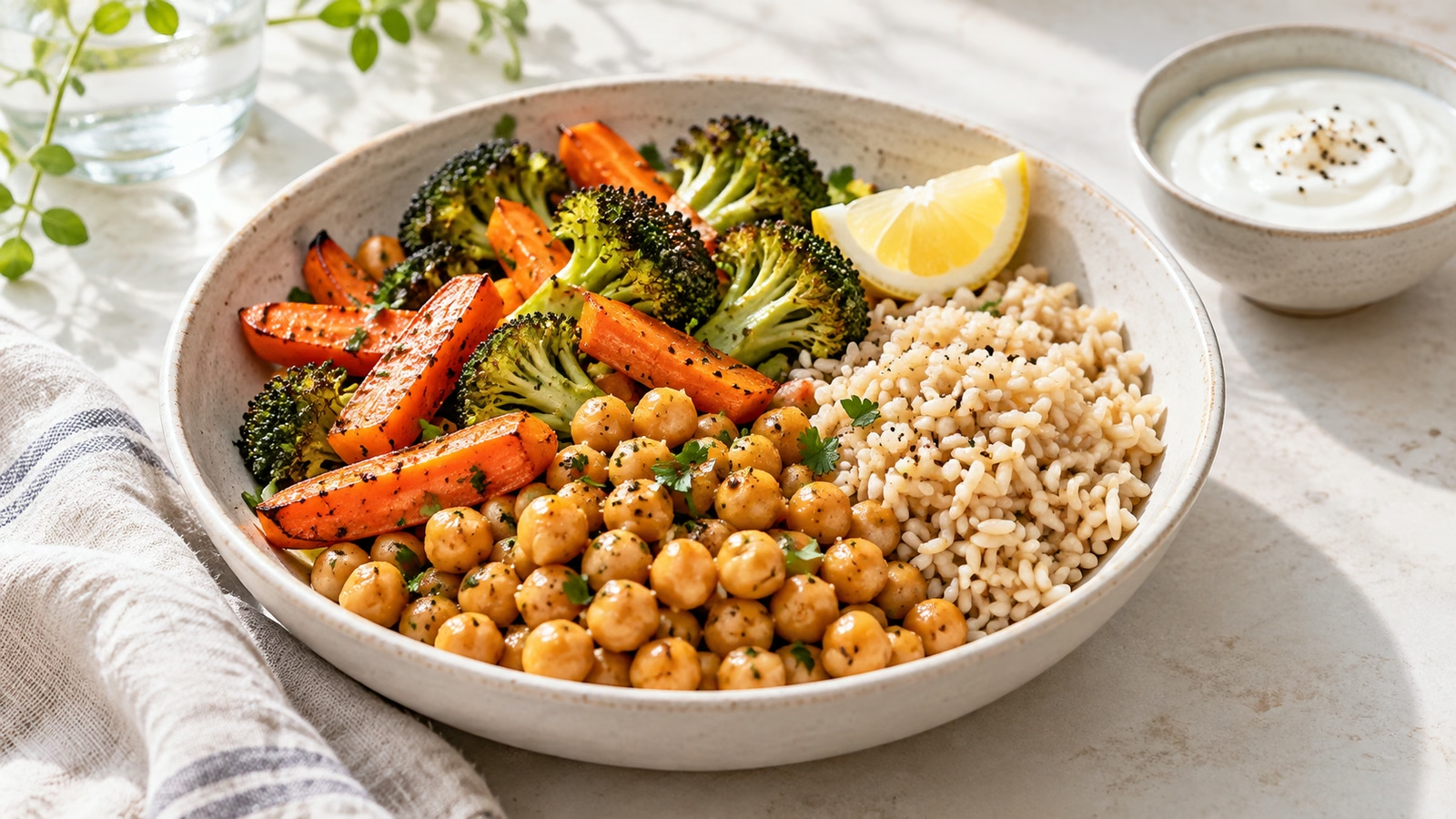
You can use the areas of agreement without building your dinner around a diagram. Look at the food you normally buy, identify what is missing, and choose a change that fits your kitchen. The goal is a varied eating pattern that supplies what you need, not an exact arrangement of the foods pictured on a government website.
- Start with a familiar meal: add vegetables to a bean-and-rice bowl, or pair oatmeal with fruit and a protein food you enjoy.
- Check the actual grain: “multigrain” or “sourdough” alone does not establish that a product is whole grain. Read the ingredients.
- Keep convenient produce: the written federal guidelines explicitly allow suitable frozen and canned vegetables and fruit. A package does not automatically make a food unsuitable.
- Keep the source and date together: a school handout, an older webpage, and the new federal PDF may describe different editions. Check before combining their serving numbers.
- Adapt for your circumstances: allergies, pregnancy, age, culture, food access, and medical conditions can change how broad advice becomes meals.
No pyramid can diagnose a nutrient deficiency, promise disease prevention, or replace individualized care. It also cannot tell you how much you enjoy a meal or whether you can afford to repeat it. Those practical details belong in the conversation, especially when a change sounds simple on paper but is difficult in daily life.
For a longer expert discussion, the Mayo Clinic video below features Dr. Kyla Lara-Breitinger interviewing Dr. Dariush Mozaffarian about what changed, what remained, and where debate persists in the new guidelines. It offers clinical context rather than a meal-by-meal prescription.
Sources
- U.S. federal government: Current food pyramid
- Dietary Guidelines for Americans, 2025–2030
- Daily Servings by Calorie Level companion
- USDA Center for Nutrition Policy and Promotion: Food-guide history, 2011
- American Heart Association: Response to the new federal guidance
- Harvard T.H. Chan School of Public Health: Expert perspectives on the 2025–2030 guidelines

Hi, I’m Laura, the voice behind Tastiva. I’ve always believed that eating well should feel enjoyable, comforting, and realistic—not like another complicated rule to follow. I love creating recipes that fit into everyday life, sharing simple nutrition ideas, and finding small ways to make meals feel a little better without losing the pleasure of good food.