
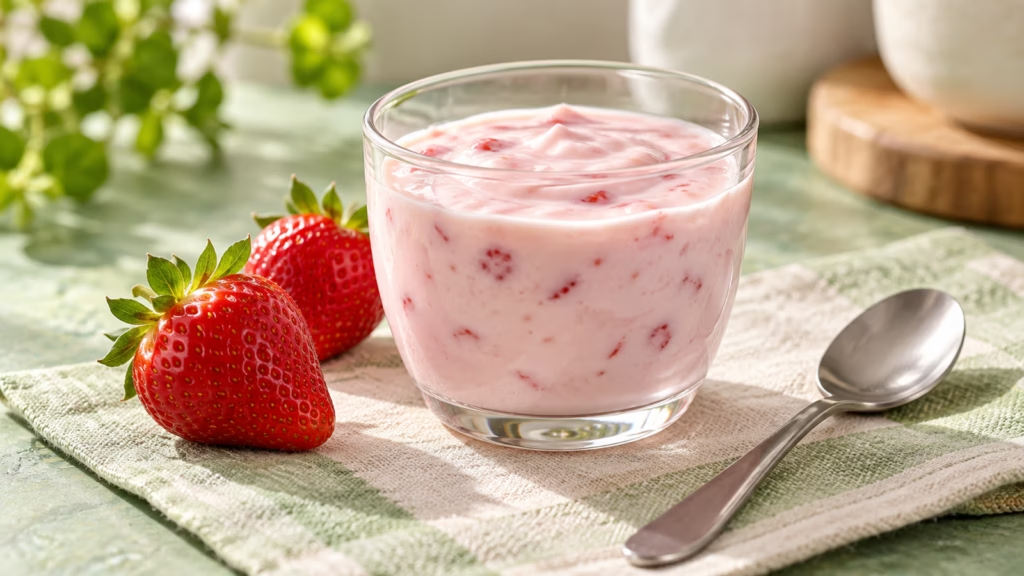
A small Activia yogurt cup can look like an easy breakfast decision, until the probiotic wording starts doing more work than the nutrition label. Start with the exact product and portion: the current U.S. Strawberry Probiotic Yogurt cup is 113 grams, with 80 calories, 4 grams of protein and 6 grams of added sugars. Other Activia products can differ.
Let the label tell you what is in the cup before a front-of-pack promise decides the meal.
This is a label-based guide, not a hands-on taste test. I would compare the cup with what you actually want from it: a small snack, part of breakfast or a yogurt with particular ingredients. None of those decisions needs a promise that one food will solve every digestive complaint.
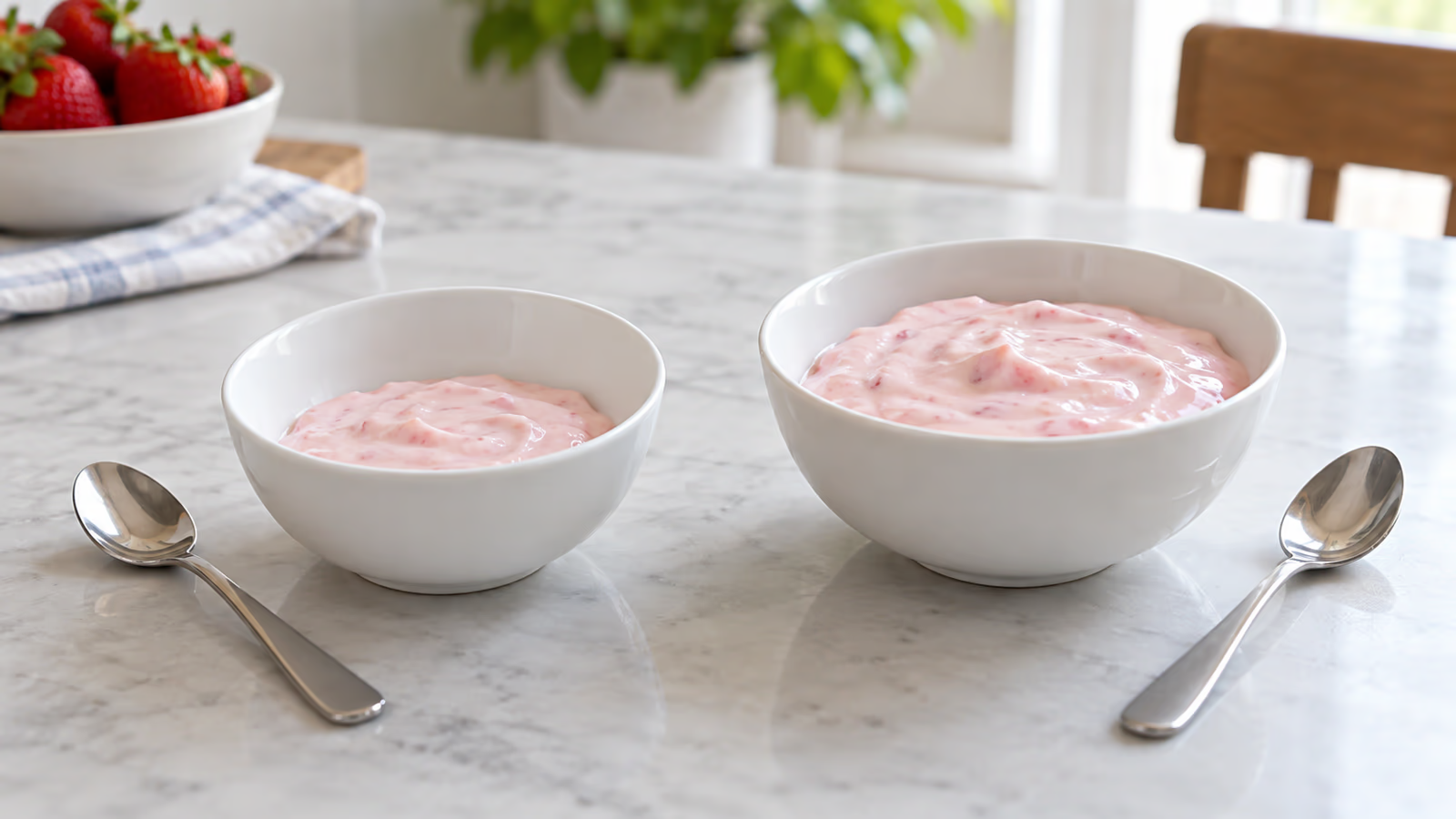
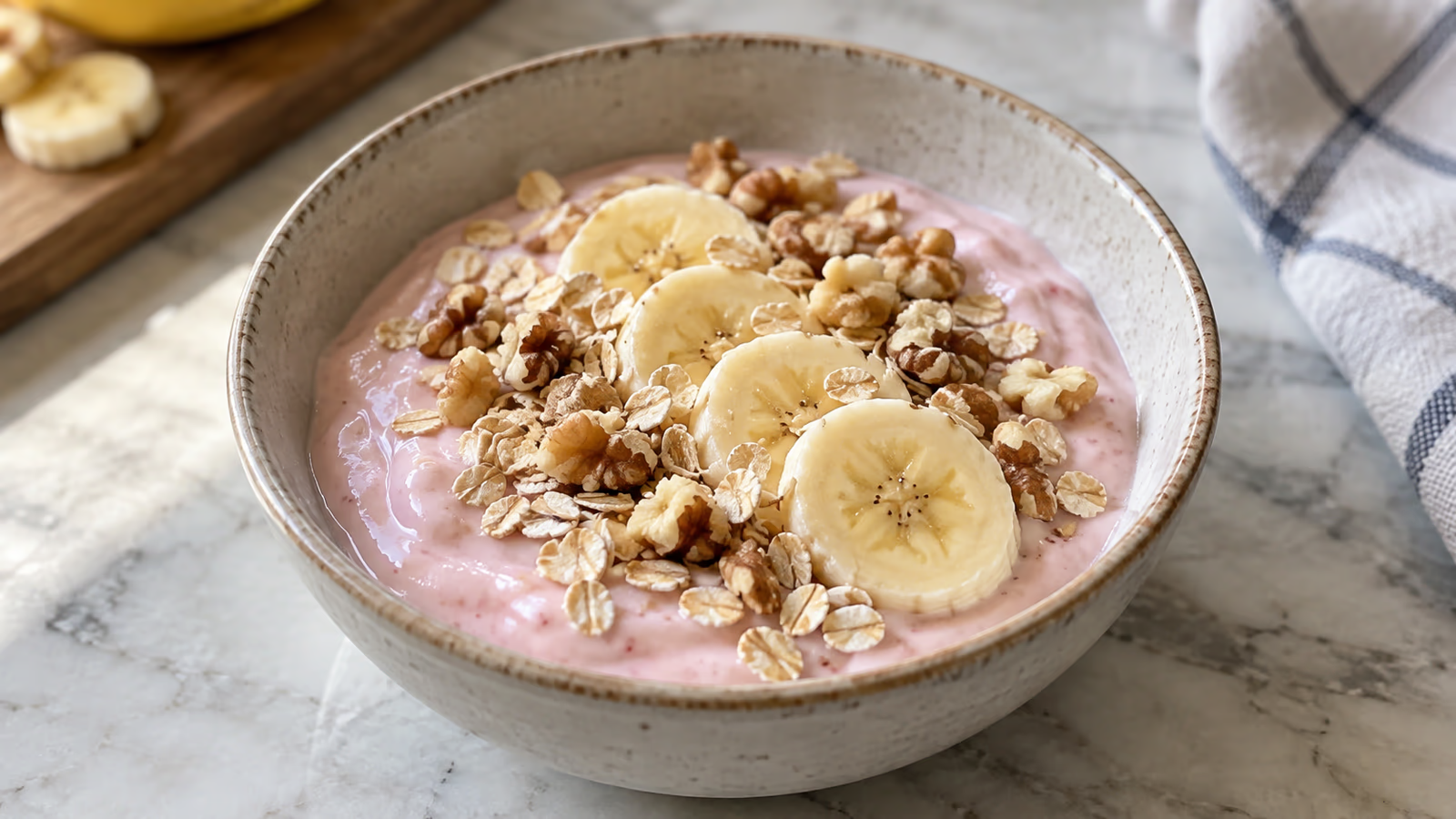
The images here are unbranded portion and serving illustrations, not photographs of Activia products. Check the actual package for product details; fruit, oats, and nuts add their own nutrients.
Read this Activia yogurt cup on its own terms
The manufacturer’s U.S. strawberry four-pack listing, checked October 9, 2026, describes a low-fat cultured dairy yogurt. Its label is the reference here; always check the package you buy, especially if the size, flavor or product line is different.
- One cup, 113 g: 80 calories and 4 g protein.
- Total sugars: 9 g, including 6 g added sugars. The added amount is already part of the total.
- Total fat: 1.5 g, including 1 g saturated fat; sodium: 65 mg.
- Calcium: 150 mg and vitamin D: 2 mcg; fiber: 0 g.
The ingredients include cultured reduced-fat milk, cane sugar and strawberries, with smaller amounts of other ingredients for texture, flavor and color. Milk is declared as an allergen. The listing also identifies a probiotic strain, B. lactis DN 173-010/CNCM I-2494; that specific name is more informative than treating all cultured foods as identical.
Compare the same amount, not just one container
A small cup and a larger yogurt tub portion are not automatically comparable. The FDA explains that the serving size on a label reflects typical consumption, not a recommendation for how much you personally should eat. Check both the grams per serving and the servings per package.
- For a single-cup snack, use the figures for one 113 g cup.
- If you eat two of these cups, the arithmetic becomes 226 g, 160 calories, 8 g protein and 12 g added sugars. This is a portion calculation, not a suggested daily dose.
- When comparing another yogurt, either use equivalent weights or acknowledge that the portions differ. A larger portion can contain more protein simply because there is more food.
Total sugar and added sugar are separate pieces of information. Naturally occurring milk and fruit sugars can contribute to the total, while cane sugar contributes to the added amount. I would use the added-sugars line for that comparison rather than assuming all 9 grams came from spoonfuls of sweetener.
Keep probiotic claims specific
The National Center for Complementary and Integrative Health notes that different probiotic types can have different effects. Evidence for one organism or product cannot simply be transferred to every yogurt that uses the word probiotic. A strain name identifies what is present; it does not establish every possible benefit.
- Do not read the package as a diagnosis or a treatment plan for persistent digestive symptoms.
- A product’s protein, calcium or vitamin D content is a nutrition fact. A claim about changing symptoms requires separate evidence.
- If you are seriously ill, immunocompromised or considering probiotics for a medical reason, discuss the choice with a qualified clinician.
- A dairy yogurt is not automatically lactose-free. A probiotic claim does not remove milk proteins or make the product suitable for a milk allergy.
For the terminology behind the label, our prebiotic and probiotic guide explains the distinction. I prefer to keep the practical question small: do you like this food, tolerate it and find its portion useful in the way you eat? That is different from expecting a universal result.
Build a breakfast or snack around the actual cup
The strawberry flavor points naturally toward fruit, oats or nuts rather than a savory sauce. If you want yogurt for both sweet and savory cooking, plain yogurt offers a different starting point. The best choice depends on the job, not only the name on the lid.
- Add fruit for another flavor and texture. Its nutrients are additional to the yogurt label.
- For a more substantial bowl, consider oats or nuts in a portion that suits your meal. Check allergies and count those additions separately.
- If protein is the main comparison, read that line across the actual products and portion sizes. This cup contains 4 grams; do not assume every yogurt supplies the same amount.
- Keep yogurt refrigerated, use a clean spoon and follow its package date and storage instructions.
A familiar green package can be convenient, but it should not end the comparison. Read the exact label again when switching flavors or formats, and give taste preferences their proper place without borrowing someone else’s product review.
The FDA’s short video below explains the Nutrition Facts label used for these comparisons. It is general label guidance, not an endorsement of Activia.
Sources
- Activia U.S.: Strawberry Probiotic Yogurt, current product label.
- FDA: understanding serving size.
- FDA: total sugars and added sugars.
- NCCIH: probiotics, evidence and safety.
- FDA: safe food storage.

Hi, I’m Laura, the voice behind Tastiva. I’ve always believed that eating well should feel enjoyable, comforting, and realistic—not like another complicated rule to follow. I love creating recipes that fit into everyday life, sharing simple nutrition ideas, and finding small ways to make meals feel a little better without losing the pleasure of good food.