
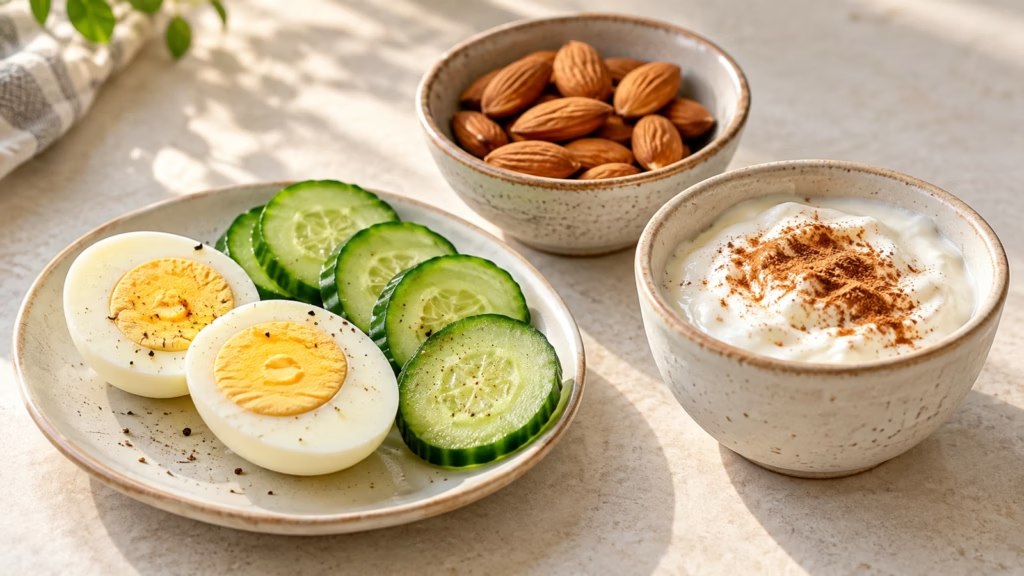
Low carb snacks can be ordinary foods: a hard-boiled egg, a cheese stick, crisp vegetables, or a small serving of plain nuts. The useful question is not whether the package looks like diet food, but what is in the portion you actually eat. These eight ideas give you practical starting amounts and the label checks that keep the description honest.
Choose a snack you enjoy, check the portion, and let the whole label tell you more than the claim on the front.
What to know before choosing low carb snacks
These are general lower-carbohydrate snack ideas, not a prescription to restrict carbohydrates or a promise that every option meets the same gram limit. Your needs depend on the rest of your eating pattern and any individual medical advice. The American Diabetes Association’s snack handout lists one hard-boiled egg and one string-cheese stick among examples with 5 grams of carbohydrate or less; product sizes and additions still need checking.
If you use insulin or another medicine that can cause low blood sugar, discuss significant carbohydrate changes with your care team. MedlinePlus explains that some people need carbohydrate-containing snacks as part of their treatment plan. A low-carb snack is not a substitute for the fast-acting carbohydrate used to treat low blood sugar; follow your prescribed treatment instructions.
- Use portions as starting points. The amounts below make comparison easier. They are not appetite limits or individualized targets.
- Check the actual product. Sweet coatings, sauces, flavorings, and larger containers can change carbohydrate amounts.
- Keep other nutrients in view. Lower carbohydrate does not automatically mean lower sodium, lower saturated fat, or a more useful snack for you.
Four simple options for the refrigerator
- 1. One hard-boiled egg. Add black pepper or a little paprika if you like. Cook until both yolk and white are firm, and keep it refrigerated. Tastiva’s hard-boiled egg storage guide explains the one-week limit counted from cooking, whether the egg is peeled or not.
- 2. One string-cheese stick. The individually wrapped format makes the serving easy to identify. Read that product’s label, including sodium and saturated fat. Keep it cold; its wrapper does not make it a shelf-stable food.
- 3. One cup of cucumber or celery with a small dip portion. Start with one tablespoon of a dip you enjoy, and count the dip as well as the vegetables if tracking carbohydrates. A sweet bottled dressing and a plain yogurt-based dip are not interchangeable label entries.
- 4. Half a cup of plain Greek yogurt. Cinnamon can add flavor without a granola layer. Plain yogurt still contains carbohydrate, and brands differ. Use the label for the measured amount; flavored yogurt, honey, cereal, or fruit changes the total.
I’d choose between these by texture as much as convenience: something creamy when a spoonful sounds good, or vegetables when you want crunch. If a snack leaves you hungry, consider whether you need more food or a meal. There is no prize for making an afternoon harder with an arbitrarily tiny portion.
Four more ideas with a useful portion check
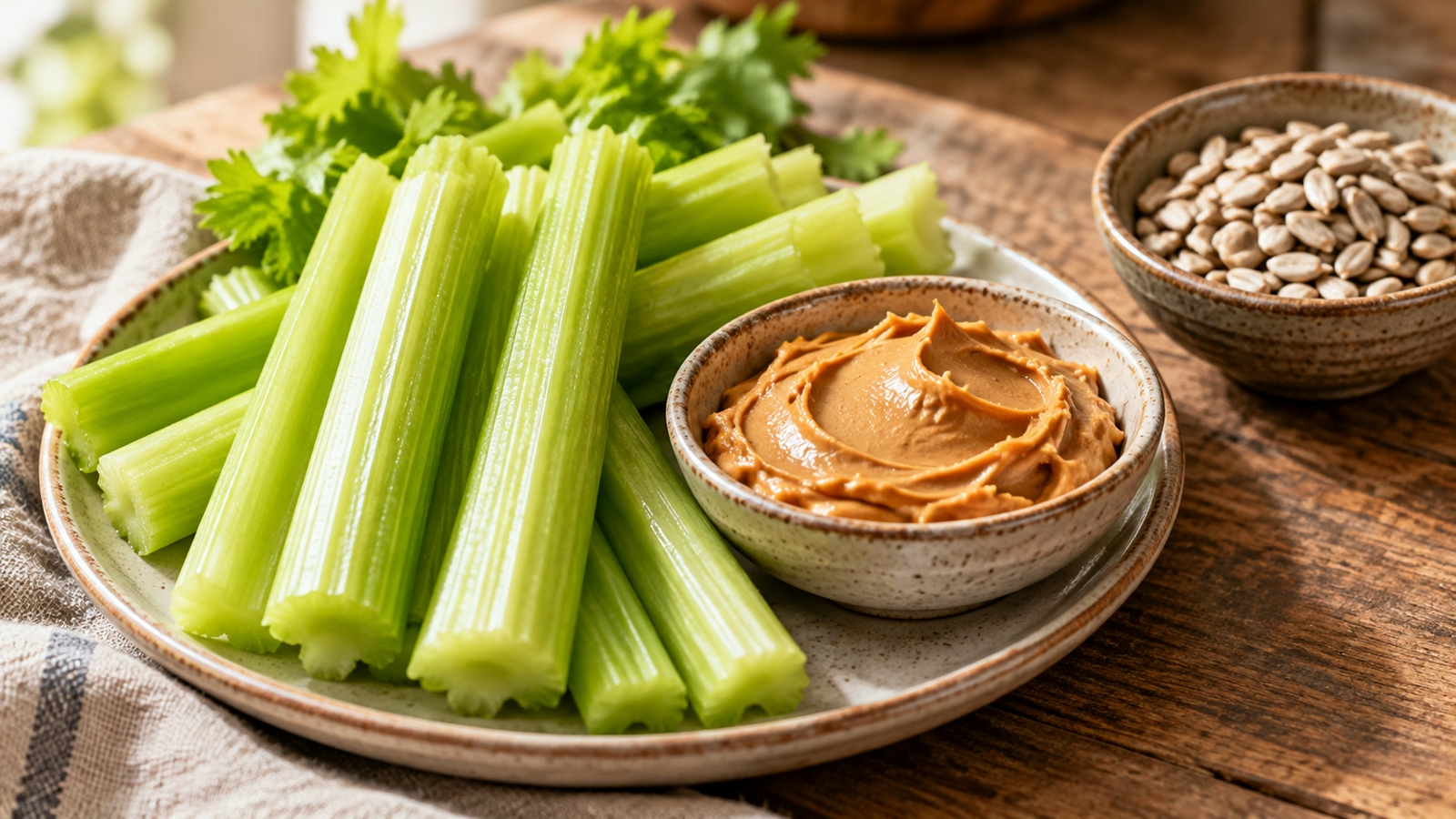
- 5. Celery with peanut or seed butter. Start with one tablespoon of the spread and a few celery sticks. Choose a product without a sweet coating or mix-in if keeping carbohydrate lower is your aim. Peanuts and seeds have their own allergy considerations. Follow the jar’s storage directions; the peanut butter refrigeration guide explains why the exact product matters.
- 6. A small portion of plain nuts or seeds. An ounce of nuts, or a measured portion of shelled seeds based on the package, is easier to assess than eating from a large bag. Honey-roasted and candy-coated versions differ. Nuts and seeds provide energy too, so lower carbohydrate is not the same as calorie-free.
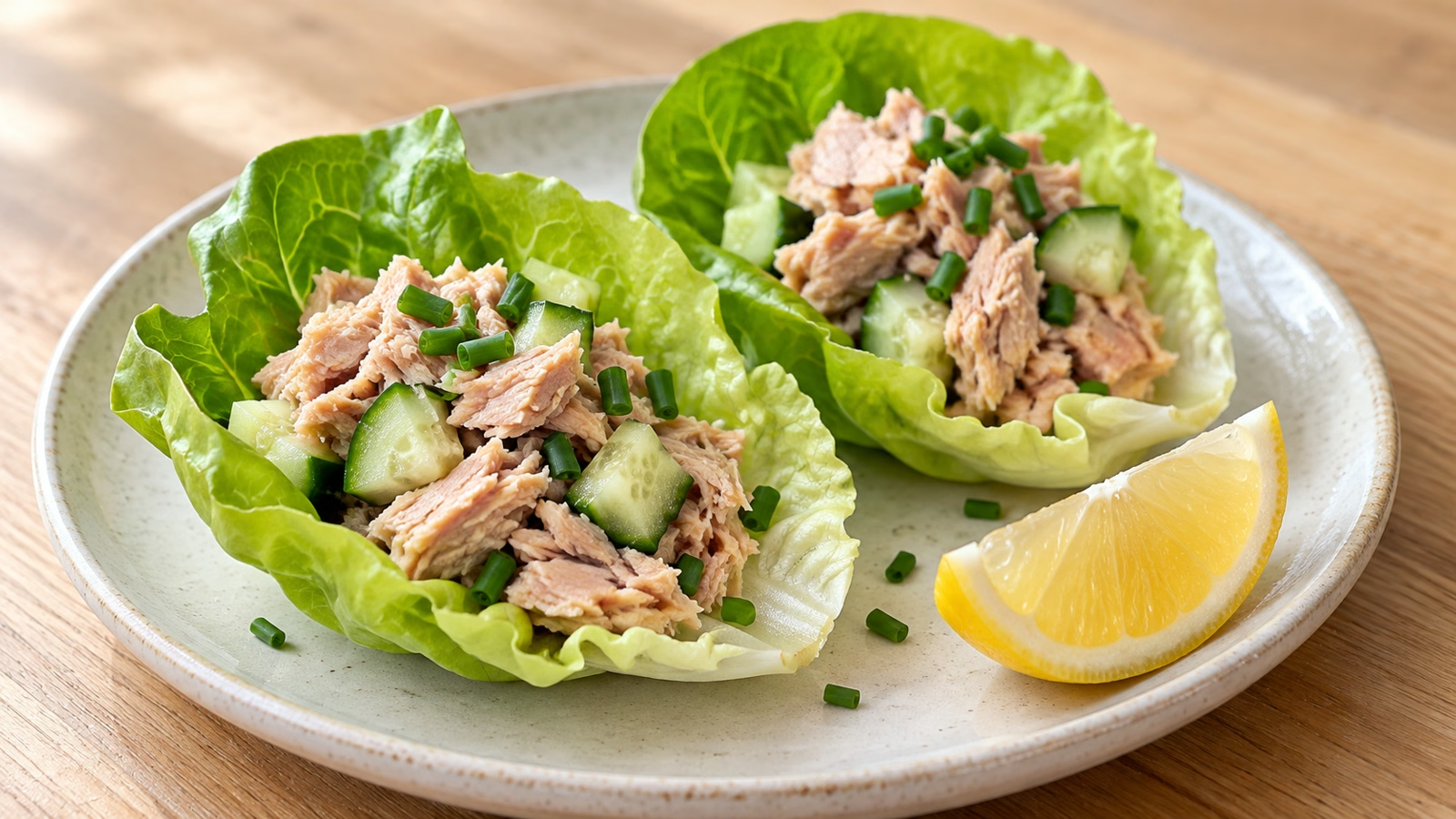
- 7. Plain tuna or salmon with lettuce. Try about two ounces of ready-to-eat canned or pouch fish in lettuce leaves, with cucumber and lemon. Check flavored pouches for added ingredients and sodium. Once opened or assembled, treat it as perishable food and refrigerate promptly.
- 8. A little avocado with tomato. Start with about a quarter of an avocado and a few tomato pieces, seasoned to taste. The size of the avocado changes the portion considerably. This is an assembly idea, not a calculated nutrient claim; use weights and reliable food data if you need a precise count.
The American Diabetes Association includes eggs, vegetables, fish, and avocado among its practical snack ideas, while MedlinePlus also lists plain peanuts and sunflower seeds as lower-carbohydrate choices. The suggested serving amounts here are planning examples. There is no single carb number assigned to the whole collection.
Read the label, then make the snack convenient
Start with the serving size and servings per container. The FDA explains that a label serving describes the amount represented by the nutrition information; it is not a recommendation for how much you should eat. If you eat twice that amount, the listed carbohydrate and other nutrient amounts double too.
- Use total carbohydrate when carb counting. The ADA’s label guide includes sugars, starch, and fiber in that total. Looking only at sugar can miss part of the picture; follow your care team’s specific counting method if you have one.
- Include the additions. Crackers, sweetened toppings, sauces, and a larger dip serving belong in the count. A low-carb base does not cancel the rest of the plate.
- Prepare a small amount ahead. Wash vegetables, portion a snack, and label cooked eggs with their cooking date. Keep perishable foods at 40°F or below and refrigerate within two hours, or one hour above 90°F.
- Keep variety. Carbohydrate-containing foods can fit a balanced eating pattern. This list offers options for a preference or plan, not a reason to treat fruit, beans, or whole grains as forbidden.
Downshiftology’s boiled-egg video below shows several textures. For the hard-boiled snack listed here, choose the fully firm yolk and white rather than the soft-boiled versions, then cool and refrigerate promptly.
Sources
- American Diabetes Association: Healthy Snack Choices
- American Diabetes Association: Snacking Success
- MedlinePlus: Snacking When You Have Diabetes
- American Diabetes Association: Food Labels
- FDA: Understanding the Nutrition Facts Label
- FoodSafety.gov: Four Steps to Food Safety
- Downshiftology: Boiled Eggs and Video

Hi, I’m Laura, the voice behind Tastiva. I’ve always believed that eating well should feel enjoyable, comforting, and realistic—not like another complicated rule to follow. I love creating recipes that fit into everyday life, sharing simple nutrition ideas, and finding small ways to make meals feel a little better without losing the pleasure of good food.