
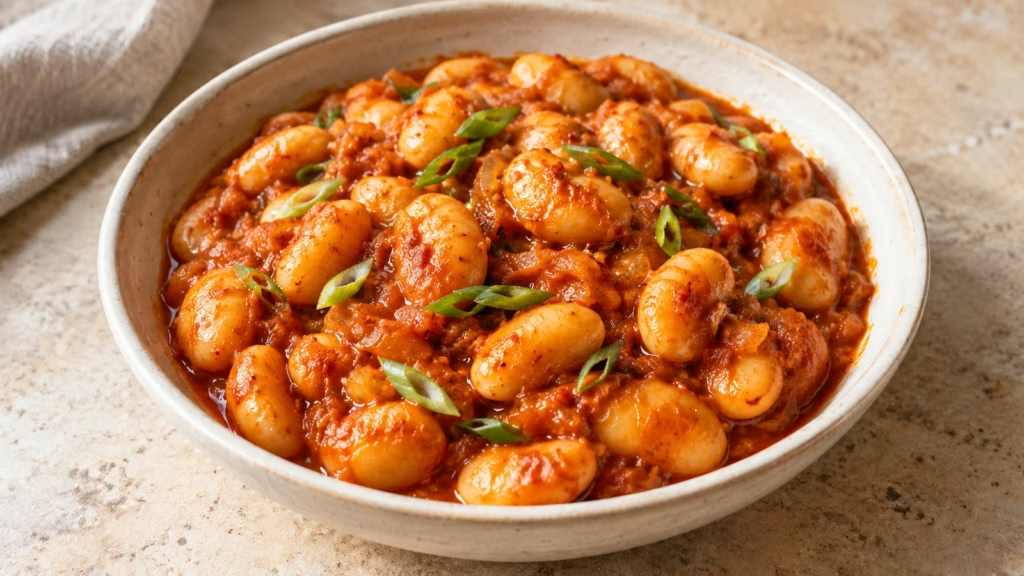
The beans are ready, the skillet is warm, and the tub of gochujang is doing its usual impression of a condiment with more potential than instructions. These gochujang butter beans put it to work in a creamy tomato sauce: soften the aromatics, dissolve the paste, then warm the beans gently so their broad, tender centers stay intact.
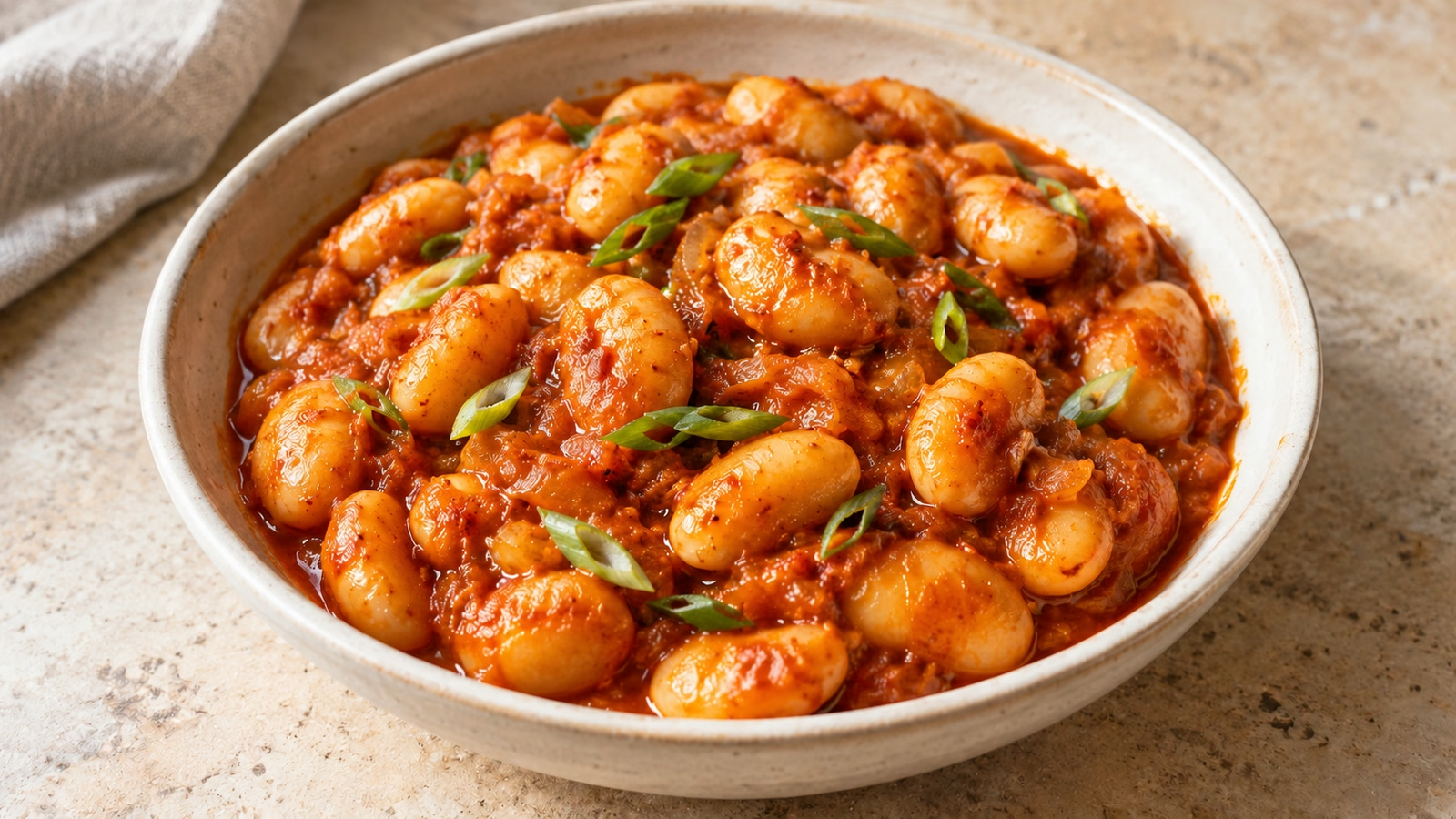
Let the sauce carry the heat, and give the beans a gentle landing.
What makes gochujang butter beans work
Gochujang brings chile heat, sweetness, salt, and fermented depth. Tomatoes stretch that concentrated flavor across the pan, while a little cream softens its edges. I prefer a spoonable sauce here, rather than a sticky glaze; it gives you something worth catching with a piece of toast.
- Start modestly. One tablespoon of gochujang gives this four-serving batch a useful starting point. A second tablespoon is optional, after tasting.
- Use cooked butter beans. Canned beans keep dinner practical and do not need a long simmer.
- Keep the identity honest. This is an original pantry adaptation using a Korean ingredient, not a traditional Korean bean dish.
The wider interest is real, even if this particular skillet is not a documented viral recipe. Bidfood’s 2026 UK trends research includes gochujang among flavors drawing chef interest. That is a regional trend signal, not proof that every American kitchen is cooking the same dinner.
Choose ingredients for flavor, not extra salt
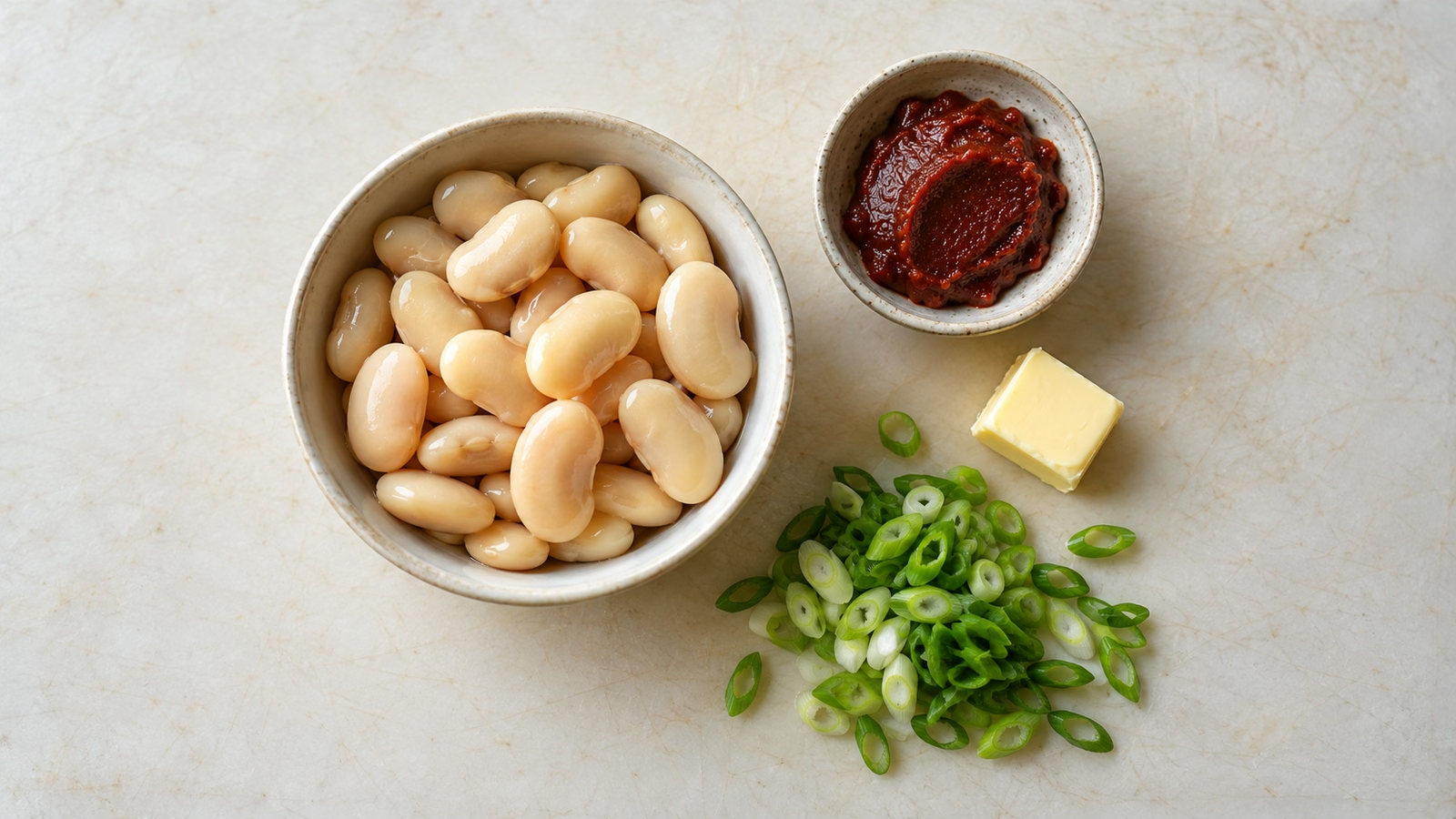
Buy plain no-salt-added canned butter beans and drain them well. Their broad shape makes this dish feel substantial, although cannellini will work if that is what you have. Expect smaller mouthfuls and potentially firmer skins; use the same drained weight rather than assuming every can contains the same quantity.
- Gochujang: Look for the paste, not a ready-made dipping sauce. Check wheat, soy, and other allergen information on your particular tub.
- Tomatoes: Plain crushed tomatoes make a cohesive base. Large diced pieces produce a chunkier, sometimes looser sauce.
- Butter and cream: Unsalted butter softens the onion, and heavy cream offers richness in a small amount. Unsweetened oat cooking cream is an option, but flavor, thickness, and nutrition will change.
- Seasoning: Hold the salt until the beans and sauce are together. The paste and canned ingredients already contribute some.
If you are curious about the condiment itself, Tastiva’s gochujang guide explains the difference between the fermented paste and dry gochugaru. Do not replace it spoon for spoon with plain chile flakes; the sauce would lose both body and seasoning.
Keep the sauce smooth and the beans whole
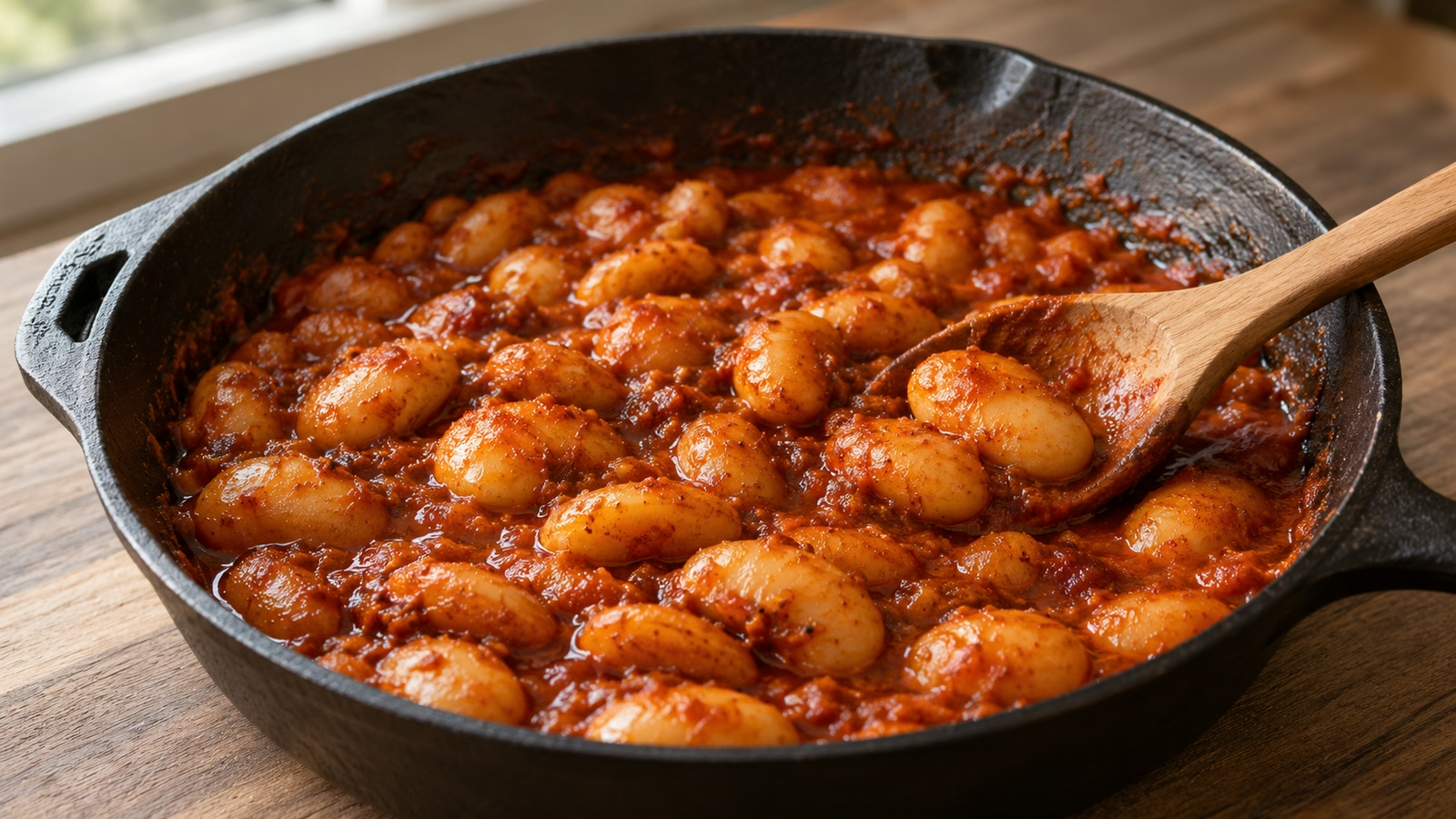
The useful sequence is sauce first, beans second. Let the onion soften before adding garlic, then stir the gochujang into the tomato mixture until no concentrated lumps remain. A splash of water gives the paste somewhere to go without catching on the pan.
- Too thick? Add water a tablespoon at a time. You want the sauce to settle back around the beans when you drag a spoon through it.
- Too thin? Simmer the sauce briefly before adding the beans. If they are already in the pan, use gentle heat and avoid constant stirring.
- Too hot? Extra unsalted cooked beans or a little more cream can spread out the seasoning. Sugar alone does not remove chile heat.
- Beans breaking apart? Fold with a broad spoon or gently shake the skillet. Some starch is welcome, but vigorous stirring turns the pan into a mash.
Finish with rice vinegar only after tasting. The tomatoes already bring acidity; the small splash should wake up the sauce rather than make it sharply sour. Scallions go on at the end for a fresh contrast.
Serve now or save a portion for lunch
Spoon the beans over toast, alongside a baked potato, or into a bowl with a simple cucumber salad. I would keep the accompaniment lightly seasoned so the chile paste remains the main flavor. These are hearty beans in sauce, not a soup; add broth only if you deliberately want a looser meal.
- Pack separately: Keep bread and fresh toppings away from the sauce until serving.
- Cool promptly: Refrigerate in shallow containers within two hours, or one hour above 90°F.
- Store and reheat: Keep at 40°F or below, use within three to four days, and reheat leftovers to 165°F. Loosen with a little water as needed.
The card’s timing starts with canned beans and includes a short sauce simmer. Dried beans require a separate, fully completed cooking step; do not add them directly to the tomato sauce and expect the same result.
Gochujang Butter Beans Recipe

Ingredients
- 1 tablespoon unsalted butter 14 g
- 1 small onion 100 g, finely diced
- 2 cloves garlic 6 g, minced
- 1 tablespoon gochujang 20 g; additional paste optional and not included in nutrition
- 1 can crushed tomatoes 14 ounces / 400 g
- 1/4 cup water 60 ml, plus more as needed
- 2 cans no-salt-added butter beans 15 ounces each; drained and rinsed, about 500 g total
- 1/4 cup heavy cream 60 g
- 1 teaspoon unseasoned rice vinegar 5 g
- 2 scallions 30 g, thinly sliced
Equipment
- 1 Large skillet
- 1 Cutting board
- 1 Chef’s knife
- 1 Measuring spoons
- 1 wide spoon
Instructions
- Melt the butter in a large skillet over medium heat. Add the onion and cook for 5–6 minutes, stirring, until softened. Add the garlic and cook for 30 seconds.
- Stir in the gochujang, crushed tomatoes, and water until smooth. Bring to a gentle simmer and cook for 6–8 minutes, stirring occasionally, until slightly thickened.
- Fold in the drained cooked beans and cream. Simmer gently for 4–5 minutes until the beans are hot throughout; avoid vigorous stirring.
- Taste the sauce. Add a little extra gochujang if desired, dissolving it in a spoonful of sauce first. Stir in the rice vinegar, then loosen with water if needed.
- Divide into four portions and finish with scallions. Serve with an accompaniment of your choice; bread or rice is not included in the nutrition estimate.
Nutrition
Notes
Tried this recipe?
Let us know how it turned out!Sources
- Bidfood: 2026 flavor-trend research and survey scope
- Maangchi: gochujang ingredient guide
- USDA: safe handling of leftovers
Hi, I’m Laura, the voice behind Tastiva. I’ve always believed that eating well should feel enjoyable, comforting, and realistic—not like another complicated rule to follow. I love creating recipes that fit into everyday life, sharing simple nutrition ideas, and finding small ways to make meals feel a little better without losing the pleasure of good food.