
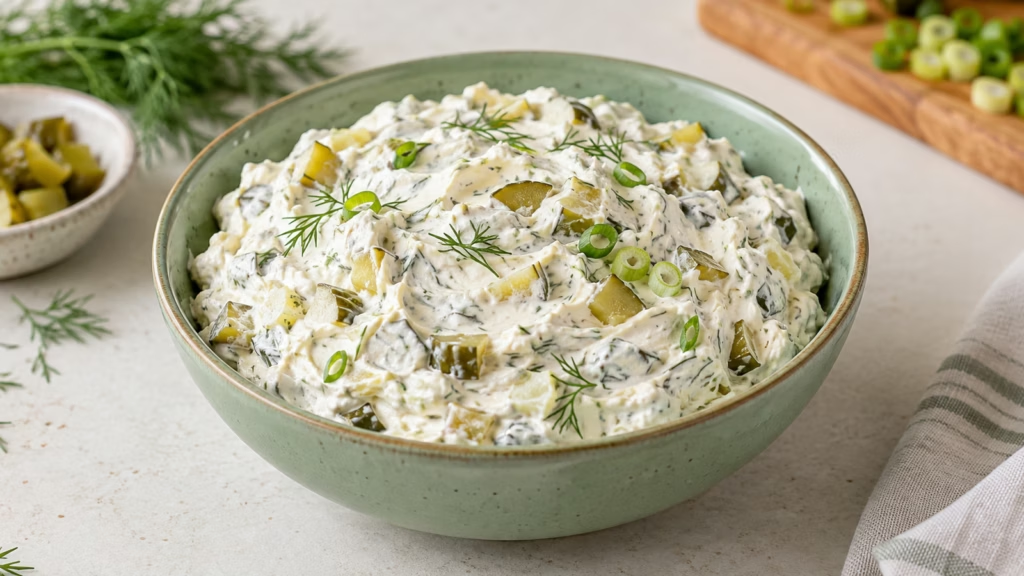
A creamy dip should stay on the cracker long enough to reach your mouth. Pickle dip makes that a little tricky, because the ingredient bringing all the crunch also brings brine. This version combines well-drained dill pickles with thick Greek yogurt, softened cream cheese and a modest amount of ranch seasoning for a scoopable dip that tastes unmistakably of pickles.
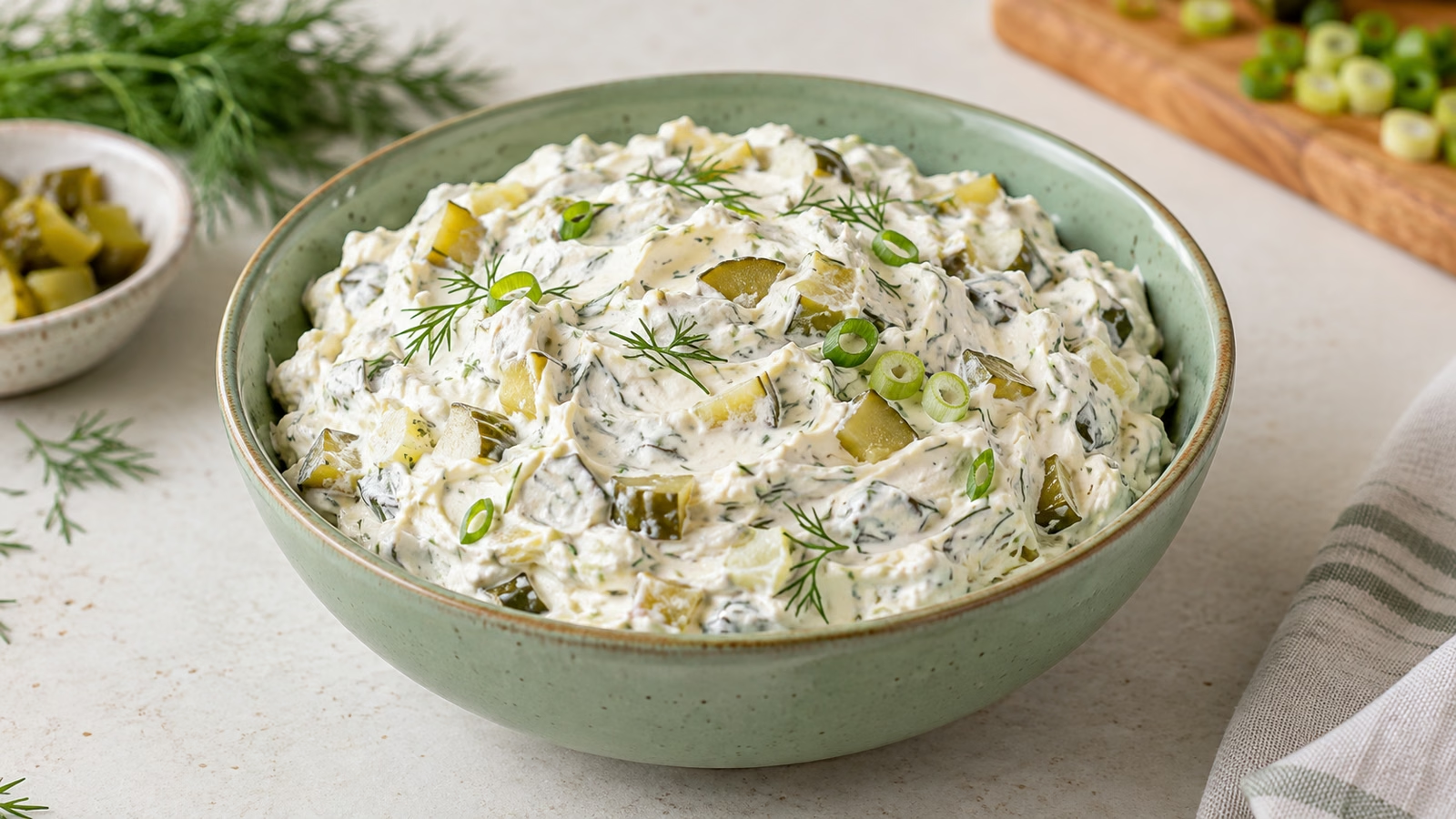
Drain the chopped pickles before mixing, then add brine only if the finished dip actually needs it.
What makes this pickle dip different
The pickle-dip trend has room for very different bowls. Parade covered a Grillo’s-inspired version in March 2026, while Eating Bird Food shared a yogurt-forward fried-pickle dip in April. This recipe keeps the dill, ranch and chopped-pickle character but skips bacon, shredded cheese and a breadcrumb topping.
I’d let the pickles lead rather than adding every salty ingredient in the refrigerator. The yogurt gives the base tang, and a smaller portion of cream cheese adds body. It is a different balance from an all-cream-cheese dip, so expect a fresher-tasting, slightly softer mixture rather than a stiff spread.
- Use plain, thick Greek yogurt. Flavored yogurt brings sweetness that does not belong in this recipe.
- Choose crunchy dill pickles instead of sweet bread-and-butter pickles unless you want a deliberately sweeter dip.
- Cream cheese should be soft enough to mash smoothly but still handled within safe room-temperature limits.
- Ranch seasoning is a measured starting point. Different packets contain different amounts of salt, dried herbs and dairy.
Drain the pickles and smooth the base
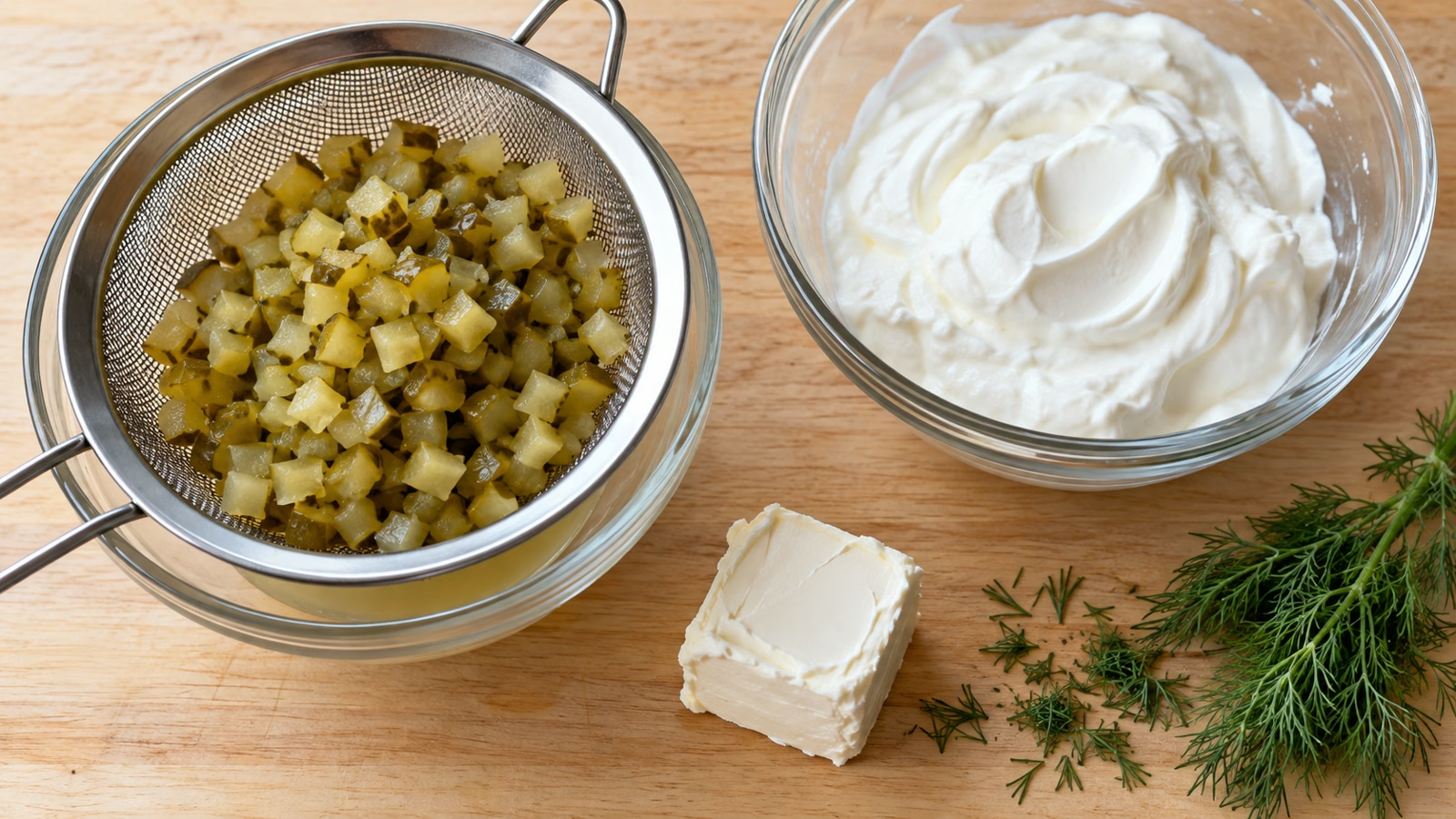
Chop the pickles first, then let them sit in a small sieve while you prepare the dairy mixture. Press gently with a spoon and blot with a clean paper towel if they still look very wet. You do not need to squeeze them until dry; the goal is to remove loose brine that would otherwise thin the bowl.
Mash the softened cream cheese until smooth before adding the yogurt in portions. A whisk or hand mixer can help, but neither can make a cold, firm cube disappear instantly. Tiny cream-cheese lumps are a mixing problem, not a reason to pour in more liquid.
- Cut pickles into small pieces so each scoop gets crunch without a giant chunk pulling the dip apart.
- Stir the yogurt before measuring if liquid has separated on top, or drain loose whey for a thicker result.
- Fold the pickles in after the base is smooth; vigorous beating can crush them and release more moisture.
- Chill for 30 minutes before adjusting the seasoning. The herbs and garlic become more noticeable as the dip rests.
Adjust salt, dill and texture deliberately
The recipe begins with two teaspoons of ranch seasoning, fresh dill and a little garlic powder. Taste after chilling, using the dipper you plan to serve. A dip that seems restrained on a spoon can taste plenty salty once it meets a seasoned cracker.
For my money, fresh dill earns its space here more than another handful of cheese. Its feathery leaves reinforce the pickle flavor without adding much bulk. If fresh dill is unavailable, use the smaller dried-dill amount in the notes, then give it time to hydrate.
- Too thick: Stir in pickle brine one teaspoon at a time, stopping as soon as it scoops comfortably.
- Too loose: Chill first. If it remains runny, stir in more thick yogurt or softened cream cheese; extra seasoning cannot fix the structure.
- Too salty: Add more unsalted dairy base and adjust the yield. Do not assume lemon juice removes salt.
- Want heat: Add a few drops of hot sauce to your own serving first so the entire bowl does not become an experiment.
- Need an allergen swap: Check ranch labels for milk and other allergens. This dairy-based recipe is not automatically suitable when one ingredient is replaced.
Serve cold and keep the crunch
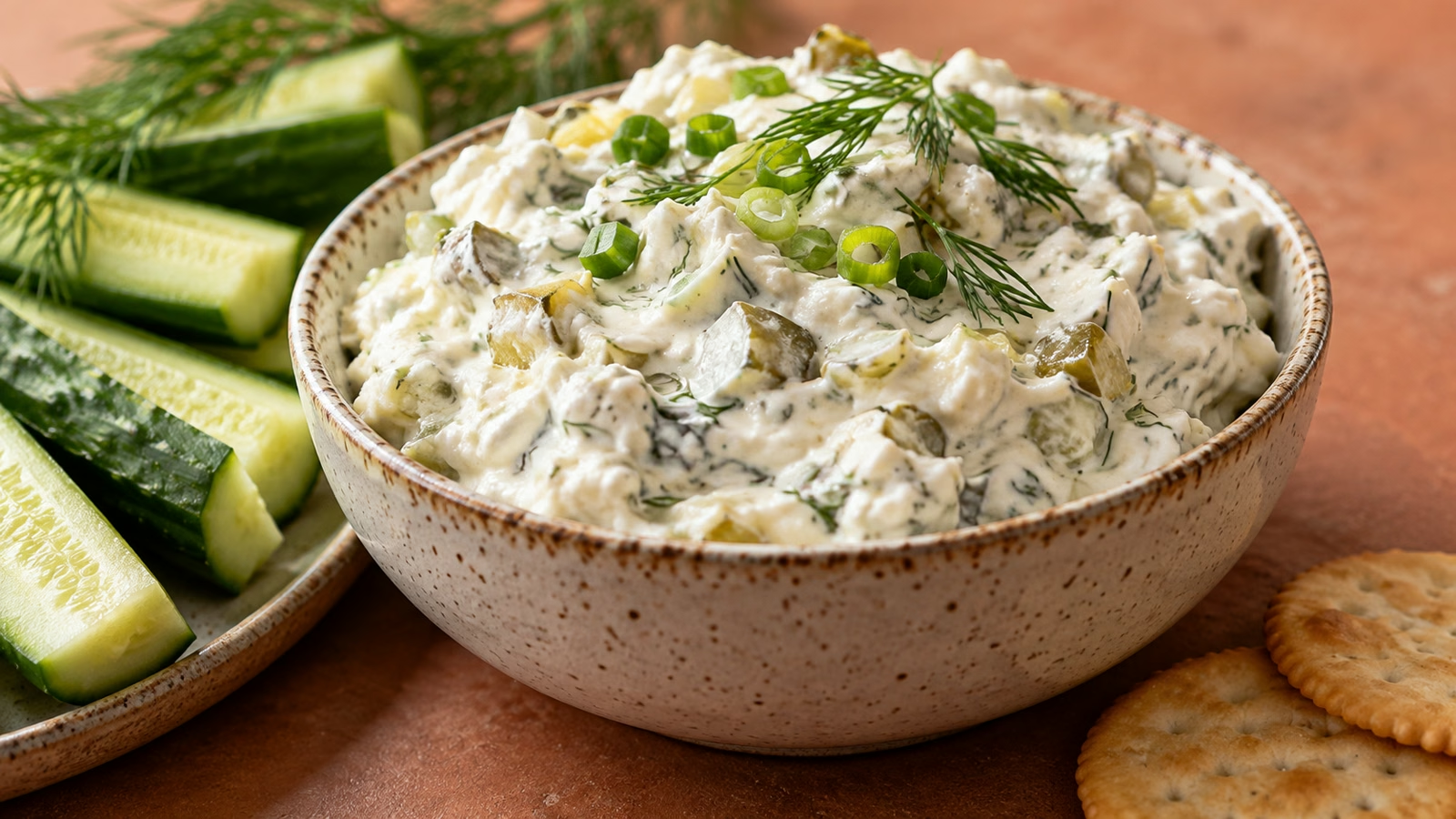
Set out cucumber spears, bell pepper strips, sturdy crackers or chips. The card nutrition covers the dip alone, so count dippers separately if you are tracking intake. This is also useful as a sandwich spread, provided you keep the layer modest enough that the filling does not slide away. For a fuller meal around it, use our snack plate dinner formula.
Store the dip covered in the refrigerator at 40°F (4°C) or below and use within three days. Stir gently before serving; some separation is normal. I would not freeze it for a party, because thawed yogurt and pickles are unlikely to retain the texture that makes this bowl appealing.
- For a gathering, put out a small portion and replenish from the refrigerator rather than leaving the whole batch warm.
- Discard perishable dip left out for more than two hours, or one hour when the temperature is above 90°F (32°C).
- Keep serving utensils clean, and avoid returning a used serving portion to the untouched storage container.
Pickle Dip Recipe

Ingredients
- 1 cup plain nonfat Greek yogurt 245 g
- 4 ounces cream cheese 113 g, softened
- 1 cup dill pickles finely chopped and well drained, 150 g
- 2 teaspoons ranch seasoning mix about 6.4 g; brands vary
- 1 tablespoon fresh dill finely chopped, 1 g
- 1 scallion thinly sliced, 15 g
- 1/4 teaspoon garlic powder 0.8 g
Equipment
- 1 Fine-mesh sieve
- 1 Mixing bowl
- 1 Spatula
- 1 Whisk or hand mixer
Instructions
- Place chopped pickles in a fine sieve and let drain while preparing the base. Press gently with a spoon to remove loose brine.
- Mash or beat the softened cream cheese until smooth. Mix in the yogurt gradually until evenly combined.
- Stir in ranch seasoning, dill, scallion and garlic powder. Fold in the drained pickles.
- Cover and refrigerate for 30 minutes. Taste with your chosen dipper. If needed, thin with pickle brine one teaspoon at a time. Serve cold and refrigerate leftovers promptly.
Nutrition
Notes
Tried this recipe?
Let us know how it turned out!Sources
- Parade: March 2026 pickle dip trend
- Eating Bird Food: yogurt-forward pickle dip
- USDA: leftovers and food safety
- USDA FoodData Central
- Hidden Valley: seasoning nutrition label
Hi, I’m Laura, the voice behind Tastiva. I’ve always believed that eating well should feel enjoyable, comforting, and realistic—not like another complicated rule to follow. I love creating recipes that fit into everyday life, sharing simple nutrition ideas, and finding small ways to make meals feel a little better without losing the pleasure of good food.