
An ordinary refrigerator can be a good starting point for healthy eating: a few eggs, yesterday’s rice, carrots, a tub of yogurt, and something in the freezer. You don’t need a matching set of meal-prep containers to make those ingredients useful. Start by checking what is safe to use, choose a few foods that work together, and make the next meal easier to assemble.
Look for a meal you can put together with what you have, then buy only what would make it work better.
What healthy eating looks like beyond a perfect plate
The World Health Organization describes a healthy diet through adequacy, balance, moderation, and diversity. In kitchen terms, that means eating enough to meet your needs, including different kinds of nourishing foods, and looking at your usual pattern rather than judging one snack. Age, activity, culture, food access, and personal health needs all affect what that pattern looks like.
A practical meal can bring together produce, a protein food, and a grain or other starchy food, with flavor and some fat. Beans, eggs, tofu, fish, poultry, and yogurt offer different ways to include protein. Whole grains are useful choices to work in regularly; vegetables and fruit can be fresh, frozen, or canned. Check packaged options for added sugars and sodium rather than assuming the freezer aisle is second best.
For a visual reference, Canada’s food guide uses half a plate of vegetables and fruit, a quarter of whole grains, and a quarter of protein foods. It explicitly treats the picture as proportions, not a prescription for the exact amount every person should eat. A soup or rice bowl can use the same idea without arranging dinner into separate compartments.
Check the fridge before writing the shopping list
Give yourself a short inventory, not a full kitchen reorganization. Open the fridge and identify one ingredient that needs using soon, one ready-to-use protein, and one base for a meal. Then check the freezer and cupboard. That cooked rice may already have companions: frozen broccoli and tofu, or canned beans and a jar of tomatoes.
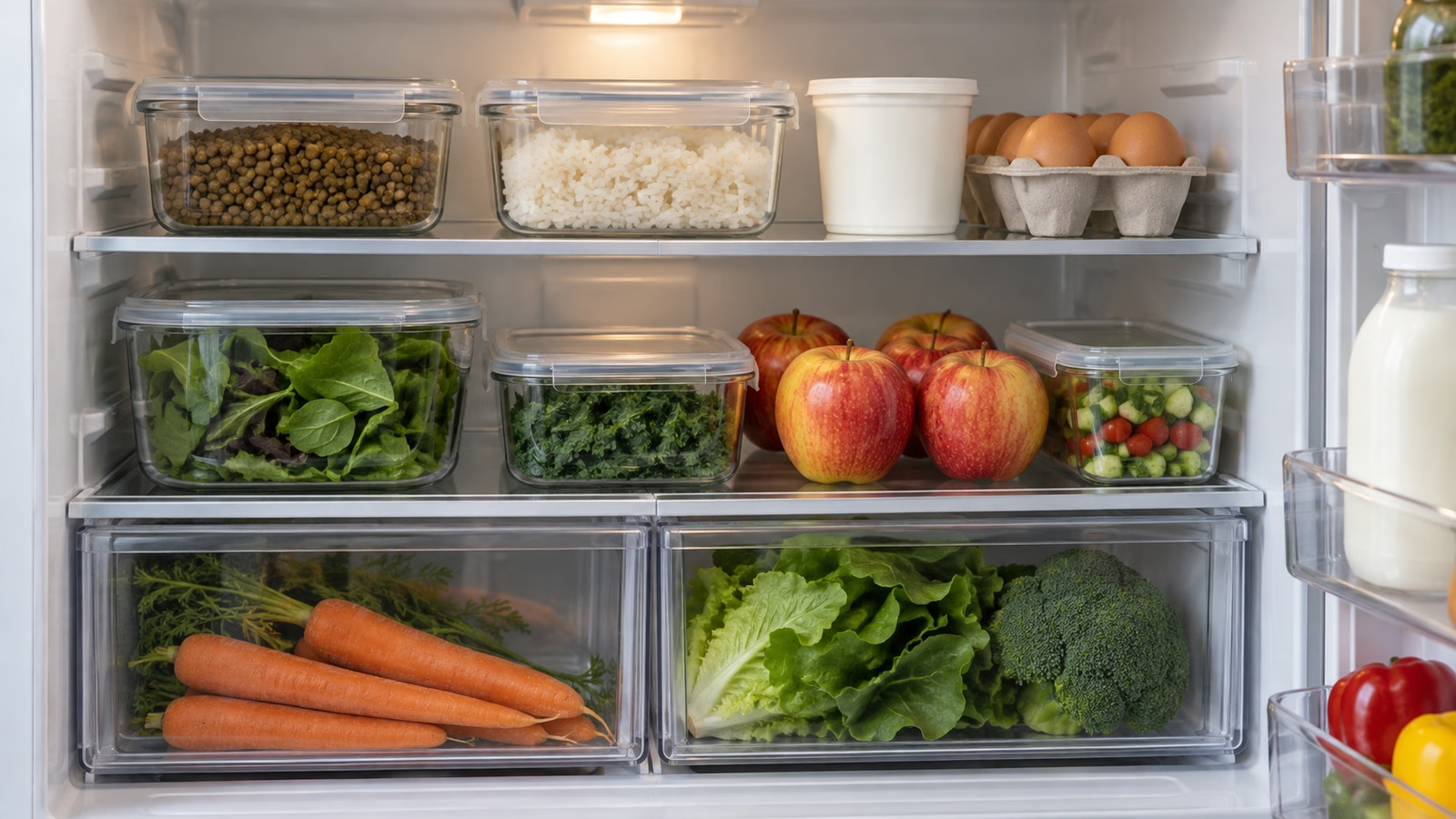
- Use soon: note washed greens, cut vegetables, opened packages, and properly stored leftovers. Check storage dates before planning around them.
- Ready with little work: keep track of canned beans, eggs, plain yogurt, frozen vegetables, and cooked grains you can safely use.
- Missing piece: write the small thing that completes a meal, such as fruit for breakfast or a protein food for the rice bowl.
- Backup: choose a simple cupboard-and-freezer meal for the night your schedule changes. It should use food your household actually likes.
Planning two or three days can be more useful than filling an entire week with meals you won’t have time to cook. Health Canada recommends considering your schedule, overlapping ingredients, and the food already on hand. Put a realistic meal beside each busy day, and leave room for a change of plans.
Turn a few familiar ingredients into meals
These combinations are starting points, not nutritionally calculated menus. Adjust amounts to your appetite and needs, and substitute foods that fit your budget, traditions, and allergies. A meal doesn’t become less worthwhile because it uses a can opener or a microwave.
- Breakfast from the fridge: plain yogurt, oats, and sliced fruit, with nuts or seeds if suitable. For a savory option, pair fully cooked eggs with whole-grain toast and tomatoes.
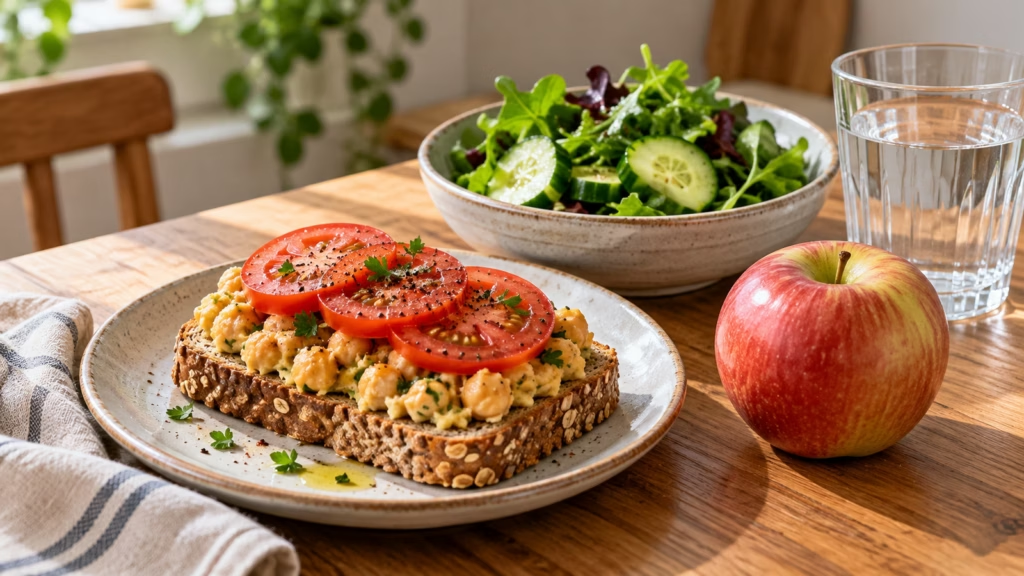
- Lunch from the cupboard: mash canned chickpeas with a little olive oil and lemon, spread on whole-grain toast, and add tomato slices or a salad. Fruit on the side can use up what is already in the bowl.
- Dinner from a few components: combine properly stored cooked brown rice, tofu, and cooked frozen broccoli or carrots. Ginger, garlic, lemon, herbs, or a modest amount of a favorite sauce can give it a direction.
- A familiar dish with one useful change: add beans to a soup you already enjoy, or serve fruit and yogurt alongside a quick breakfast. Start where your cooking already feels comfortable.
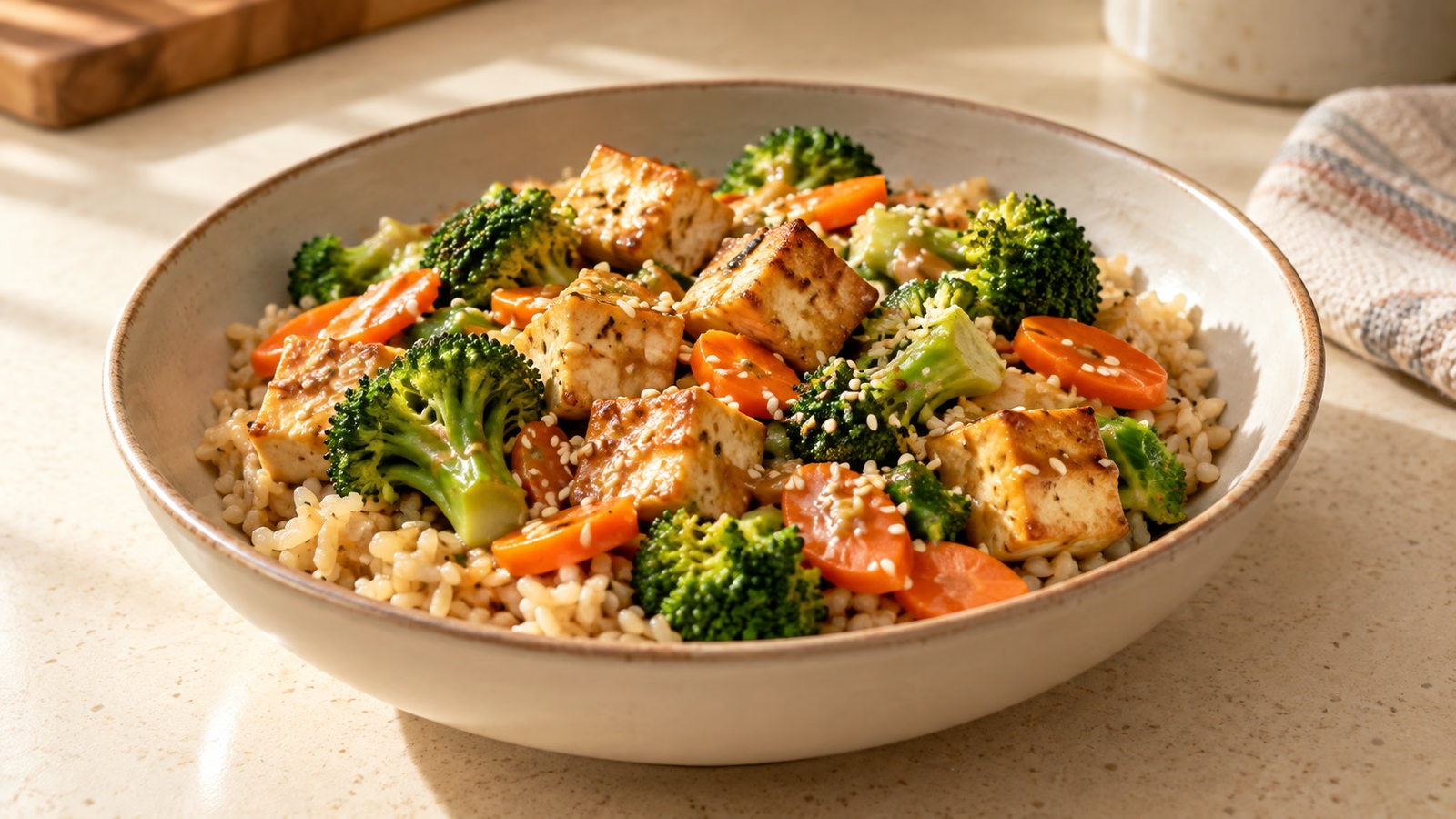
If cooking the grain is the part that slows you down, our brown rice guide explains the water ratio and texture checks. You can make one component ahead without committing to a refrigerator full of identical lunches. Keep sauces separate when you want leftovers to become a different meal.
Water is an easy drink to keep alongside meals. For snacks, think about what would genuinely help between meals: fruit with yogurt, crackers with hummus, or another combination you enjoy. There is no requirement to eat a snack when you don’t want one, or to make every eating occasion photograph-ready.
Make the routine affordable and safe
Before buying a large package, ask whether you can store and use it. Compare unit prices, consider store brands, and check frozen or canned produce when fresh options cost more. Beans and lentils can be useful budget proteins, but the best bargain is still food you can prepare and will eat. A smaller package can make sense when it prevents waste.
- Cool leftovers promptly: USDA advises refrigerating perishable food within two hours, or one hour when temperatures are above 90°F. Divide larger amounts into shallow containers.
- Keep the fridge cold: use 40°F or below. Date cooked leftovers and use them within three to four days, or freeze them for longer storage.
- Reheat thoroughly: leftovers should reach 165°F as measured with a food thermometer. Don’t rely on the outside feeling warm.
- Keep the next step small: choose one breakfast, one lunch, and one backup dinner you can repeat. Change an ingredient when you want variety rather than rebuilding the whole routine.
If a health condition, food allergy, pregnancy, or a history of disordered eating changes your needs, use individualized guidance from a qualified clinician or registered dietitian. General meal ideas are a starting point. They don’t replace a plan designed for you.
For a quick visual example, Health Canada’s video shows how its food-guide proportions can become a shared chicken, brown rice, and salad meal. It is Canadian guidance, offered here as a practical meal-building example.
Sources
- World Health Organization: Healthy diet.
- Health Canada: Make healthy meals with Canada’s food guide plate.
- Health Canada: Plan what you eat.
- Health Canada: Healthy eating on a budget.
- USDA: Leftovers and food safety.
- Health Canada: Eat together using Canada’s food guide plate, video transcript.

Hi, I’m Laura, the voice behind Tastiva. I’ve always believed that eating well should feel enjoyable, comforting, and realistic—not like another complicated rule to follow. I love creating recipes that fit into everyday life, sharing simple nutrition ideas, and finding small ways to make meals feel a little better without losing the pleasure of good food.