
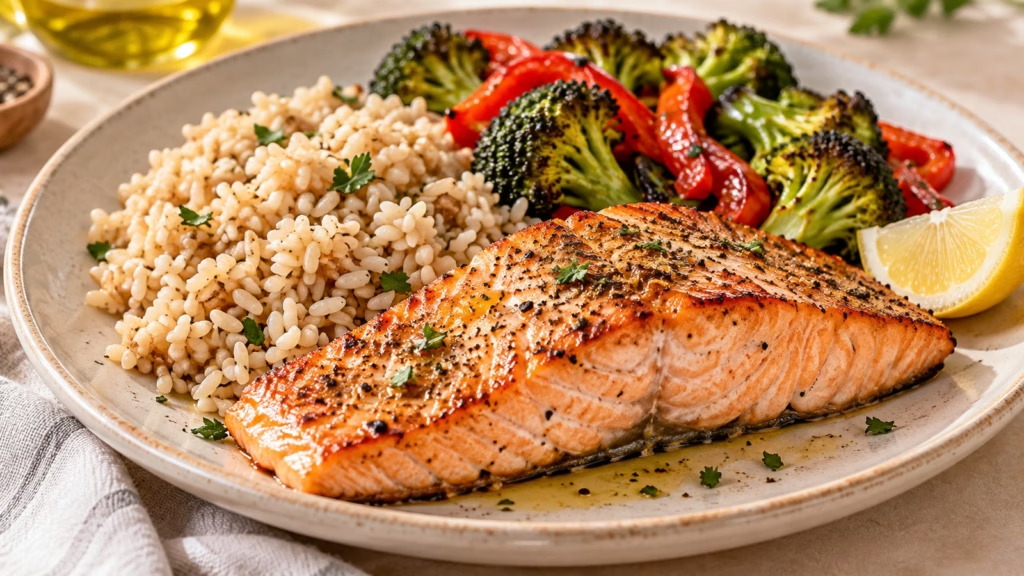
A heart healthy diet is a repeatable way of eating, not a special menu you follow perfectly for a week. Build most meals around vegetables, fruit, whole grains, and varied protein foods; favor unsaturated fats, and pay attention to sodium and added sugars. The American Heart Association’s March 2026 guidance emphasizes the overall pattern, including food bought prepared or eaten away from home.
The most useful change is one you can bring back to an ordinary breakfast, lunch, or dinner.
I’d start with the meal that feels easiest to change. Maybe breakfast needs something more substantial than a sweet drink, or dinner needs a dependable bean option. You do not need a kitchen overhaul to begin, and a busy day does not erase the choices you make across the rest of the week.
What a heart healthy diet emphasizes now
The 2026 AHA scientific statement organizes its advice around nine features. In everyday terms, it favors a varied, fiber-rich pattern, sensible energy intake for individual needs, healthier protein and fat sources, less sodium and added sugar, and less reliance on ultraprocessed foods. If you do not drink alcohol, it says not to start; if you do, limit it.
- Choose variety: rotate vegetables, fruit, beans, whole grains, nuts, and seeds rather than asking one “superfood” to do everything.
- Look at what replaces what: use foods rich in unsaturated fat, such as olive oil, nuts, or avocado, in place of some saturated-fat sources.
- Give plant proteins regular space: beans, lentils, and soy foods can share the week with fish and other protein choices.
- Make the pattern portable: the same principles can guide a sandwich, a restaurant order, or a meal assembled from pantry staples.
The AHA continues to prefer low-fat or fat-free dairy while acknowledging ongoing debate about comparisons with full-fat dairy. Its guidance is specifically cardiovascular-focused. Another established option is the DASH eating plan, which uses ordinary foods and adjusts serving goals to energy needs rather than requiring branded products.
An illustrative day, with room to change the food
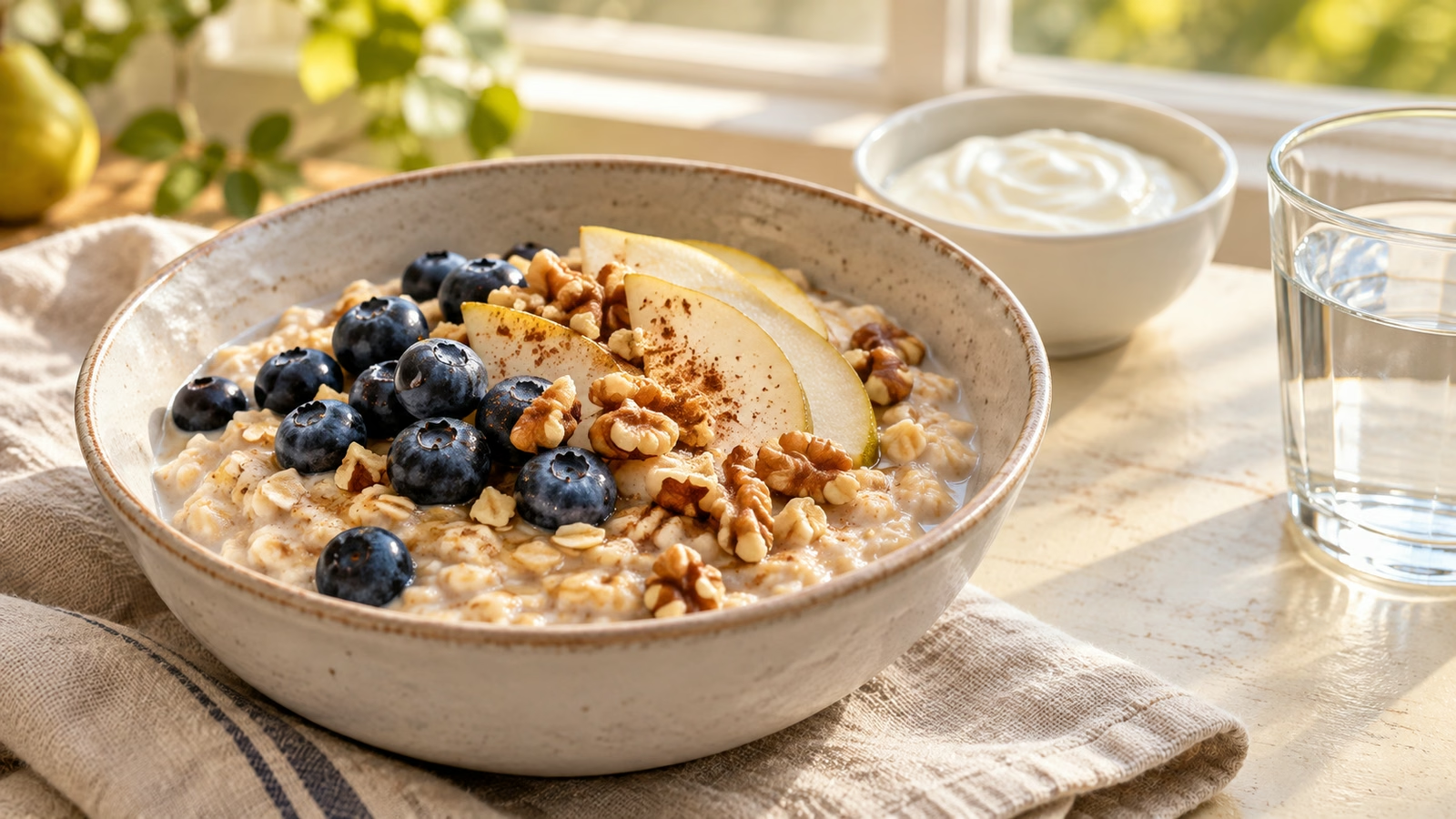
Here is a practical example of how those choices can show up across a day. It is not a calculated meal plan, a calorie target, or a prescription; portions and extra food should match your appetite, energy needs, and any medical advice. The point is to make the pattern visible, not to make everyone eat the same lunch.
- Breakfast: oatmeal with berries or sliced pear, walnuts, and plain low-fat yogurt. Prefer savory food? Try whole-grain toast with an egg and tomatoes.
- Lunch: a lentil or chickpea bowl with cooked whole grains, cucumber, peppers, and a lemon-and-olive-oil dressing. Leftover cooked vegetables can work here too.
- Dinner: fish or tofu with brown rice and broccoli or other vegetables. A bean-and-vegetable stew is another route when the oven is not part of the plan.
- A snack, if wanted: fruit with unsalted nuts, or plain yogurt with fruit. Pick foods that suit your hunger rather than adding snacks because a schedule says so.
- Drinks: keep water or unsweetened drinks easy to reach. Replacing a regular sugary drink is one concrete way to reduce added sugar.
You can change the cuisine without losing the structure. Lentil dal, a vegetable-and-bean soup, or a rice bowl can all fit. Familiar flavors matter: garlic, ginger, cumin, herbs, citrus, and vinegar give you many directions to take the same basic ingredients. No single meal needs to include every food group or every good choice.
Shop for useful swaps, not perfect packaging
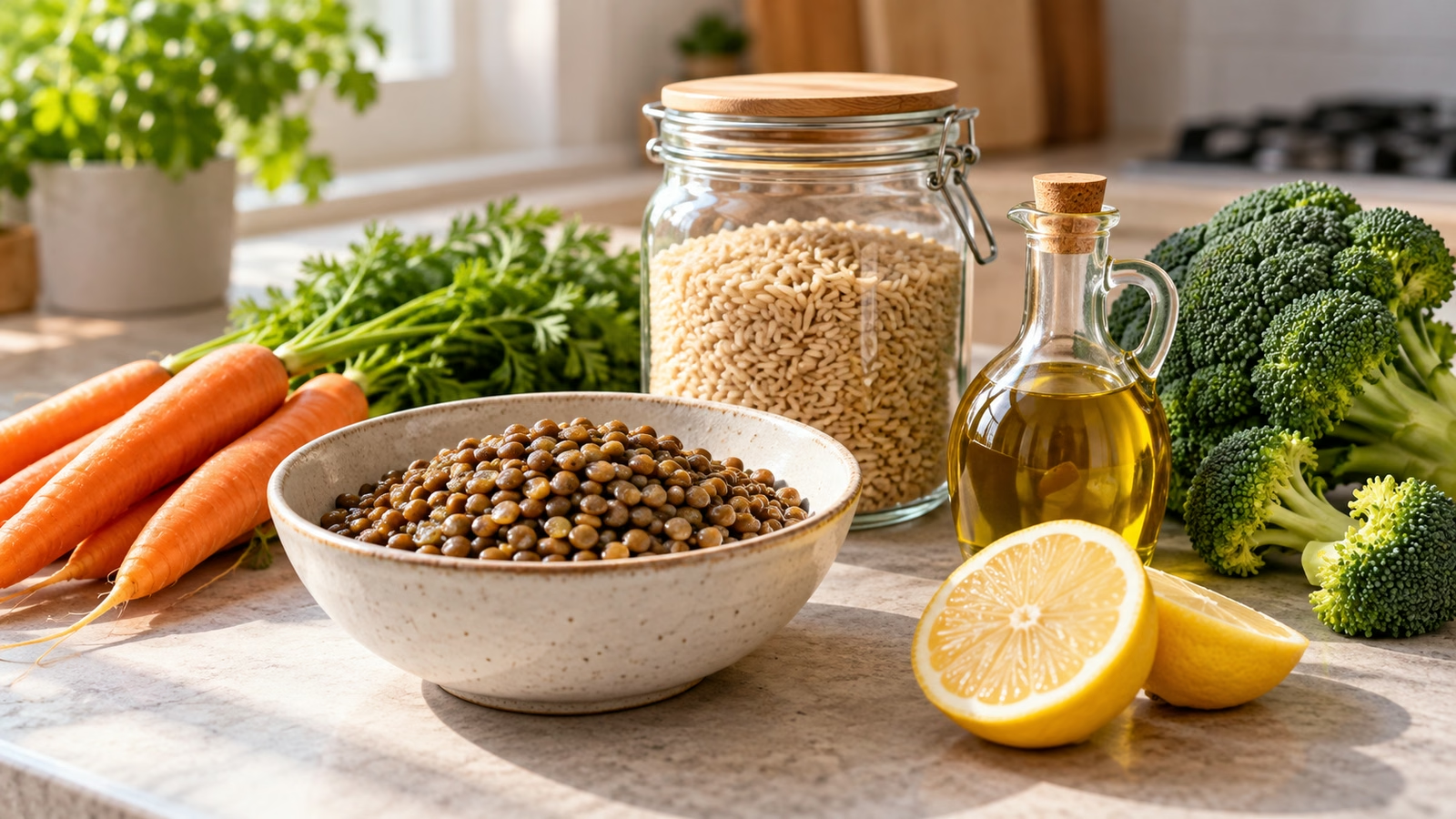
The front of a package is designed to get your attention. The ingredient list and Nutrition Facts panel are more useful for a decision. Compare similar products using the same serving size, then consider the amount you actually eat. A small printed serving can make two otherwise similar items look misleadingly different.
- For grains: look for whole-grain ingredients in bread, cereal, or crackers. Plain oats and brown rice are simple starting options, not the only acceptable ones.
- For convenient protein: keep beans, lentils, canned fish, or tofu that you enjoy. Compare sodium in prepared and canned versions.
- For produce: fresh, plain frozen, and suitable canned options can all help. Buy forms you will use, not food that looks aspirational but gets forgotten.
- For fats: replace some butter, lard, or coconut oil with an unsaturated-fat option suited to the dish. This is a substitution, not an instruction to pour extra oil over every meal.
- For everyday extras: compare added sugars in yogurt or cereal and sodium in broth, sauces, and dressings. Change a product you buy often before worrying about an occasional ingredient.
Canned food is not automatically a poor choice, and “processed” does not tell you everything about a food. No-salt-added beans and frozen vegetables can make a nutritious meal more achievable. For salads and bowls, the guide to rinsing canned beans explains when draining and rinsing is useful and when a recipe may need the liquid.
Keep flavor, and adapt the advice to your health
Sodium often arrives through bread, sauces, prepared meals, and restaurant food as well as the saltshaker. Reducing it does not have to mean serving everything plain. Start with a lower-sodium base and add acidity, herbs, or spices so the meal still tastes like something you want to cook again.
- At home: choose a lower-sodium broth, taste before salting, and use lemon, lime, vinegar, garlic, or a salt-free seasoning blend.
- When eating out: ask for sauces or dressings on the side when practical, and choose a vegetable or bean side you enjoy. One order does not define the week.
- With potassium-based salt substitutes: check with your clinician first if you have kidney disease or take medicines affecting potassium. “Less sodium” does not make every substitute suitable for every person.
- With a diagnosed condition: heart failure, kidney disease, diabetes, and other needs may require individual sodium, fluid, potassium, or carbohydrate guidance. Keep your existing care plan and medicines in place.
Food choices can support cardiovascular health, but they cannot promise that you will avoid heart disease or remove the need for treatment. Blood pressure, cholesterol, movement, sleep, smoking exposure, and medical care also matter. If the changes feel overwhelming, a registered dietitian can help turn the advice into meals that fit your budget and routine.
The American Heart Association video below features nutrition researcher Dr. Maya Vadiveloo discussing balanced heart-focused eating. It was published in 2022; the written guidance above uses the AHA’s 2026 update.
Sources
- American Heart Association: 2026 dietary guidance key points
- American Heart Association: 2026 guidance and practical context
- NHLBI: DASH Eating Plan, updated February 2026
- American Heart Association: Food choices and familiar flavors
- American Heart Association: Sodium, flavor, and potassium cautions
- American Heart Association: High potassium and medical considerations

Hi, I’m Laura, the voice behind Tastiva. I’ve always believed that eating well should feel enjoyable, comforting, and realistic—not like another complicated rule to follow. I love creating recipes that fit into everyday life, sharing simple nutrition ideas, and finding small ways to make meals feel a little better without losing the pleasure of good food.