
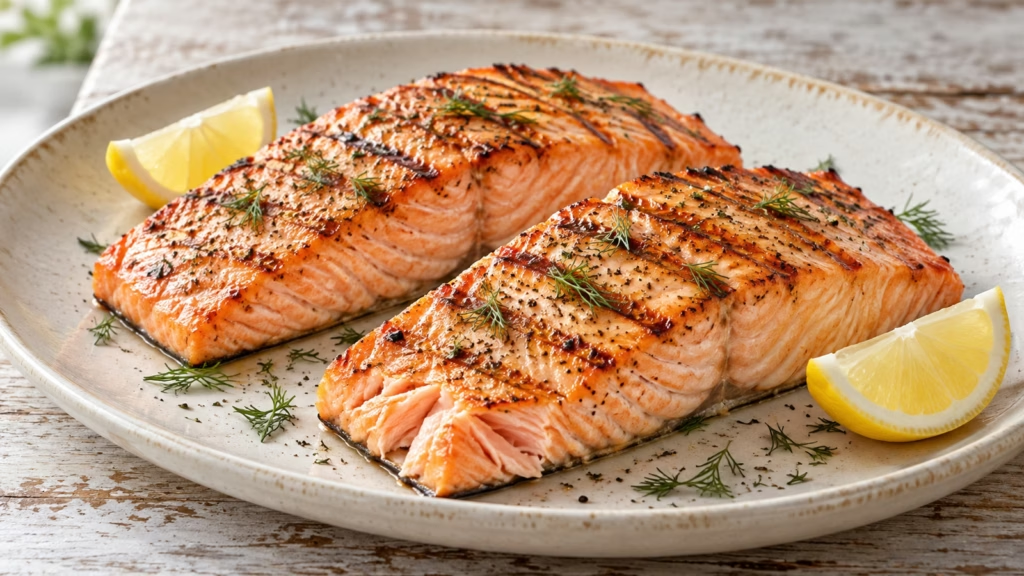
Grilled salmon needs surprisingly little to feel like a proper dinner: browned edges, a squeeze of lemon, and a center that separates into moist flakes. The tricky part is usually getting it off the grate in one piece. A hot, clean cooking surface and a little patience make that much less dramatic.
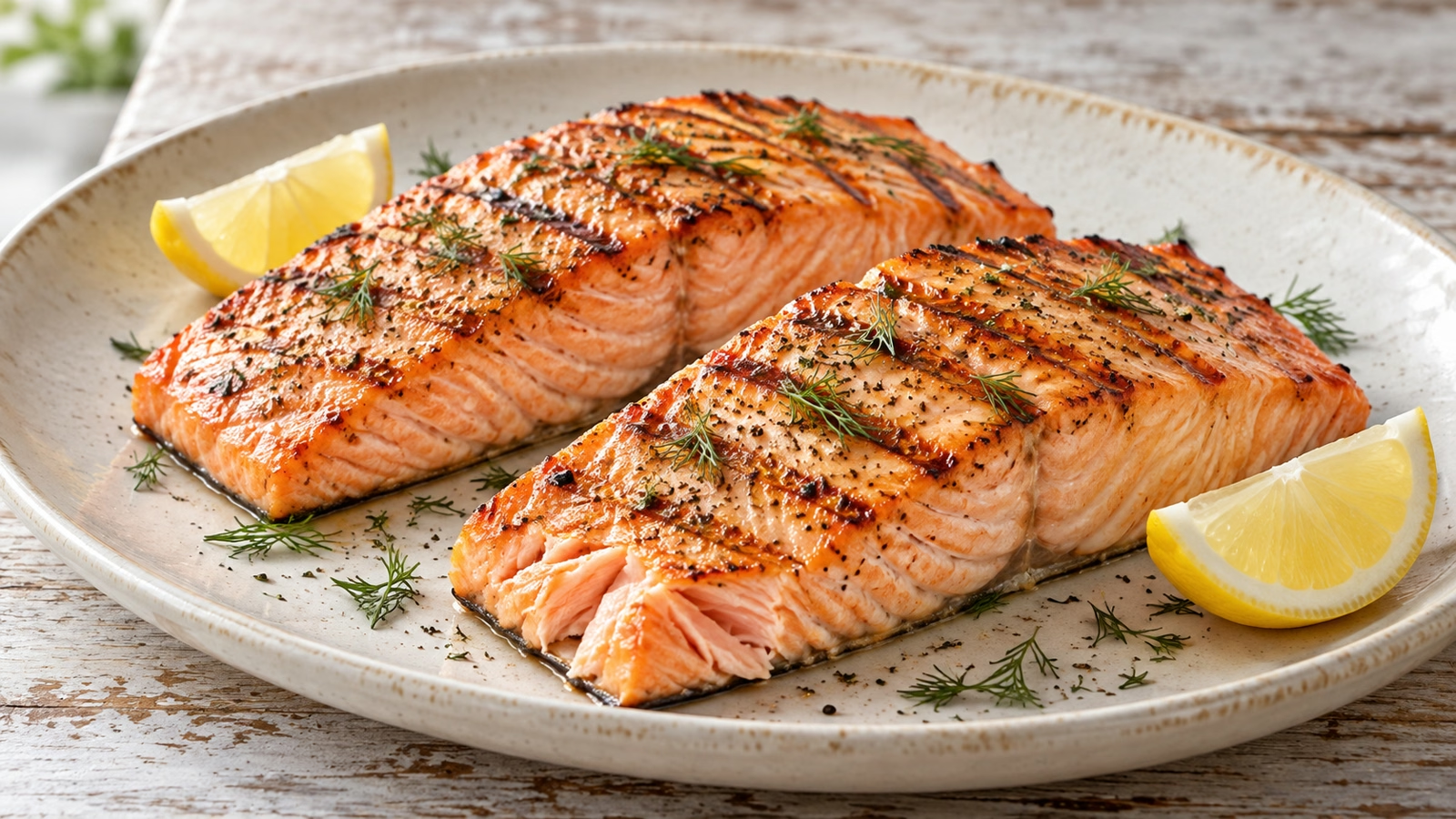
Let the first side set before you try to turn it. A fillet that still grips the grate is asking for another moment.
This recipe keeps the seasoning simple and finishes with dill after cooking, where its fresh flavor stays noticeable. I would rather spend the attention on the fish than on a long marinade. Four evenly sized, skin-on portions are easier to manage than a whole side, especially when the grill has a few hotter spots.
Choose portions that cook at the same pace
Look for salmon fillets about 1 inch thick, roughly 150 grams each, with the skin still attached. Center-cut portions are useful because they have fewer thin ends to dry out before the middle cooks. If one piece tapers sharply, place that end toward the cooler part of the grill and check it ahead of the others.
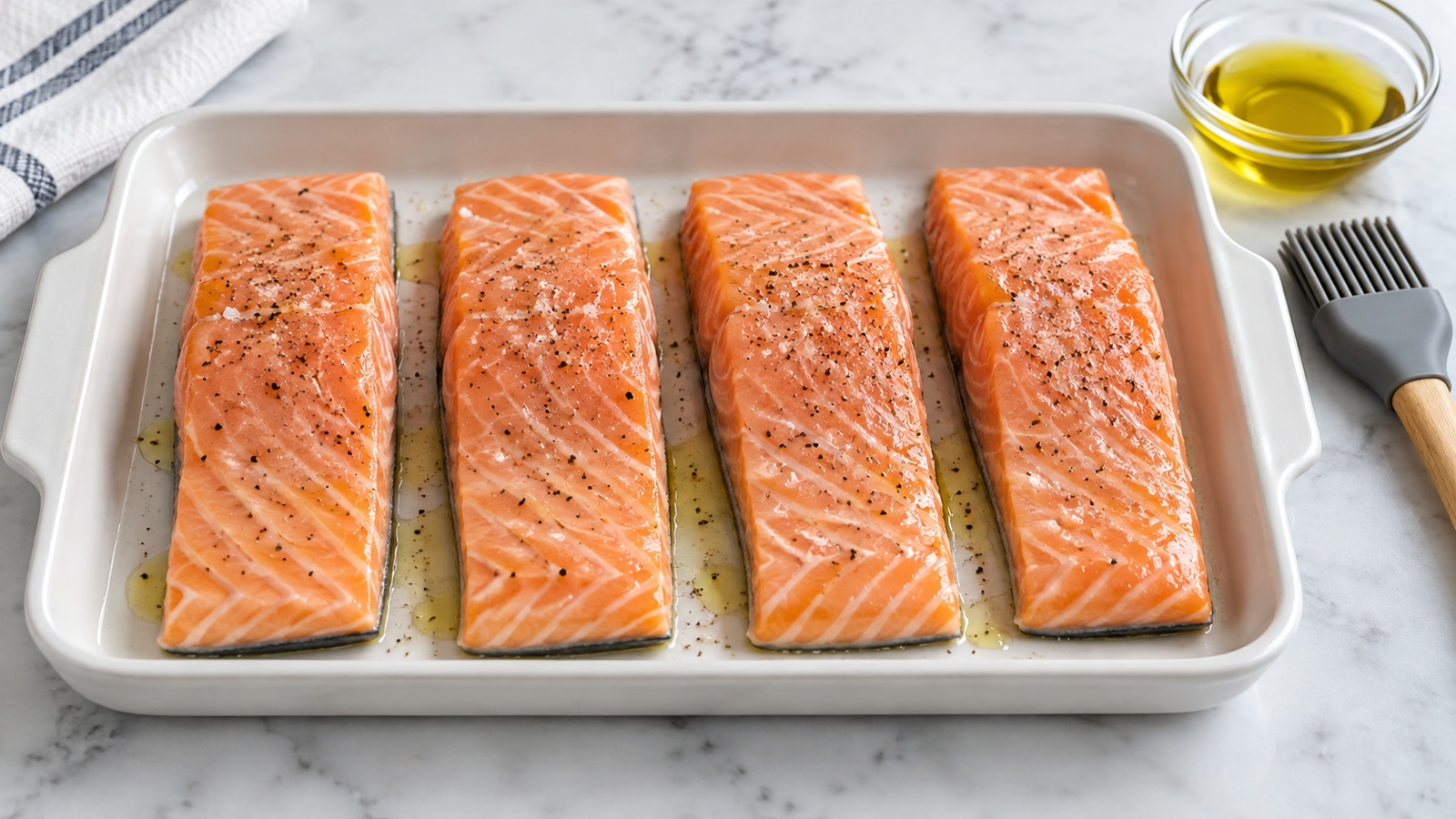
Thaw frozen fish in the refrigerator and follow any package directions about removing vacuum packaging before thawing. Keep the fish chilled while the grill heats. Pat both sides dry with paper towels, feel gently for pin bones, and remove any you find with clean fish tweezers. Brush the portions lightly with oil, then season with the measured salt and pepper.
Set up a hot area and a cooler escape route
Preheat the grill with the lid closed, following the manufacturer’s directions, then aim for medium-high direct heat around 425–450°F. Clean the grates with a suitable grill-cleaning tool and inspect for any loose debris before the food goes on. A surface covered in yesterday’s sticky sauce makes delicate fish harder to lift cleanly.
Leave a cooler zone available: an unlit burner on a gas grill, or an area without coals directly beneath it on a charcoal grill. That space is useful if dripping fat causes a flare-up or a thick piece needs longer after the outside has browned. Move the food away from flames with long-handled tools; do not spray water into the grill.
Keep a clean serving platter beside the grill, separate from the tray that held raw salmon. Have a thin, broad fish spatula and an instant-read thermometer ready before you begin. Once the fish is cooking, you should not have to hunt through a kitchen drawer while the first side gets darker.
Turn once, then check the center
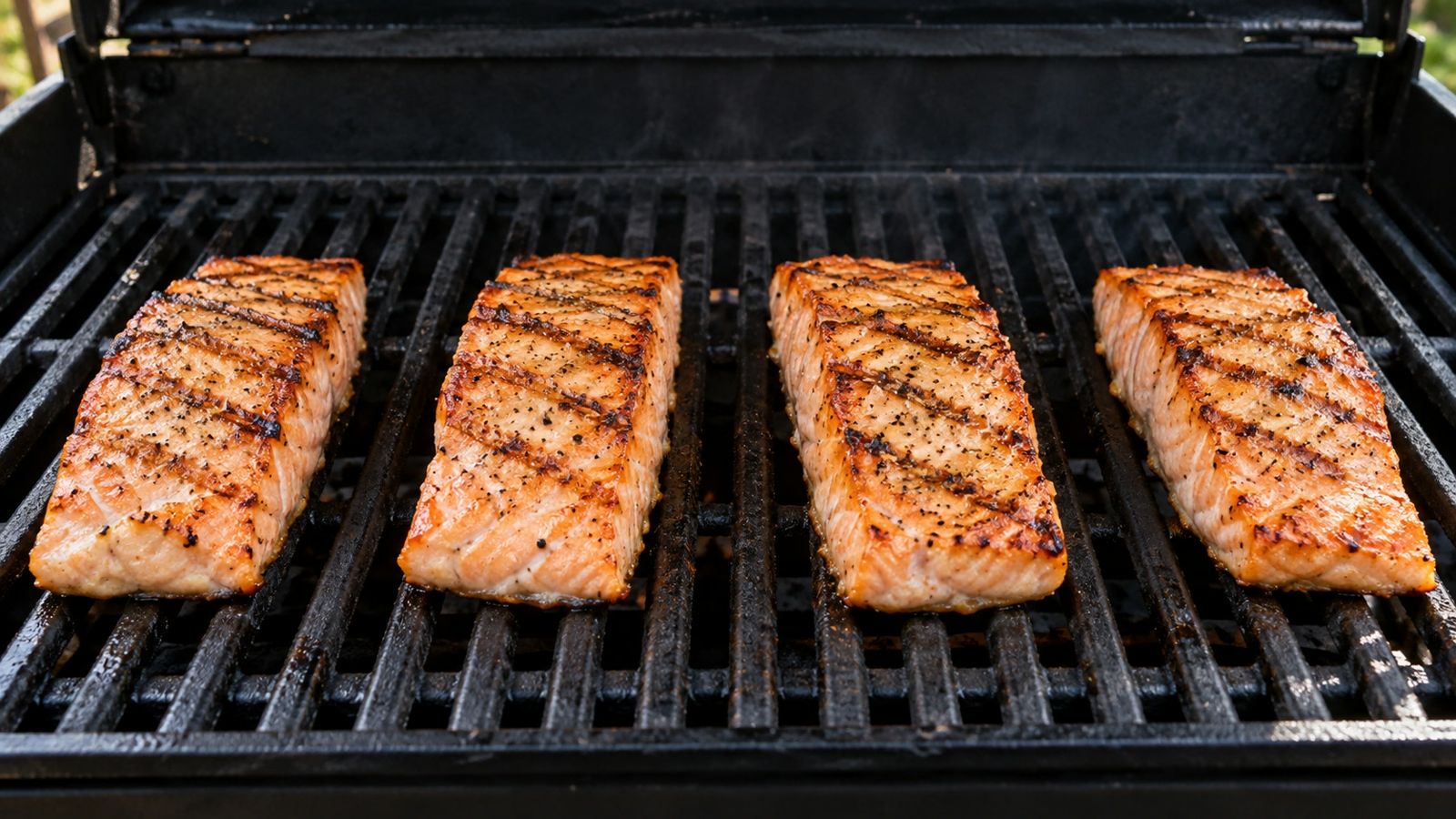
Place the fillets flesh-side down over direct heat and close the lid. Begin checking whether they release after about 5 minutes. Slide the spatula gently beneath an edge; if the surface catches, wait another minute rather than tearing it loose. You want a browned surface that lifts with the fish, not grill marks left stuck to the metal.
Turn onto the skin side and continue cooking with the lid closed, checking after another 3 minutes. Thickness, starting temperature, and the grill itself all change the timing, so the suggested 8–12 minutes is a guide. If the exterior is ready but the center needs longer, move that portion to the cooler zone and close the lid again.
Insert the thermometer sideways into the thickest center, keeping its tip out of the skin and away from the grate. Cook to 145°F before removing the salmon. Our salmon internal temperature guide explains where to measure and why a surface reading can mislead you. Opaque flakes are a helpful visual cue, but use the thermometer for the decision.
Finish simply and serve while warm
Transfer the fish to the clean platter and let it stand for 3 minutes while you add lemon juice and chopped dill. The skin can stay attached for serving, or you can slide the spatula between it and the flesh. A little white protein on the surface is normal; it is not a reason to keep cooking an already finished fillet.
Add a crisp salad or steamed vegetables, with brown rice cooked until tender if you want a grain alongside. Keep sauces and extra lemon on the table so everyone can adjust their own plate. The nutrition estimate covers the fish and listed seasoning, rather than those optional sides.
Refrigerate leftovers promptly in a shallow covered container, within two hours of cooking or one hour when the outdoor temperature exceeds 90°F. Use refrigerated cooked salmon within 3–4 days. Reheat leftovers to 165°F, or serve properly chilled leftovers cold over a salad; either way, keep them chilled until you are ready to use them.
Grilled Salmon Recipe

Ingredients
- 4 skin-on salmon fillets 150 g (about 5.3 oz) each; about 1 inch thick; 600 g total
- 20 g olive oil about 1 1/2 tablespoons
- 4 g fine salt about 2/3 teaspoon
- 1 g ground black pepper about 1/2 teaspoon
- 20 g fresh lemon juice about 1 tablespoon plus 1 teaspoon
- 4 g fresh dill chopped; about 2 tablespoons
Equipment
- 1 Gas or charcoal grill with lid
- 1 Fish spatula
- 1 Instant-read thermometer
Instructions
- Preheat the grill with its lid closed according to the manufacturer’s instructions. Clean and inspect the grates. Set up medium-high direct heat, around 425–450°F, with a cooler zone available on one side.
- Keep the fish refrigerated until preparation. Pat the thawed fillets dry, check for pin bones, and remove them. Brush both sides with the measured olive oil and season evenly with salt and pepper.
- Place the fillets flesh-side down over direct heat. Close the lid and cook for about 5–7 minutes, until the surface is browned and releases when gently lifted with a broad spatula. If it sticks, wait another minute rather than forcing it.
- Turn the fillets skin-side down and close the lid. Begin checking after 3 more minutes; total grilling usually takes about 8–12 minutes, but thickness and grill heat vary. Insert an instant-read thermometer sideways into the thickest center and cook to 145°F before removing. Move to the cooler zone if the surface browns before the center is ready.
- Transfer to a clean platter, separate from the raw-fish tray. Rest 3 minutes, spoon over the lemon juice, and sprinkle with dill. Serve with or without the skin.
Nutrition
Video
Notes
Tried this recipe?
Let us know how it turned out!Sources
- Weber: releasing and turning salmon on the grill
- FDA: seafood handling and cooking guidance
- USDA FoodData Central: ingredient nutrition data
Hi, I’m Laura, the voice behind Tastiva. I’ve always believed that eating well should feel enjoyable, comforting, and realistic—not like another complicated rule to follow. I love creating recipes that fit into everyday life, sharing simple nutrition ideas, and finding small ways to make meals feel a little better without losing the pleasure of good food.