
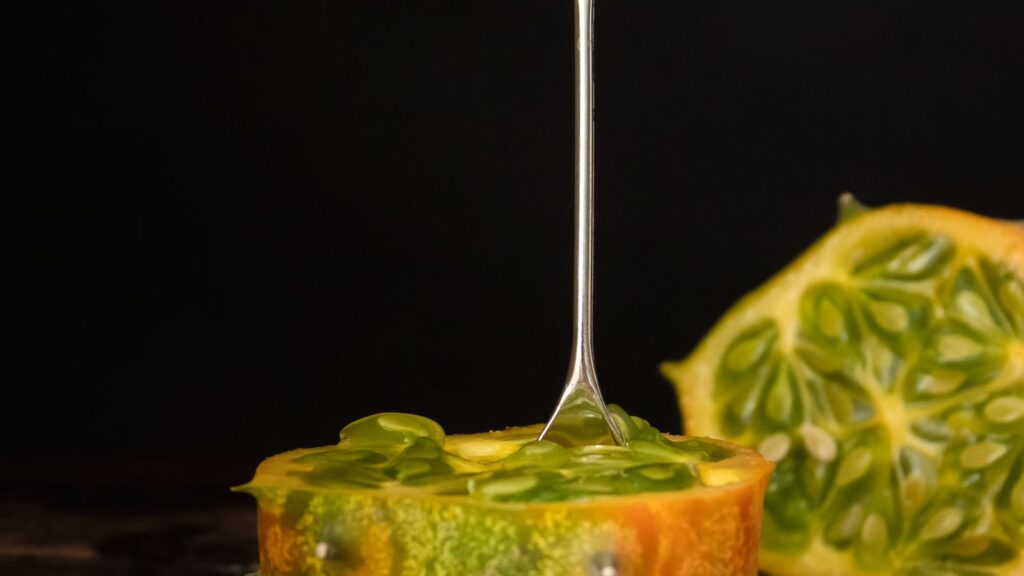
Horned melon looks like a tiny orange sea creature on the outside and a bowl of green jelly on the inside. Also sold as kiwano or African horned cucumber, it is a fun fruit to try when you want a cool, lightly sweet bite. I would buy one ripe fruit, rinse it, cut it carefully around the spikes, and eat the seed-filled pulp with a spoon before building a complicated recipe around it.
The bright peel is a container. Scoop the green, seeded pulp and taste it first; the flavor is gentler than the dramatic outside suggests.
What a horned melon is
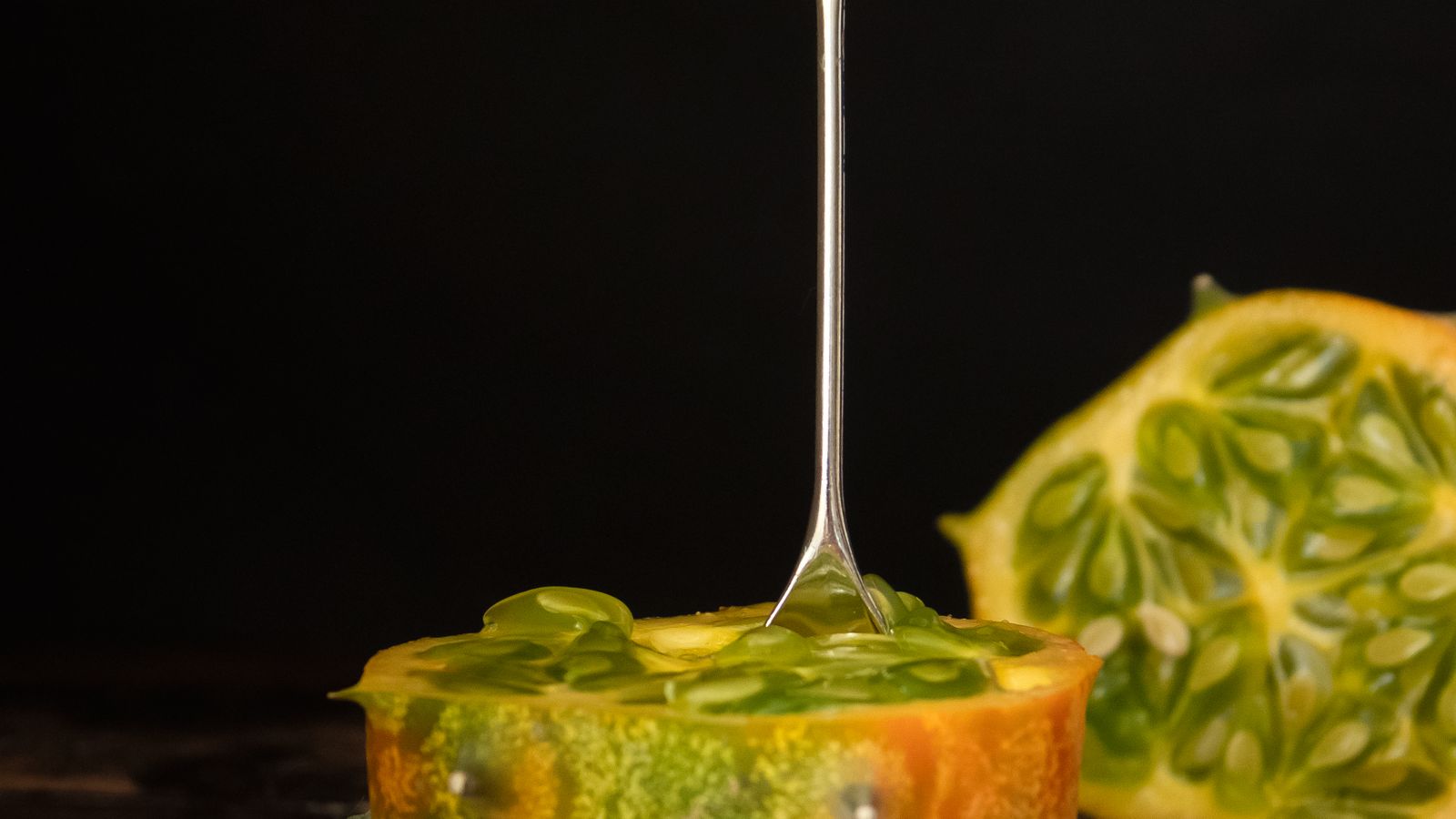
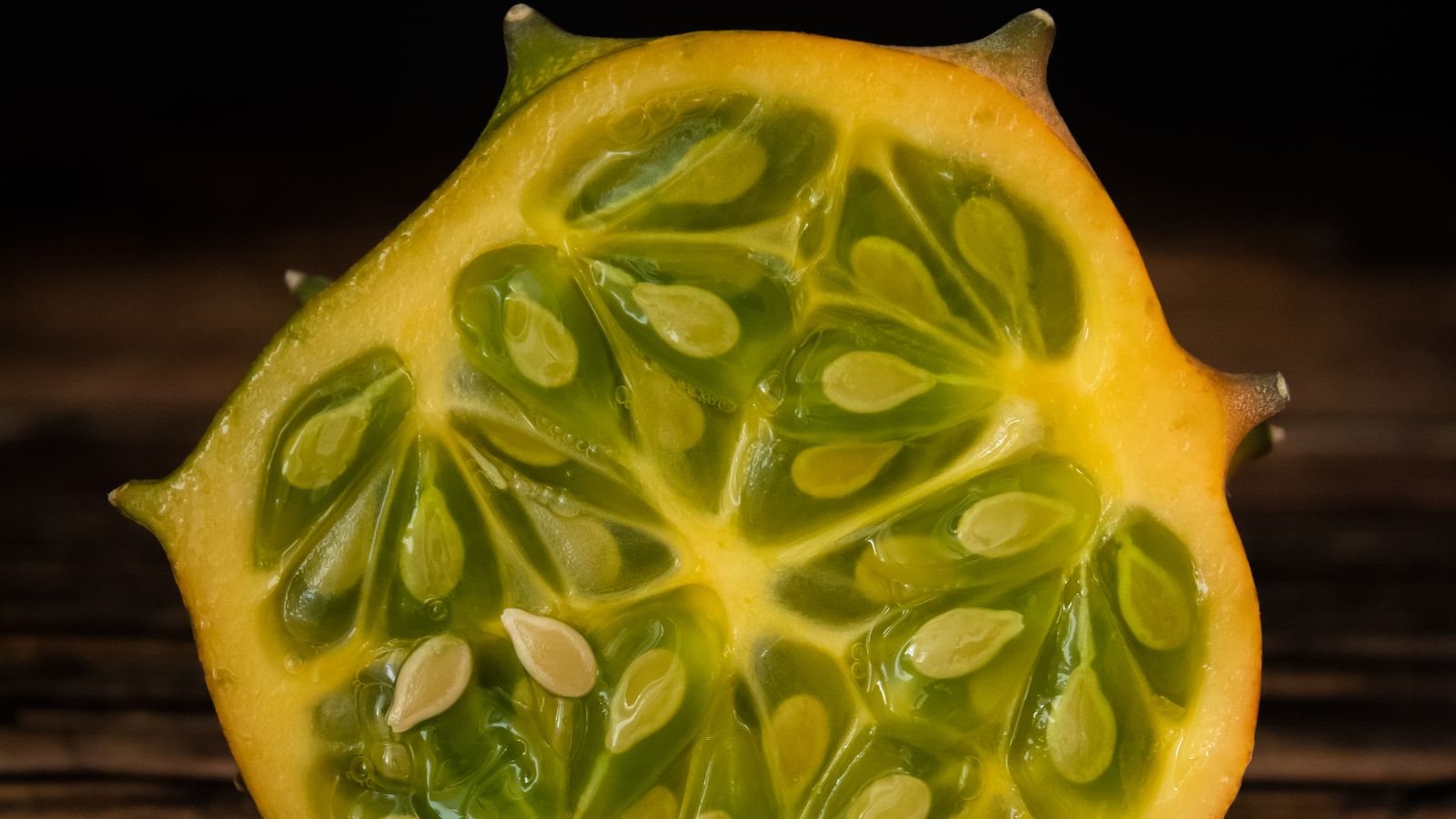
Horned melon is Cucumis metuliferus, a member of the cucumber family. University of Florida Extension describes the fruit as spiny and notes that it may be eaten raw or used in soups and stews. It is called kiwano in many stores. The outer rind develops a golden-orange color at peak ripeness, while the interior stays green, slippery, and full of small edible seeds.
The name melon can set up an expectation of a sweet cantaloupe. This fruit is usually milder and more cucumber-like, with a tart, citrusy edge. UF/IFAS Extension describes a cucumber taste when less ripe and hints of melon, banana, and lemon as it ripens. Your particular fruit and its ripeness will decide which note stands out.
The horns are firm enough to make cutting awkward. Set the fruit on a steady board, use a sharp knife, and keep your fingers away from the spikes. The rind is mainly a convenient bowl for the pulp in this guide. A supplier such as Frieda’s suggests scooping the inside and discarding the peel.
How to tell when it is ready
Look for a yellow to golden-orange or deeper orange rind, rather than a mostly green exterior, if you want a ripe fruit. Frieda’s produce guidance describes orange color at peak ripening. Avoid fruit with obvious mold, leaking areas, or serious damage. A little variation in the peel is normal; the best test of flavor still comes when you open it.
If you are buying for the weekend, ask the produce seller which fruits are ready and follow the package’s storage advice. Research on kiwano storage shows that handling and temperature affect quality, so I would not invent a universal shelf-life rule for every store. Whole fruit and cut pulp have different storage needs.
Wash the outside under running water before you cut it, as FDA recommends for produce you plan to peel or slice. That keeps dirt on the rind from moving into the pulp on your knife. Cut only when you are ready to eat, and refrigerate leftover cut fruit promptly in a covered container.
The easiest way to eat it
Cut the fruit in half across its middle and scoop out the green jelly with a spoon. The tender seeds are eaten with the pulp, much like cucumber seeds. Frieda’s also suggests eating directly from the shell. If you prefer fewer seeds, press the pulp through a sieve for a juice or sauce, though you will lose some of the fruit’s distinctive texture.
A little salt can bring out its cucumber side; a little lime can sharpen the tartness. For a sweeter bowl, spoon the pulp onto yogurt or alongside mango. I would add it at the end, so the green jelly remains visible and the seeds keep their pleasant crunch. Taste before adding sugar because ripeness varies.
Horned melon can also add a bright note to a drink, but it is not a substantial substitute for a whole meal. The striking rind makes a playful serving bowl; set it on a plate so the spikes do not roll around. If you are serving it to someone new to the fruit, show them which part to scoop.
Simple uses and storage after cutting
Try the pulp over a fruit salad, with cucumber in a savory salad, or stirred into a chilled sauce. It has a watery texture, so add it just before serving if a dish should stay crisp. Our pomegranate seed guide offers another fruit with a contrasting pop of texture.
Refrigerate the cut fruit and use it while its smell and texture are fresh. Follow the general FDA guidance to keep cut produce cold and discard anything with mold or spoilage. Whole-fruit storage instructions can vary by supplier and ripeness, so check the label or ask the seller when you buy it.
If the pulp seems too slippery to eat by the spoonful, combine a small amount with firmer fruit rather than throwing the whole thing into a blender. The mix of textures makes a difference. A simple bowl of diced mango, cucumber, and a little kiwano can show off its flavor without hiding the seeds. Use clean utensils and serve soon after mixing. The spiky shell is eye-catching, but the edible green center is the reason to bring one home.
A horned melon is more approachable than it looks. Choose an orange ripe fruit, wash it, halve it, and spoon out the green seeded center. Enjoy its mild cucumber-citrus flavor as it is, then decide whether it belongs in a fruit bowl or a savory one.
Sources
- UF/IFAS Extension, The Kiwano and Pepino
- Frieda’s, Kiwano Produce Guide
- UC Agriculture and Natural Resources, Storage of Kiwano Fruits
- FDA, Selecting and Serving Produce Safely

Hi, I’m Laura, the voice behind Tastiva. I’ve always believed that eating well should feel enjoyable, comforting, and realistic—not like another complicated rule to follow. I love creating recipes that fit into everyday life, sharing simple nutrition ideas, and finding small ways to make meals feel a little better without losing the pleasure of good food.