
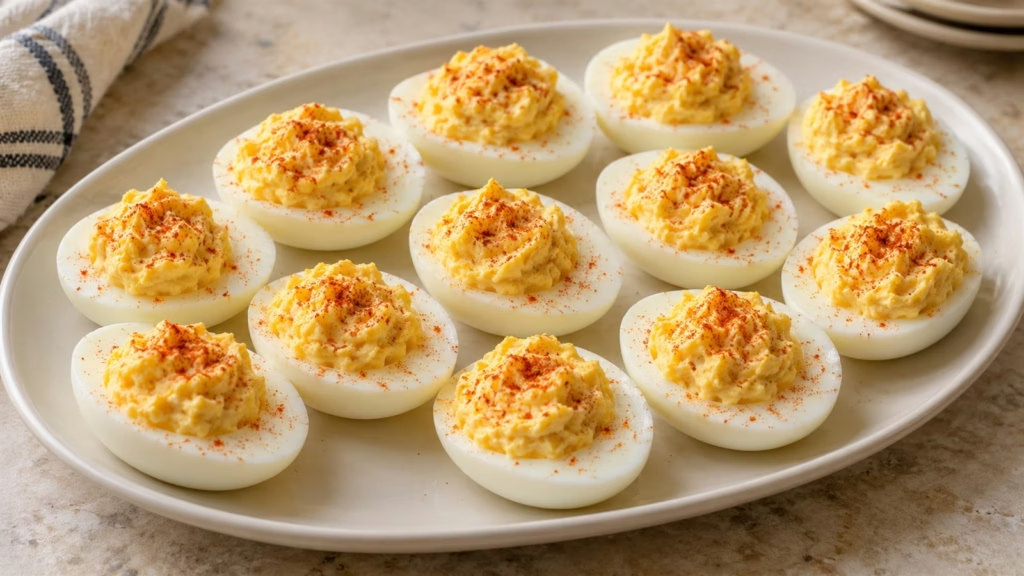
A tray of peeled eggs can look ready for a party right up until the filling turns lumpy or slides out of the whites. This deviled eggs recipe keeps the job simple: mash the yolks thoroughly before adding mayonnaise, use mustard and vinegar for a little tang, and fill only once the whites are cool and dry. Six large eggs give you twelve halves, enough for a small appetizer plate without a mountain of leftovers.
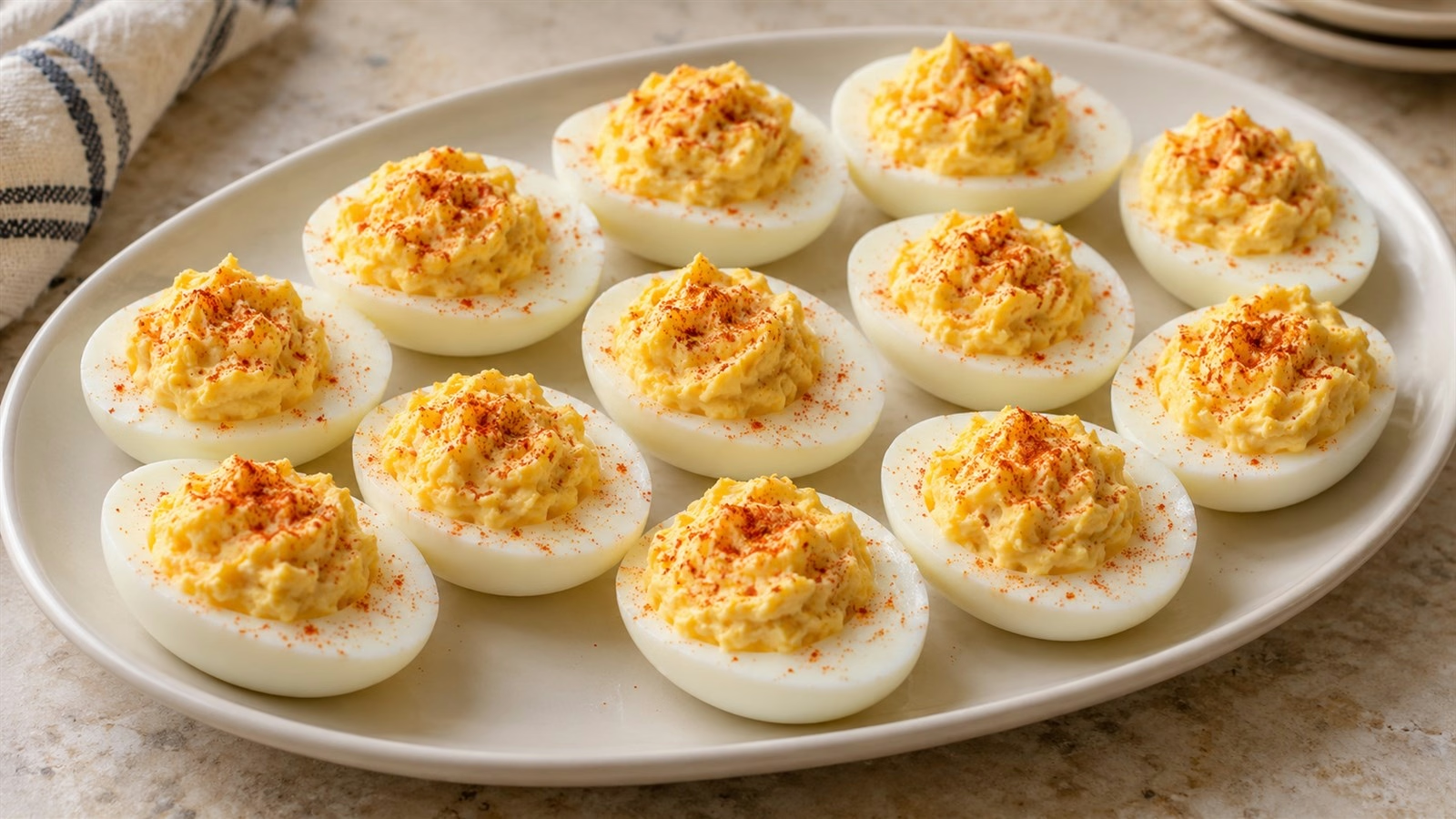
Give the yolks your attention before you give the eggs a fancy piping tip.
What makes a balanced deviled eggs filling
The yolks supply the body, mayonnaise loosens them, and mustard gives the mild egg flavor some direction. Vinegar adds a small, sharp lift. I’d keep the first batch straightforward; it is easier to decide whether you want more mustard when pickle relish, bacon, and hot sauce aren’t all competing for the same spoonful.
- Large eggs: Use the size specified in the card. Much smaller eggs leave less yolk to balance the mayonnaise.
- Regular mayonnaise: Its thicker texture suits a filling that needs to hold a mound. Different brands vary, so add any extra cautiously.
- Yellow mustard: A familiar, direct choice. Dijon is an option when you want a different mustard flavor; start with the card amount rather than assuming more is better.
- White vinegar: A measured splash is enough here. Lemon juice changes the flavor, so treat it as a variation rather than an identical replacement.
- Paprika: A light dusting adds color. Sweet paprika keeps the garnish mild; smoked paprika adds a noticeably smoky note.
Start with firm yolks and intact whites
Hard-cooked means the white and yolk are firm throughout, not jammy in the center. A soft middle makes the filling less predictable and does not meet the FDA’s guidance to cook eggs until both parts are firm. Cool the eggs promptly in ice water after cooking, then handle them with clean hands and utensils.
- Give the eggs space. Arrange them in a single layer in the saucepan so they heat evenly rather than piling them into a small pot.
- Use a timer. The card gives a covered hot-water method; avoid extending the holding time while you finish another task.
- Peel gently. Tap and roll the shell, then work under cool running water if needed. Don’t scrape the white with a fingernail to rescue every stubborn piece.
- Dry before cutting. Surface water can collect on the plate and dilute the filling. Slice lengthwise with a clean knife, wiping it between eggs when yolk clings to the blade.
A torn white still tastes like an egg. I’d save a damaged one for another meal rather than turning presentation into a project.
Smooth the filling without making it runny
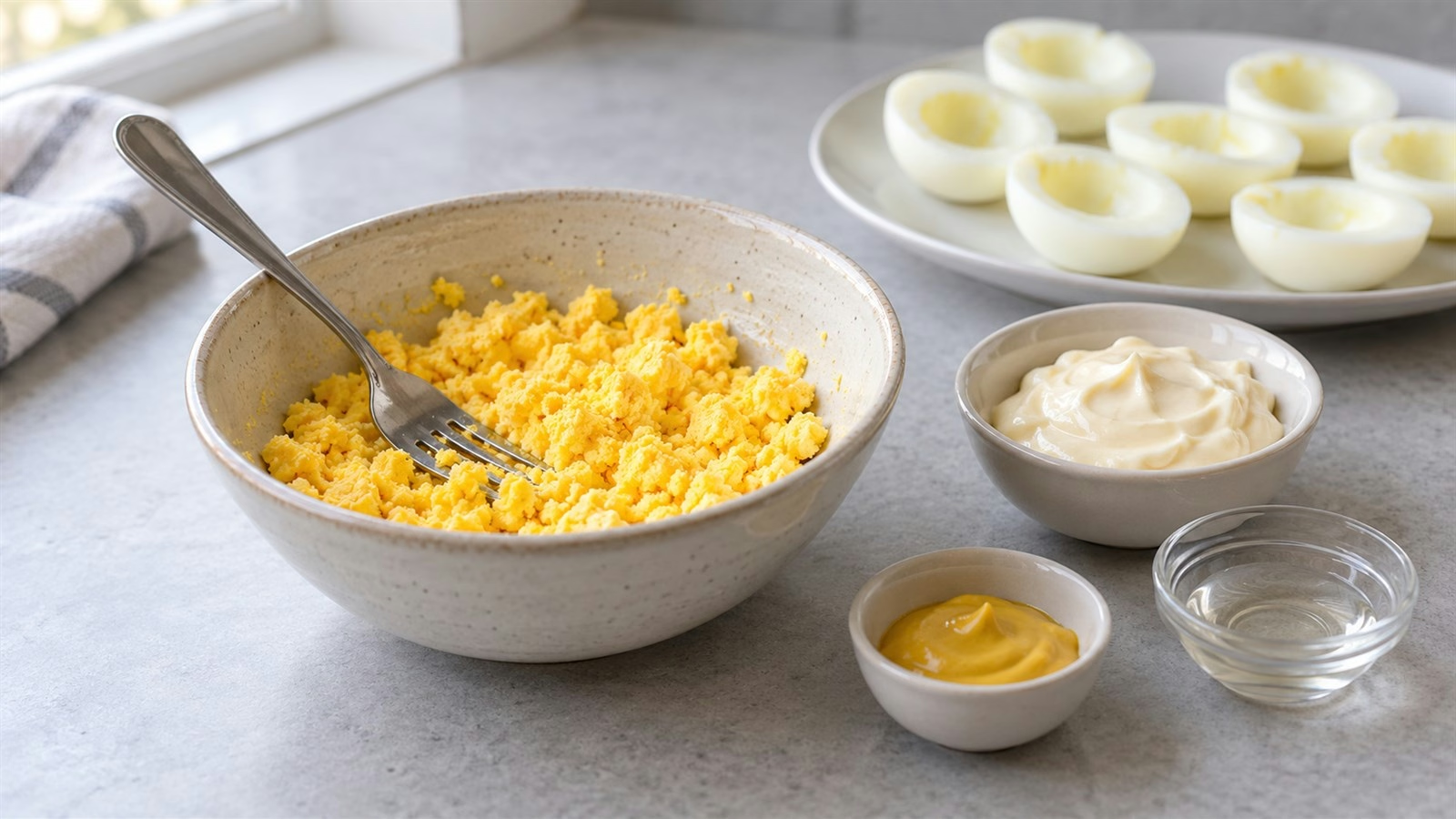
Mash the yolks into fine crumbs first. Once wet ingredients are added, overlooked chunks are harder to spot and squash. A fork gives a pleasantly simple filling; pressing the cooked yolks through a fine sieve gives a smoother starting point if you want to pipe them.
- Grainy filling: Work on the yolks before adding more mayonnaise. Extra liquid cannot remove an unmashed piece.
- Filling too stiff: Stir in mayonnaise a teaspoon at a time, stopping when the mixture holds a soft mound. Record any additions if you are using the nutrition estimate.
- Filling too loose: Pause before adding more vinegar or pickle juice. Chill briefly and spoon rather than pipe; chilling will not undo a large excess of liquid.
- A clogged piping tip: Use a wide opening or simply spoon the filling. Tiny decorative tips have ambitions that a fork-mashed yolk may not share.
Serving, variations, and a sensible make-ahead plan
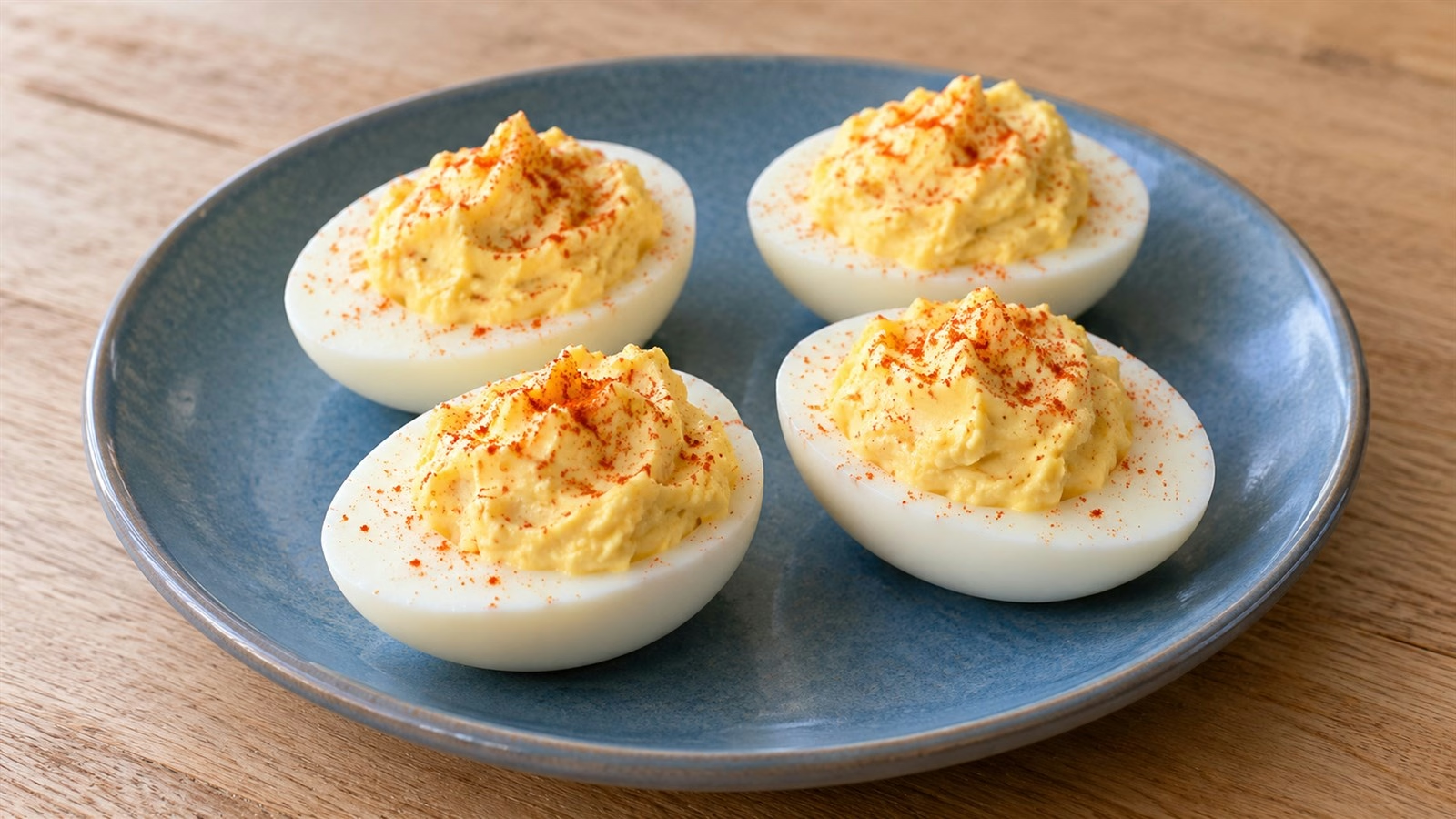
Serve these cold as an appetizer or alongside a lunch plate. For a broader meal, add crisp vegetables and something substantial rather than expecting two egg halves to do the entire job. Tastiva’s snack plate dinner guide offers a useful way to build that plate around what you have.
- Fresh herbs: Finely cut chives make an optional garnish; Tastiva’s chives guide explains how to use their gentle onion flavor.
- Relish: Drain it well and add a small amount after the base is mixed. Sweet relish changes sweetness, and chunky relish changes piping.
- Yogurt: Replacing some mayonnaise with thick plain yogurt brings more tang and changes the texture. It is a different version, not a promise of identical results.
- Make ahead: Prepare the day before for convenience, keep whites and filling covered separately in the refrigerator, and assemble near serving time.
- Keep cold: Refrigerate at 40°F (4°C) or below. Discard after more than two hours unrefrigerated, or one hour above 90°F (32°C), following FDA egg-safety guidance.
For this mixed egg dish, use a conservative three-to-four-day refrigerated limit, and never extend the original cooked eggs’ one-week limit by turning them into a new recipe. See how long hard-boiled eggs are good for for the cooking-date rule. Refrigeration does not rescue eggs left warm too long.
Deviled Eggs Recipe

Ingredients
- 6 large eggs
- 1/4 cup regular mayonnaise 55 g (USDA generic quarter-cup weight)
- 1 teaspoon yellow mustard 5 g
- 1 teaspoon white vinegar 5 g
- 1/8 teaspoon fine salt
- 1/8 teaspoon ground black pepper
- 1/8 teaspoon sweet paprika
Equipment
- 1 Saucepan with lid
- 1 Bowl for ice water
- 1 Slotted spoon
- 1 knife
- 1 Mixing bowl
- 1 Fork
- 1 Measuring spoons
- 1 Wide-tip piping bag optional
Instructions
- Arrange eggs in one layer in a saucepan and cover with water by 1 1/2 inches. Bring to a boil, reduce heat to low for 1 minute, cover and remove from heat. Leave covered for 14 minutes.
- Transfer eggs to ice water for 10 minutes, until cool. Peel, dry, and halve lengthwise. Verify that the whites and yolks are firm; place yolks in a mixing bowl and whites on a clean plate.
- Mash the yolks into fine crumbs with a fork. Mix in mayonnaise, mustard, vinegar, salt, and black pepper until smooth.
- Divide filling evenly among the twelve whites using a spoon or wide piping opening. Dust with paprika. Cover and refrigerate until serving.
Nutrition
Video
Video: Downshiftology demonstrates cooking, cooling, filling, and garnishing deviled eggs. Her version uses Dijon mustard, apple cider vinegar, and a boiling-water method; follow the recipe above for its yellow mustard, white vinegar, quantities, and covered hot-water timing.
Notes
Tried this recipe?
Let us know how it turned out!Sources
Hi, I’m Laura, the voice behind Tastiva. I’ve always believed that eating well should feel enjoyable, comforting, and realistic—not like another complicated rule to follow. I love creating recipes that fit into everyday life, sharing simple nutrition ideas, and finding small ways to make meals feel a little better without losing the pleasure of good food.