
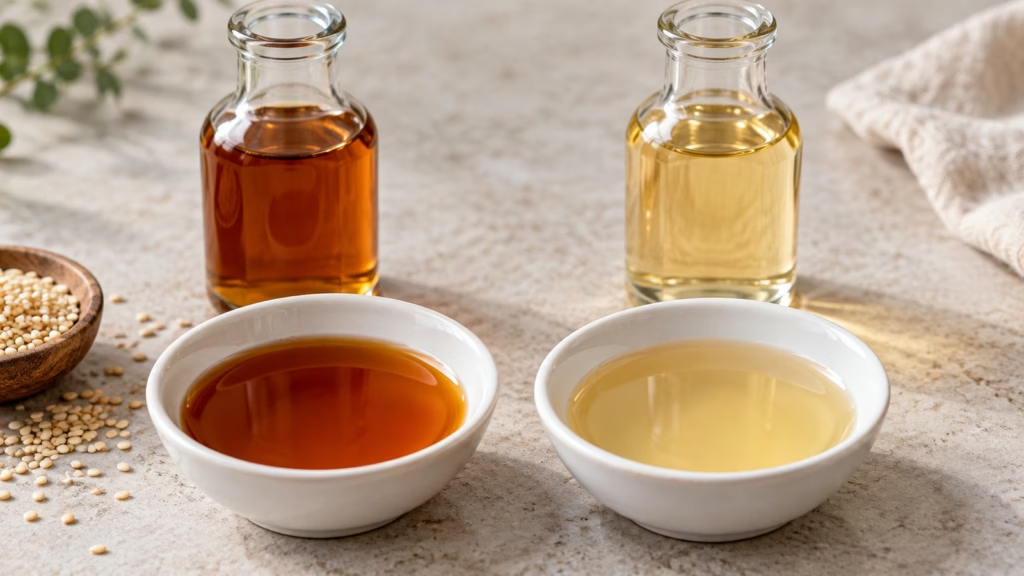
The pan is ready for oil, but the bottle smells intensely of toasted seeds. In a toasted sesame oil vs regular comparison, that aroma is your first clue: toasted oil is often used for a pronounced finishing flavor, while other sesame oils may be better suited to the main cooking step. Read whether the bottle is toasted, refined, or unrefined before choosing.
Use the bottle’s flavor and cooking guidance together; color alone cannot do both jobs.
Toasted sesame oil vs regular is not the whole label
Toasted sesame oil comes from sesame seeds that have been toasted before pressing, which gives it its recognizable nutty aroma. Untoasted sesame oil generally has a quieter flavor. Refining is a separate processing distinction, so regular is not a precise technical category.
- Toasted: Look for a pronounced roasted-seed flavor, often useful in small amounts.
- Untoasted: Usually less assertive, though the exact flavor varies by producer.
- Refined: Check the maker’s recommended cooking use; this can be different from its unrefined product.
- Blended: Read the ingredients. Some products combine sesame oil with another oil, so the front label does not tell the whole story.
I would choose by the intended dish rather than buying whichever bottle looks darkest. A noodle dressing needs a different balance from the oil used to cook a full pan of vegetables.
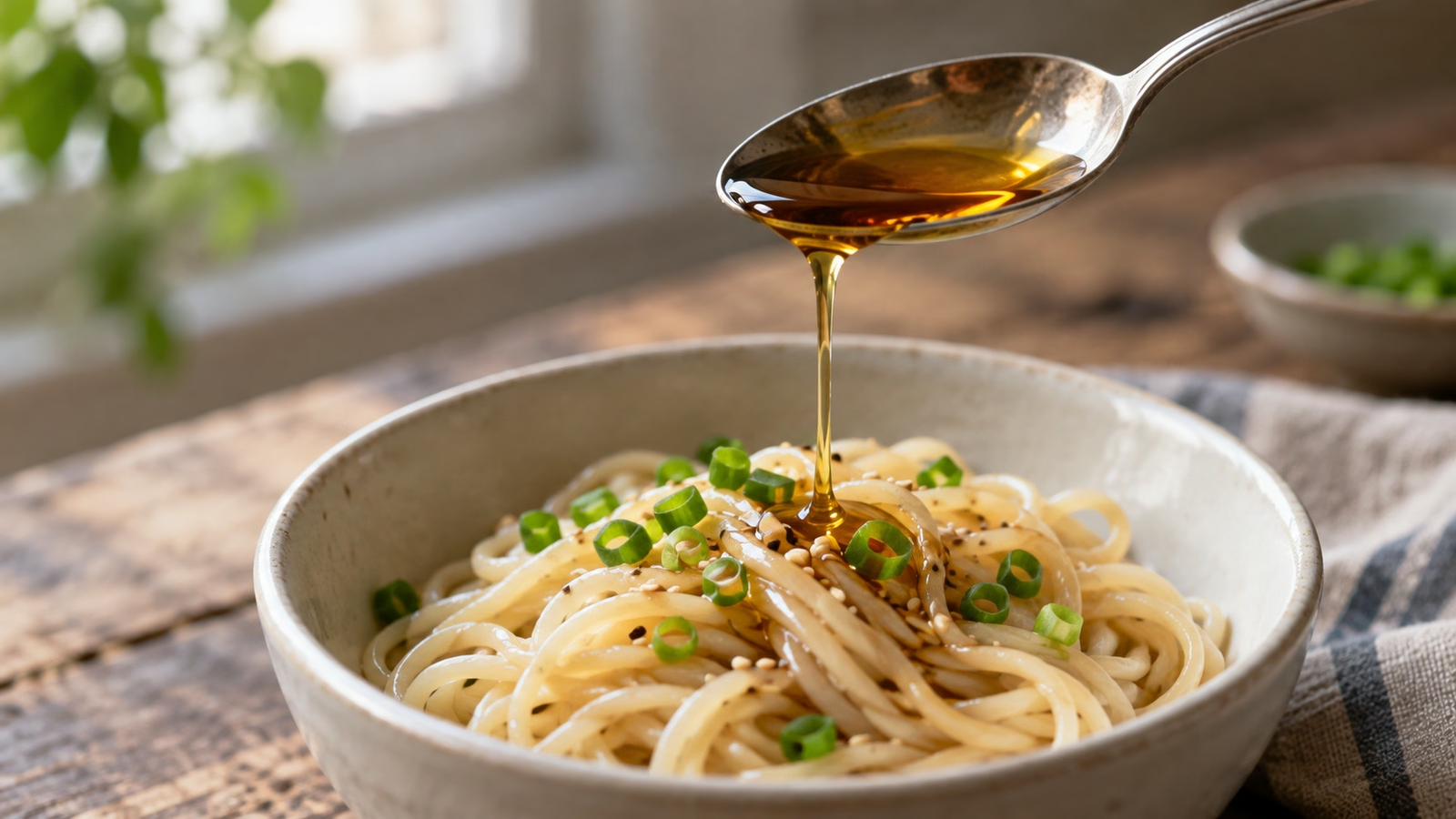
Choose a cooking oil and a finishing flavor separately
The advice that toasted sesame oil must never touch heat is too absolute. Some makers recommend moderate-heat cooking with their toasted product, while others emphasize adding it after cooking. What you should avoid is treating every sesame oil as an interchangeable high-heat frying oil.
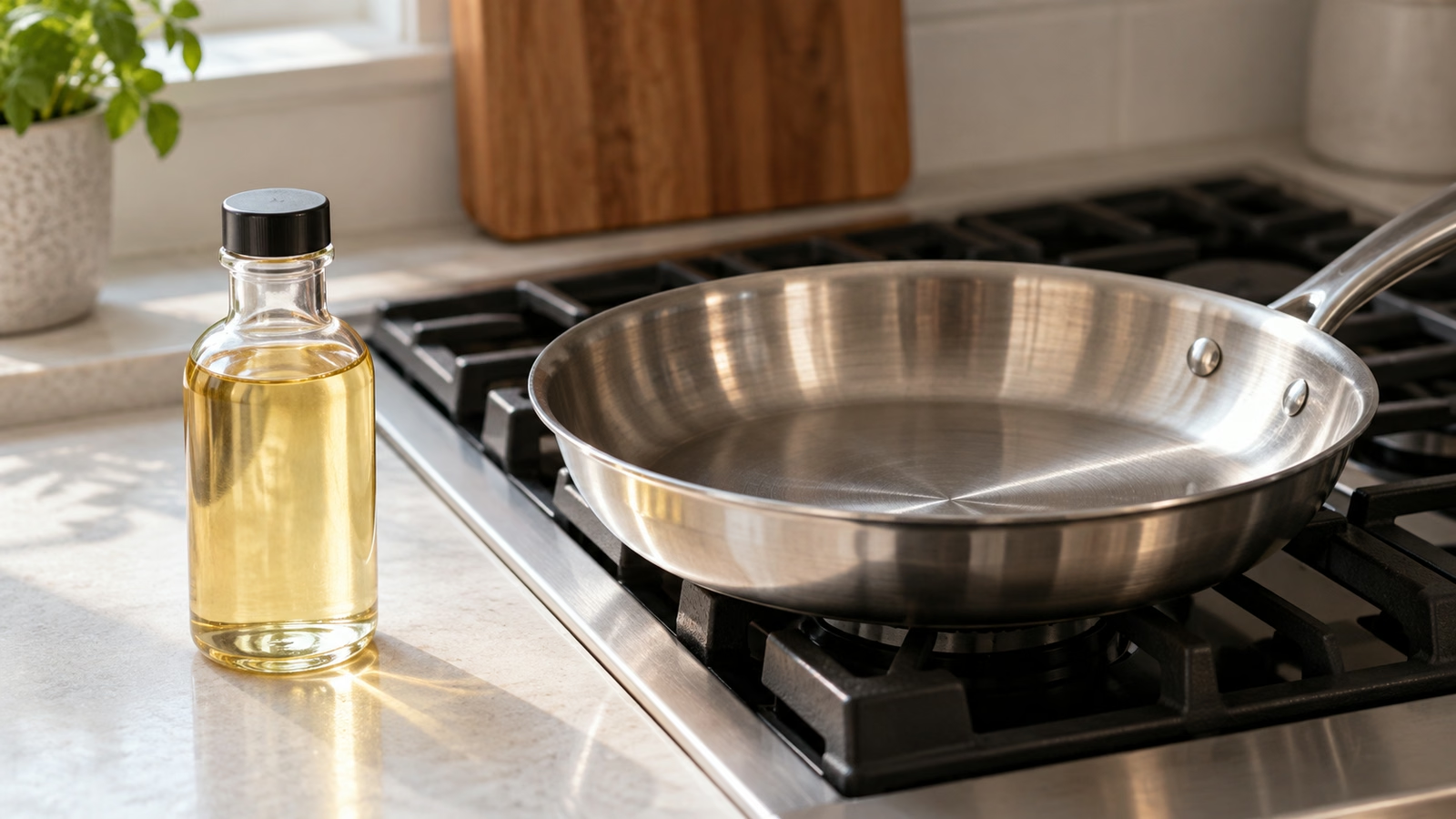
- For a hot skillet: Use an oil whose label supports that temperature and method. Add toasted sesame oil later if you want its aroma.
- For a dressing: Start with a small amount of toasted oil, then balance it with the other ingredients.
- For a soup: A few drops at the end can provide aroma without changing the whole broth’s fat level very much.
- For baking: Consider both heat guidance and flavor. A strongly toasted oil may dominate a delicate cake even if the cooking method is suitable.
For example, Spectrum labels its refined sesame oil for higher-heat cooking, while La Tourangelle describes medium-heat uses for its toasted oil. Those product-specific directions are more useful than assigning one smoke point to every bottle in the category.
Make substitutions without overwhelming dinner
When a recipe asks for a small finishing amount of toasted sesame oil, plain sesame oil will supply fat but less of the intended aroma. When a recipe uses a larger quantity of a mild oil to cook ingredients, replacing all of it with a strongly toasted oil can make the flavor much more dominant.
- Missing toasted oil: Use a suitable mild oil for the cooking function, then accept that the final flavor will be different.
- Only have toasted oil: Check the label before heating it. Do not assume a finishing ingredient is appropriate for a long, hot fry.
- Making a sauce: Add a little, mix, and taste before pouring more. Strong aroma is easier to increase than remove.
- Using sesame seeds instead: Seeds add crunch and a different distribution of flavor. They are not a direct liquid replacement.
Tastiva’s black sesame seed guide covers the whole-seed ingredient. Tahini is another sesame product again: it contains ground solids and thickens sauces, so it cannot replace oil without changing texture.
Buy a useful bottle and protect its flavor
Bold global flavors, including sesame, feature in 2026 food-trend coverage from Bidfood. This guide addresses a practical kitchen question connected with that interest; it does not claim a measured surge for a particular sesame-oil type.
- Size: If you use a few drops at a time, a small bottle may be the more practical purchase.
- Storage: Keep the cap closed and follow the producer’s directions. Heat and light are poor companions for an oil you want to taste fresh.
- Quality: An unpleasant stale or paint-like odor is a reason to replace the oil rather than hide it in a strongly flavored dish.
- Allergy: Sesame is an allergen. Do not assume refining or cooking makes a product suitable for someone with a sesame allergy.
- Nutrition: These are concentrated fats; a toasted aroma does not make a tablespoon nutritionally negligible. Compare equal serving amounts.
My practical two-step approach is simple: use an appropriate oil to cook, then decide whether a small toasted-sesame finish improves the dish. Sometimes the finish is exactly what the bowl needs. Sometimes the other ingredients are already doing enough.
Juri Austin of Chef JA Cooks explains the flavor and kitchen uses of toasted and light sesame oils in the video below. Use the examples alongside the cooking directions on your own bottle, since refining and blends vary.
Sources
- Kikkoman: toasted sesame oil ingredients and uses
- Spectrum: refined sesame oil cooking guidance
- La Tourangelle: toasted sesame oil processing and uses
- Bidfood: 2026 flavor-trend context

Hi, I’m Laura, the voice behind Tastiva. I’ve always believed that eating well should feel enjoyable, comforting, and realistic—not like another complicated rule to follow. I love creating recipes that fit into everyday life, sharing simple nutrition ideas, and finding small ways to make meals feel a little better without losing the pleasure of good food.