
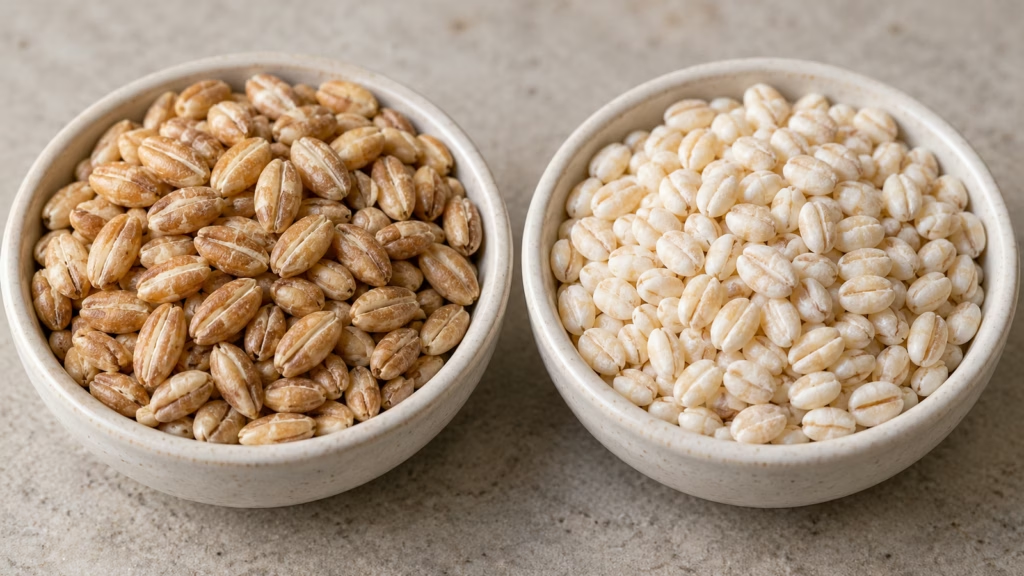
The soup recipe says pearl barley, but the bag in your pantry says hulled; that small word changes more than the color of the grains. In hulled vs pearled barley, hulled barley retains its bran and germ and counts as a whole grain; pearl barley has been polished and usually cooks faster. Choose by the dish, the texture you want, and the time your actual package requires.
Read the barley label before choosing the cooking clock; the same-looking grain can need a different plan.
Hulled vs pearled barley starts with processing
Barley grows with a protective outer covering, and that tough hull is removed before ordinary culinary barley reaches the pot. Hulled barley keeps the edible bran, germ, and endosperm underneath; pearling polishes away some or all of the bran. The Whole Grains Council classifies hulled barley as whole grain and pearl barley as refined.
| What to compare | Hulled barley | Pearled barley |
|---|---|---|
| Processing | Inedible hull removed; bran and germ retained | Hull plus some or all bran polished away |
| Whole-grain status | Whole grain | Not whole grain |
| Typical appearance | Tan to brown, less polished | Light tan to cream; pearling varies |
| Cooking behavior | Usually needs a longer simmer | Usually softens sooner |
| Useful role | Chewy grain bowls, salads, longer cooking | Brothy soup, softer grain sides, barley risotto |
Lightly pearled barley can still look tan. I’d trust the printed product name before color, especially at a bulk bin.
Read the package, including the less familiar names
“Hulled” and “hulless” are not opposites: hulless barley has a loosely attached hull that generally falls off at harvest, allowing the bran and germ to remain. Neither word means you should cook an inedible husk. Whole grain describes what remains in the kernel, not whether the product sounds particularly rustic.
- Hulled or dehulled: Look for a whole-grain description and normal food-use cooking instructions. These terms usually identify minimally processed kernels.
- Hulless or naked: This can also be whole grain; the covering separates more easily. Check the product’s processing description.
- Pearl or pearled: These are names for the polished form. They do not promise a particular number of minutes.
- Quick barley: Follow its shorter package method. It has been processed for speed and is not interchangeable with regular kernels on a shared cooking schedule.
- Flakes or grits: These describe shape. They may come from whole barley or pearl barley, so read beyond the large name on the front.
- Unhulled barley: Do not assume a product intended for sprouting, animal feed, or planting is ready for normal cooking. Buy food-grade culinary barley.
A package that simply says “barley” leaves an important question unanswered. Check the ingredient list and directions or ask the manufacturer. Farro has a similar processing puzzle, although it is a different grain; Tastiva’s farro guide can help if the two bags are sharing your shelf.
Match the simmer to the grain in your bag
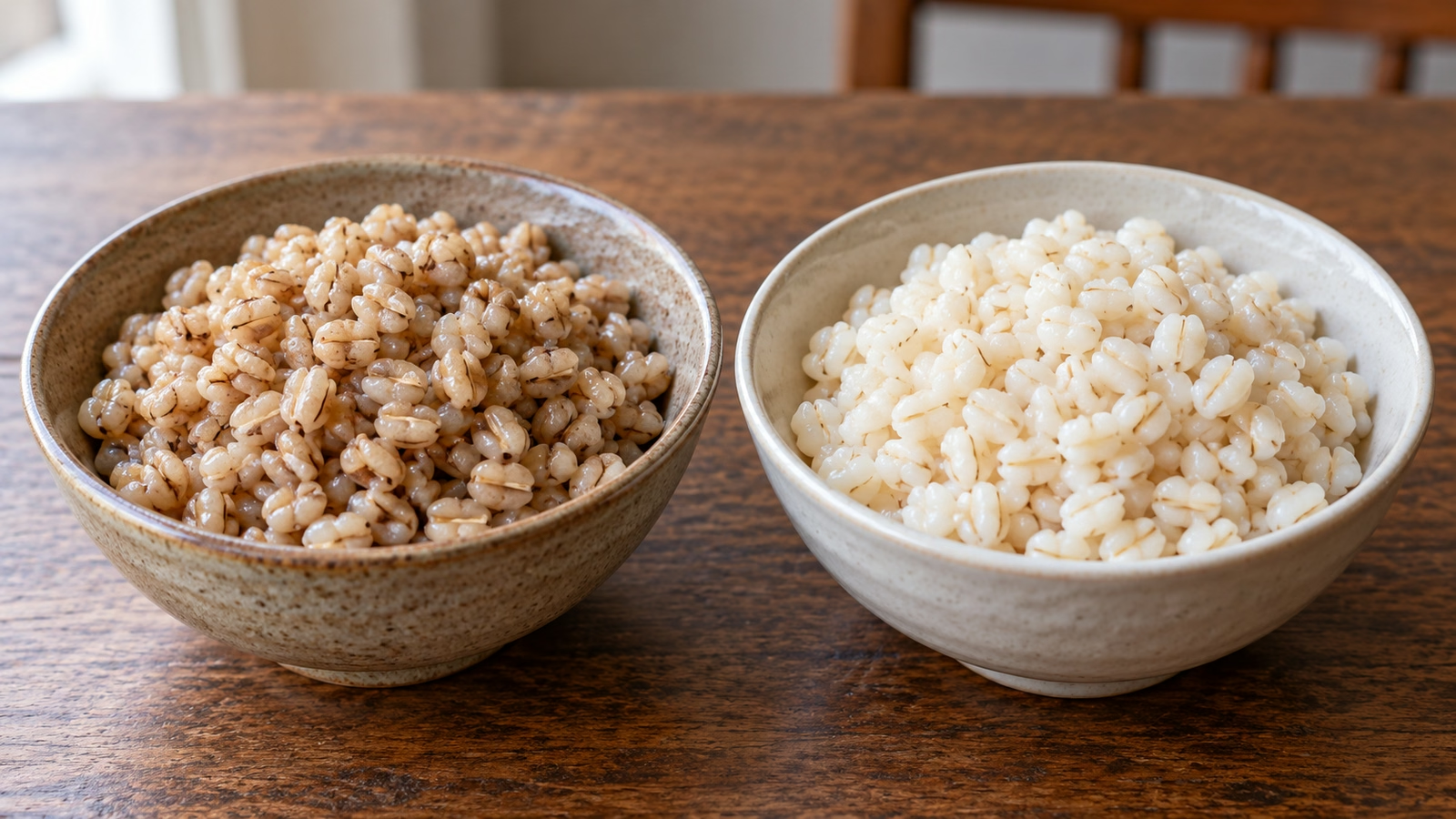
Pearled barley generally cooks sooner, but the ranges on real products matter more than a universal chart. For example, Shiloh Farms’ hulled barley directions specify a 1–2 hour simmer with three parts water to one part grain. That is a product example, not a timing promise for every hulled barley.
- Start with the package: Use its grain-to-water ratio and method for your first batch. Check whether its directions assume soaking.
- Check tenderness: Bite a cooled grain. It should have the chew you want without a hard, chalky center.
- Watch the water: If the pot gets dry while the grain is firm, add hot water and keep the simmer gentle.
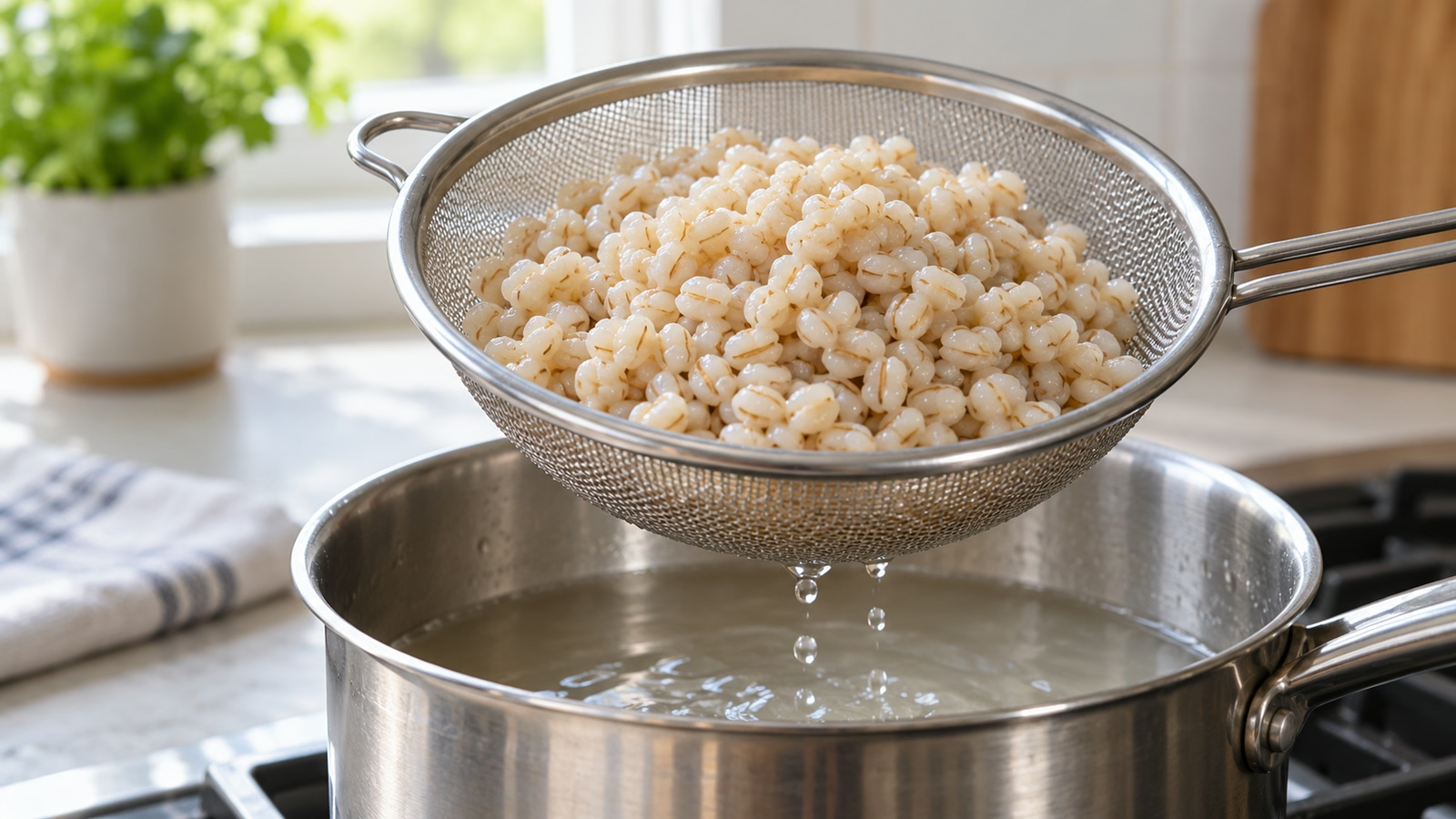
- Drain if directed: Some methods use more water than the grain absorbs. Draining is appropriate when that is the intended method, rather than forcing it to behave like an absorption-style rice recipe.
- Soak with a purpose: A manufacturer may recommend soaking to shorten cooking. Follow its instructions, including safe handling, instead of assuming every barley needs an overnight soak.
I’d cook an unfamiliar hulled barley separately before adding it to a soup. Otherwise, the vegetables may spend an extra hour waiting for the grain to catch up. A longer cooking time is useful information, not a flaw you need to disguise.
Choose for the meal, then compare nutrition fairly
For a chewy lunch bowl, hulled barley offers whole-grain kernels and a substantial texture. For a soup you want to finish on a shorter schedule, pearl barley can be the more practical choice. Both deserve a decision based on the rest of the meal; neither needs a “good grain” or “bad grain” label.
- Soup: Use the type specified, or cook a replacement separately. Add cooked grains to the finished pot and adjust broth to taste.
- Grain salad: A firmer grain can hold its place alongside crunchy vegetables. Cool cooked barley promptly and refrigerate it; do not leave a bowl out to cool all afternoon.
- Creamy barley dish: Pearled barley usually suits a softer, starchier result. Hulled kernels may remain more distinct and need a different liquid and time plan.
- Nutrition labels: Compare the same dry weight or the same clearly defined cooked portion. Dry and cooked figures differ because cooking adds water.
- Fiber and whole grains: Hulled barley retains the complete kernel. Pearl barley still contains fiber distributed within the grain; refined does not mean fiber-free.
- Gluten: Both contain gluten. Pearling and rinsing do not make barley suitable for celiac disease or a gluten-free diet; follow FDA gluten-free guidance.
For a pearl-barley example, Jamie Oliver makes a vegetable-and-chorizo soup in this Tesco-sponsored video. It illustrates using the quicker-cooking grain in soup; hulled barley may need a separate, longer cooking plan.
Sources
- Whole Grains Council: barley forms and whole-grain status
- Shiloh Farms: product-specific hulled barley cooking directions
- FDA: gluten-free food labeling
- FoodSafety.gov: cooling and temperature guidance

Hi, I’m Laura, the voice behind Tastiva. I’ve always believed that eating well should feel enjoyable, comforting, and realistic—not like another complicated rule to follow. I love creating recipes that fit into everyday life, sharing simple nutrition ideas, and finding small ways to make meals feel a little better without losing the pleasure of good food.