
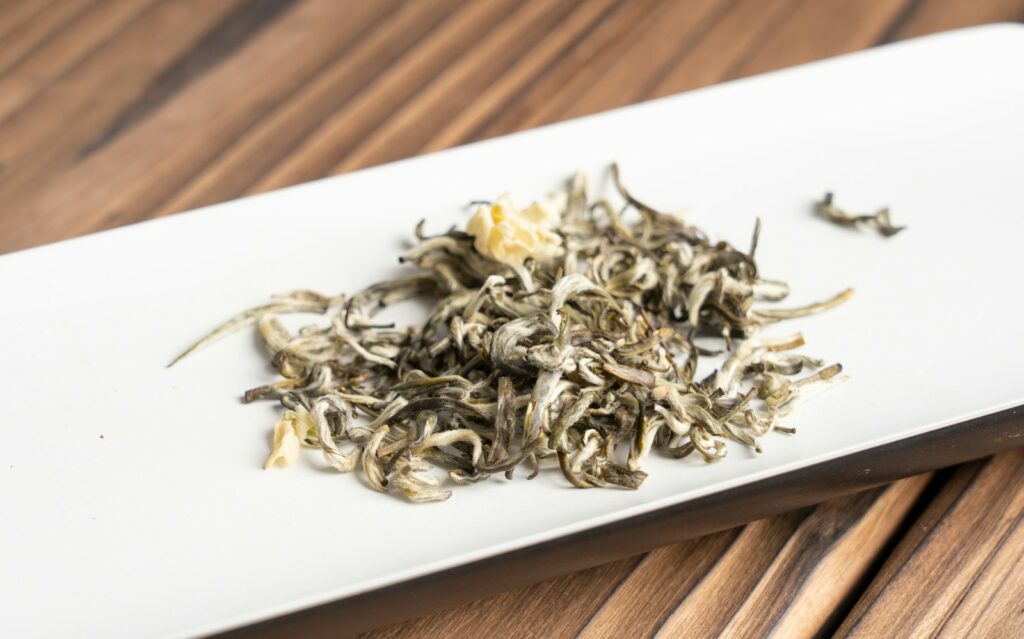
That soft, floral aroma can make jasmine tea seem like an herbal infusion, but the familiar cup is usually green tea scented with jasmine blossoms. It generally contains caffeine. The flower provides the fragrance; the underlying tea determines much of the flavor, brewing approach, and caffeine story.
Choose jasmine tea for the balance of leaf and flower, then give the leaves enough room and a gentle steep to open up.
What jasmine tea actually contains
Jasmine tea describes a scented style, not one fixed recipe or a separate variety of tea plant. Green tea is a common base, but white and black teas can also be scented with jasmine. A product made only from flowers is a different drink, so read the ingredients rather than letting the floral name answer every question.
In traditional scenting, tea leaves take on the fragrance of jasmine blossoms. Flowers don't have to remain in the finished package for the tea to smell floral. Harney & Sons' Dragon Pearl Jasmine, for example, uses rolled green tea with white buds scented with jasmine flowers. That's one producer's blend, not a definition every brand must follow.
I find the base-tea description more useful than a dramatic promise on the box. “Jasmine green tea” tells you something concrete. A label that names the ingredients, explains its scenting, and provides brewing directions gives you a clearer starting point than “detox,” “slimming,” or other claims that don't explain the cup.
Loose leaves, pearls, and bags make different trade-offs
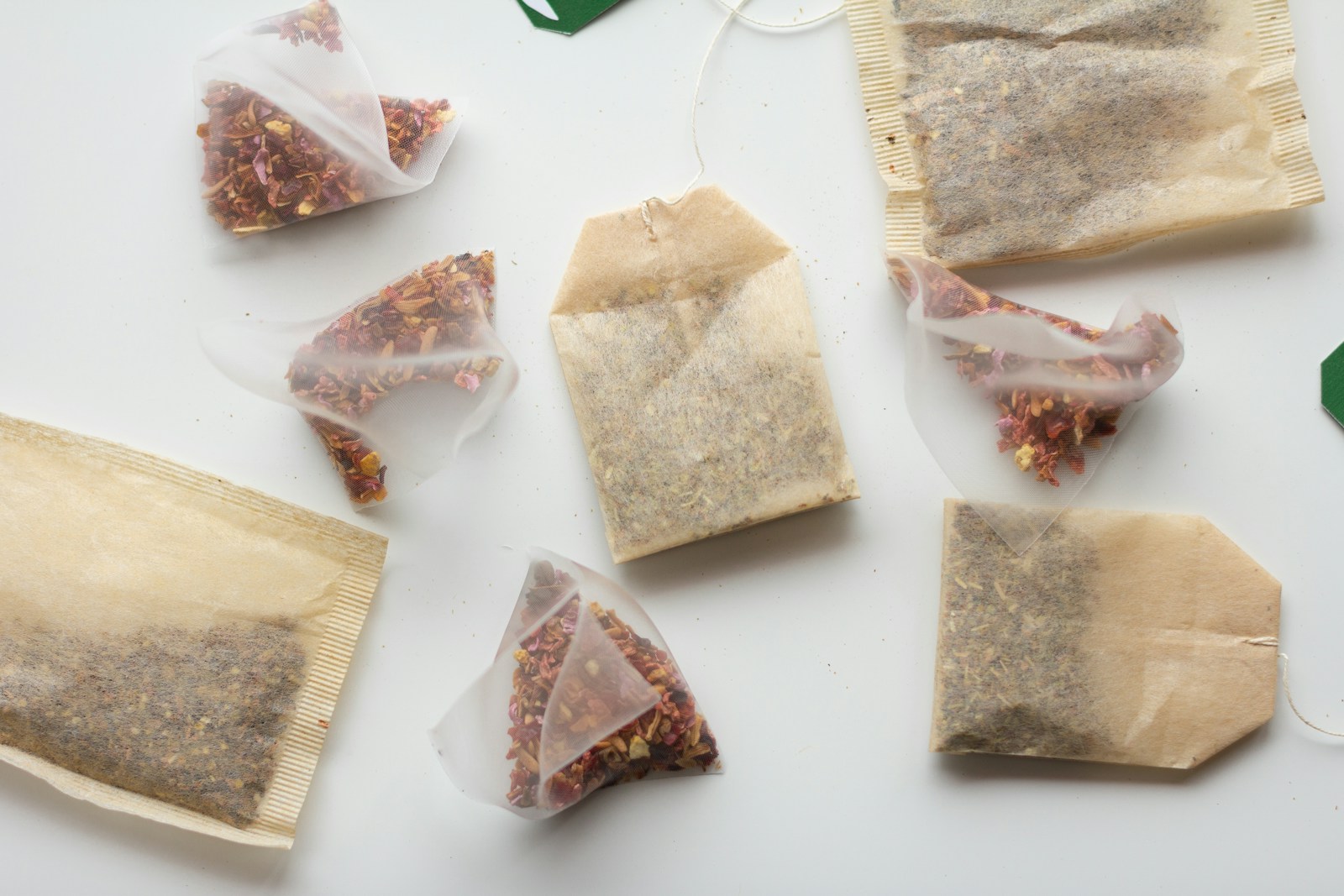
Pearls are small rolled bundles of tea that gradually unfurl in hot water. They need space: packing them tightly into a tiny infuser can restrict that opening. Loose leaves offer similar control over the amount you use, while bags and roomy sachets make cleanup easier. Format alone doesn't settle quality.
| Format | What to expect | What to check |
|---|---|---|
| Jasmine pearls | Rolled leaves that expand during brewing | Enough infuser space and the producer's suggested amount |
| Loose jasmine tea | Easy adjustment of leaf quantity | The base tea, scenting description, and storage seal |
| Bags or sachets | Convenient portions and less cleanup | Mug size; one bag may not suit an oversized travel cup |
| Bottled jasmine tea | A ready-to-drink product | Added sugar, ingredients, and any stated caffeine amount |
| Flower-only infusion | No tea leaf unless included in a blend | Exact plant ingredients and food-grade sourcing |
The flavor can be grassy and floral, lightly sweet-smelling, or more robust if the base is black tea. A sweet aroma doesn't necessarily mean sugar has been added. Conversely, a ready-made jasmine drink may contain sweeteners even when a plain brewed tea would not.
My preference is to judge a first cup before adding anything. That's an editorial nudge, not a rule against milk or sugar: it simply makes it easier to notice whether the tea itself suits you before changing its flavor.
Brew for fragrance without an overly bitter finish
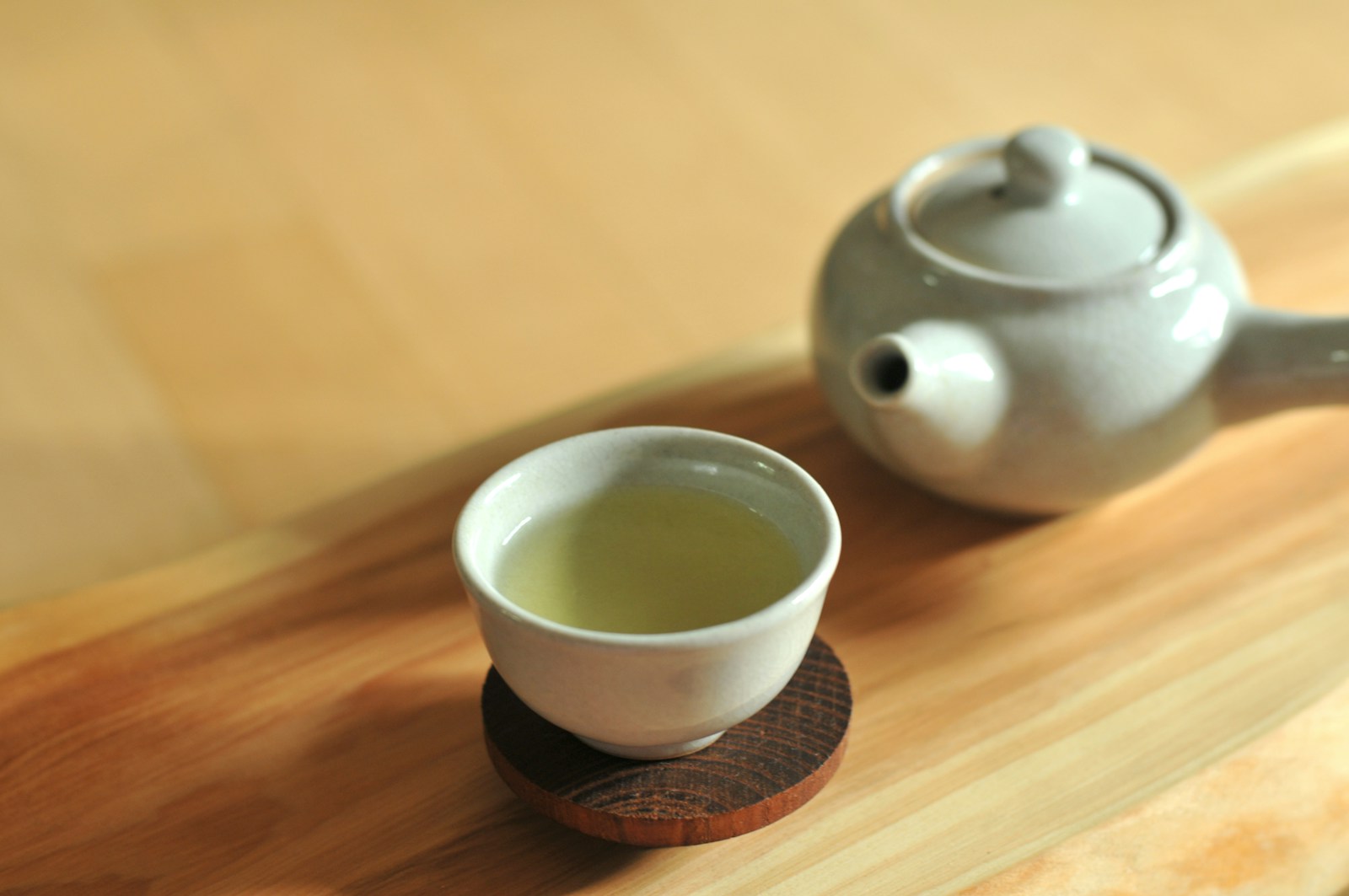
Follow the package instructions first because leaf size and base tea vary. As a specific example, Harney recommends about 175°F (79°C) water and 2–3 minutes for its Dragon Pearl Jasmine. That is a useful starting reference for that product, not a universal requirement for all jasmine teas.
- Measure for your cup: compare the directions with your actual mug's capacity. A large mug can need more leaves rather than a much longer steep.
- Give pearls space: use a roomy basket or pot so the leaves can open rather than bunch together.
- Remove the leaves: when the suggested time is up, lift the basket or strain the tea instead of leaving it to grow steadily stronger.
- Change one thing: if the cup tastes harsh, try a shorter steep or slightly cooler water next time. If it's weak, first check the leaf-to-water amount.
- For iced tea: follow the producer's iced directions. Ice dilutes the drink, so a recipe intended for a hot cup may taste thin over a full glass of ice.
There is no need to treat brewing like a laboratory assignment. A timer and attention to the directions solve much of the uncertainty. Once you find a balance you enjoy, make a small note on the package; that is more useful than remembering someone else's supposedly perfect cup.
Caffeine, health claims, and keeping the aroma fresh
Tea made from Camellia sinensis contains caffeine unless it has been decaffeinated, and decaffeinated tea can still contain some. Jasmine scenting doesn't remove caffeine. The amount varies with the leaves, serving, and preparation, so don't assign every jasmine tea one fixed number. Tastiva's guide to caffeine in matcha explains why different tea formats need different comparisons.
Green tea has been researched for several health outcomes, but NCCIH describes important limits in the evidence. Those studies don't establish that adding jasmine fragrance treats anxiety, causes weight loss, or prevents disease. Enjoying an aromatic drink is a perfectly sufficient reason to choose it. If caffeine affects your sleep, the evening timing still matters, however soothing the tea smells.
Keep dry tea tightly closed in a cool, dry place away from strong kitchen odors, and follow the producer's storage guidance. Buy an amount you're likely to finish while its aroma is appealing. A small tin that gets used can be a better fit than a large bag that spends months open beside the spice rack.
Sources
- Harney & Sons: Dragon Pearl Jasmine ingredients and brewing guidance
- Cambridge Dictionary: jasmine tea
- NCCIH: green tea evidence and safety
- FDA: caffeine amounts and individual sensitivity

Hi, I’m Laura, the voice behind Tastiva. I’ve always believed that eating well should feel enjoyable, comforting, and realistic—not like another complicated rule to follow. I love creating recipes that fit into everyday life, sharing simple nutrition ideas, and finding small ways to make meals feel a little better without losing the pleasure of good food.