
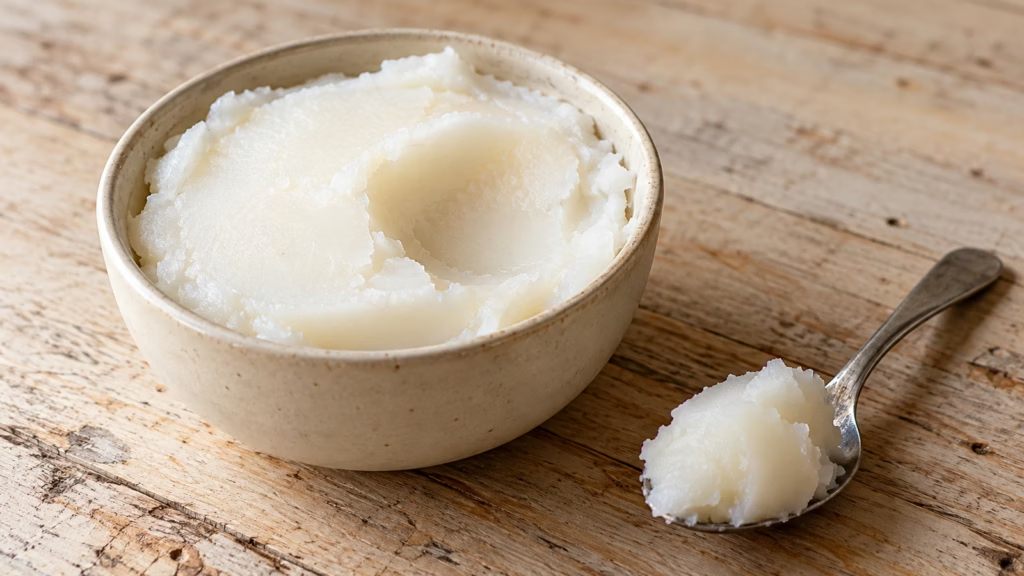
A pastry recipe calls for lard, and suddenly the fat aisle needs more thought than the filling. Lard is rendered pork fat, used in foods ranging from pie dough to savory cooking. Leaf lard, a refined block, and a butcher’s freshly rendered fat can differ in flavor, firmness, and storage needs. Knowing which one you have makes the next step much simpler.
Choose lard for the flavor and texture your recipe needs, then follow that product’s storage instructions rather than treating every tub alike.
Lard, leaf lard, and the words on the package
Rendering separates usable fat from the tissues it comes from. The U.S. standard for lard identifies it as fat rendered from edible pig tissues; leaf lard comes specifically from leaf, or abdominal, fat. Despite the name, there are no plant leaves involved. Both are pork products, so neither fits a vegetarian or pork-free meal.
- Leaf lard: Often chosen when a mild pork flavor is useful, particularly in pastry. Fatworks describes its leaf lard as coming from the pig’s protective leaf-fat deposits and having a milder flavor.
- Refined packaged lard: Read beyond the word lard. Armour’s listed formula, for example, contains lard, fully hydrogenated lard, and ingredients added to protect flavor. That is a specific formulation, not a description of every jar.
- Freshly rendered or butcher-supplied lard: Ask whether it is ready to cook with, what flavor to expect, and how to store it. Raw pork fat sold for rendering is not the same finished ingredient.
- Bacon drippings: These bring the character of cooked bacon. Do not assume they can stand in for a mild pastry fat without changing the result.
I would ask about flavor before buying lard for a sweet pie. A savory note may be welcome in beans and distracting beside a delicate fruit filling. White color alone will not answer that question, and a neutral flavor does not make a pork ingredient suitable for someone who avoids pork.
Put its texture to work in the right recipe
A useful first project is a recipe that already names lard. King Arthur’s Tender Pie Crust uses cold lard, works the fat into flour in two stages, and adds ice water gradually. The point is controlled texture, rather than melting all the fat into the flour before you begin.
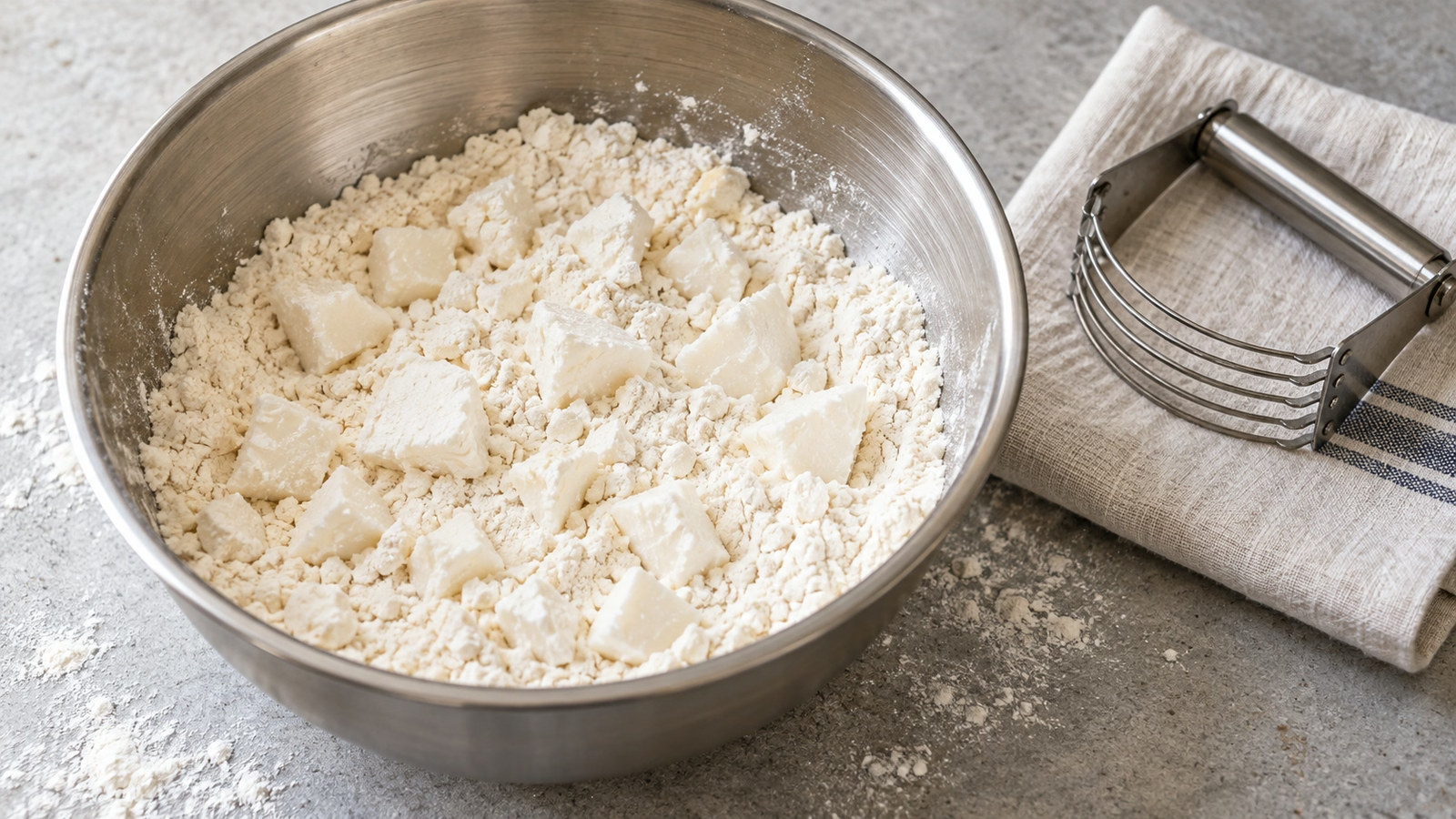
- Cold pastry dough: Follow the recipe’s cues for the size of the remaining fat pieces. Stop to chill if the mixture becomes too soft to handle as directed, rather than trying to fix everything with extra flour.
- Biscuits or other baked goods: Choose instructions developed for lard or an explicitly supported substitution. A different fat can change the flavor, rise, and browning.
- Savory cooking: A recipe may use lard as the cooking fat for vegetables, beans, or a dough. Check the intended amount and method instead of assuming more fat means a better result.
- Hot-pan cooking: Follow the product and recipe’s intended use. Do not treat a smoke-point number as a temperature target or leave heating fat unattended.
For a broader comparison of cooking fats, Tastiva’s high smoke point oil guide explains why heat control matters as much as the number on a chart. I prefer choosing a fat for a clear job rather than asking one jar to become the answer to every pan in the kitchen.
A butter swap changes more than the flavor
Butter contains water and milk solids, while lard is essentially fat. In King Arthur’s biscuit comparison, changing the fat affected height, browning, and taste. Those were the bakery’s tests, not a guarantee about your recipe, but they show why an equal-looking spoonful need not behave the same way.
- Check for an approved alternative first. If the recipe gives a butter, shortening, or lard option, use its quantity and handling directions instead of borrowing a ratio from an unrelated dish.
- Keep the physical form in mind. Liquid oil cannot simply provide the cold solid pieces a particular pastry method asks you to leave in the dough.
- Do not improvise several changes together. A new fat plus a different flour and liquid makes it hard to know why the dough behaves differently.
- Measure in the stated units. If the recipe gives grams, weigh that ingredient. Do not assume every solid fat fills a measuring cup to the same weight.
For a concrete example, King Arthur’s Tender Pie Crust gives a specified butter alternative to its lard. That is permission within that formula, not a universal lard-to-butter rule. If your reason for substituting is dietary, choose a recipe designed around the acceptable fat rather than working backward from an ingredient you cannot use.
Store the lard you bought, not a generic version
Storage advice genuinely differs. Fatworks tells customers to refrigerate its pasture-raised lards. Armour’s commercial-product guidance says its listed products do not require refrigeration and should be kept cool to ambient. Those directions belong to those products; neither should be pasted onto an unlabeled jar of home-rendered fat.
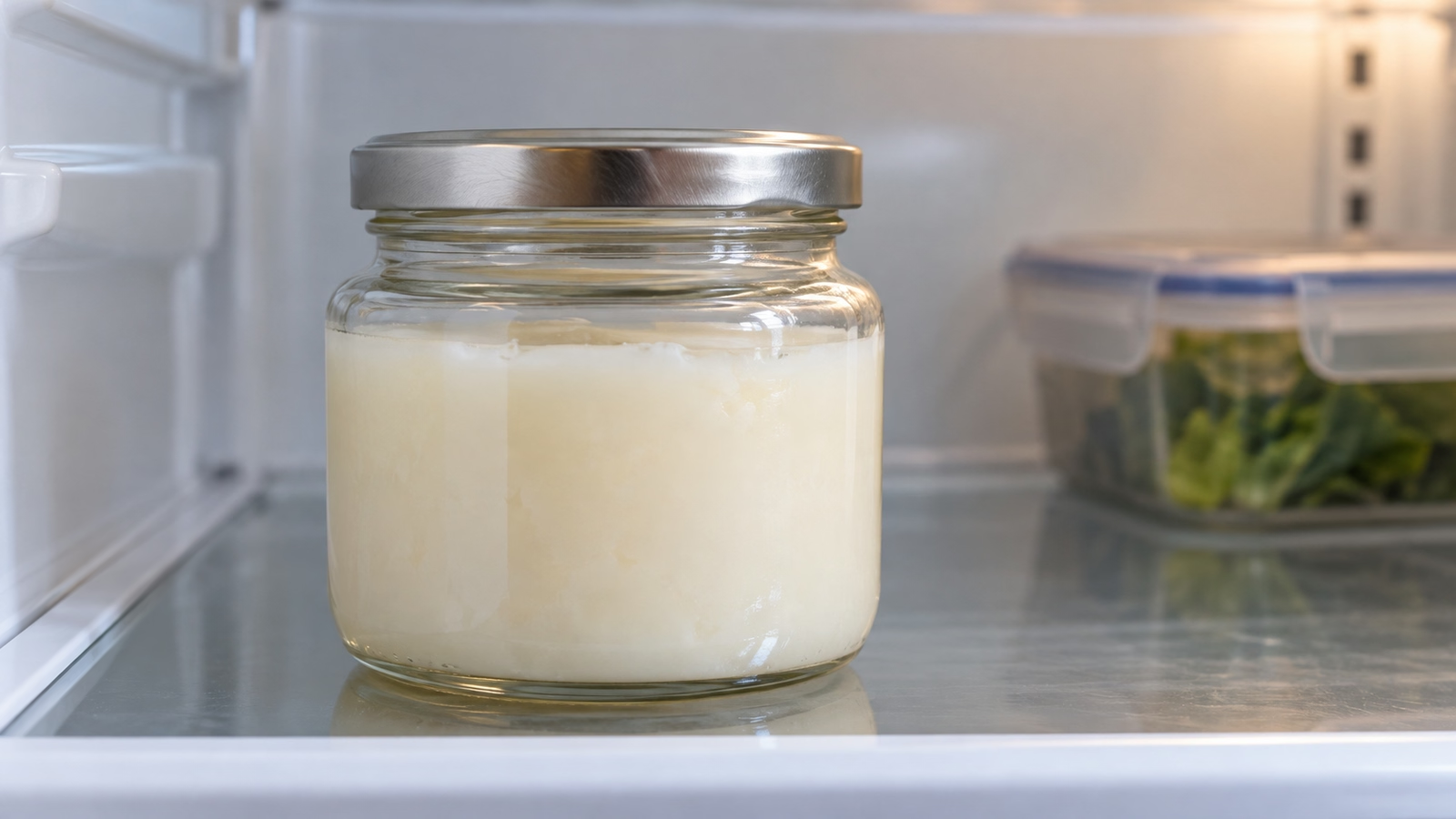
- Keep the original guidance: Save the label, opening date, and producer’s storage instructions if you transfer lard to another container.
- Use a clean utensil: Avoid carrying crumbs or food back into the jar, and close it promptly after measuring.
- Separate fresh fat from used cooking fat: A tub’s shelf-life guidance does not describe fat that has already cooked a meal or collected food particles.
- Ask when the history is unclear: A butcher’s or home-rendered product needs its own handling advice. Appearance alone is not a substitute for knowing how it was made and stored.
Lard’s baking usefulness is also separate from its nutritional role. It contains saturated fat. The American Heart Association’s 2026 guidance favors replacing sources of saturated fat with sources of unsaturated fat within the overall eating pattern. A traditional ingredient does not need a health halo to have a place in a particular recipe.
For a practical discussion of pastry fats, the King Arthur Baking video below features pie author Kate McDermott comparing butter, shortening, and lard. It is a useful companion when your immediate question is which fat to choose for a crust.
Sources
- 9 CFR 319.702: Lard and leaf lard
- Armour: Product ingredients and commercial storage guidance
- Fatworks: Leaf lard and product storage guidance
- King Arthur Baking: Tender Pie Crust
- King Arthur Baking: Fats and liquids in biscuits
- American Heart Association: 2026 dietary guidance
- King Arthur Baking: Which fat to use for pie crust

Hi, I’m Laura, the voice behind Tastiva. I’ve always believed that eating well should feel enjoyable, comforting, and realistic—not like another complicated rule to follow. I love creating recipes that fit into everyday life, sharing simple nutrition ideas, and finding small ways to make meals feel a little better without losing the pleasure of good food.