
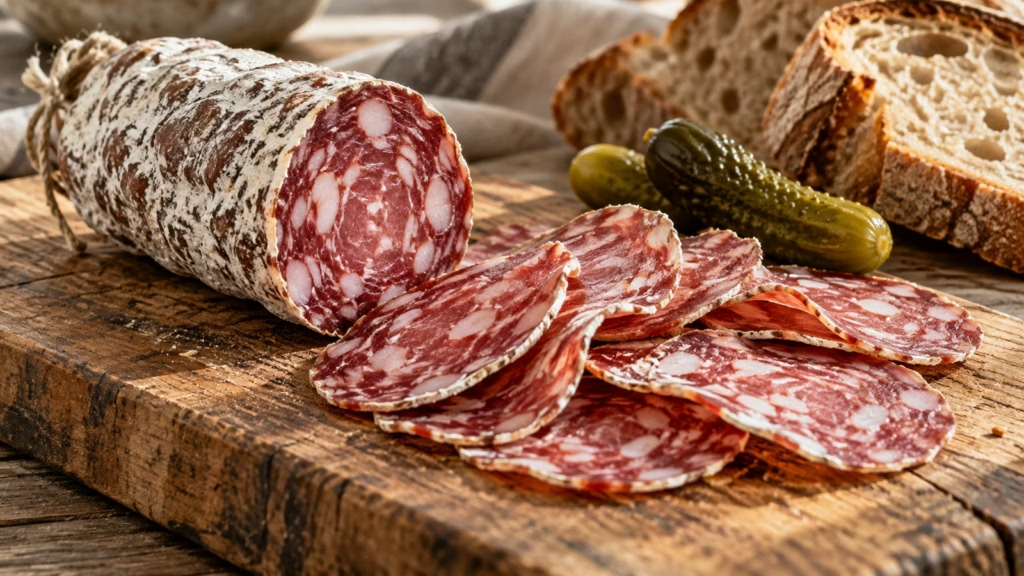
Salami is a family of seasoned sausages, not one fixed deli meat. Some are dry and firm enough for thin slices; others are softer, cooked styles sold for sandwiches. The useful first question is which kind you have. That answer changes its flavor, how you serve it, and whether the unopened package belongs in the pantry or the refrigerator.
Before planning the sandwich or snack board, check the salami’s style and storage label.
What salami is, and what the name leaves out
A few slices can bring garlic, pepper, tang, and richness to a plain piece of bread. But the word salami does not promise a particular meat, spice blend, or preservation method. Many versions use pork; others include beef or different meats. The ingredient list is the reliable place to check, especially when dietary restrictions matter.
- Dry salami: Typically made through controlled curing, fermentation, and drying. Its firm texture and concentrated flavor make it useful in small slices or pieces.
- Cooked salami: Cotto salami is a cooked style. Do not apply dry-sausage storage guidance to it just because both products say salami.
- Ready to eat: This wording concerns preparation. It does not mean the product can stay unrefrigerated.
- Whole versus sliced: An intact dry sausage and a packet from the chilled deli case may have different handling directions. Keep the original label with either one.
I would not try to settle the storage question by pressing the sausage or judging its color. Read the wording first. Commercial dry-sausage production uses controlled conditions; hanging ordinary raw sausage in a home kitchen is not an equivalent process.
Choosing between familiar styles
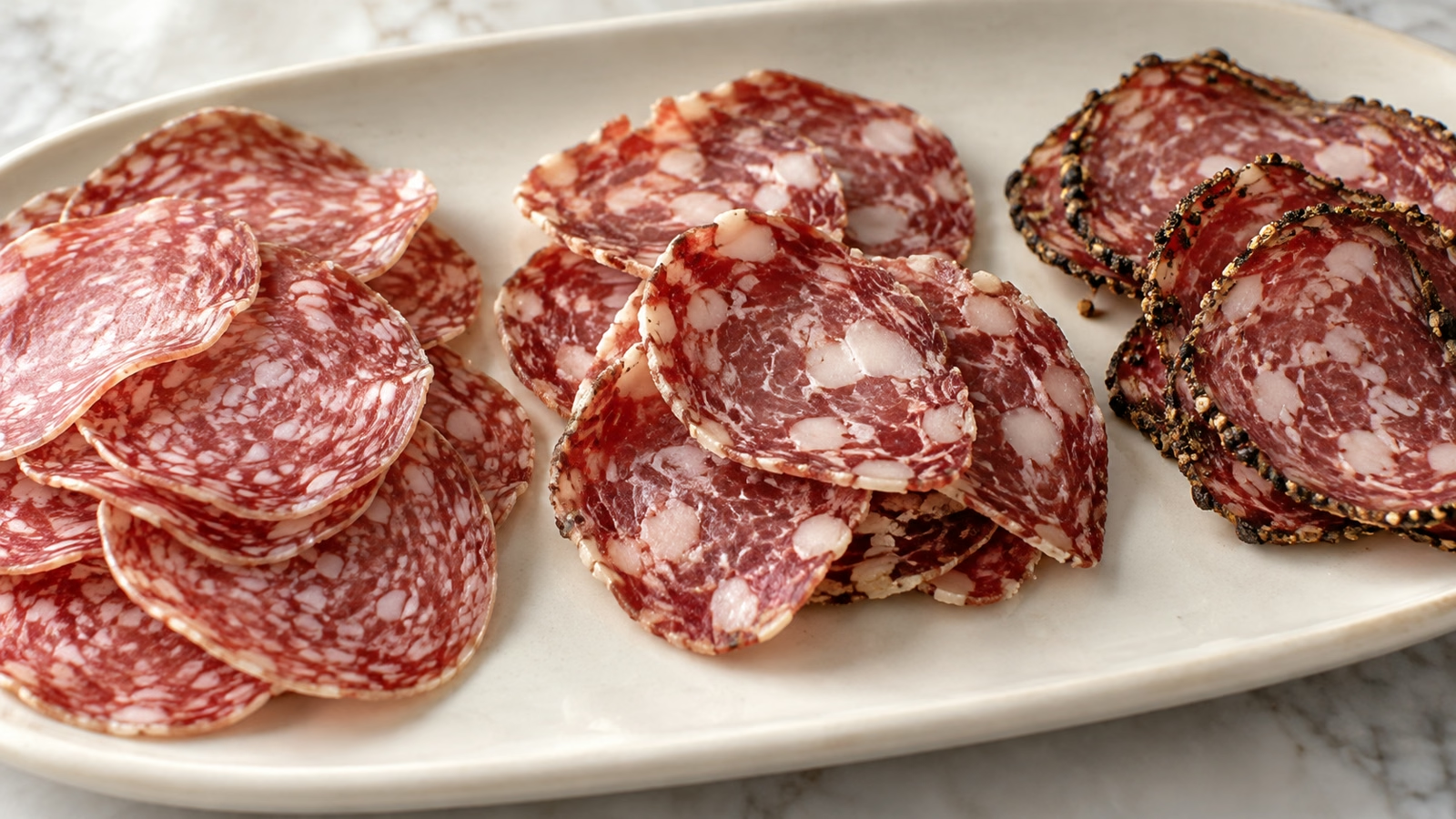
Style names help narrow the choice, but producers still vary. Think about the texture and seasoning you want rather than treating every version as interchangeable. A mild sandwich salami can disappear beside a very sharp cheese, while a heavily peppered one may already supply all the bite you need.
- Genoa: Often a gentler choice for sandwiches. As a specific example, Columbus describes its Genoa as finely chopped pork with garlic, black pepper, and wine, aged for a soft texture and mild flavor.
- Italian dry: Look for a firmer bite and check the producer’s seasoning description. Columbus uses pork, pepper, spices, and burgundy wine in its version; that formula is an example, not a definition for every brand.
- Peppered or spicy styles: Read whether the heat comes from a pepper coating, chile in the meat, or both. Choose a small amount first if the strength is unfamiliar.
- Soppressata: A named salami style rather than a separate category that excludes salami. The grind, seasoning, and heat vary, so ask the deli counter about the particular one.
- Pepperoni: A related dry sausage with its own seasoning and pizza uses. Our pepperoni guide explains that familiar option in more detail.
When comparing packages, use the same weight and account for any casing you will remove. A large log is only a useful purchase if you will finish it within its storage guidance. A smaller pack can fit a couple of lunches without leaving another open item to manage.
Make the slices work in a meal
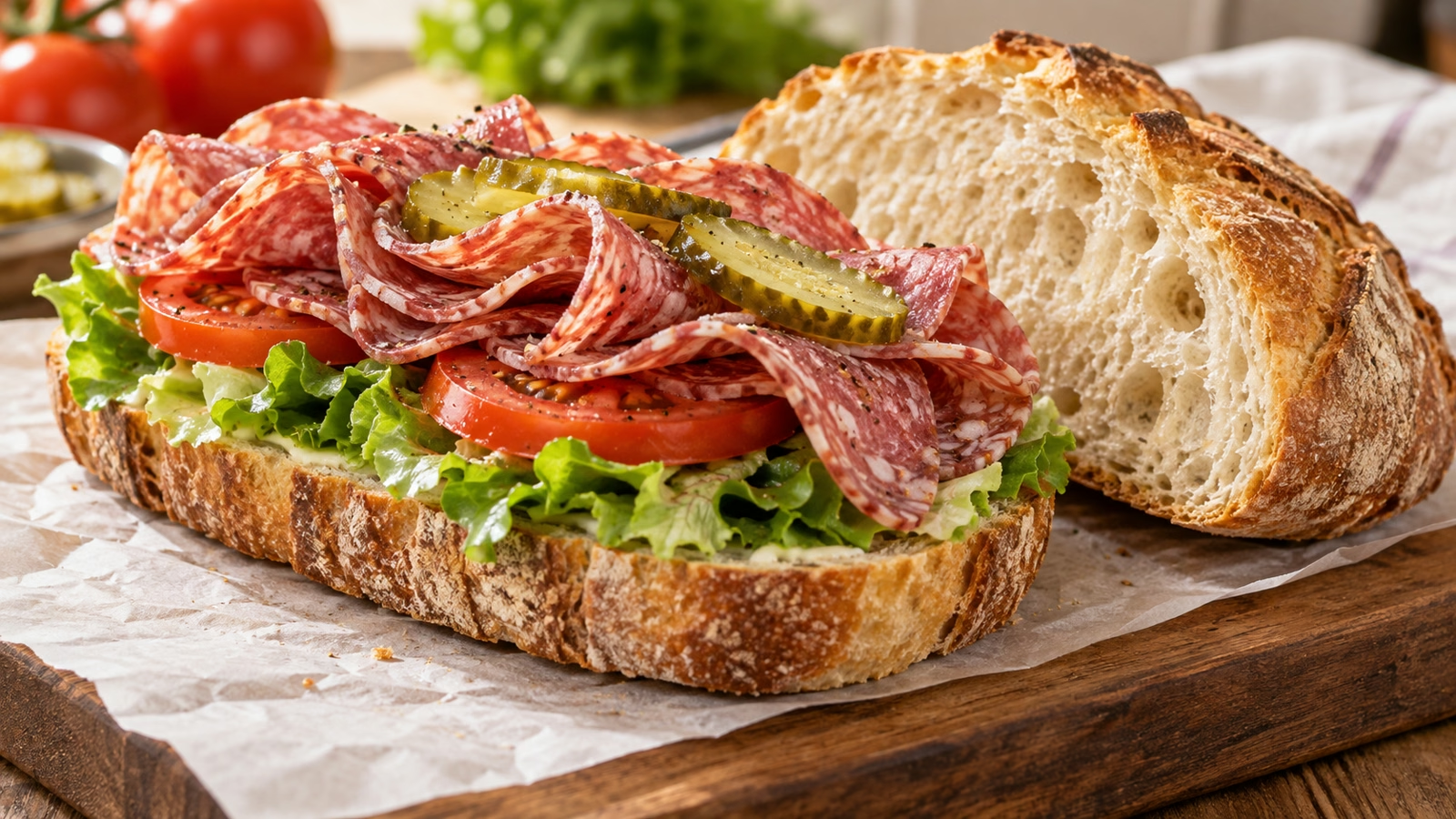
For a sandwich, thin folds are often easier to bite through than a thick, flat stack. Add something crisp and something bright: lettuce and tomato, or cucumber and a few drained pickles. I like that contrast more than piling several strongly seasoned meats into the same mouthful.
- On a board: Serve a modest amount beside bread or crackers, fruit, and a contrasting cheese. Keep wet pickles in a separate small dish.
- In pasta salad: Cut ready-to-eat salami into small pieces so it is distributed through the bowl. Taste before adding more salt when olives or cheese are also included.
- In a warm dish: Small pieces can season a vegetable sauté, egg dish, or pasta. Start with a little and watch the heat so thin edges do not scorch.
- For a simple dinner: Use it as one flavorful component of a broader plate. Our snack plate dinner formula helps fill out the meal with produce and other substantial foods.
Check the casing instructions before serving a whole sausage; do not assume every outer covering is edible. Slice on a clean board with a sharp knife and return the unused portion to appropriate storage. You can always put out a little more, which is easier than keeping a large platter safely chilled.
Storage starts with the package, not the name
Refrigerate anything labeled “keep refrigerated.” USDA guidance allows some whole, unopened hard or dry sausages to be kept in the pantry, but that is not permission to move a chilled packet there. Once opened, follow the product’s instructions and any shorter use-by guidance.
- Hard or dry sausage: USDA lists up to three weeks refrigerated after opening. This category-specific guidance should not be extended to every salami product.
- Cooked deli-style salami: Apply the appropriate luncheon-meat guidance, generally three to five days refrigerated after opening or deli slicing, unless the label is shorter.
- Cold storage: Keep the refrigerator at 40°F (4°C) or below. Wrap the product well, note when it was opened, and use clean utensils.
- Serving time: Refrigerate perishable foods within two hours, or one hour above 90°F (32°C). Count preparation time as well as time on the table.
- Higher-risk diners: CDC recommends that pregnant people, adults 65 or older, and people with weakened immune systems avoid unheated deli meats and fermented or dry sausages, or heat them to 165°F (74°C) or until steaming hot.
Do not taste questionable meat to decide whether it is safe, and do not assume every surface mold is an intended part of curing. Follow the producer’s guidance for that exact product. For a short look at two familiar style names, Di Bruno Bros. explains soppressata and salami in the video below.
Sources
- USDA FSIS: Sausages and food safety
- USDA FSIS: Storage times for sausages
- USDA FSIS: Safe handling and refrigerated storage
- CDC: Preventing Listeria infection
- Columbus: Genoa salami product details
- Columbus: Italian dry salami product details
- Smithfield Culinary: Cooked cotto salami product listing

Hi, I’m Laura, the voice behind Tastiva. I’ve always believed that eating well should feel enjoyable, comforting, and realistic—not like another complicated rule to follow. I love creating recipes that fit into everyday life, sharing simple nutrition ideas, and finding small ways to make meals feel a little better without losing the pleasure of good food.