
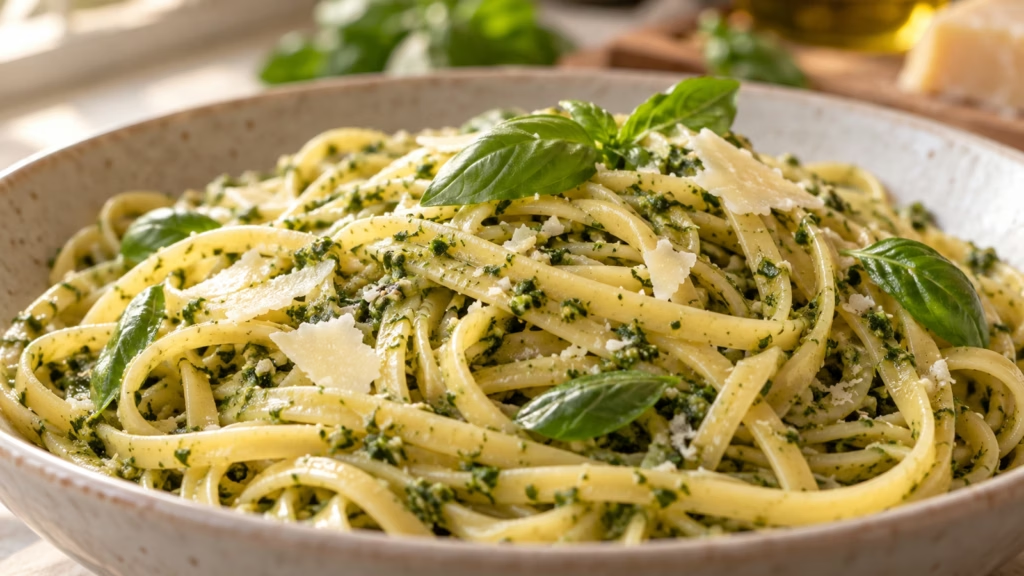
Linguini and linguine name the same pasta: long, narrow, flattened strands that sit between round spaghetti and wider ribbon shapes. “Linguine” is the spelling you will see on many Italian pasta packages; Oxford also recognizes “linguini” in North American English. If a recipe uses one spelling and your box uses the other, you have not bought the wrong shape.
Give these narrow ribbons a sauce that coats the strands, with enough movement left for an easy twirl.
Linguini, linguine, and the shape in the box
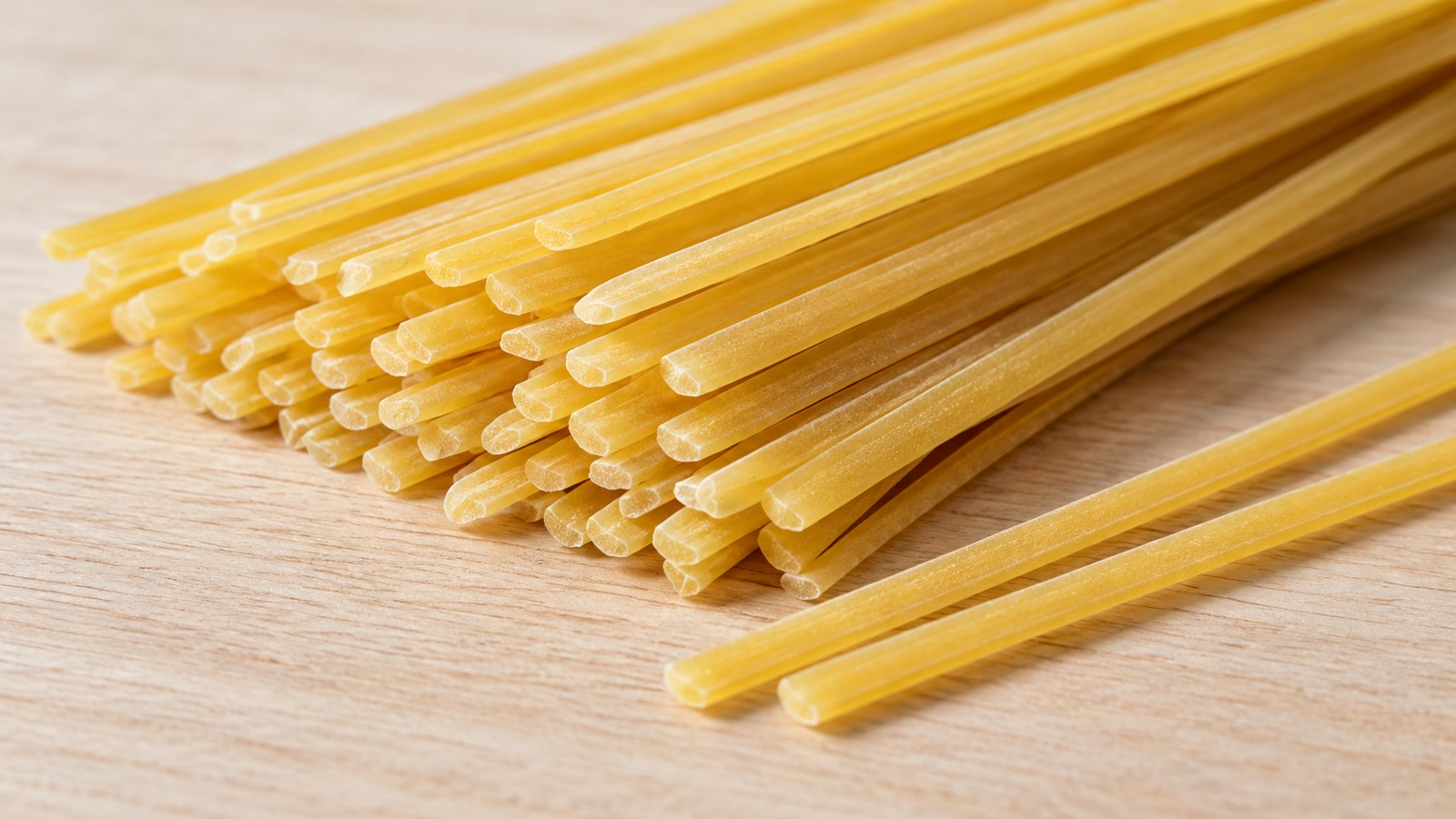
The shape is easier to recognize once you look at a dry strand from the end. It is flattened rather than round, with a gently curved profile. Barilla describes linguine as narrower and thinner than fettuccine; De Cecco emphasizes its flattened, slightly convex section. That gives it a ribbon-like bite without the broad sweep of a wider noodle.
- Compared with spaghetti: Both are long pastas, but spaghetti is round. The two can work in similar everyday dishes, with a different feel on the fork.
- Compared with fettuccine: Linguine is the narrower option. Do not assume the wider pasta needs exactly the same cooking time.
- Compared with angel hair: Very fine strands need their own timing and gentler handling. They are not a drop-in substitute for a long simmer in sauce.
- At the store: Check whether the product is dried, fresh, whole-wheat, or made without gluten. Similar-looking strands can have different ingredients and cooking instructions.
I would choose linguine when I want a long pasta that feels substantial enough for a light sauce but still twirls easily. Its Ligurian association with pesto is a useful starting point, not a limit on what dinner can be.
Choose a sauce that travels with the strands
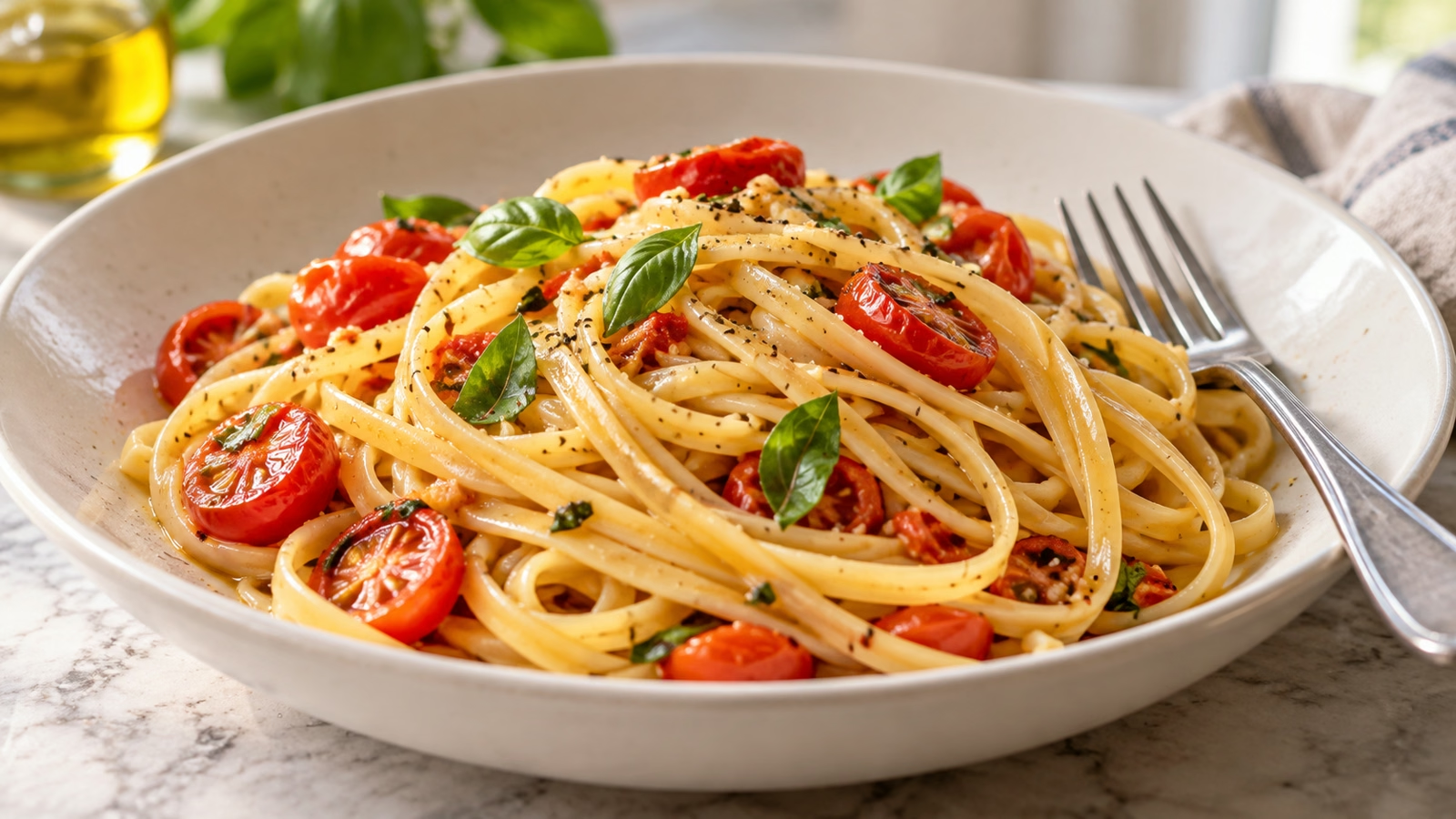
A plate of long pasta can look generously sauced while the first forkful is almost bare. The issue is often distribution: all the good bits are sitting at the bottom. With linguine, aim for a coating that follows the ribbons and cut larger additions into pieces you can comfortably pick up with them.
- Basil pesto: A familiar partner for this Ligurian shape. Loosen the pesto as its recipe directs and toss thoroughly. Our guide to making pesto covers the sauce itself.
- Tomato and herbs: A smooth sauce or softened small tomato pieces can spread through the strands. Add bulky vegetables thoughtfully rather than burying the pasta.
- Oil-based sauces: Garlic, herbs, and a little chile can give a clear flavor direction. De Cecco also suggests combinations with anchovies and capers.
- Seafood: Linguine works with fish- and shellfish-based sauces. Follow a complete seafood recipe for its separate handling and cooking instructions.
- A creamy sauce: Keep the texture loose enough to toss. A very thick coating can make narrow strands feel heavy before they reach the table.
The same principle helps with substitutions. Spaghetti is a practical alternative when the cupboard is short on shapes; a wider ribbon changes the balance more noticeably. I would keep the sauce idea and adjust the pasta cooking, rather than trying to make the replacement behave identically.
Cook by the package, then check the bite
There is no single cooking time for all linguine. Barilla’s U.S. Classic Blue Box page lists nine to ten minutes. De Cecco lists twelve minutes for its no. 7, or ten for al dente. Those are product-specific examples, and the instructions on the package in your kitchen should come first.
- Prepare the finish. Have the sauce and serving bowls ready before the pasta is done. A cooked bundle waiting in a colander is harder to dress evenly.
- Boil and separate. Add pasta to boiling salted water and stir as the strands soften. Keep them moving periodically; oil in the pot is not a substitute for stirring.
- Taste near the stated time. Al dente means cooked with a firm bite, rather than a crunchy, raw-tasting center. Consider any additional time the pasta will spend in a hot sauce.
- Save cooking water. Reserve some before draining. Add it in small amounts while tossing if the sauce needs loosening.
- Finish for the sauce. Hot sauces can finish with the pasta in a pan. For pesto, follow its method; the Barilla demonstration below combines drained pasta and pesto in a mixing bowl.
For a hot dish, skip rinsing after draining so you keep the surface starch that helps the sauce cling. Use tongs gently to lift and turn the strands through the sauce. If you are deciding between this shape and a round one, our durum-wheat spaghetti guide gives that pasta its own closer look.
When the bowl needs a small adjustment
Taste the combined dish before adding more cheese, salt, or oil. Pesto, capers, seafood cooking liquid, and grated cheese can each change the seasoning. A spoonful of the sauce alone does not always tell you how the finished pasta will taste.
- Too tight to toss: Add a little reserved cooking water, then lift and turn again. Make small changes so the sauce does not become soupy.
- Sauce pooling underneath: Give the pasta a thorough toss and check whether the recipe calls for further pan finishing. Simply adding more sauce may leave the same problem.
- Strands stuck together: Separate them gently while dressing. For the next batch, stir during cooking and shorten the wait between draining and saucing.
- Pasta already too soft: Do not keep simmering it in hopes that it will firm up. Serve promptly, and begin checking earlier next time.
A small forkful is the most useful final check: pasta, sauce, and any additions together. For one serving direction, Barilla Australia & New Zealand’s short video shows linguine with pesto Genovese, green beans, and potatoes.
Sources
- Oxford Learner’s Dictionaries: Linguine and the linguini spelling
- Barilla: Linguine shape, pairings, and product cooking time
- De Cecco: Linguine no. 7
- Barilla: Pasta cooking technique

Hi, I’m Laura, the voice behind Tastiva. I’ve always believed that eating well should feel enjoyable, comforting, and realistic—not like another complicated rule to follow. I love creating recipes that fit into everyday life, sharing simple nutrition ideas, and finding small ways to make meals feel a little better without losing the pleasure of good food.